

What's the difference between a business checking account and a corporate card platform?
Quick answer: A business checking account holds your company's money and moves it: customer payments come in, and payroll and vendor payments go out by ACH, wire, or check. A corporate card platform controls how employees spend that money. These tools can issue cards with limits, collect receipts, code purchases, and sync them to your books.
Once more than one or two people spend company money, most businesses end up needing both. Slash brings business checking¹, a corporate card that settles daily from that checking account, bill pay, and accounting sync together in one account for $0 or $25 a month. Traditional banks, meanwhile, sell checking and business credit cards as separate products.
Below, we take a look at how Slash, Ramp, Brex, Mercury, and Chase compare in respect to these features. For fee-level comparisons of checking accounts, see best business checking accounts for small businesses.
Competitor details are accurate as of November 2026, checked on each provider's own site.
What does a business checking account do?
A business checking account usually functions as the overall operating account. Revenue lands there, payroll and vendor payments leave from it, and taxes and loan payments are drawn from it. Deposits are FDIC insured up to $250,000 per depositor, per bank, per ownership category, and some providers extend coverage through sweep networks. A checking account usually comes with a debit card that spends the balance directly, and its controls focus on who can see the account and who can send money. For how fintech accounts and banks differ, see fintech business account vs traditional bank.
What does a corporate card platform do?
A corporate card platform pairs company cards with the software to control them. Typical features include:
- Physical and virtual cards for employees, vendors, and subscriptions
- Limits by card, team, merchant, or category, and card requests that an admin approves
- Receipt and memo collection, often by text or email, and reimbursements for out-of-pocket spend
- Coding rules and accounting sync, so each purchase arrives in your ledger categorized
- Bill pay and approval workflows on many platforms
Ramp and Brex are some of the best-known card-first platforms. Their cards are charge cards: the balance is paid in full from a linked bank account, with no revolving credit.
How do corporate card balances get paid?
Every card balance is eventually paid from a bank account. What differs is when, and whether you can carry it:
- Slash: The Slash Visa® Platinum Card is a charge card issued by Column N.A. that settles daily from your Slash business checking account, with no interest and no carried balance.
- Ramp: Ramp's terms say card statements are issued and payable monthly unless otherwise specified, and the full amount is debited from your linked account the business day after the statement. Its card terms also describe daily payments on request.
- Brex: The Brex Card is a pay-in-full charge card on a daily or monthly cycle. Daily payments come out of a Brex business account, and spending limits are based on its balance; monthly payments are debited from a linked account. Commercial businesses need more than $500,000 in annual revenue for monthly payments.
- Mercury: The IO card is a credit card that’s paid off automatically from your Mercury account each month, so it doesn't actually accrue interest.
- Traditional banks: Business credit cards such as Chase Ink Business Cash are separate credit accounts, and balances you carry accrue interest at a variable APR after any intro period.
Daily settlement keeps your checking balance close to what you've actually spent, so you won’t get surprised by a month of card spend at once. Monthly payment gives up to a month of float (but a single large debit), and a revolving credit card costs interest if you don't pay in full. See charge card vs credit card to learn more.
When do you need both?
Almost every business needs a checking account. You need a card platform, or a checking account with one built in, when:
- More than one or two people buy things for the company
- Software subscriptions sit on personal cards and come back as reimbursements
- Someone’s stuck chasing receipts at the end of the month
- You want limits by person, team, or vendor instead of sharing one card number
- Your card statement is reconciled separately from your bank account
A solo owner with a few purchases a month can usually run on checking and a debit card. A card platform can't replace checking: something has to receive revenue and pay the card balance, which is why Ramp and Brex both offer business accounts of their own.
Should you use one platform or a separate bank and card tool?
Separate bank and card platform
Pros: You keep your existing bank, with its branches, cash deposits, and lending relationship, and choose the spend tool you like best.
Cons: You’ve got two logins, two sets of permissions, two feeds to reconcile, and card payments that move between systems. Card platforms also set eligibility bars: Ramp requires $25,000 in a business bank account, and Brex asks funded startups for $50,000 in cash. Advanced tiers are priced per user: Ramp Plus is $15 per user a month plus a platform fee, and Brex Premium is $12 per user a month.
All-in-one banking and spend platform
Pros: one balance, cards that settle from the account they draw on, one approval policy for transfers and bills, and one accounting sync.
Cons: one provider holds both your operating cash and your spend tooling, and online platforms don't offer branches, so businesses that deposit cash or want a local lender often keep a traditional bank account as well.
Here’s a more visual breakdown:
How do Slash, Ramp, Brex, Mercury, and Chase compare?
Plans and features are subject to change. Confirm current terms with each provider before you choose.
Slash business banking
Works with cards, crypto, plus cards, crypto, accounting, and more.
How does Slash combine checking, cards, and bill pay?
One balance, with cards that settle daily
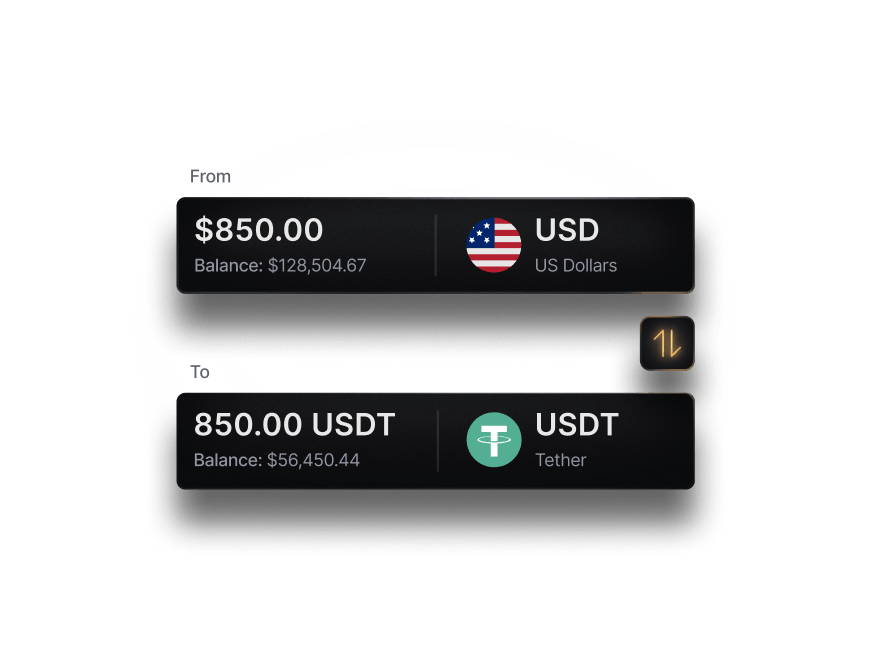
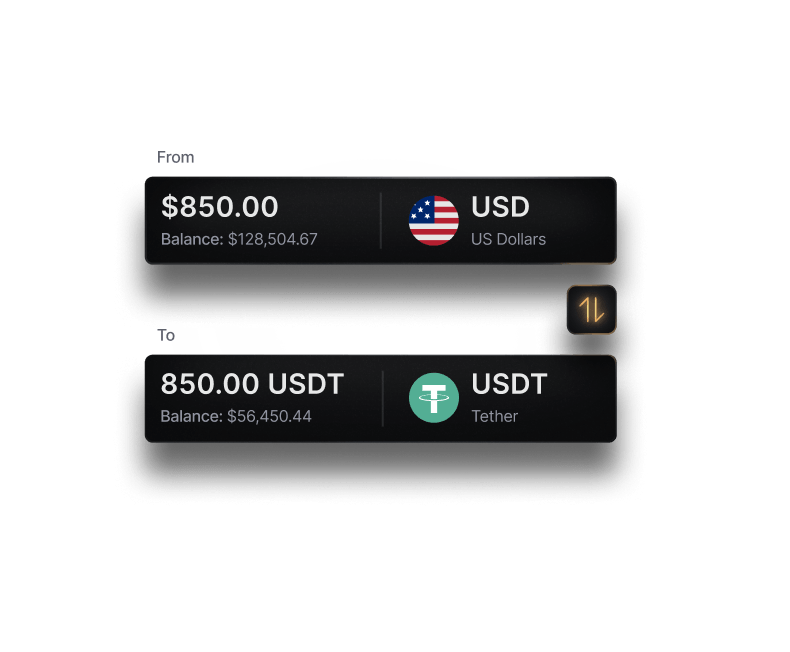
The Slash card settles daily from your Slash business checking account, so card spend comes out of the same balance that pays your bills, with no interest and no balance to carry. You can get unlimited virtual cards, physical cards, and up to 2% cash back on eligible purchases.
Controls on cards and payments
Each card can carry a transaction-size limit; daily, weekly, monthly, yearly, or total limits; and merchant, category, MCC, and country rules, and card groups cap a team's total spend. Employees can request cards, which an Owner or Admin approves. For outgoing money, a payment approval policy routes transfers and bill payments by amount or requester through multi-step approval chains, which can include the requester's manager. Owner, Admin, Accountant, and Employee roles control who sees and does what.
Receipts, reimbursements, and accounting
Submission policies ask cardholders for receipts and memos by text message or email on transactions above a threshold you set, and receipts forwarded to your Slash receipts address are matched automatically. Employees submit expense reports for out-of-pocket purchases, and approved reimbursements are paid by ACH. Mapping rules and AI categorization code transactions, and you review them before syncing to QuickBooks Online, Xero, NetSuite, or Sage Intacct on both plans.
Bill pay, invoicing, and virtual accounts
Bill Pay extracts details from forwarded or uploaded invoices and pays by ACH or wire through your approval policy. Invoicing collects by ACH, wire, or card, with recurring invoices and automated reminders. Virtual accounts give each client, project, or location its own account number.
Where it falls short: daily settlement means no month of float; if you want 30 days between spending and paying, Ramp's or Brex's monthly terms may fit better. If you often deposit cash, keep a bank with branches alongside it. Sole proprietorships aren't eligible, and the Free plan charges $1 per same-day ACH, $6 per domestic wire, and $5 per outgoing FedNow or RTP payment.
Verdict: do you need a business checking account, a corporate card platform, or both?
If employees spend company money, you need both functions. Choose Slash to get them in one account: business checking, a high-cashback corporate card that settles daily, bill pay, approvals, and accounting sync, at $0 or $25 a month per entity with no per-user fees. Choose Ramp or Brex if you want a card-first spend platform with monthly payment terms and meet their minimums, Mercury if banking is the priority and a monthly-paid 1.5% card is enough, and a traditional bank such as Chase if you need branches, cash deposits, or a revolving credit card, paired with a spend tool.
Related: corporate cards with no per-user fees, multi-step payment approvals: free vs paid plans, and best bill pay software for small businesses. Head-to-head: Slash vs Ramp, Slash vs Brex, Slash vs Mercury, and Slash vs Chase.
Apply in less than 10 minutes today
Join the 10,000+ businesses already using Slash.
Frequently Asked Questions
What is the difference between a business checking account and a corporate card platform?
A business checking account holds your money and moves it: deposits come in, and ACH, wire, check, and bill payments go out. A corporate card platform such as Ramp or Brex issues employee cards with limits, collects receipts, codes spend, and syncs it to your accounting software, and the card balance is paid from a bank account. Slash combines both: checking, a corporate card that settles daily from it, bill pay, and accounting sync.
What's the best business bank account that includes corporate cards and bill pay?
Slash includes business checking, the Slash Visa Platinum Card with up to 2% cash back on eligible purchases, and Bill Pay with approval rules on both its $0 Free and $25 Pro plans, priced per entity. Mercury pairs checking with its IO card and free Bill Pay, and Ramp and Brex pair their card platforms with business accounts and bill pay. Traditional banks such as Chase offer checking, business credit cards, and online bill pay as separate products.
Are Fintech Business Bank Accounts Safe Compared to Traditional Banks?

What's the best way for a growing company to manage banking, corporate cards, and bill pay in one place?
Run them on one balance so nothing has to be reconciled between systems. In Slash, card spend settles daily from the same checking account that pays your bills, transfers and bill payments follow one approval policy, and card, bill, and transfer activity syncs to QuickBooks Online, Xero, NetSuite, or Sage Intacct, with no per-user fees as you hire.
Do I still need a business checking account if I use Ramp or Brex?
Yes. Card platforms pay the card balance from a bank account, and something has to receive revenue and run payroll. Ramp requires $25,000 in a business bank account to qualify, and both Ramp and Brex offer their own business accounts; Brex cards with daily payments draw from a Brex business account.
The Best Corporate Cards for Employee Expense Tracking in 2026

Is a corporate card the same as a business credit card?
Not quite. Corporate cards from platforms like Slash, Ramp, and Brex are usually charge cards: the balance is paid in full, daily or monthly, with no interest. Business credit cards from banks, such as Chase Ink, let you carry a balance and pay interest. See corporate cards vs business credit cards.
Business Charge Card vs Credit Card: 6 Key Differences You Should Know


