

Accounting Software for Healthcare Suppliers: Support Financial Control and Growth
Companies operating on the supply side of healthcare face a uniquely challenging financial framework.
Pharmaceutical companies, medical device manufacturers, and other specialized healthcare organizations all manage highly capital-intensive operations and a regulatory framework that leaves little margin for error. Unlike most other businesses, healthcare suppliers often handle invoices tied to FDA-regulated products, navigate reimbursements that depend on how their customers are paid by insurers, and maintain records that need to hold up to audit scrutiny at any time.
For healthcare businesses, generic accounting software may fall short. Industry-specific financial management tools can help healthcare suppliers maximize their working capital, maintain HIPAA compliance where applicable, and build the kind of financial visibility needed to manage complex payer relationships.
This guide explores what healthcare accounting software includes, which features matter most, and how to evaluate the right solution for your medical supply company. We’ll also show you the industry-specific capabilities of Slash, a Soc 2 Type II certificated financial platform that can integrate with leading accounting tools, streamline your customer invoicing, and earn you high-value cashback from your spending.¹
Why does healthcare accounting software matter to vendors?
Suppliers and manufacturers in the healthcare space operate at the intersection of two complex financial environments: their own production and distribution costs on one side, and the revenue cycle challenges of healthcare providers on the other.
When healthcare providers experience delays in insurance reimbursements or claims processing, those delays can ripple upstream. A hospital that is waiting on payment from an insurer may slow its own payables, affecting the cash flow of the medical equipment manufacturer or pharmaceutical distributor it relies on. Accounting software built for the healthcare business should give suppliers tools to monitor receivables in real time, model the impact of payment delays, and plan accordingly.
Beyond the revenue cycle, healthcare suppliers also contend with strict compliance requirements. Depending on the nature of their products and the data they handle, suppliers may be subject to:
- HIPAA requirements
- FDA supply chain regulations
- Standards like ISO 13485 for device manufacturers
Accounting software for healthcare vendors should incorporate compliance checks and audit trails as core features. Financial reporting in this space needs to demonstrate that every transaction followed a documented, defensible process.
Industry-focused accounting and financial management tools differ from general solutions in several ways. They are built to handle the intricacies of medical billing software workflows, support electronic claims reconciliation, and integrate with systems like EHR and ERP platforms that healthcare organizations already rely on. They also tend to offer stronger audit trails, more granular access controls, and reporting structures that align with how healthcare businesses are organized.
Key features to look for in healthcare accounting software
With complex, industry-specific considerations in the healthcare space, it helps to know which features will actually make a difference in your accounting processes. Here's what healthcare suppliers and pharmaceutical companies should look for:
- Reconciliation for insurance claims and billing: Healthcare suppliers that work directly with payers, or whose customers rely on insurance reimbursements to fund their purchases, need accounting tools capable of handling complex billing reconciliation.
- Patient invoicing and payment tracking: Suppliers that provide equipment, consumables, or services used in patient care may issue invoices tied to patient-facing procedures, or work with providers who rely on patient payment collections to fund their own accounts payable. Accounting software that can track invoices and payments across multiple payer types can give suppliers better visibility into their receivables.
- Compliance, reporting, and audit readiness: HIPAA compliant financial platforms typically meet SOC 2 Type II standards, which means their data security controls are independently audited on a regular basis. When evaluating solutions, healthcare suppliers should confirm whether the platform has achieved this certification and how frequently audits are conducted.
- Multi-entity financial visibility: Many healthcare suppliers and distributors operate across multiple legal entities, product lines, or geographic markets. If this applies to your company, access to financial reporting across multi-entity business structures should be a priority.
- Integration with EHR and ERP systems: EHR platforms like AthenaHealth, CollaborateMD, CureMD, ChartLogic, Compulink, and NexTech are primarily designed for medical practices and clinical operations, but they may appear in the procurement and billing workflows of the suppliers and manufacturers serving those practices. Accounting tools that can connect to these systems via API or direct integration can help keep financials aligned with your operations.
- Automated revenue cycle reporting: Revenue cycle visibility means tracking the full path from invoice to payment across varying payment terms, payer types, and reimbursement timelines. Accounting software with automated revenue cycle reporting can identify aging receivables, flag delayed payments, and break down collections by customer, payer, or product line.
The 5 top healthcare accounting software solutions in 2026
Not every accounting software can support certain healthcare-specific workflows. Some are full ERP systems built for industrial healthcare applications, while others are lighter solutions that can work well for smaller suppliers or specialized providers. Below are five accounting solutions worth evaluating, each with a different approach to healthcare accounting:
Intuit QuickBooks
QuickBooks isn't purpose-built for healthcare accounting, but its third-party ecosystem fills many of the gaps. EDI solutions like Relasoft Pharma Suite and TrueCommerce EDI integrate with QuickBooks to handle pharma-specific transactions such as chargebacks and purchase order processing with major wholesalers. Add-on tools like Acctivate and Fishbowl can extend the platform with lot tracking, batch and process manufacturing, barcode scanning, serialization, and more. Combined with direct Slash integration for streamlined payment workflows, QuickBooks works well for healthcare suppliers that aren't yet ready to move to a full ERP.
Acumatica
Acumatica's Manufacturing Edition supports multiple production modes, including batch process manufacturing, which is the standard in pharmaceutical production. It includes bill of materials (BOM) management, material requirements planning (MRP), work center scheduling, and product configuration, giving healthcare suppliers and pharma manufacturers control over production planning and execution from a single cloud-based platform.
Oracle Netsuite
Oracle NetSuite offers a purpose-built Life Sciences ERP that brings finance, supply chain, quality management, manufacturing, and R&D data together on one cloud platform, with compliance features for FDA, GMP, and ISO standards. It also handles clinical trial accounting, contract expense accrual management, milestone-based revenue recognition, grant tracking, and Gross-to-Net profitability analysis.
Odoo
Odoo's Manufacturing module (MRP) supports BOM-driven production, work center management, real-time cost tracking, and automated scheduling. These capabilities are applicable to pharmaceutical formulation, tablet production, and medical device assembly. Its quality management modules include automated quality control points, inspection reports, quarantine zones, and root cause analysis.
Sage Intacct
Sage Intacct provides a financial management platform designed for biotech and life sciences organizations, with integrated grant and fund accounting, cost allocation, and compliance reporting. Its security safeguards are HIPAA-compliant and certified by third-party auditors, and Sage Intacct will enter Business Associate Agreements with eligible healthcare clients. It also integrates directly with Slash, connecting financial management with healthcare-specific payment workflows.
Slash: A financial platform built for medical suppliers
Slash is a business banking platform designed to meet the financial needs of healthcare suppliers, manufacturers, and distributors. It combines secure payment workflows, real-time visibility into spending, and built-in compliance features to support the specific demands of healthcare financial management.
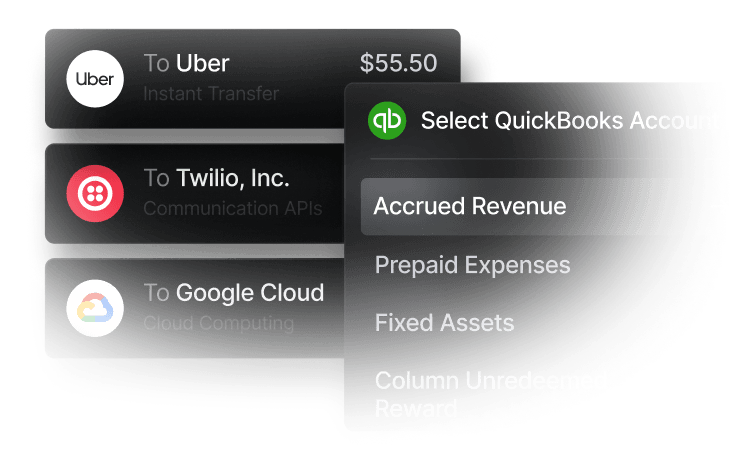
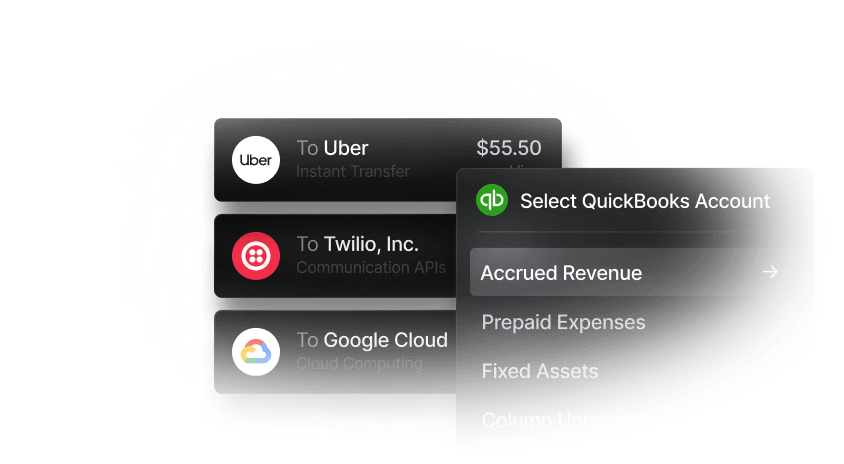
Slash is SOC 2 Type II certified, providing a foundation for HIPAA compliance in payment and invoicing workflows. It integrates directly with QuickBooks, Xero, and Sage Intacct, allowing organizations to automate reconciliation, streamline financial reporting, and keep their accounting systems current without manual data transfers. Suppliers can generate invoices with built-in payment links, which can reduce delays in collections and give customers both a simpler and more efficient path to payment.
The standard in finance
Slash goes above with better controls, better rewards, and better support for your business.


How to choose the right software for your healthcare organization
Selecting accounting software for a healthcare business requires matching the platform's capabilities to your actual operational complexity, not just checking a feature list. The following framework maps common supplier business types to the software categories most likely to meet their needs:
Modernize healthcare accounting operations with Slash
Healthcare suppliers and manufacturers need financial tools that match the regulatory environment they operate in. Slash is SOC 2 Type II compliant, giving healthcare organizations a secure foundation for managing sensitive financial data across complex, multi-payer operations. With built-in spend controls and real-time visibility, finance teams can stay on top of spending without adding manual work.
Slash handles the operational side of healthcare finances: issuing cards, paying suppliers, and accessing working capital. Every transaction is recorded and prepped for clean export into QuickBooks, Xero, or Sage Intacct. Choose the accounting software or ERP your company already relies on, and let Slash handle the rest.
Some of Slash’s additional features that can support healthcare financial operations include:
- Slash Visa® Platinum Card: Issue unlimited virtual cards with customizable spending controls across departments, earning up to 2% cash back on spending.
- Accounting integrations: Connect expense data directly to QuickBooks, Xero, and Sage Intacct to streamline reconciliation, tax reporting, and audit preparation.
- Expense tracking: Track spending across departments and teams with line-item visibility and automatic receipt capture.
- Diverse payment methods: Pay suppliers through Slash Pro with free, unlimited domestic ACH, wire transfers, and real-time payment rails like RTP and FedNow.
- Slash Capital Financing: Access short-term financing with flexible 30-, 60-, or 90-day repayment terms to help bridge cash flow gaps.⁵
- Data-driven analytics: Monitor transactions in real time through dashboards that provide immediate visibility into organizational spending.
Apply in less than 10 minutes today
Join the 10,000+ businesses already using Slash.
Frequently asked questions
How long does it typically take to implement healthcare accounting software?
It depends on the complexity of the solution. A cloud-based platform like QuickBooks can be up and running in a few days, while a full ERP like NetSuite or Acumatica typically takes three to six months to implement, depending on the level of customization, data migration, and integration work involved.
Healthcare Financial Management: A Guide to Navigating Compliance and Cash Flow Cycles

Healthcare Accounts Payable Automation: Streamline Invoices and Payments
What internal controls should be set up when adopting new healthcare accounting software?
At a minimum, establish role-based access controls so users can only view or modify the data relevant to their function. Beyond that, set up approval workflows for payments and journal entries, enable audit logging for all transactions, and define clear policies for how financial data is exported or shared across integrated systems.
Read more from us


