
SWIFT Codes
Look up any bank’s SWIFT code. Verify it’s correct, see what each part means, and get the details you need before you wire money.
banks on SWIFT
countries connected
Find a SWIFT code
Search by bank, country, location, or SWIFT code.
Already have a code? Verify it here →










What are SWIFT codes?
SWIFT codes (also called BIC codes) are unique codes that tell the global banking network exactly which bank you're sending money to. SWIFT stands for Society for Worldwide Interbank Financial Telecommunication, while BIC stands for Bank Identifier Code. These 8 to 11 character codes uniquely identify a bank, its country, location, and specific branch. When you send or receive an international wire transfer, the SWIFT code ensures your money reaches the correct bank and branch. The SWIFT network processes over 40 million messages per day, connecting more than 11,000 financial institutions across 200+ countries.
How do SWIFT codes work?
Every SWIFT code breaks down the same way: the first four characters identify the bank (e.g., CHAS for JPMorgan Chase), the next two identify the country (e.g., US for United States), the following two identify the city or location (e.g., 33 for New York), and an optional three-character suffix identifies a specific branch. When you initiate an international wire transfer, your bank uses the recipient's SWIFT code to route the payment through the SWIFT network. If the two banks don't have a direct relationship, the payment may pass through one or more intermediary (correspondent) banks, each identified by their own SWIFT codes.
SWIFT codes vs. IBAN: what's the difference?
SWIFT codes and IBANs serve different purposes. A SWIFT code identifies a specific bank or branch globally. think of it as the bank's address. An IBAN (International Bank Account Number) identifies a specific account at that bank. think of it as the account's address. For international transfers, you typically need both: the SWIFT code to route the payment to the correct bank, and the IBAN to credit the correct account. IBANs are primarily used in Europe, the Middle East, and parts of Africa and the Caribbean. The United States does not use IBANs; instead, US banks use routing numbers for domestic transfers and SWIFT codes for international ones.
When do you need a SWIFT code?
You need a SWIFT code whenever you're sending or receiving an international wire transfer. This includes paying overseas suppliers, receiving payments from international clients, transferring funds between your own accounts at banks in different countries, and making SEPA payments within Europe. Some domestic transfers may also require a SWIFT code if the banks involved use the SWIFT network. If you're only making domestic transfers within the US, you'll typically use a routing number (ABA number) instead of a SWIFT code.
SWIFT Code Directory
Select a bank for its SWIFT code, wire fees, and transfer details.
How to find a bank's SWIFT code
There are several ways to find the SWIFT code you need. Check your bank statement or online banking portal. most banks display their SWIFT code in the account details or international transfer section. You can also contact your bank directly and ask for their SWIFT/BIC code. You can also search our directory above. When using a SWIFT code, double-check that you have the correct branch code (the last 3 digits) if the bank has multiple branches, as sending to the wrong branch can delay your transfer.
International wire transfer fees and timing
International wire transfers sent via the SWIFT network typically take 1 to 5 business days to arrive, depending on the countries involved, the number of intermediary banks in the chain, and the currencies being exchanged. Fees vary by bank but usually include a sending fee ($15–$50), possible intermediary bank fees ($10–$30 each), and a receiving fee charged by the recipient's bank. The fee structure (who pays what) is determined by the charge code: SHA (shared. sender and receiver split fees), OUR (sender pays all fees), or BEN (receiver pays all fees). Using the correct SWIFT code is critical. errors can cause delays, returned payments, and additional fees.
Understanding SWIFT code format
Every SWIFT code follows a standardized format regulated by ISO 9362. The code is either 8 or 11 characters long. Characters 1-4 are the bank code. a unique identifier for the institution (e.g., DEUT for Deutsche Bank). Characters 5-6 are the country code following ISO 3166-1 alpha-2 (e.g., DE for Germany). Characters 7-8 are the location code identifying the city or region (e.g., FF for Frankfurt). Characters 9-11 (optional) are the branch code. if omitted or set to XXX, the code refers to the bank's head office. Understanding this format helps you verify that a SWIFT code is legitimate before initiating a transfer.
How correspondent banking works with SWIFT
Not every bank has a direct relationship with every other bank in the world. When two banks don't have a direct connection, they rely on correspondent banks. intermediary institutions that facilitate the transfer. For example, if you're sending money from a small regional bank in the US to a bank in Southeast Asia, the payment might route through a major correspondent bank like JPMorgan Chase or Citibank. Each correspondent bank in the chain charges a fee, which is why transfers through multiple intermediaries cost more and take longer. Knowing your bank's correspondent banking relationships can help you choose the most efficient (and cheapest) route for your international payments.
Send and receive payments globally with Slash
Send and receive SWIFT payments across 180+ countries with Slash.
Pay Vendors in 180+ Countries
Leverage the SWIFT network to pay any international recipient with an eligible bank account.
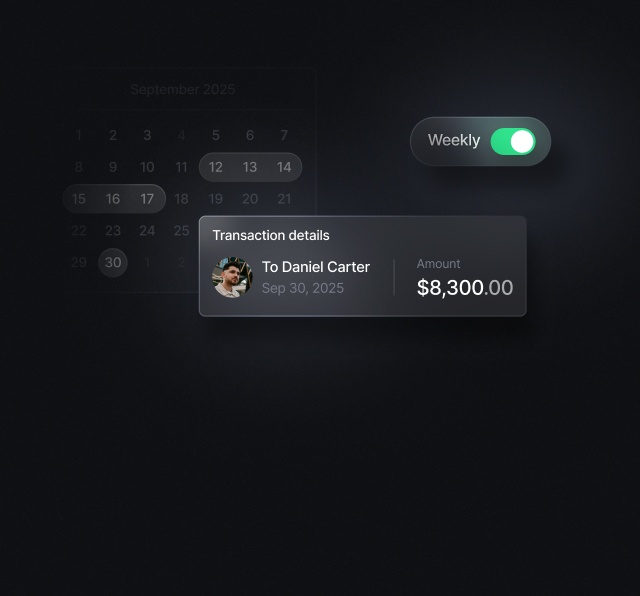
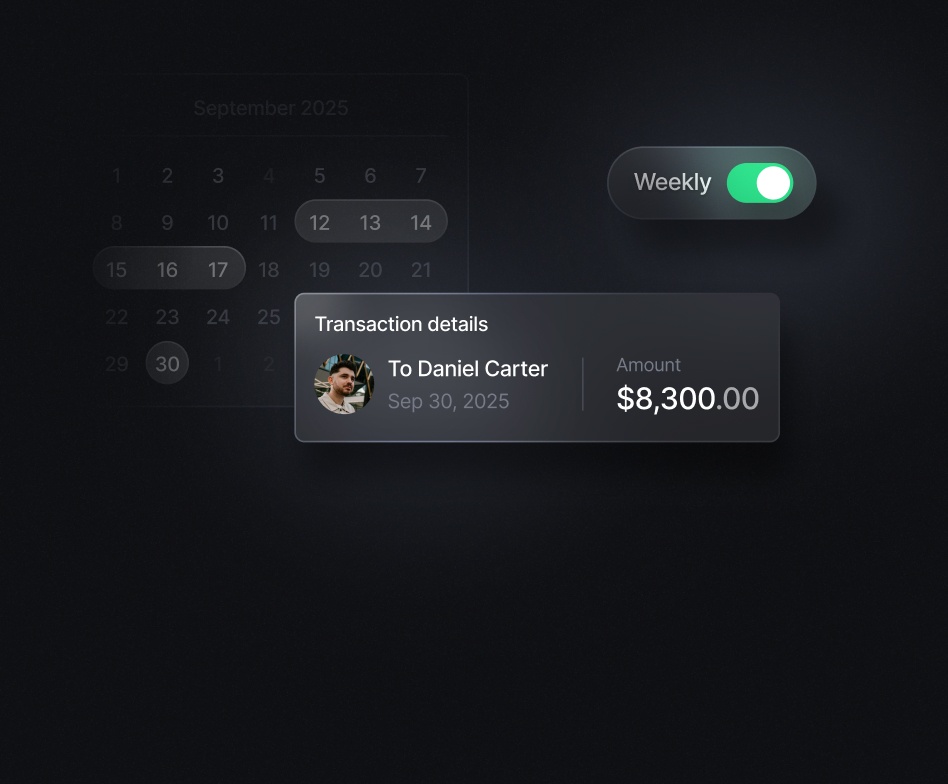
Schedule & Recurring Payments
Automate payments to run exactly when you need. weekly, monthly, or on your custom cadence.
Built-In Recipient Management
Manage vendors or contacts on Slash and add destinations for Wire, ACH, SWIFT, and Crypto.
Browse SWIFT codes
Explore SWIFT codes grouped by geographic region. from North America to the Middle East.
International wires, handled.
Track cross-border payments, manage multiple currencies, and integrate with your treasury tools using Slash.
Explore more financial tools and references
Slash offers a suite of free tools to help you manage payments, identify charges, and understand financial codes.
Learn more about international payments
Guides and insights on cross-border payments, wire transfers, and global banking from our team.

The Top Fiat-Backed Stablecoins for Modern Businesses
Read article
How Are Stablecoins Helpful for Businesses? Pros and Cons
Read article
How Crypto Payment APIs Work: A Guide for Businesses
Read article
PayPal vs Payoneer: A Complete Comparison For Businesses
Read articleApply in less than 10 minutes today
Join the 10,000+ businesses already using Slash.
Frequently asked questions
Don't see the answer you're looking for? Get in touch.