

How to Automate Healthcare Accounts Payable for Accuracy and Compliance
Pharmaceutical companies and healthcare suppliers operate in an environment where accounts payable (AP) management carries unusually high stakes. Supply chains are heavily regulated, making audits a routine part of operations. Product development and manufacturing are capital-intensive, which places added pressure on disciplined cash flow management. Most importantly, the reliability and quality of healthcare products ultimately influence patient outcomes at hospitals, clinics, and extended care facilities. These dynamics make effective healthcare financial management and healthcare payment processing essential across partners and vendors.
Implementing accounts payable workflow automation is one way healthcare organizations can address these challenges. By reducing reliance on manual processes and standardizing invoice processing in healthcare and how payments move through the business, this kind of healthcare accounts payable automation can help improve accuracy, support audit readiness, and give finance teams clearer visibility into outstanding obligations.
In this guide, we'll break down how healthcare organizations can optimize accounts payable through automation—useful for teams automating healthcare finance and exploring ap automation—by examining its potential benefits, common implementation challenges, and the features that may matter most when evaluating different software solutions. We'll also explain how Slash is a business banking platform that can meet the needs of healthcare financial professionals, with secure payment workflows, real-time visibility into spending, and corporate cards that earn up to 2% cash back.¹
The standard in finance
Slash goes above with better controls, better rewards, and better support for your business.

What is automation in healthcare accounts payable?
Accounts payable refers to the short-term debt obligations a business owes to its suppliers for goods and services purchased on credit. For healthcare manufacturers and suppliers, this typically includes payments for materials, contract manufacturing, testing services, logistics, and specialized equipment. These payments may be made through bank transfers, credit or charge cards, or other short-term financing arrangements tied to procurement.
What distinguishes healthcare accounts payable from other industries is the regulatory environment surrounding these transactions. Some regulations healthcare companies may need to consider when paying for goods and services include:
- FDA Regulations:Sets standards for drug and device safety, quality, and labeling. Authorizes and carries out audits related to supply chain integrity.
- HIPAA (Health Insurance Portability and Accountability Act):Requires strict safeguards for patient health information that may appear in billing or payment records.
- DSCSA (Drug Supply Chain Security Act):Mandates electronic systems to track prescription drugs and prevent counterfeits.
- ISO 13485:Governs quality management systems for medical device manufacturers.
- Good Distribution Practices (GDP):Provides guidance for maintaining pharmaceutical quality during storage and transport.
Automating accounts payable involves more than speeding up payments. It encompasses the full invoice and payment lifecycle, including intake, validation, approval, and settlement. Instead of manually reviewing invoices, automation tools can match invoices to contracts or purchase orders, route them to the correct approver, and schedule payments based on vendor terms. Each step is recorded automatically, creating clear audit trails that support both internal controls and external regulatory reviews.
What challenges might healthcare organizations encounter when managing accounts payable?
Healthcare organizations often manage accounts payable across complex supply chains, strict regulatory frameworks, and tight cash flow constraints. Below is some additional information about the factors that can make manual AP processes especially inefficient for healthcare companies:
Inconsistent invoicing formats
Healthcare suppliers may rely on several disconnected systems to manage payments tied to invoices and purchase orders. Some material suppliers may require access through supplier portals, testing labs could rely on emailed invoices, and smaller clinics may still send paper invoices by mail. In practice, invoice processing in healthcare spans multiple channels. Without a way to automatically scan and organize these documents, AP teams must normalize invoice data manually before it enters the accounting system, which can increase the risk of data entry errors, missed approvals, duplicate payments, or invoices being processed without proper validation.
Compliance requirements
Healthcare manufacturers are subject to strict supply chain and financial regulations that require strong documentation and audit trails. Supply chain laws such as the Drug Supply Chain Security Act (DSCSA) can result in regular external audits conducted by the FDA. During these audits, organizations may be required to demonstrate that vendor payments followed defined approval workflows, were issued to approved suppliers, and were supported by complete and accurate documentation.
Exposure to operational risk
Because the development, manufacturing, and distribution of medical supplies can be capital-intensive, inefficiencies or revenue leakage within the AP process can lead to serious financial consequences. Payment issues may also delay production schedules, disrupt regulatory timelines, or limit access to materials needed to meet customer demand. Over time, these risks can impact both your business's operational continuity and long-term financial sustainability.
Inefficient payment methods
A 2025 study found that only 7% of healthcare finance professionals in the U.S. were actively using payment innovations, suggesting that a significant share of healthcare payments may still be processed through outdated methods. While paper checks remain one of the least optimized payment methods today, relying solely on traditional banking rails for EFTs can also limit your ability to send transfers quickly or cost-effectively. These payment methods can slow time-to-pay across the supply chain and introduce downstream inefficiencies. Modernizing healthcare payment processing can address many of these bottlenecks.
Handling complex vendor and customer relationships
Healthcare suppliers often operate between two financially complex groups. Care providers may experience cash flow gaps due to reimbursement cycles or claims delays. When working with specialized suppliers, payments may need to move across borders to support lower-cost manufacturing or specialized testing services. Given the complexity of sending and receiving payments in the healthcare industry, access to a diverse set of payment methods and financial forecasting tools can help improve relationships with business partners and better support operational planning.
What are the benefits of automated payment processing in healthcare?
Accounts payable automation can significantly improve how healthcare organizations manage financial operations. The benefits outlined below highlight how automation supports accuracy, visibility, and compliance:
Improved accuracy and reduced processing costs
AP automation software can use optical character recognition (OCR) and intelligent data extraction to capture invoice details automatically, eliminating most data entry errors. The system can also cross-reference invoices against purchase orders and contracts to flag discrepancies before payment is processed. This three-way matching can help prevent both honest mistakes and fraud.
Stronger cash flow management
Automation solutions can capture and record invoices in real time as they arrive, giving finance teams immediate visibility into outstanding payables. This visibility supports more accurate cash flow forecasting and stronger healthcare financial management, with payables clearly broken down by supplier, department, or cost center. For broader cash flow needs, Slash's capital financing provides access to flexible short-term funding directly through the dashboard, helping organizations manage liquidity when timing gaps arise.⁵
Enhanced data privacy measures
Modern AP automation platforms designed for the healthcare industry incorporate security features aligned with HIPAA requirements. This includes encryption for data at rest and in transit, role-based access controls that ensure staff only see invoices relevant to their responsibilities, secure audit logging of all data access, and compliance with SOC 1 and SOC 2 standards.
Seamless system integrations
The most effective automation solutions don't operate in isolation—they integrate seamlessly with your existing technology infrastructure. For healthcare organizations, this typically means connecting with your ERP system (such as Sage Intacct, Oracle, SAP, or others), your electronic health record system, procurement platforms, and banking systems. Slash integrates with QuickBooks and Xero, and its API can support automated data sharing across financial systems.
What features do the best automated accounts payable software include?
When evaluating AP automation solutions, healthcare organizations should prioritize features that support compliance, control, and flexibility without adding operational complexity:
- SOC 1 / SOC 2 compliance:Your financial platform should meet the same security and audit standards expected across the healthcare supply chain. Slash is a SOC 2 Type II--compliant business banking platform, meaning customer data security controls are regularly audited to meet strict trust and compliance requirements.
- High-value corporate cards:Centralize receipt collection across teams while earning up to 2% cash back on spending with the Slash Visa Platinum Card. This allows healthcare organizations to offset operational costs and redirect savings toward capital-intensive needs.
- Diverse payment rails:Slash supports domestic and global ACH, wire transfers to more than 180 countries, and real-time payments over networks like RTP and FedNow. The platform also supports on- and off-ramps between USD and stablecoins such as USDC and USDT, allowing organizations to hold, send, and receive digital dollars across multiple supported blockchains.⁴
- Easy-to-access financing:Healthcare spending can be unpredictable. Payments from Medicare, Medicaid, and private insurers to your customers can be delayed, eventually straining your company's cash flow. Slash offers working capital financing with flexible 30-, 60-, or 90-day repayment terms to support short-term liquidity needs.
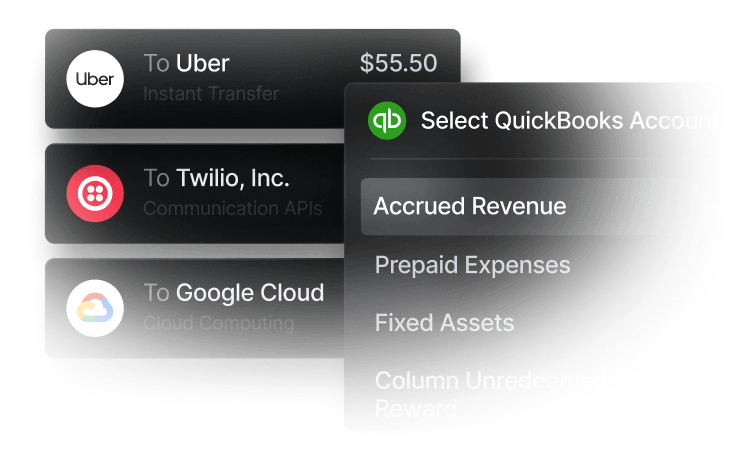
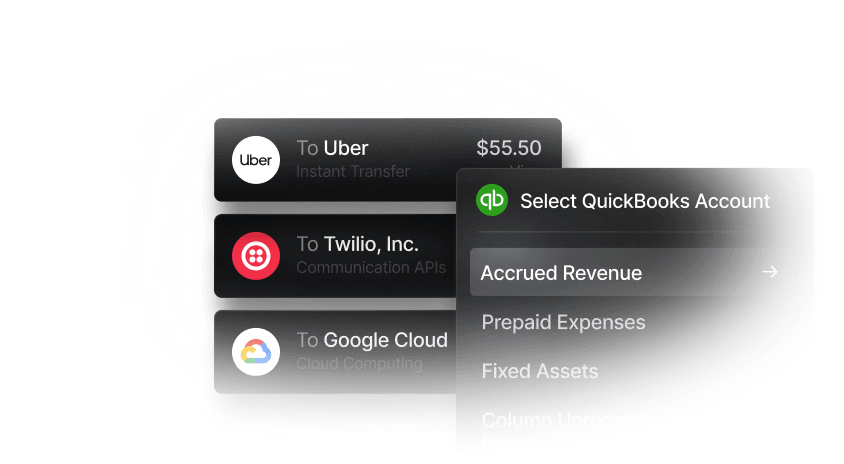
- Automated expense controls:Card transactions, bank transfers, and invoice payments can be exported directly into QuickBooks to automate reconciliation and reduce manual work. This integration supports more accurate expense reporting and simplifies downstream processes like audit and tax preparation.
- Accounting integrations:Export all of your card transactions, bank transfers, invoice settlements and more into QuickBooks to automate reconciliation, expense reporting, tax preparation and more.
Support automated accounts payable workflows with Slash
In healthcare, accounts payable is more than a back-office function. When AP processes are slow, inconsistent, or error-prone, the impact can ripple across supply chains, production schedules, and ultimately patient care. Automating accounts payable—through healthcare accounts payable automation—helps healthcare organizations reduce operational risk, maintain audit readiness, and create more predictable cash flow in an environment where timing and compliance matter.
By bringing structure and visibility to invoice approvals and payments, AP automation strengthens financial resilience. Finance teams gain clearer insight into obligations, tighter controls over spending, and the confidence that processes can scale as regulations evolve and operations grow. This consistency supports stronger vendor relationships and ensures critical supplies and services remain available when they are needed most.
Slash helps healthcare organizations modernize accounts payable by combining secure payment workflows, real-time visibility, and built-in controls that support compliance without adding complexity. With the right financial infrastructure in place, healthcare teams can focus less on managing financial risk and more on delivering reliable, high-quality care.
Apply in less than 10 minutes today
Join the 10,000+ businesses already using Slash.
Frequently asked questions
What type of healthcare organizations can benefit from AP automation?
Healthcare manufacturers, pharmaceutical companies, suppliers, and service providers with complex vendor networks and regulatory requirements often benefit most from an AP automation solution like Slash.
Healthcare Financial Management: A Guide to Navigating Compliance and Cash Flow Cycles

Does AP automation replace accounting software?
No. AP automation tools typically integrate with accounting systems (e.g. Slash's integrations with QuickBooks and Xero) to streamline invoice processing and payments, not replace core accounting functions.
Payment Automation Explained for Businesses in 2026
How does AP automation support compliance?
Automated workflows create consistent approval processes and audit trails, making it easier to demonstrate compliance during internal reviews or external audits. In addition, SOC 2 Type II--compliant financial service providers like Slash prioritize data security for accounts and payment information, which can help safeguard sensitive healthcare data.
Accounts Payable Automation: 6 Best Practices to Streamline Your AP Process
Read more from us


