

How Utility Expenses Are Treated for Business Taxes
If you’re a business owner working within tight margins, you’ll probably want to take advantage of any opportunity you can to earn a little extra capital. What many owners don’t know is that one of these earning opportunities can come from the very thing that literally keeps the lights on: your utilities.
Under U.S. federal tax law, utilities like electricity, water, gas, internet, and phone services are generally deductible. The IRS allows businesses to deduct expenses that are "ordinary and necessary" for their trade or business, and utilities by-and-large fit this description. This deduction can apply to multi-entity companies with offices in several states, data-heavy operations running on cloud infrastructure, and even remote teams whose home internet bills support their work.
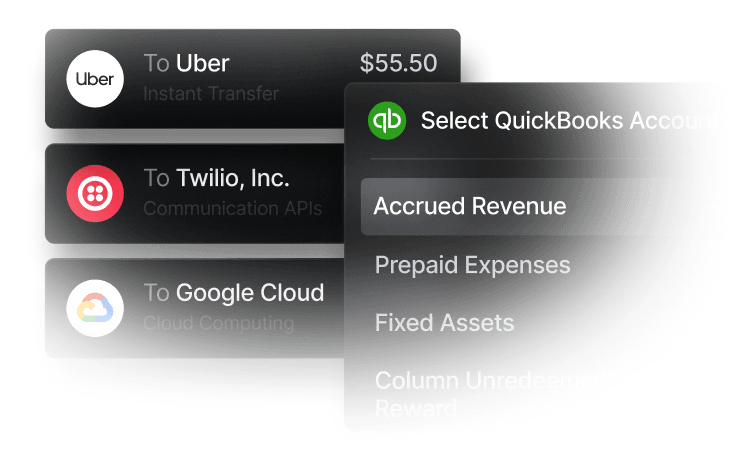
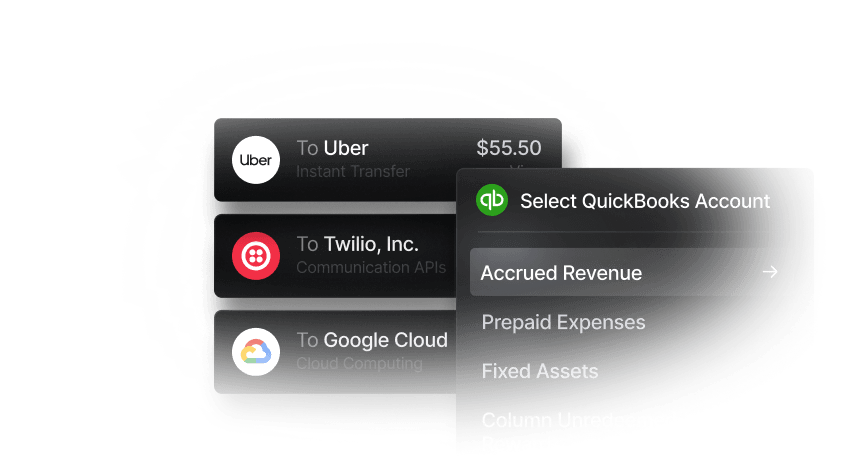
Below, we’ll take a look at which utility costs qualify, how allocation works for mixed-use spaces, what’s changed in recent filing seasons, and the mistakes relating to poor documentation or miscategorization. Sorting and tracking your utility expenses can be easier with Slash, a business banking platform built for financial management.¹ Slash can automatically categorize expenses and sync them with your accounting software, meaning your utility spend can stay organized without extra manual effort.
Types of Utility Services Businesses Commonly Pay
In a tax context, "utilities" covers the essential services that keep a physical or digital operation running. The IRS mentions some common deductible utilities in Publication 535, including:
- Electricity
- Natural gas/heat
- Water
- Wastewater/sewage
- Trash collection and recycling
- Telecommunications services (internet and phone lines)
Each of these costs appear as operating expenses on your returns. While these represent the boilerplate examples of utilities, the category can get broader than that. Here are a few alternative examples that can usually be deducted in the same way:
- Security and monitoring systems
- HVAC maintenance contracts for climate-controlled spaces
- Cloud hosting and dedicated data lines that are essential to running your systems
- A monthly Amazon Web Services bill running a core production environment
Another interesting use case is utilities used directly in a manufacturing company’s production process, such as natural gas used to heat and mold plastic. This may be categorized as manufacturing overhead and factored into cost of goods sold (COGS) rather than as its own operating expense. How the cost is classified can affect both what gets deducted and how your gross margin is reported.
Tax Rules Governing Utility Deductions for Businesses
If your utilities are fully dedicated to business property/operations, the IRS treats them as fully deductible operating expenses in the year they're incurred. Overall, they have to be “ordinary-and-necessary”, meaning they’re standard costs that are common in your industry and matter for your day-to-day. Electricity, gas, water, and internet at your company’s office pretty much always clear that bar.
Mixed-use spaces, on the other hand, can get a little sticky. A home office qualifies for utility deductions, but only for the portion of the home used regularly and exclusively for business. You can do this by using your square footage; if your home office takes up 15% of your home's total square feet, you can generally deduct 15% of your household electricity and gas bills for the year.
Cellphones and landlines are deducted differently, even if they’re used in the same way. If you use a home landline for business calls, you can’t deduct any of it. However, if you acquire a second landline for work, you can deduct its whole cost. Cellphones land in between, as you can deduct your phone bill’s cost based on how often you use it for business purposes. It’s up to you to track that and report it accurately.
While your entity type doesn’t affect what you can deduct, it can affect where it appears on your taxes:
- Sole proprietors and single-member LLCs report on Schedule C
- Partnerships report on Form 1065
- S corporations report on Form 1120-S respectively, with deductions flowing through to owners' personal returns.
- C corporations deduct directly on Form 1120
Unless the company is a C corp, deductions flow through to the owner’s personal returns.
One more thing to note: if your commercial lease is structured as a gross lease that bundles utilities into the monthly rent, that full payment is typically deducted as rent, not as utilities. If utilities are metered and billed separately by your landlord, they belong in the utilities category. In this instance, you’ll want to avoid double-deducting costs that are already part of the rent deduction.
Recent Changes Impacting Utility Expense Deductions
While the basic IRS rules for deducting utilities haven't changed dramatically, some recent developments have led to a few adjustments. For instance, 2022’s Inflation Reduction Act added Section 179D, which raised the potential deduction limits up to $5.94 per square foot and expanded the definition of “energy efficient” buildings.
Meanwhile, another new bill actually erased tax deductions for a few green-energy related initiatives. If your business installed solar panels after December 31st, 2025, you can no longer claim a 30% tax deduction for their energy production.
The recent expansion of remote work has also changed the way home utilities are treated. If employees work remotely and the company reimburses their home internet bills through an accountable plan (one that requires documentation and a business-purpose connection), those reimbursements are generally deductible to the employer and not taxable to the employee as compensation. While the rule itself isn’t new, the use of accountable plans is fairly new to companies that didn’t hire remote employees until 2020 or after.
Overall, tax rules at the federal and state level are always evolving. Finance leaders should stay on top of IRS guidance releases and check in with their tax advisors as new rules take effect.
Strategies to Maximize Legitimate Utility Tax Deductions
When it comes to maximizing your tax deductions, it’s more about monitoring and capturing opportunities rather than changing the way you use your utilities on a daily basis. Here are a few strategies:
Keep Utility Expenses Within the Tax Year
If your company practices cash-basis accounting, expense deductions are logged when a bill is actually paid rather than when it's incurred. That means a December utility bill paid on January 3rd lands in next year's taxes, not this year's. If you're running close to year-end and want to maximize current-year deductions, paying outstanding utility bills before December 31st pulls those costs into the right period and keeps your books a little simpler overall.
Use Software to Track Utility Costs Across Entities
Multi-location companies and businesses with remote teams generate lots of utility-related expenses in different places. Without an efficient system, reconciling those costs at the end of the year often means you’ve got to pull data from several different bank statements. Slash's business banking dashboard centralizes transaction data across accounts, virtual cards, and payment methods, so your utility spending can be tagged by entity or location as it happens rather than sorted months later.
Review Eligible Expense Categories Regularly With Your Tax Advisor
Utility questions aren’t always easy to answer. Is an AWS bill a software subscription or a utility? Do I deduct my security system’s setup bill or just the monthly fee? What if we used a backup generator for electricity one week? The right classification can depend on how your industry typically treats the cost and how your accountant interprets the ordinary-and-necessary standard for your situation. For this reason, it’s helpful to check in with your tax advisor about any gray areas.


Common Mistakes Businesses Make With Utility Deductions
If you fully document your utility expenses and you know where everything gets sorted, errors should be few and far in between. If you don’t, though, you might make some of these mistakes:
- Claiming 100% of household utilities: A home office deduction requires a realistic calculation of the business-use percentage. Unless you use every room in your home for your business, you should calculate the square footage of a room or two compared to the rest of your floor plan. You can’t deduct the entire electric bill because you work on your laptop and charge it from the wall overnight. The IRS is very specific about the "regular and exclusive use" requirement.
- Double-counting utilities included in rent: Some commercial leases count your utility costs in your single monthly payment, which means deducting them again as a separate utility expense is a double deduction. If you’re not sure whether utilities are included in the monthly bill or not, doublecheck your lease terms.
- Misclassifying capital improvements as operating expenses: A utility-related project like upgrading HVAC infrastructure is a capital expenditure, not a general utility expense. These are either capitalized and depreciated or deducted under Section 179 rather than expensed as a utility cost.
- Inconsistent categorization across entities or locations: A multi-entity business that codes electricity as "utilities" in one entity and "office expenses" in another can lead to big reconciliation problems and change the look of your budgets.
Stay on Top of Your Utility Tax Deductions With Slash
Managing your finances accurately is the key to managing your tax deductions accurately. If each of your utility expenses are categorized when they’re made and tracked throughout the year, calculating them at the end of the year becomes simple. That’s exactly where Slash can help.
Slash is a neobank that can tag utility payments by entity, location, vendor, and category, meaning you’ve got clean data to work with when evaluating what to deduct and what to leave alone. With a visible set of records, you’ll be ready for any new bills and regulations that tweak tax deduction rules.
All of your utility expenses can be found on an integrated business banking dashboard that features payments, invoices, card spend, and even stablecoins together in the same place.⁴ Through Slash, you can also manage separate entities through the same login without mixing up any of their bills or cash flow trends. Along with automated categorization tools, our platform comes with features such as:
- Working capital financing: Access short-term financing with flexible 30-, 60-, or 90-day repayment terms to help bridge cash flow gaps.⁵
- High-yield treasury: Earn up to 3.80% annualized yield on idle funds with money market investments from BlackRock and Morgan Stanley, managed directly within your Slash account.⁶
- Native cryptocurrency support: Send and receive USD-pegged stablecoins USDC and USDT across eight supported blockchains for faster, lower-cost global payments.
- Slash Visa® Platinum Card: The Slash Card allows you to set customizable spending controls and issue unlimited virtual cards for handling team expenses, vendor payments, subscriptions, and more. Users can also earn up to 2% cash back on business purchases.
- Accounting & ERP integrations: Sync transaction data with QuickBooks Online, Xero, NetSuite, or Sage Intacct to streamline reconciliation, reporting, and month-end close.
When your expenses are fully organized, your annual tax returns can become an opportunity instead of a problem. Slash can help you get there.
Apply in less than 10 minutes today
Join the 10,000+ businesses already using Slash.
This article is educational content, not legal or tax advice. It’s always best to consult a qualified tax professional about your specific situation before filing.
Frequently Asked Questions
Can a business deduct utilities for a space it uses both as a home and an office?
Yes, but only for the portion that you use for work. The IRS requires that you calculate the percentage of your home used regularly and exclusively for business, typically using square footage, and apply that percentage to your total household utility costs.
The Complete Guide to LLC Expenses and Tax Deductions

Are internet and phone expenses for remote employees deductible?
Sometimes, yes. If your company reimburses employees for part of their home internet costs, and those reimbursements require employees to document the business purpose and return any excess amounts, the costs are generally deductible for the employer. Flat stipends that don't require substantiation may be treated as taxable wages rather than deductible expenses. The specific structuring matters, so a review with your tax advisor is worthwhile before rolling out a remote utility reimbursement policy.
Top Expense Tracking Software in 2026

Are there tax incentives for businesses that reduce utility consumption through energy upgrades?
Well, they were. The Section 179D deduction used to allow businesses that own commercial buildings to deduct costs for qualifying energy-efficient improvements to HVAC, lighting, and solar additions. However, 2025’s Big, Beautiful Bill changed that, so new energy improvements are no longer deductible.
Read more from us


