

Non-Deductible Business Expenses Explained
Each time your company makes a business-related expense, there’s a chance it’s tax deductible, meaning you can legally subtract it from your total income to reduce your taxable income. However, with the enormous variety of purchases and expenditures a business can make, it’s difficult to remember which are deductible and which aren’t. For the sake of compliance, it’s important to know which expenses the IRS has deemed non-deductible.
Non-deductible expenses are costs a business incurs that cannot be subtracted from taxable income, meaning the business pays tax on money it's already spent. The consequences of getting this wrong compound in both directions: claiming deductions you're not entitled to creates audit exposure and potential penalties; missing legitimate deductions you are entitled to means overpaying taxes unnecessarily.
This guide covers what makes an expense non-deductible, which categories the IRS consistently flags, the gray areas where businesses most often make mistakes, and how keeping better records prevents the problem before tax time arrives. We’ll also take a look at Slash, a neobank that comes with tools that can intelligently categorize business expenses and make tax seasons simpler for busy accounting teams.¹
What Makes a Business Expense Deductible?
The IRS standard for deductibility comes from Section 162 of the Internal Revenue Code, which allows deductions for "ordinary and necessary" business expenses. Each of these words have particular conditions:
- An expense is ordinary if it is common and accepted in the business's industry or trade. Renting office space is ordinary for a professional services firm. Buying raw materials is ordinary for a manufacturer. Overall, the type of expense must be commonplace in the industry’s context.
- An expense is necessary if it is helpful and appropriate for the conduct of the business. Notably, "necessary" doesn't mean indispensable; the IRS has clarified that an expense doesn't have to be absolutely required to qualify. It just needs to be a legitimate and important business purpose.
Expenses that either fail these tests or fall into specific categories the IRS has explicitly prohibited are non-deductible, regardless of how the business accounts for them. Charging a purchase to your business account or ordering something on company time doesn’t instantly make an expense deductible. The nature and purpose of the expense determines its tax treatment.
Common Non-Deductible Business Expenses
Here are some common examples of non-deductible expenses that may trip some finance teams up:
Personal Expenses
The clearest category of non-deductible costs is personal expenses paid through the business. Personal meals, family vacations, home improvements, clothing, and personal vehicle use for non-business driving are all non-deductible, even if they're charged to a company card or paid from a business account.
The complication is that many expenses serve both personal and business purposes, especially with the proliferation of remote jobs. It’s quite common for modern employees to have a home office, a vehicle used for client meetings and personal errands, or a phone that handles both work and personal calls. These require allocation between the deductible business portion and the non-deductible personal portion. The IRS requires that the business use be documented and reasonable.
Fines, Penalties, and Illegal Payments
Fines and penalties paid to government agencies are explicitly non-deductible under Section 162(f) of the tax code. These may include regulatory penalties, OSHA violations, environmental compliance fines, late tax penalties, and SEC settlement fines. The rationale is straightforward: allowing a deduction would effectively subsidize the noncompliance that triggered the penalty, reducing its deterrent effect. The IRS has consistently applied this prohibition, and courts have upheld it even when businesses argue the penalty was a reasonable cost of operations in their industry.
One exception can be compensatory payments, which are amounts paid to make a harmed party whole, as opposed to punitive amounts paid to the government. These may be deductible even when they arise from the same underlying event as a penalty. A settlement that includes both a government fine and a separate payment to a damaged third party can allow the compensatory portion to be deducted while the fine component is not. The allocation needs to be documented clearly in the settlement agreement.
The same principle extends to illegal payments. Bribes, kickbacks, and payments that violate the Foreign Corrupt Practices Act are non-deductible. Even if they were somehow deductible, we’d advise you not to break the law.
Political Contributions and Lobbying Expenses
Contributions to political campaigns, political action committees (PACs), or political parties are not deductible as business expenses, regardless of how directly a piece of legislation might affect the business. The prohibition applies whether the contribution is cash, services, or in-kind support.
Lobbying expenses are similarly non-deductible for most businesses. There is a limited exception for a de minimis amount of in-house lobbying activity (generally up to $2,000 per year), but professional lobbying fees and dues paid to organizations whose primary activity is lobbying don't qualify.
Capital Expenditures (In the Year of Purchase)
Expenses used to acquire, improve, or create a long-lived asset aren't immediately deductible in the year of purchase. Instead, they must be capitalized and deducted over time through depreciation or amortization. A $50,000 piece of manufacturing equipment isn't a $50,000 expense in year one; it's an asset that generates depreciation deductions over its useful life.
The distinction between a capital expenditure and a deductible operating expense can be one of the most frequently contested areas in business tax. The IRS's general rule is that costs extending the useful life of an asset or adding significant new capability are capital in nature. Routine repairs and maintenance that keep an asset in its current condition are generally deductible as operating expenses. Some trickier expenses, such as a substantial renovation or a major software upgrade, may require judgment or professional guidance.
Life Insurance Premiums (When the Business Is the Beneficiary)
Premiums paid on life insurance policies covering employees, officers, or other individuals are non-deductible if the business is directly or indirectly a beneficiary of the policy. This applies to key-person life insurance, which are policies taken out to protect the business against the loss of a critical employee. The premiums are not deductible; the death benefit proceeds, when received, are typically tax-free under Section 101.
Life insurance premiums paid as part of a group-term life insurance plan for employees (where employees are the beneficiaries) are generally deductible up to a coverage limit of $50,000 per employee. Above that threshold, the cost becomes a taxable fringe benefit.
Meals and Entertainment (Limits Apply)
The Tax Cuts and Jobs Act of 2017 significantly tightened the rules on meals and entertainment deductions. Tickets to sporting events, concerts, and golf outings are no longer deductible under current law, even when the clear purpose is business development with a client. This is a categorical change from the prior 50% deductibility rule for entertainment, and one that may catch businesses off guard.
Meals remain partially deductible in specific circumstances:
- Business meals where business is genuinely discussed, with proper documentation of attendees and purpose: 50% deductible
- Meals provided for the convenience of the employer (on-premises cafeterias, meals provided at the worksite): 50% deductible through 2025, then fully non-deductible under current law
- Office parties or social events open to all employees: 100% deductible
The amount, date, location, business purpose, and names and business relationships of all attendees must be recorded. Without that documentation, the deduction is disallowed regardless of whether the meal genuinely served a business purpose.
Commuting Costs
Transportation between an employee's home and their regular place of work is commuting, not business travel, and is not deductible for the employee or reimbursable tax-free by the employer. However, driving from the office to a client site or trade show is. Ultimately, the location you travel to and the location you travel from must both be work-related.
The line shifts when an employee works from a home office that qualifies as their primary place of business. In that case, travel from the home office to another business location can be treated as deductible business travel rather than commuting, as long as the home office itself meets IRS requirements for a legitimate business deduction.
Charitable Contributions
Charitable donations made by a business are generally not deductible as business expenses under Section 162. C corporations can deduct qualifying charitable contributions as a separate item under Section 170, subject to a 10% of taxable income limit. For pass-through entities like S corporations and LLCs, the charitable deduction flows through to the owners' individual returns, not the business return, and is subject to individual deductibility limits.
The practical implication is that labeling a payment as charitable giving doesn't necessarily produce a deduction at the business level. The entity structure and the applicable income limits determine the actual tax benefit.
How to Categorize Expenses for Your Business: Examples & Best Practices

Business Expenses That Are Partially Deductible
Several categories sit between clearly deductible and clearly non-deductible, depending on certain conditions. These are the moments that can trip businesses up the most:
- Home office deductions are legitimate when the space is used regularly and exclusively for business and is the principal place of business. The "exclusively" requirement is strict; a home office that doubles as a guest room or a general workspace used for occasional personal browsing doesn't qualify. The deduction can be calculated using the simplified method ($5 per square foot, up to 300 square feet) or the actual expense method (proportional share of home costs).
- Mixed-use vehicles require allocation between business and personal miles. Only the business-use percentage of vehicle expenses is deductible. The IRS requires contemporaneous records like a mileage log to be maintained throughout the year. If you’ve forgotten to keep specific documentation, it’s unlikely that you’ll be able to cobble it together at the last minute..
- Business travel with personal components can be deductible for the business-specific portions. If a founder flies to a three-day conference in Miami and extends the trip two days for personal leisure, the airfare may be fully deductible, but the two personal days' lodging and meals are not. The IRS looks at the primary purpose of the trip and the proportion of business to personal days when evaluating these deductions.
- Club memberships like country clubs, athletic clubs, or airline lounges are not deductible, even when used for client entertainment or business development.
- Legal fees are generally deductible when they arise from business activities like contracts, employment matters, regulatory compliance. Legal fees relating to personal matters, or that result in the business acquiring a capital asset, are not deductible as current expenses. A gray area exists for legal fees tied to business disputes where a settlement includes both deductible and non-deductible components. This varies case-by-case, but the allocation between the two usually determines the tax treatment.
- Startup costs and organizational expenses are not immediately deductible in full. Businesses can elect to deduct up to $5,000 in startup costs and $5,000 in organizational costs in the first year of operation, with amounts above those thresholds amortized over 180 months. Costs incurred before the business officially begins operating are treated as startup costs subject to these limits rather than ordinary operating expenses.


Why Accurate Classification Matters
Deductible and non-deductible expenses need to be tracked carefully for several reasons beyond the annual tax return. These include:
- Audit readiness: The IRS can audit returns for up to three years after filing (or six in cases of substantial understatement of income). A business that can produce clean documentation of its expense categories is in a far stronger position during an audit than one that needs to reconstruct its reasoning from old records.
- Financial statement accuracy: Misclassifying non-deductible expenses as deductible ones overstates the operating cost of the business and understates taxable income, both of which distort the picture for lenders, investors, and the business's own management team. It also messes up your tax returns, naturally.
- Compounding cost of errors: Claiming deductions the business isn't entitled to can trigger penalties of 20% of the underpayment for negligence or substantial understatement, plus interest. The earlier the classification errors are caught, the lower the correction cost.
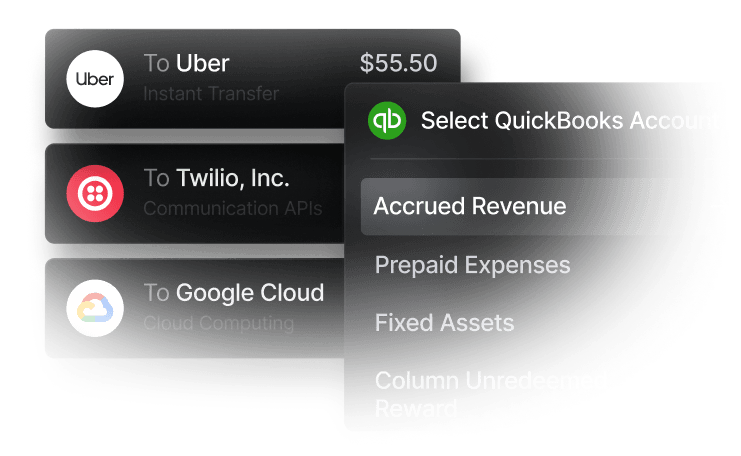
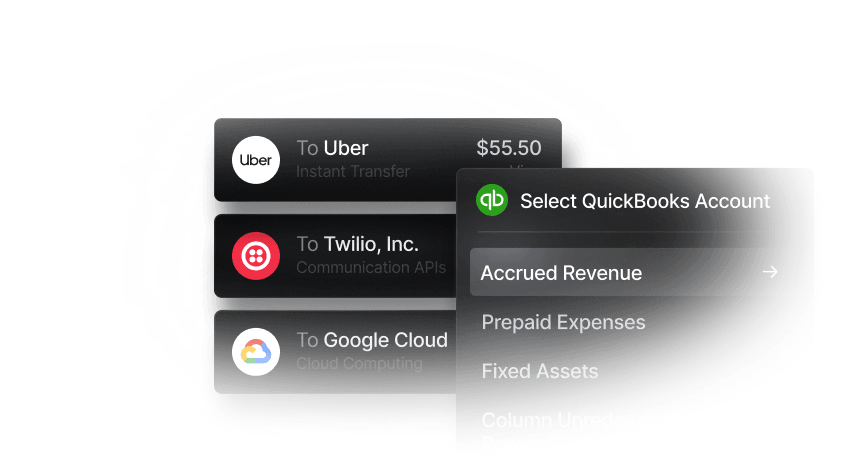
Many companies will make hundreds of business purchases each year, coming from different employees, connecting to different accounts, and occurring for different reasons. Manually categorizing every one of these purchases can be a nightmare. Some business banking platforms, such as Slash, come with automated categorization tools that sort expenses into the proper buckets the instant the transactions are made. This allows all expenditures to be pre-arranged before the end of the month or year arrives.
Common Mistakes and How to Avoid Them
Even if you’re relatively familiar with the IRS’s ruleset, it’s still easy to make mistakes, including:
- Assuming business payment equals business deduction: An expense charged to a corporate card or paid from a business checking account isn't automatically deductible. The tax treatment depends on the nature of the expense, not the payment method.
- Missing the entertainment deduction change: Some finance teams still accidentally categorize client entertainment as 50% deductible, even though this law changed in 2018. However, business meals that stay distinct from entertainment remain 50% deductible with proper documentation.
- Deducting life insurance premiums for key-person policies: Key-person insurance is a legitimate risk management tool, but the premiums are not a deductible business expense when the business is the beneficiary.
- Failing to allocate mixed-use expenses: Claiming the full cost of a vehicle, home office, or phone without allocating for personal use invites scrutiny and, in an audit, a disallowance of the non-business portion.
Get Better Visibility Into Your Business Expenses With Slash
All of these IRS rules and regulations can be difficult to remember. Even if your finance team has them down pat, though, classifying and arranging your transaction data can be a massive challenge in itself. Missing receipts, disorganized approval processes, and fractured systems often lead to mistakes that hurt companies when tax season arrives.
We designed Slash to change that. Slash is a business banking platform that enhances visibility into your expenses while automatically categorizing them at the point of purchase. If an employee buys a printer with their Slash Visa® Platinum Card, it can be labeled as an “Office Supplies” expense as soon as it hits your dashboard. This transaction will also prompt receipt capture at the moment of purchase via email or SMS. Plus, purchasing that printer can earn you up to 2% cash back, too.
Users can take advantage of unlimited sub-accounts to separate funds for different projects, purchases, and teams. Categorization can be an afterthought when a virtual card is restricted to one vendor and one type of expense. No matter the card or purpose, each transaction made through Slash syncs with accounting platforms like QuickBooks Online, Xero, and Sage Intacct, ensuring no data is lost or mistranscribed between separate solutions.
Our platform comes with a wide variety of other features, including:
- AI-powered finance: Our platform comes with Twin, a built-in AI agent that can be prompted with natural language to complete complex tasks. Users can ask it to create cards, pay invoices, review your cash flow, and much more.
- Working capital financing: Access short-term financing with flexible 30-, 60-, or 90-day repayment terms to help bridge cash flow gaps.⁵
- Native cryptocurrency support: Hold, send, and receive USD-pegged stablecoins USDC and USDT across eight supported blockchains for faster, lower-cost global payments.⁴
- Diverse payment methods: Slash supports a wide range of payments, including card spend, global ACH, international wire transfers to over 180 countries via SWIFT, and real-time domestic payments through RTP and FedNow.
The keys to a simple end-of-year close are organized financial records and accurately categorized expenses. Reach out today to see how Slash helps with both.
Apply in less than 10 minutes today
Join the 10,000+ businesses already using Slash.
Frequently Asked Questions
Are vehicle repairs tax deductible?
Vehicle repairs are deductible if the vehicle is part of a work fleet. Certain exceptions may apply for personal vehicles that are consistently used for work purposes.
What Is a Fleet Card? How It Works, Types, and Benefits

What happens if I misclassify non-deductible business expenses as deductible ones?
Misclassifying non-deductible expenses as deductible results in underreporting taxable income, often leading to significant penalties, interest on unpaid taxes, and a higher likelihood of an IRS audit. You will likely have to pay back the taxes owed plus accuracy-related penalties.
How to Keep Track of Business Expenses Efficiently: A Step-by-Step Guide
Is my home office tax deductible?
If you’re self-employed, an independent contractor, or a gig worker, your home office is often tax deductible. The space must be your principal place of business, used regularly and exclusively for work.
The Complete Guide to LLC Expenses and Tax Deductions
Read more from us


