

5 Key Differences Between Corporate Cards and Business Cards, and How to Choose the Best Option
Corporate cards and business cards are often lumped together as if they're interchangeable, but that's not entirely accurate. When comparing a corporate credit card vs. a business credit card, each type corresponds to different company sizes and their respective level of operational complexity.
A corporate credit card is usually intended for larger businesses with high annual revenue, numerous employees, and more sophisticated expense management needs. In contrast, a business credit card caters to small business owners, sole proprietors, and growing teams that need accessible purchasing power without the systems for managing company-wide spending. Put simply, in a corporate card vs business card comparison, the biggest differences are organizational scale, controls, and the systems required to manage spend.
Since both card types handle everyday business spending, it's easy to assume they work the same way. Even some issuers don't always use the terms 'business card' and 'corporate card' consistently, and you may see labels like 'corporate business card' used interchangeably. Still, there are notable distinctions between them, such as their approval requirements, liability protection, credit score impact, spending visibility, and overall expense management capabilities. Understanding the differences can help you determine which option best fits your company's current needs.
In this guide, we'll break down what corporate cards and business cards are, how they differ, and the key factors that determine which option is right for your organization. Consider the modern corporate card and financial platform offered by Slash, which delivers corporate credit card benefits such as real-time spend insights, granular card controls, accounting integrations, and high-value cash back.¹ Read on to see how the Slash card can unlock corporate-grade capabilities for businesses of any size.
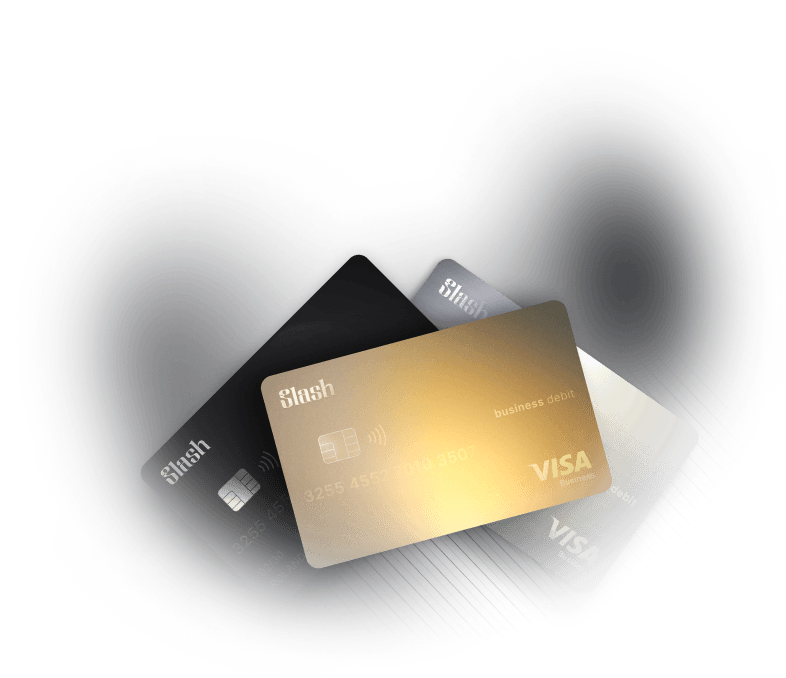

What is a corporate credit card?
A corporate card is intended for large or well-established companies, often with high annual revenue, multiple departments, and a significant volume of recurring business expenses. Many corporate cards do not require a personal guarantee. Instead, issuers may pursue repayment directly from the business; generally, large companies are often considered reliable enough to underwrite without an individual guarantor.
Corporate cards are best for companies that need centralized control over numerous monthly transactions across multiple cards. Corporate cards, like the Slash Visa® Platinum Card, include granular controls like customizable spending limits, department-level permissions, automated expense tracking, and policy enforcement. Platforms such as Slash may also integrate with accounting systems or ERP platforms like QuickBooks and Xero, Oracle NetSuite, or Sage, enabling finance teams to streamline reconciliation and automate reporting across all cardholders and maintain unified expense data with all your financial systems.
Corporate cards can also generate rewards through cashback, point redemption, statement credits, or travel perks. Slash's corporate charge card offers up to 2% cash back from company spending, an industry-leading rate that can deliver substantial value for high-volume spenders.
What is a business credit card?
A business credit card for small business use often works best for sole proprietors and companies in earlier growth stages. Business cards vary widely in features, rewards, and underwriting criteria, yet they typically fall into a few common categories, including:
- Secured credit cards: Intended for businesses with little or no credit history. These require an upfront cash deposit (usually equal to the card's credit limit) and usually offer limited spending controls, basic reporting, and modest rewards. They're often used as a stepping stone until a business qualifies for unsecured credit.
- Purchasing cards (P-cards): P-cards are designed to streamline procurement and operational spending. They allow designated employees to make authorized business purchases without going through a full purchase order or reimbursement process.
- Travel and expense (T&E) cards: Tailored for employees who travel regularly for work. These cards may include elevated travel rewards, rental car or baggage insurance, enhanced travel booking protection, and integrations with T&E management platforms.
- Introductory offer credit cards:Some cards offer a 0% APR period after opening a new account, which typically spans the first 12-15 months. These offers can give businesses more flexibility to finance large upfront purchases and pay down balances over longer periods of time without incurring high interest fees. Some cards also enable balance transfers, which consolidate existing debt from previously held cards.
- Co-branded credit cards: Issued in partnership with major brands or retailers (e.g. Amazon, Costco, Staples), these cards provide targeted rewards on category-specific spending and can benefit businesses with predictable purchasing patterns.
Business credit cards can be easier to qualify for than corporate cards; issuers often evaluate factors such as the owner's credit score or payment history rather than requiring substantial capitalization or revenue. However, unlike corporate cards, many business cards can require a personal guarantee, meaning the owner is personally liable for paying off any accumulated debt if the business cannot repay it. This is often called a business credit card personal guarantee.
Business credit cards also come in additional forms beyond the examples above. Depending on the type you choose, benefits can include cash back rewards, introductory offers, travel perks, targeted expense management tools, and more. For many small business owners, a business credit card serves as an early foundation for handling expenses, supporting employee spending, and improving cash flow before transitioning to more advanced corporate card platforms down the line.
What are the differences between corporate and business cards?
To better understand how corporate and business credit cards compare, it's helpful to look at their key differences side-by-side. One important disclaimer: the distinctions below represent general patterns across the industry; certain cards may not fit the label of 'corporate card' or 'business card' perfectly. Still, these general characteristics help define what companies can expect from each card type and how it will support their expense management, transaction oversight, and compliance needs. Below, we break down the areas where the business and corporate cards diverge:
Eligibility and approval requirements
Corporate credit cards generally require higher annual revenue, stronger capitalization, and an established business credit history to qualify for approval. When a credit report is required for a corporate card, it typically relies on a business credit score, which is a separate measure of creditworthiness tracked by credit bureaus like Dun & Bradstreet (D&B). Business credit cards, however, generally support a wider range of credit scores and companies with limited initial capital. As a result, issuers often base approval on the owner's debt repayment history, cash on hand, and personal credit scores from agencies like FICO or Experian rather than the business's current financials.
Liability structure
While there are exceptions, corporate credit cards are more likely than business cards to forgo a personal guarantee requirement. Many of the strongest no-personal-guarantee options come from modern fintech providers like Slash. This structure can protect owners from personal liability in the event of insolvency. In contrast, business credit cards commonly require the applicant to agree to a personal guarantee, particularly when the business has limited credit history. This is frequently referred to as a business credit card personal guarantee.
Spend controls and cardholder oversight
Corporate cards generally offer granular spend controls like role-based permissions, budgeting tools, automated approval chains, and category-based restrictions. Business cards can provide some basic tools, such as spending limits per employee, but tend to rely more on manual oversight. Modern platforms such as Slash enhance card control with features like real-time transaction monitoring, team-level card grouping, unlimited virtual cards for business, and more.
Expense management and accounting workflows
Corporate cards are designed for companies that need sophisticated expense management, multi-entity support, and ERP or accounting integrations. Corporate platforms may automate receipt collection, categorize transactions based on accounting rules, and sync expenses directly into tools like QuickBooks or Xero. Business cards often can rely on third-party apps to handle more complex tasks, which may make month-end close more time-consuming.
Spending limits and financial flexibility
Corporate cards can access very high credit limits, often far exceeding what business credit cards provide. These limits may adjust dynamically based on account activity, revenue, cash flow, and overall financial performance. Charge cards, such as the Slash Visa Platinum Card, typically have no preset spending limit at all, allowing for even larger purchases than many high-limit credit cards. Business credit cards, by contrast, generally offer more modest limits that are tied to the owner's personal credit history and risk profile.


Choosing the right card for your business
Selecting a corporate or business credit card at the wrong stage of growth can create a mismatch between your needs and the card's capabilities. Some corporate cards may be too complex for small business owners who only need basic spend management. Conversely, a traditional business credit card may fall short for medium-to-large companies, limiting controls, creating operational headaches, and making it harder to manage expenses across multiple employees or departments. When weighing a corporate credit card vs business credit card, timing matters.
Choosing the right type of card at the right time, however, can yield substantial benefits. Rewards, integrations, spend controls, and fraud protections can improve financial operations at any stage. Some modern providers, like Slash, even bridge the gap between the two categories. The Slash Visa Platinum Card is one such example, offering enterprise-grade capabilities that are powerful enough to scale with growing teams yet simple enough for small businesses to implement.
Here are some things to consider when searching for the right card type for your business:
Compare different reward structures
Rewards play a major role when comparing different card options. Most cards fall into one of two structures: cash back or points-based rewards. Points programs often include category-based multipliers (for example, elevated earnings on software subscriptions), but their actual value may fall short if your spending doesn't align with those categories. It's important to calculate the true value of your points based on your company's spending patterns to avoid diluted earnings.
Flat-rate cash back tends to offer more dependable value. The Slash Visa Platinum Card earns up to 2% cash back on company purchases, removing restrictive categories and complicated redemption tables from the equation altogether.
Evaluate your spend volume and cash flow
Companies that regularly manage cross-border payments, high-cost software subscriptions, vendor invoices, or multiple recurring purchases may benefit from a corporate card with stronger controls and more versatile infrastructure. A provider like Slash can simplify complex payment operations with one-time-use virtual cards for specific purchases, dedicated cards for vendor subscriptions, and tighter oversight of spending across teams. If you're just using cards to manage day-to-day spending and the occasional subscription fee, a simpler business card may be a better fit.
Consider your team size and cardholder needs
Small businesses with only a few employees may not need to issue multiple cards; managing one or two physical cards tied to specific purchasing categories can reduce exposure to unauthorized spending and minimize administrative overhead. Larger companies overseeing spending across several teams may require broader card distribution, automated approval workflows, and real-time expense reporting. A platform like Slash enables granular role-based permissions, unlimited virtual cards issuance, and detailed oversight tools that can help finance teams better manage expenses at scale.
Determine your preference: charge card vs credit card
Both credit cards and charge cards extend a line of credit that enables short-term borrowing, but they work slightly differently. A credit card enables you to make minimum payments on your balance at the end of each billing cycle; the remainder can be rolled over into the next cycle with added interest based on your credit card's APR.
A charge card, like the Slash card, requires payment in full at the end of each billing cycle and does not come with a preset spending limit. This structure can accommodate larger upfront purchases and adapt more easily to shifting business needs. While both credit cards and charge cards earn rewards and enable flexible spending, the choice between the two ultimately depends on which payment model best aligns with your company's cash flow strategy.
Review approval requirements
Corporate credit cards typically evaluate business credit scores and company financials when determining eligibility. Approval may depend on factors such as annual revenue, cash flow, and overall financial performance. Business cards tend to use more varied underwriting criteria, which can make them more accessible to early-stage companies and small business owners. These distinctions can also inform any charge card vs credit card decision.
Corporate cards built for complete control with Slash
Even though corporate credit cards and business credit cards have clear distinctions, some modern solutions blur the lines, bringing the accessibility of small business cards together with the infrastructure and spending power of corporate options. The Slash Visa Platinum Card is one of those rare go-betweens, delivering enterprise-grade capabilities without sacrificing accessibility for growing teams or small business owners.
A corporate card can give you more than just a way to pay. It can also open the door to a far more capable financial toolkit. The card supports day-to-day spend management; in tandem with the complete Slash platform, you can leverage global payment rails, automated approval workflows, real-time cash flow analytics, and more. In addition to our high-cashback corporate card, Slash provides:
- Diverse payment options: Move funds across nearly any rail, including global ACH, domestic and international wires to 160+ countries via SWIFT, and real-time networks like RTP and FedNow.
- Native cryptocurrency support: Access built-in on/off ramps for USD-pegged stablecoins such as USDC and USDT. Blockchain transfers bypass traditional processing and FX fees, offering faster, lower-cost alternatives for global vendor payments.⁴
- Flexible financing: Draw from the Slash Working Capital line of credit whenever your business needs short-term liquidity, with convenient 30-, 60-, or 90-day repayment terms tailored to your cash flow.⁵
- High-yield treasury accounts: Put idle cash to work with integrated money market funds from BlackRock and Morgan Stanley, earning up to 4.1% annualized yield.⁶
- Invoicing tools: Rolling out now, Slash will let you generate invoices directly from your saved contacts, track payment statuses with clearer oversight, send customized reminders, and accept cutting-edge payment methods, including crypto.
Slash is a complete financial command center built for control, automation, and scalability. If your business wants a corporate card that outperforms traditional issuers and supports your growth at every stage, visit slash.com today.
Apply in less than 10 minutes today
Join the 10,000+ businesses already using Slash.
Frequently asked questions
Does a corporate card hurt your credit?
Misuse of a corporate credit card can affect both your personal and business credit scores, depending on the circumstances. High balances, recurring missed payments, or excessive debt can hurt your credit regardless of card type. No-personal-guarantee options like the Slash card can reduce your exposure to personal credit risk, but irresponsible usage may still create negative marks on your business credit report.
The Best Corporate Cards for Employee Expense Tracking in 2026

Is corporate credit the same as business credit?
Not exactly. While the terms are sometimes used interchangeably, corporate credit typically refers to the credit profile of larger companies with established financial histories and strong business credit scores. Business credit, on the other hand, often applies to small and mid-sized companies where underwriting may rely more heavily on personal credit scores and feature lower revenue and capitalization requirements.
Can corporate cards have virtual and physical cards?
Yes. Some corporate card providers, including Slash, let businesses issue an unlimited number of both physical and virtual cards for business. Using separate card accounts can help protect sensitive financial information and give finance teams clearer visibility into spend activity.
Virtual Business Credit Cards: How They Work + Best Options for 2026


