

Business Credit Cards with No Personal Guarantee: How to Apply and Choose the Right One
You've poured everything into your small business. The office is set up, inventory is stocked, marketing is underway, and payroll is covered. You put your early expenses on a business credit card, relying on its flexibility just until revenue catches up. But despite your best efforts, sales begin to stall. Within a few months, the company edges toward insolvency.
Then, you realize: the card you used required a personal guarantee, making you personally liable for the remaining balance. No longer is this downturn just a temporary rough patch; it's a serious threat to your financial future.
That's where we come in — to help you compare the best no personal guarantee business credit cards and identify high-quality business cards that do not require a personal guarantee.
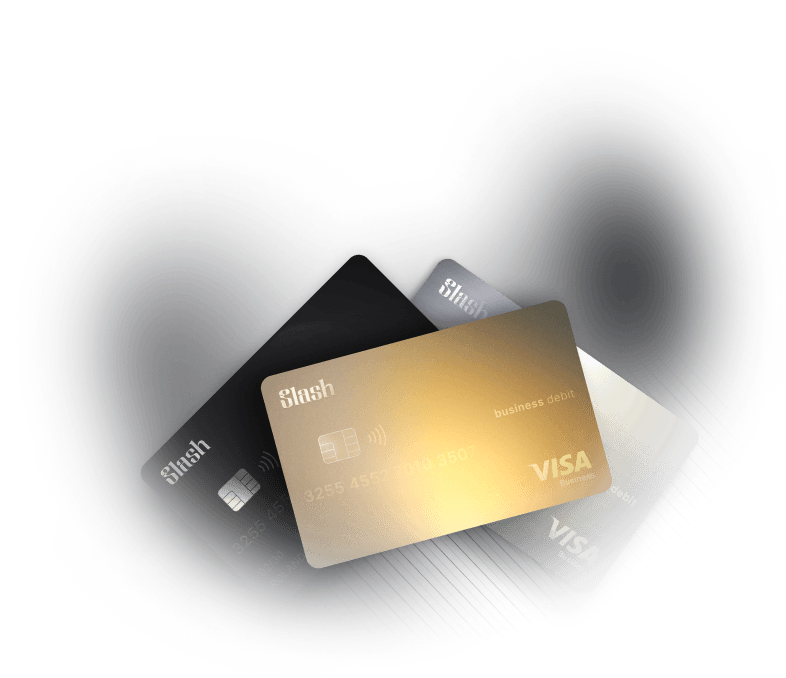
Modern financial platforms, like Slash, are increasingly offering corporate credit cards that do not require personal guarantees, giving upstart companies access to credit without putting the founder's personal assets at risk.¹ With cards that feature up to 2% cash back rewards, no preset spending limit, and real-time expense controls, Slash enables business owners to minimize personal exposure while they strengthen their company's financial infrastructure.
If you're also considering how to apply for business credit cards broadly, this guide provides context for both traditional and no personal guarantee options. For teams specifically seeking a business credit card no personal guarantee required, these EIN-based options can be compelling alternatives to founder-backed credit.
What is a personal guarantee, and how does it work?
A personal guarantee is a legal commitment in which an individual, typically a business owner or partner, agrees to personally repay a debt if their business cannot. There are two main types of personal guarantees:
- Limited personal guarantee: Sets a maximum dollar amount that a lender can collect from you if you default on your debt.
- Unlimited personal guarantee: The lender can recover the entire outstanding balance, in addition to any interest or fees.
Lenders rely on personal guarantees to reduce risk when extending credit or business loans to companies that may not yet have strong credit scores, sufficient revenue, or well-established business credit history. Consequently, personal guarantees are especially common among credit cards intended for new or small businesses hoping to build credit.
When applying for a business credit card with a personal guarantee, applicants are typically required to provide a Social Security Number (SSN) for a credit check, an estimate of personal income, an Employer Identification Number (EIN), and recent financial statements. These details help issuers assess creditworthiness and determine underwriting terms. For applicants with low or limited credit, they may be forced into using a secured credit card, which is a starter product with a low credit limit, required cash deposit, and conventionally modest rewards.
How to apply for a business credit card with no personal guarantee
Not sure how to apply for business credit cards without a personal guarantee? Here's how these applications differ from traditional ones.
Applying for a business card with no personal guarantee generally involves a different evaluation process than traditional business credit card applications. Instead of assessing the owner's personal credit score, lenders focus on the company's current financial position, looking at metrics like revenue and available capital. Businesses will need to supply an EIN, recent bank statements, revenue information, and basic incorporation details to help determine creditworthiness. Oftentimes, SSNs and credit checks may not be required. In some cases, providers position this as a business credit card no personal credit check because underwriting relies mainly on business cash flow and balances. Strong liquidity or investor backing can increase approval likelihood and support higher initial credit limits. In short, you can apply for a business credit card without personal guarantee by demonstrating healthy cash flow and bank balances — effectively, to apply for business credit card without personal guarantee, emphasize consistent revenue and strong deposits.
The Slash Visa Platinum Card is one example of a no-personal-guarantee card that uses a more accessible application process. As an EIN-only business credit card, steady cash flow may be sufficient for small businesses to qualify, while well-funded startups can obtain high spending limits, even with a limited credit history. This can be especially helpful for teams seeking startup business credit cards with no credit. Cardholders can earn up to 2% cash back on spending, a rate significantly higher than many secured cards.


What are some business credit cards that do not require a personal guarantee?
Below are some of the most popular no personal-guarantee cards available to businesses today. You'll notice that none of these options are issued by legacy banks; fintech providers have been far more willing to extend corporate credit cards without requiring a personal guarantee.
Each of these offerings are charge cards rather than credit cards (business charge cards no personal guarantee), meaning balances cannot be carried over into future billing cycles. Instead, cards must be paid in full each period. This structure keeps personal finances more insulated from business volatility. Plus, each card can grant access to modern expense management tools that go far beyond what many institutional banking apps provide. Here are our top picks for the best no personal guarantee business credit cards:
Slash Visa® Platinum Card
The Slash card is accessible to businesses of all sizes and offers an industry-leading cash back rate of up to 2%. The application is EIN-only, making it an EIN-only business credit card, so your SSN is never required for a personal credit check. Through the Slash dashboard, you can issue unlimited physical and virtual cards, set custom spending rules for teams or individuals, and configure per-card limits to maintain tighter control over business finances.
Unlike many competitors, Slash also supports broader financial operations — including virtual business bank accounts, stablecoin transfers, working capital financing, and multi-entity management— making it one of the most complete no personal guarantee options available.⁴﹐⁵
Card details:
- Annual fee: $0--$25 per month for Pro
- APR: N/A (charge card)
- Foreign transaction fee: 1%
Additional features:
- Earn up to 2% cash back
- No preset credit limits
- Sync with Slash's expense management software
- Integrate transaction data into QuickBooks
- Issue unlimited virtual and physical cards
Ramp Visa® Card
Ramp offers modern spend controls and automation tools, but it comes with several limitations. Ramp caps its cash back rewards at 1.5%, and its per-user, per-month pricing can become costly for larger teams. Ramp also may require significant cash reserves to qualify and tend to favor established businesses with strong financial history.
Card details:
- Annual fee: $0--$15 per user per month
- APR: N/A (charge card)
- Foreign transaction fee: Up to 3%
Additional features:
- Earn up to 1.5% cash back
- No preset credit limits
- Sync with Ramp expense management tools
- Issue physical and virtual cards
Drawbacks: Ramp often requires $25,000--$100,000+ cash on hand; their application requirements may be better suited for well-established companies; and per-user pricing can scale costs rapidly
BILL Divvy Visa® Card
BILL is primarily an accounts payable and accounts receivable management platform. Compared to other options, it is limited in business banking capabilities, lacking features like virtual accounts, treasury tools, and the broader payment rails offered by competitors like Slash. Furthermore, BILL's rewards program is points-based, meaning category multipliers may not align with your company's typical spending patterns, and the effective cash value may be lower than a straightforward cash back card.
Card details:
- Annual fee: $0-$89 per user per month
- APR: N/A (charge card)
- Foreign exchange fees: Up to 3%
Features:
- Points-based rewards with spend category multipliers
- Sync with BILL's Spend & Expense services; connectivity with BILL's AP/AR software requires a paid subscription
- Issue unlimited physical and virtual cards
Drawbacks: BILL has comparatively low effective cash value when redeeming points for cash back, and their card does not pair with a full-stack business banking platform
Brex Card from Mastercard®
The Brex Card is designed for funded startups and high-growth companies, offering spend controls, travel perks, and automated workflows. However, access is limited; Brex has tightened eligibility criteria to primarily support venture-backed businesses, with requisites like $1m+ annual revenue. Plus, Brex's rewards program can be overly complicated, and many businesses may find it difficult to match the effective cash value of a flat-rate cash back rewards card.
Card details:
- Annual fee: $0-$12 per user per month
- APR: N/A (charge card)
- Foreign transaction fee: Up to 3%
Additional features:
- Point-based rewards with spend category multipliers
- No preset credit limit
- Sync with Brex expense management software
- Statement credits and travel booking deals through Brex rewards
Drawbacks: Not accessible to most small businesses (high capitalization or revenue requirements), and comparatively low effective cash value when redeeming points for cash back
Rippling Visa® Card
Rippling offers a corporate card integrated into its broader HR, payroll, and IT management platform. While convenient for companies already using Rippling, the card itself is not a standout financial product compared to dedicated spend platforms. Rewards and limits depend heavily on cash flow, and the financial feature set lags behind more finance-focused competitors like Slash.
Card details:
- Annual fee: Included as part of Rippling platform pricing
- APR: N/A (charge card)
- Foreign transaction fee: 0%
Additional features:
- Earn up to 1.75% cash back
- Unlimited virtual and physical cards
- HR and payroll system integration
- Real-time policy enforcement
Drawbacks: Best when synced with Rippling's broader HR/payroll ecosystem; lower cash back rewards than competitors; and does not pair with a full-stack business banking platform
Choosing the right no personal guarantee business credit card for your business
Selecting the right no personal guarantee business card ultimately depends on your company's financial profile, growth stage, and operational needs. While many fintech providers offer modern spend controls and simplified onboarding, not all cards offer the same level of functionality, rewards, or accessibility. Evaluating the right criteria can help ensure you choose a card that supports both short-term spending needs and long-term business development.
Here are some key factors to consider when comparing business credit cards with no personal guarantee:
- Eligibility requirements: High minimum cash reserves and revenue expectations can limit access for some new and small businesses. If you specifically need business credit cards for new businesses without personal guarantee or business credit cards for startups without a personal guarantee, look closely at minimum balance and revenue thresholds.
- Rewards structure: Straightforward cash back can provide a higher effective cash value than category-based points systems.
- Platform capabilities: Look for cards that have highly customizable spend controls, like card-grouping or configurable spend limits. Platforms that integrate with third-party accounting systems can streamline expense reporting, reconciliation, and more.
- Banking infrastructure: Choosing a card that pairs directly with a business banking platform enables you to see your entire financial infrastructure side-by-side. The best banking platforms feature wide-ranging payment methods (global ACH, domestic and international wires, and real-time networks), virtual accounts, high-yield treasury, and cutting-edge payment capabilities with stablecoin support.⁶
- Cost and fees: Typically, business cards have foreign transaction fees between 1-3%. Of the no-personal-guarantee cards on our list, Slash and Rippling feature the lowest FX fees. Additionally, watch out for services with a subscription model that charges per user, per month; for larger teams, subscription costs can quickly build up.
Get started with a no personal guarantee business card from Slash
Slash's EIN-only card application is accessible to businesses of all sizes, and the platform that comes with the card is also designed to support organizations at any stage. Slash provides a centralized dashboard to send, track, and manage company expenses. It can streamline daily operations by automating tedious tasks like expense categorization, compliance checks, and accounting syncs.
The Slash platform features capabilities that many competitors don't match, such as stablecoin payments and industry-leading cash back. Below are some additional products and features from Slash that can improve the accuracy, speed, and sophistication of your finance processes:
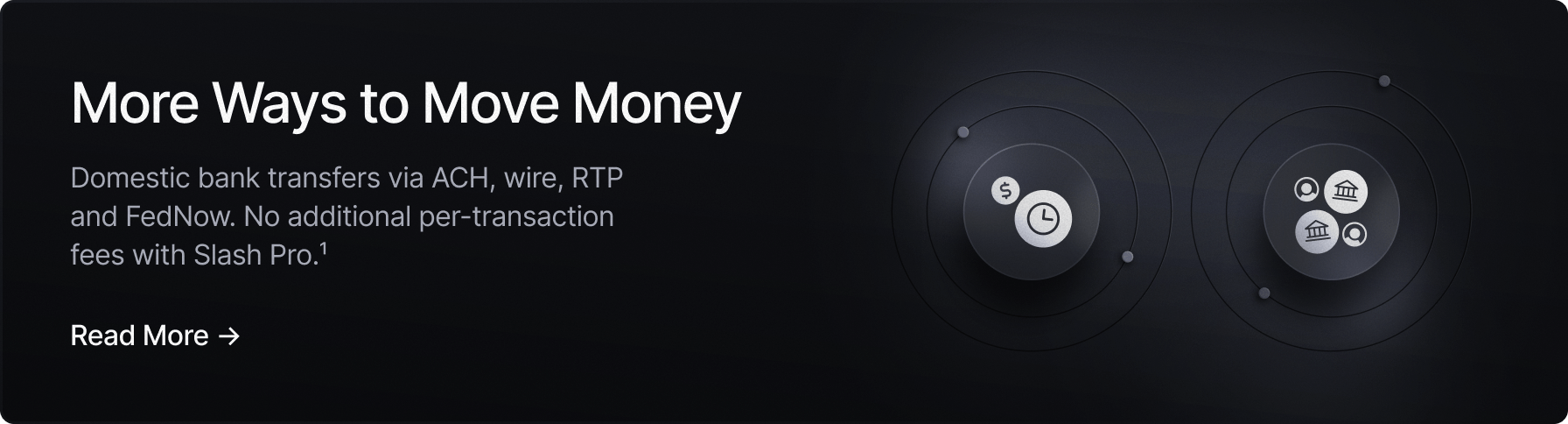
- Smarter business banking: Create dedicated virtual business bank accounts to segment funds, improve cash flow visibility, and streamline internal budgeting. Slash supports a wide range of payment options, including corporate card spend, global ACH, domestic and international wires to 160+ countries via SWIFT, and real-time rails like RTP and FedNow.
- Multi-entity support: As your organization expands, Slash scales with you. Multi-entity capabilities allow you to manage all your subsidiaries, business units, and storefronts from a single dashboard, unifying financial visibility across your entire organization.
- Seamless integrations: Slash syncs expense data with QuickBooks to streamline reconciliation, reporting, tax preparation, and more. Or, you can connect your Slash accounts to third-party financial services with Plaid and pull data from Xero for improved accounting synchronization.
- Native crypto support: Slash enables direct in-app transfers of stablecoins. With built-in on/off ramps, you can convert company funds into USDT, USDC, and send blockchain-based payments, reducing fees and processing delays. This capability can be especially useful for businesses with frequent cross-border transactions.
- Slash Working Capital: Slash's tailored line of credit provides fast access to short-term liquidity. Draw funds as needed and choose repayment terms of 30, 60, or 90 days to support growth, smooth cash flow, or cover unexpected expenses.
Unlock better rewards and streamline financial operations without the personal risk. Get started today at slash.com.
Apply in less than 10 minutes today
Join the 10,000+ businesses already using Slash.
Frequently asked questions
How quickly can a business get approved for a no-personal-guarantee card?
Approval timelines for business credit cards vary by provider. Slash's EIN-only application can be completed in minutes, and approvals are often faster than traditional issuers since eligibility doesn't rely on a credit report.
What are the Easiest Business Credit Cards to Get? Top Picks and How to Get Yours Approved

Can these cards be used internationally?
Most business credit cards can be used internationally, though foreign transaction fees and regional support vary by issuer. The Slash card can be used internationally anywhere Visa is accepted with a low, 1% FX fee. Global card issuance will also be available to Slash users in early 2026.
Mastering Cross-Border Fees: Essential Insights and Strategies for Reducing International Payment Fees
Do these cards offer virtual card options?
Many modern business card platforms provide virtual cards for added flexibility and security. Slash allows businesses to issue unlimited virtual cards directly from its dashboard.
Read more from us


