

The Best Secured Business Credit Cards for 2026
First-time founders without established revenue or a lengthy credit history may have a tough time applying for a traditional business credit card. Most credit card issuers perform a credit check before lending a business card, and those with poor credit may be denied. Fortunately, there’s a type of business card that welcomes new business owners without a lengthy credit history: the secured credit card.
A secured credit card is a type of business credit card that allows individuals with a limited credit history to improve their credit through consistent business expenses. While this form of card may not be a long-term operating tool, it can be a great launching point for new business owners who need to manage their finances while establishing a business credit score.
In this guide, we’ll discuss how secured business credit cards work, what their benefits and tradeoffs are, when business owners should consider them, and what the top secured credit card options are in 2026. We’ll also take a look at the Slash Visa® Platinum Card, a charge card for growing startups that comes with high cash back and an all-in-one business banking dashboard.¹
What is a Secured Business Credit Card?
Unsecured business credit cards come with a revolving credit line that can be paid off over time. A good credit history is required in order to obtain most unsecured cards, as card issuers often entrust account holders with debt that gets carried for several payment periods. Secured credit cards, on the other hand, come with low credit limits that must be paid off each month. These cards are “secured” because users put up a refundable security deposit as collateral, which protects issuers from unpaid debt.
Secured cards exist to reduce issuer risk while enabling early-stage founders to establish a credit history and build up their business credit score. A personal credit score is completely separate from a business credit score – a business score is often measured in a range from 1-100 (with the bureaus Dun & Bradstreet and Experian), while a personal score’s range is 300-850 (when using FICO or VantageScore). Business scores reflect a company’s credit history and financial track record, which is why it’s common for first-time founders to start with a secured card that allows them to build their score from scratch.
Due to the fact that secured credit cards usually carry low limits and don’t allow for long-term payments, they’re best used for early business credit formation with the goal of accessing an unsecured card in the future.
How Do Secured Business Credit Cards Work?
Secured credit cards function similarly to unsecured cards in everyday use, as purchases are made with borrowed funds you’ll pay back on a later date. In most other ways, though, these two cards are quite different. Here are some of the features that define secured cards:
Credit Line Set by Deposit
Your security deposit typically determines your credit limit; if you put down $1,000 as a deposit, you’re telling the lender that you have roughly that much financial flexibility, and your monthly limit will be $1,000. Credit line minimums on secured credit cards can be as low as $200, while their maximum limits usually aren’t above $5,000. The Slash Visa® Platinum Card is an example of a card that instead bases your spending power on your actual financial performance, which means there’s no deposit required and no preset credit limit.
It’s important to note that your deposit is reserved for the secured card issuer in cases of missed payments, and cannot be used at any point to pay the balance.
APR and the Bill Cycle
Many secured credit cards can come with an annual percentage rate (APR) of 25-30%, which is higher than the typical 15-25% found among unsecured cards. This is because individuals applying for secured cards usually have a poor or nonexistent credit history, and higher rates protect lenders against the risk a bad credit history entails. Some secured cards also carry an annual fee, which further factors into the APR.
Since APR can be high and your own security deposit is being used as collateral, it’s very important to deliver your minimum payment each month. Missing even one bill cycle can incur fees and cost you part of your security deposit.
Business Credit Bureaus
To build a personal credit score, card issuers report data like your payment history and balances to three major credit bureaus: Experian, Equifax, and TransUnion. The bureau that helps develop your business credit score, on the other hand, is Dun & Bradstreet.
Dun & Bradstreet is a business data and analytics company that collects and maintains commercial information for global companies of all sizes. They assign a DUNS (Data Universal Numbering System) number to newly formed entities that serves as a consistent reference point, allowing payment history and commercial activity to be tracked over time. Dun & Bradstreet uses this data to begin building a business credit report for your company, and a credit card issuer may later request that report to help decide whether to lend you a card.
Building Business Credit
When developing brand new credit on a secured card, your monthly activity makes a strong impact on your business credit score. Using your card consistently and paying the balance off in full each month demonstrates financial stability that positively affects your credit.
The initial formation of your startup also factors heavily into building business credit. Establishing a legal entity, obtaining a tax ID, applying for a DUNS number, opening a dedicated business account, and working with vendors helps build credit from day one. Creating your company is the first step to developing a good business credit score, and responsible spending is the second step.
Key Benefits and Drawbacks of Secured Business Credit Cards
Since secured credit cards aren't meant for long-term use, they come with both benefits and drawbacks for small business owners. Let’s compare the advantages and disadvantages of using a secured card:
Benefits
- Easier approval: Most secure credit card companies are open to accepting individuals with a poor or nonexistent business credit history.
- Building business credit: Establishing an entity and paying off monthly balances result in the quick growth of your business credit score.
- Access to extra capital: A secure credit card allows you to access funds to pay recurring expenses from vendors or software subscriptions, making it easier to stay cash solvent.
- Transition into unsecured cards: After a period of positive credit behavior, some credit card companies will actually refund your cash deposit and transition your secured credit card into an unsecured one.
Drawbacks
- Security deposit: To set a credit line, you have to put your own money up as collateral, which usually won’t be returned to you for at least a year.
- Lower credit limit: Typical business credit cards offer credit limits of $20,000+, while you won’t often find a limit above $5,000 with a secured credit card.
- Higher APR: With APRs as high as 30%, it becomes very costly to miss monthly payments on a secured card.
- Poor fit for growing teams: Low spend limits and tight payment deadlines make it difficult for startups to scale quickly.
Top Secured Business Credit Cards by Business Use Case
There’s a variety of factors first-time founders can prioritize when evaluating secured credit cards. For that reason, we’ll position the following cards as good fits for different business use cases. Here’s how some popular secured cards may match your needs:
For Low Deposit Entry: Capital One Quicksilver Secured Cash Rewards Credit Card
With a security deposit minimum of only $200 and no annual fee, the Capital One Quicksilver Secured Cash Rewards Credit Card is a good choice for small business owners seeking easy entry into a business account. While it does come with a relatively high APR of 29.99%, this card offers automatic credit monitoring tools and 1.5% cash back on every purchase.
A maximum credit limit of $3,000 means the Capital One Quicksilver Secured Cash Rewards card isn’t necessarily meant for scaling businesses, but will work well with solopreneurs and small startups.
For Higher Limits: Valley Visa® Secured Business Credit Card
If you’re looking for high credit limits, the Valley Visa Secured Business Credit Card may be the right fit. It offers a spending limit as high as $25,000 – provided you’re able to put down a security deposit of 110% that amount. New cardholders can take advantage of a 0% APR for their first six months, followed by a variable APR between 14.95-26.25%. One downside of the Valley Visa® Secured card is the 4% fee charged with balance transfers, which can be costly when dealing with large sums of money.
For Low APR: First Tech Platinum Secured Mastercard
The First Tech Platinum Secured Mastercard offers an APR of only 12.50%-18.00%, putting it in a range of its own against its competitors. It comes with no balance transfer fee or annual fee, and your security deposit can be anything from $500-$25,000.
Here’s the catch: this card isn’t a dedicated business card, and thus, it won’t actually improve your business credit score. Solo proprietors and certain small business owners can still get a lot out of what the First Tech Platinum Secured Mastercard has to offer, but if you’re looking to use a secured card to build up your business credit score, this card isn’t for you.
For Upgrading to Unsecured: Bank of America Business Advantage Unlimited Cash Rewards Mastercard Secured
The Bank of America Business Advantage Unlimited Cash Rewards Mastercard Secured card is a solid option for those looking to transition to an unsecured credit card. Bank of America periodically reviews your account to determine whether you’re eligible for an unsecured card, and with responsible spending, you can make that jump in less than a year. The card also comes with 1.5% cash back and a 26.99% variable APR, but it does require a minimum security deposit of $1,000.
Best Alternative: The Slash Visa® Platinum Card
Without a good business credit score, early-stage founders are typically limited to secured credit cards with high APRs and inconvenient security deposit requirements. The Slash Visa® Platinum Card is the exception.
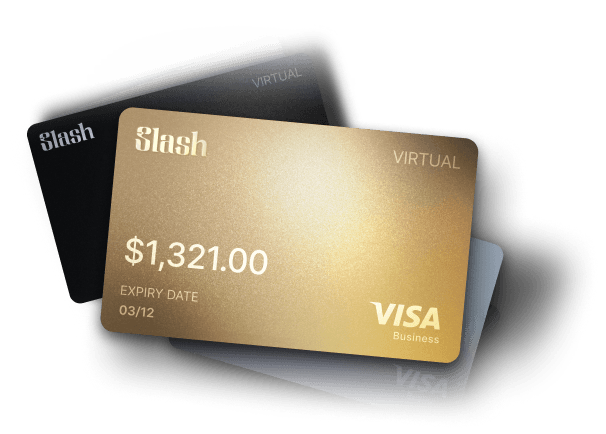
The Slash Card is a charge card that offers up to 2% cash back, granular spend controls, and automated expense management – all without requiring a business credit history or charging APR interest. Instead, we use alternative underwriting models that check to make sure your business financials are strong and your revenue flow is consistent. This means that you can immediately start earning cash back on your Slash Card without the need to put a security deposit down as collateral.
Unlike some of the secured credit card lenders we’ve discussed, Slash doesn’t report your financial data to major credit bureaus or transition you to an unsecured card down the line. That’s because our business banking platform is built to scale with your company for the long term. We offer unlimited physical and virtual cards, as well as a number of tools that can help both small businesses and busy corporations.
How to Choose a Secured Business Credit Card
Here’s a short checklist reviewing the factors you should evaluate and the questions you should ask yourself:
- Deposit size and flexibility: How low is the minimum security deposit, how high is the maximum deposit, and does my deposit determine my credit limit?
- Rewards and perks: Are there cash back options, and are they tied to expense categories? Does the card come with other perks such as special tools or low fees?
- APR range: What’s the APR, and how likely will my business be to carry a balance for an extended time?
- Transitioning to an unsecured card: Can this issuer upgrade me to an unsecured card, and how quickly do I want this to occur?
You’ll want to review all these elements against your business plans, revenue projections, and spending patterns. A low APR secured card that transitions to an unsecured card may fit a business that intends to scale quickly, while a high APR secured card with good cash back may fit a founder that wants to keep their expenses tight and efficient.
Ready to Apply For a Business Card? Try Slash
The Slash Visa Platinum® Card combines the long-term viability and perks of an unsecured credit card with the easy access of a secured card. Our configurable spending limits, category restrictions, and real-time payment monitoring enable you to take charge of your business’ cash flow and reconcile each transaction at the end of the month. The Slash card also comes with up to 2% cash back on every business purchase, earning you extra capital that you can reinvest as your company scales.
Each card – physical and virtual – is accessible on the dashboard of our business banking platform. This platform comes with a full suite of financial tools, including:
- Diverse payment options: Businesses that work internationally can send funds through the rails that best fit their needs: global ACH, domestic wires, international SWIFT transfers to 180+ countries, and real-time domestic networks like RTP and FedNow.
- Native crypto support: Hold, send, and receive stablecoins such as USDC and USDT across eight supported blockchains.⁴ You can also convert company funds into stablecoins using built-in on/off ramps.
- Accounting integrations: Slash connects cleanly with QuickBooks Online to streamline your month-end close. All card and payment data can be exported for easier reconciliation and more accurate, real-time expense reporting.
- Dedicated dashboards: Our platform offers a dashboard that syncs with your cards, displaying full visibility into balances, transactions, and card activity in real time. It also categorizes your expenses automatically, saving you time and helping with tax compliance.
If you’re a first-time founder without a strong business credit score, there are a number of secured credit cards you can take advantage of. For an alternative with powerful tools that can assist your company as it scales, try the Slash Visa® Platinum Card.
Apply in less than 10 minutes today
Join the 10,000+ businesses already using Slash.
Frequently asked questions
Do secured business credit cards require a personal guarantee?
Personal guarantees are legal agreements that hold the founder personally liable for business card debt if their company can't pay. While the card is in the business's name, the personal guarantee puts the founder themselves on the hook for any debt. Most secured business credit cards do require a personal guarantee.
Business Credit Cards With No Personal Guarantee: Top Picks and How To Apply

Do credit cards send your financial data to all three major business credit bureaus?
Each business credit card sends data to different combinations of credit bureaus. For example, the Bank of America Business Advantage Unlimited Cash Rewards Mastercard Secured credit card sends data to Equifax, Experian, and another commonly used bureau named Dun & Bradstreet.
The Best Business Credit Cards of 2026

On a secured credit card, is your credit line ever different from your security deposit?
Your credit line is almost always a 1:1 ratio to your cash deposit, but there are occasional exceptions. The Valley Visa® card we discussed above is an example of a way creditors can disconnect these numbers, as it requires your security deposit to be 110% of your credit limit.
Read more from us


