

Are Business Credit Card Rewards Taxable? The Complete 2026 Tax Guide
If you have been using a company card for a while, you have probably wondered whether the cash back or points you earn on your card need to show up on your business’s tax return. It’s a reasonable concern, and one that can confuse more business owners than it should.
You may assume rewards are either completely tax-free or treated as income like any other revenue. Neither assumption is quite accurate. The IRS usually treats business credit card rewards as a reduction in the purchase price rather than income. That sounds straightforward, but it only tells part of the story. The tax treatment really depends on how the rewards are earned and how they’re paid out. Rewards from regular spending are usually handled one way, but sign-up bonuses, points issued without a purchase requirement, and other perks come with some additional considerations.
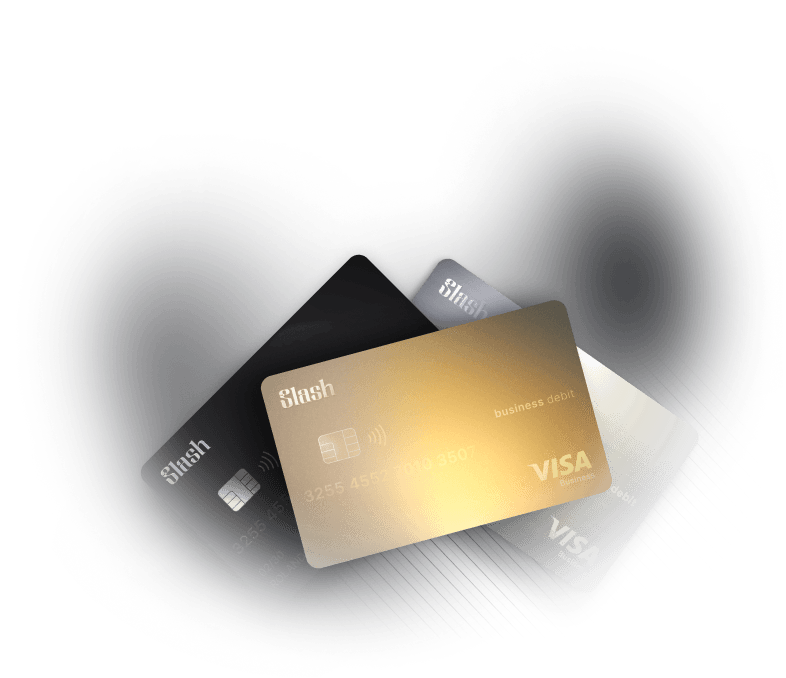
If you are earning up to 2% cash back with the Slash Visa Platinum card, this guide explains how those rewards should be treated during tax season.¹ We’ll also cover how different types of rewards are categorized, how each type affects your expense deductions, when 1099 reporting applies, and how to keep your records organized so nothing becomes an issue at filing time.

This guide is for educational purposes. The information presented should not be considered legal or tax advice. Tax rules can vary based on your business structure, state of operation, and individual circumstances. For guidance specific to your situation, consult a qualified tax professional or accountant.
The IRS framework: Rebates vs. taxable income
When it comes to business credit card rewards, the IRS does not start with “points” or “cash back” as special categories. Instead, it asks a more fundamental question: is this a rebate on a purchase, or is it income?
At a high level, the IRS treats almost everything you receive as income. Under IRC § 61, gross income includes “all income from whatever source derived.” If money hits your business and makes you better off, the default assumption is that it is taxable.
Rebates are different because the IRS treats them as purchase price adjustments, not income. A rebate, in tax terms, is a payment that directly reduces the price you paid for goods or services. In the IRS’s view, you did not actually get richer—you simply paid less.
For example, say you bought office equipment for $5,000 and later received $100 back as a discount from the seller. You are not $100 richer. Instead, your equipment just cost $4,900. Rewards from credit card spending are treated the same way, which is why cash back or points earned from routine business credit card spending are generally treated as non-taxable rebates. They reduce your cost rather than create new income.
However, the IRS sees things differently when a reward is not directly connected to a purchase. If your card issuer pays a $500 bonus just for opening an account (with no spending requirement), the payment doesn’t reduce the price of anything. In that case, the bonus fits squarely within the IRS’s definition of income, meaning it’s taxable.
Which business credit card rewards are non-taxable?
Whenever you earn cashback or points from spending on your business credit card, those rewards are considered purchase price adjustments, which falls under the category of a rebate. This is true of:
- Cash back earned as a percentage of purchases
- Points or miles earned based on spending
- Tiered rewards tied directly to transaction volume
- Statement credits, gift cards, or travel redemption credits
Credit card issuers do not issue a Form 1099-MISC for spending-based rewards, and you do not report them as income. However, they indirectly affect your taxes by reducing the net cost of your deductible expenses.
How rebates reduce your business expense deductions
Purchase rebates lower your deductions because you can only deduct what the expense actually cost you. If your business charges $2,000 in office expenses to a Slash card and earns $40 in cash back, your true out-of-pocket cost is $1,960. You would not report the $40 as income, but you also should not deduct the full $2,000. Your deduction should reflect the net amount after rewards.
But what if the expense is not deducted all at once? Larger purchases, such as equipment or startup costs, are often depreciated or amortized over time. Even in that case, the same principle applies. If you buy $15,000 worth of equipment and earn $300 in cashback tied to that purchase, your tax basis becomes $14,700. From there, you recover the lower amount through amortization or depreciation as usual.
Another point of confusion is whether this principle changes if you revolve your balance or use a “pay over time” feature on your business credit card. In short, it doesn’t. For tax purposes, the expense is generally treated as incurred when the card issuer pays the vendor, even if you carry over the balance. The financing is treated separately from the purchase itself. Any interest you incur is generally deductible as a separate business interest expense, but it does not change the basis of the original purchase or how rewards reduce that cost.
Ultimately, spending-based rewards reduce the cost of what you bought. Whether that cost is deducted immediately or recovered over time, the starting point is always the net amount after rewards.
See the ROI behind your spend
Use this calculator to understand impact, then manage and track it all in Slash.


Which business credit card rewards are taxable?
A good rule of thumb: if the reward lowers the price of something you bought, it is usually a rebate. If the reward shows up as standalone money, it is likely income. There are several types of credit card rewards that can be treated as business income, including:
- Sign-up bonuses that do not require spending
- Referral bonuses
- Promotional cash incentives
Not every single bonus payout should be automatically treated as income. If a bonus requires you to spend a certain amount to qualify, it is generally viewed as tied to that spending and treated like a rebate. But if you receive a bonus simply for opening the account with no spending requirement, the bonus is more likely to be treated as taxable income.
How to report rewards bonuses on your business taxes
If a reward is taxable, you report it the same way you would report other business income. Card issuers often will send you a Form 1099-MISC if your taxable bonuses total $600 or more during the year. If you receive a 1099-MISC, include that amount in your gross business income. Even if you do not receive a form, the income is still technically reportable.
Unlike spending-based rewards, these bonuses do not reduce a specific expense category. They stand on their own as income. Keeping them categorized separately in your accounting system can help make tax season much cleaner and helps you avoid surprises when a 1099 arrives.
What business owners often get wrong about card rewards on their taxes
Most reporting mistakes with card rewards come down to small details. The overall framework is fairly simple, but applying every consideration correctly in your books can be error-prone. Here are some issues that may cause uncertainty:
- Reporting cash back and points as income: Spending-based cash back and points are generally not taxable income. Yet some businesses record every reward as “other income” in their books. Rewards earned from spending should be reflected in your deductions, not included with your income.
- Failing to report certain bonuses: If you receive a standalone sign-up bonus, referral payment, or promotional cash incentive, that amount is typically taxable. If you receive a Form 1099-MISC or 1099-NEC from your card provider, that means the IRS has a record of that income and it should be reported.
- Treating a bonus tied to spending as income: If a welcome bonus requires you to spend a certain amount to qualify, it is generally treated like other spending-based rewards. You may mistakenly report the bonus as income like a standalone incentive, but the tax treatment changes if there’s a minimum spending threshold to earn the reward.
- Assigning a dollar amount to rewards points: Points and miles often fluctuate in value, especially when redeemed for travel. Some business owners may try to assign a dollar value to unredeemed points and report them as income, which is unnecessary. The tax impact of points is realized only after they’re redeemed, which should be reflected in your deductions, not income.
Maximize the value of your business card rewards with Slash
Here’s the bottom line: the up to 2% cash back earned with the Slash card is treated as a rebate, not income. So no, it is not a secret new revenue stream. It just feels like one.
The Slash Visa Platinum card is a corporate charge card designed for businesses that want to earn more while staying in control. Issue unlimited virtual cards in seconds, set granular spending limits by employee or team, and earn industry-leading cash back across all your company’s day-to-day expenses. Every transaction syncs automatically into the Slash dashboard, giving you real-time visibility into spending trends and cash flow, with easy exports to QuickBooks when it is time to close the books.
Beyond our high-cashback corporate card, Slash also offers:
- Diverse payment methods: Send global ACH and wire transfers to 180+ and move money domestically near-instantly through RTP and FedNow rails. Pro users pay no additional per-transaction fees.
- High-yield treasury: Earn 3.83% APY on your idle cash through treasury accounts backed by Morgan Stanley and BlackRock money market funds.⁶
- Native cryptocurrency support: Hold, send, and receive USD-pegged stablecoins such as USDC and USDT across eight supported blockchains for faster, lower-cost global payments.⁴
- Separate virtual accounts: Create unlimited accounts to separate funds by project, department, or client, with unified visibility across balances.
- Accounting integrations: Sync transactions directly with QuickBooks to keep records updated automatically.
Apply in less than 10 minutes today
Join the 10,000+ businesses already using Slash.
Frequently asked questions
Do I need to report $50 in cash back rewards on my business taxes?
If the cash back was earned from spending, it is generally treated as a rebate, not income, so you do not report it as revenue or income. However, it effectively reduces the amount of business expenses you can deduct.
How Does Cash Back Work? Choosing the Right Credit Card Rewards Program

Do credit card rewards points equal a dollar amount on business taxes?
No. Unredeemed points are not assigned a taxable dollar value. For spending-based rewards, the tax impact is tied to the underlying purchase or the actual value received upon redemption, not an estimated point balance.
How to Choose the Right Corporate Credit Card Program
Can I deduct business expenses at full value if I earn cash back on them?
Usually, no. Because cash back reduces your true cost, your deduction should reflect the net amount after rewards.
Is a business credit card signup bonus different from personal card bonuses for tax purposes?
The rules are generally the same for both. What matters is whether the bonus is tied to spending, not whether the card is business or personal. The key difference is that with a business card, rewards can affect deductible expenses and reported income, which gives them more direct tax implications than personal rewards.
Unlimited Cashback vs. Tiered Rewards: Key Differences Explained
Read more from us


