

What is a Negative Card Balance?
We’ve probably all checked our business credit card’s balance just to discover a higher number than we were expecting. It’s easy to forget about past expenses, especially when multiple employees have access to the business account. But have you ever logged in to your credit card account and seen a negative number?
Having a negative balance on your business card doesn’t necessarily mean you’ve done something wrong, or that there’s a cause for concern. If you’re running a small business with tight capital, it can actually be a good thing, as your card issuer is now the one that owes you money. However, negative balances that go unchecked can create accounting and tax compliance issues for businesses with more complex operations.
There are a few things that can cause a negative balance, including unexpected refunds and overpayments. In this guide, we’ll discuss all the ways this can occur, what to do to resolve it, and how to make sure it doesn’t keep happening. We’ll also take a look at the Slash Visa® Platinum Card, which can help you control your team’s spending while earning up to 2% cash back on eligible purchases.¹ Because the Slash Card is a charge card, you won’t have to worry about surprise credit balances, high or low.


Key Takeaways:
- A negative balance means your card issuer owes you money, usually because a refund, a statement credit, or an overpayment landed when your balance was already near zero.
- Negative balances won't hurt your account standing or your credit score, and in some cases they nudge your credit utilization into the range that helps rather than hurts.
- You don't have to act quickly on negative balances, since the money either gets spent down by normal purchases or gets automatically refunded once you hit your issuer's time limit, which usually falls somewhere between six months and two years.
- If you want the cash back sooner, you can request a refund by check or direct deposit. The Truth in Lending Act gives your issuer seven business days to process it.
- While a negative balance can be a lucky break, it can also be a symptom of disorganized finances.
What Are Common Causes of Negative Card Balances?
As you use your business credit card, you accrue owed payments over time, reflecting in a positive dollar amount on your balance sheet. A negative dollar amount means the opposite has happened, and your credit card issuer is supposed to give money back to you. Here are some ways this can end up happening:
- Refund: If a purchase was made on the credit card, and the item was returned for a full refund, that dollar amount would flow back into your account as a negative charge.
- Statement credit: Some credit cards that offer cash back reward it to you as a statement credit, which then takes owed money off your balance.
- Overpaying your balance: Depending on how you time your credit card repayments or if you set a consistent amount to pay off, you could end up paying your issuer more than you owe, resulting in a negative balance.
- Disputed charge reversal or fraud: If one of your employees used the company credit card to make an unauthorized purchase, you may have disputed the charge and had the funds return to your account.
- Fee reversals: Some credit card companies are forgiving to their longtime customers, and will waive a late fee if it’s a first time offense. If you paid off a balance with a hefty late fee and got it reversed, it will result in a negative dollar amount.
It’s important to note that these scenarios don’t automatically result in a negative balance. Your business card balance will only reach the negative if the money you received back from your card issuer was a larger amount than your current balance. You may have gone through several instances of refunds and disputed charges that you never thought twice about because it simply lowered your positive balance.
Business-specific scenarios
Let’s examine a few real-world examples of ways business credit cards can end up with a negative balance:
- Several employees were planning on flying to a networking event, but one person’s flight was cancelled due to weather. Their ticket gets refunded, and that money returns to the account.
- You’ve been paying your credit debt off with an $1000 payment each month, and you finally catch up to what you owe without realizing it, putting $1000 on an $800 balance. Thus, you now have a -$200 balance.
- You spend a lot of money in a month and accrue lots of cashback rewards, then pay off the bill before the rewards officially arrive. If your issuer pays it back as a statement credit, you’ll have some funds in the negative.
- An employee makes an unauthorized restaurant purchase of $90 on a weekend, and you dispute the charge. Whenever the dispute is processed, that dollar amount will come back.
What Happens When You Have a Negative Balance?
Carrying a negative balance doesn’t affect your account standing in any way, nor does it hurt your credit score. If anything, there’s a chance it helps your credit score. Many credit card companies track your credit utilization ratio, which measures how much of your allotted credit you use each cycle. Using 10-30% of your monthly limit usually has a positive impact on your credit score, and you’ll be close to that range after resolving your negative balance.
That said, you shouldn’t go out of your way to obtain negative balances in order to then pay them off. Paying your regular balance off at a normal rate will have the same effect.
How long can you keep a negative balance?
Holding on to a negative balance for an extended period is acceptable, if you so choose. The dollar amount will simply remain as a statement credit, and isn’t affected by interest in one direction or the other. The length of time you’re actually allowed to hold on to a negative balance varies based on your card issuer’s policies. It tends to be between six months and two years, but it’s smart to check with them first. If and when you do reach that limit, an automatic refund trigger will occur and the money will be returned to your account, setting your balance back to $0.00.
That being said, there aren’t too many good reasons your business credit card should remain in the negatives for an extended period of time. Unless your account received a massive refund from a purchase that fell through, a consistently negative balance is a sign your account is either dormant or going completely unwatched. If you’re looking for a better way to keep track of your company’s finances, you might want to look into a corporate charge card.
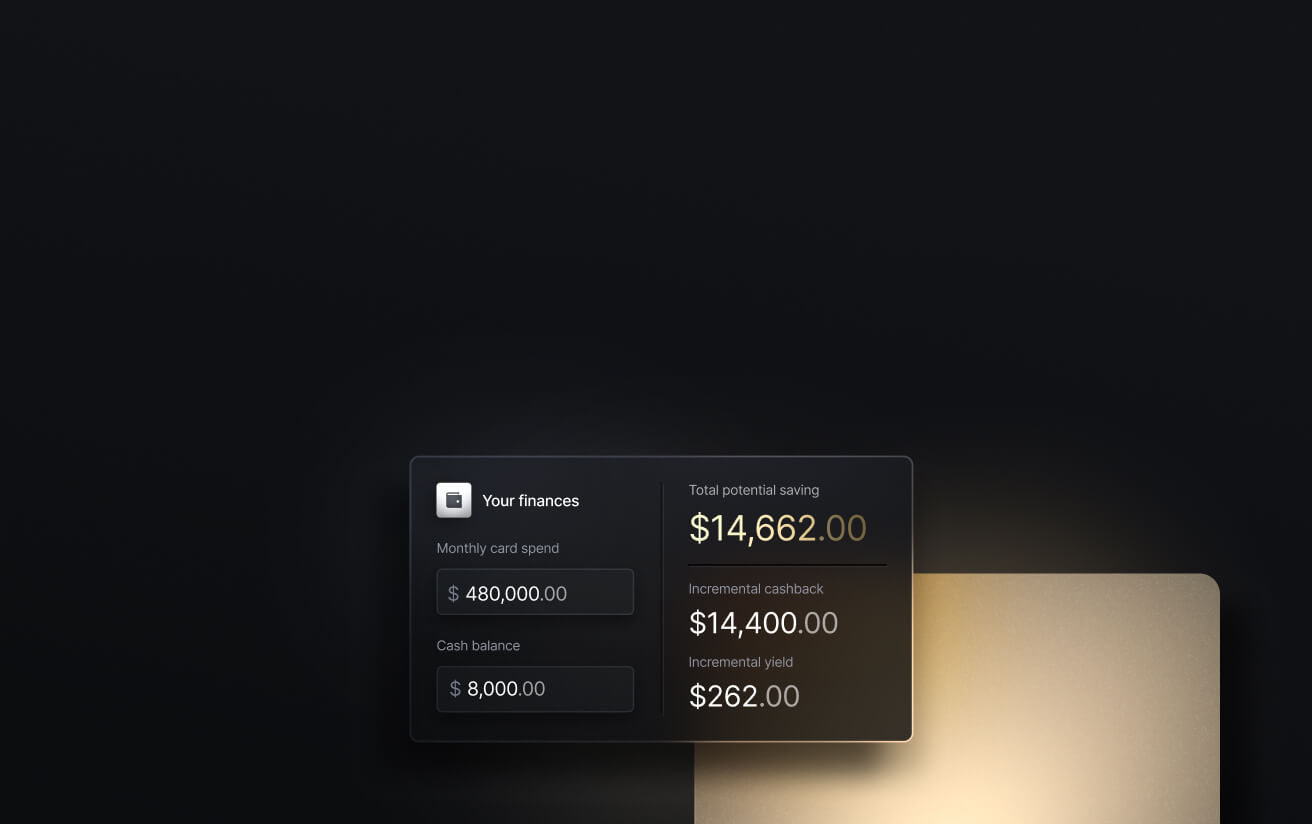
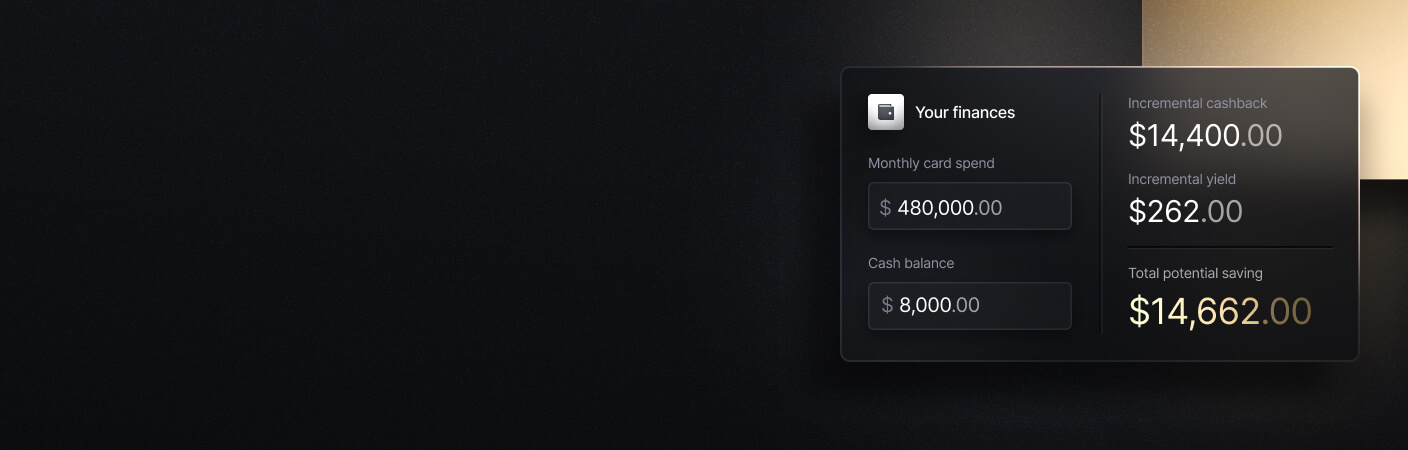
See the ROI behind your spend
Use this calculator to understand impact, then manage and track it all in Slash.
Credit Cards vs Charge Cards: Key Differences
Credit cards and charge cards both let you borrow funds to make purchases. Their main difference is in their required pay cycles: credit cards allow users to accrue interest and debt over long periods of time, while charge cards don’t carry interest and must be paid in full at the end of each month.
With a charge card, you’re unlikely to hold on to a negative balance for an extended period, since balances are typically reviewed and resolved within a month or less. This means you get to avoid the growing debt and unchecked purchases that can come with standard credit cards. However, since you’ll be paying off the total each month, accidental double payments or overpayments can still occur, resulting in negative balances.
Charge cards also encourage better expense tracking, as a month’s worth of charges are reviewed each cycle and negative charges can be spotted right away. All purchases made with the Slash Visa® Platinum Card flow directly into Slash’s business banking dashboard, which unlocks a deeper level of transaction monitoring. Additionally, admins can set granular spend controls in order to make sure budgets are adhered to and fraudulent spending is more difficult.
Credit cards do give account holders more flexibility, as the lack of a monthly deadline enables a company with tight margins to use extra capital. However, an overreliance on credit cards often leads to debt, high interest, and poor credit scores. The choice between the two cards can depend on what financial situation your company is in and how you’d like to manage your spending.
Ways to Resolve a Negative Card Balance
If you’re like most people, you may want to wipe that negative card balance away in order to return your account to normal. When you’re ready to resolve your negative balance, there are a few different avenues you can take:
- Keep spending like you usually would. If you have a -$50 balance and spend $160 on a team dinner, your balance will go back up to $110.
- Request a refund check or direct deposit in order to return the money to your account right away. To do this, contact customer service with your account details and spending history in hand. Under the Truth in Lending Act, issuers must process your request in seven business days.
- If you have a balance transfer credit card, you can actually take your negative balance and transfer it over to a card with a positive balance. Sending a -$100 balance over to a card with a $400 balance would result in a $300 balance.
- You can just be patient! As mentioned before, an automatic refund will eventually be triggered to send the money back to you.
Best Practices for Preventing Negative Balances
Consistently reviewing and tracking your cash flow is the smartest way to avoid dealing with negative balances. Review statements before making returns, set up account alerts for credits received, and check your current balance before making large, flat payments. If you really want to make sure that number never dips below zero, you may decide to consistently hold a high balance, though we wouldn’t advise you to do that.
While you can’t necessarily avoid refunds and cancelled purchases, you can mitigate some of the issues that create negative balances. The Slash Card provides granular controls and spending guardrails, ensuring that employee purchases can only come from approved vendors. This means that unauthorized purchases are rare, and those that do occur can be immediately addressed thanks to real-time transaction monitoring.
Business Account Management Tips
It’s difficult to keep your credit card balance in check when you’re not managing your spending efficiently from the top down. A good start is to establish a robust expense tracking system. Slash’s expense tracking software supports automated data entry and expense categorization so you can accurately track company-wide expenses. Our tools also allow you to track ACH, wire, and crypto payments as they process.⁴
In addition, you’ll be able to stop accidental overpayments before they happen with our system’s real-time balance monitoring. When it comes to refunds and item returns, on the other hand, establishing clear procedures and emphasizing communication among your team members is your best bet.
Impact on Business Cash Flow and Accounting
Negative balances may upset your accounting department more than they upset you as the account holder. Because a negative balance is money you're owed rather than money you have, it can mess up the math behind forecasting. Forecasts that treat a credit balance as available cash may overstate your position, and forecasts that ignore it entirely miss an asset.
Card accounts normally sit on your books as liabilities, since a balance represents money you owe. When that balance goes negative, it technically becomes an asset, because it’s money “you have”. Most charts of accounts have no natural home for that, which means accounting departments have to make a decision. They can either leave it as a negative liability, which is simple but looks odd on a balance sheet, or reclassify it as a receivable, which requires someone to reverse the entry once it resolves. Neither breaks any rules, so it’s up to you and your team.
If this isn’t addressed ahead of time, you might run into problems at month-end close. Someone reconciling the card statement against the ledger may see the negative figure, assume it's an error, and adjust it. Now you have a discrepancy that has to be traced back and explained. To keep your bases covered, it’s smart to document what caused a negative credit balance, note whether you intend to spend it down or request a refund, and apply the same treatment every period so your reconciliations stay consistent.
When to Contact Your Card Issuer
Most negative balances are nothing to worry about, but there are occasions when that negative number could actually be a reason to contact your credit card company. Bugs do happen on occasion – if you have a balance of approximately -$4,294,967,295, that’s probably an integer overflow glitch, not an unbelievable employee spending spree.
You may also reach out to them if a disputed payment hasn’t been returned in around 7 business days, as that either means your dispute was denied or something went wrong on their end. It’s best to familiarize yourself with their refund policies before ending up in a situation with disputes and extra statement credits.
Take Control of Business Expenses With the Slash Visa® Platinum Card
Negative balances typically only apply to credit cards, since balances are flexible and may be held in the positive or negative for months at a time. Charge cards like the Slash Visa® Platinum Card, require balances to be paid in full and set to $0 at the end of each business day. This means you can not only disregard worries about negative balances, but get better control of your team’s spending overall.
The Slash Visa® Platinum Card is built to help monitor employee spending habits, fight against fraud, and earn cash back at the same time. With configurable spending limits, category restrictions, and real-time payment monitoring enable you to take charge of your business’ cash flow and reconcile each transaction at the end of the month. The Slash Card also earns users up to 2% cash back on eligible business purchases, giving you extra capital that you can reinvest as your company scales.
Slash admins can issue unlimited virtual cards, meaning remote teams can spend money and acquire inventory just as easily as those in the office. Each card – physical and virtual – is trackable on the Slash dashboard. Overall, our platform comes with a full suite of financial tools, including:
- Accounting automation: Transactions are categorized as they post and carry the accounting dimensions your ledger expects: GL codes, departments, classes, locations, subsidiaries, vendor details, cardholder memos, and receipts. Set your mapping rules once in Slash instead of reclassifying spend at close.
- Working capital financing: Access short-term financing with flexible 30-, 60-, or 90-day repayment terms to help bridge cash flow gaps.⁵
- AI-powered finance: Our platform comes with Twin, a built-in AI agent that can be prompted with natural language to complete complex tasks. Users can ask it to create cards, pay invoices, review your cash flow, and much more.
- High-yield treasury: Earn up to 3.85% annualized yield on idle funds with money market investments from BlackRock and Morgan Stanley, managed directly within your Slash account.⁶
- Accounting & ERP integrations: Sync transaction data with QuickBooks Online, Xero, NetSuite, or Sage Intacct to streamline reconciliation, reporting, and month-end close.
The Slash business banking platform can completely transform your organization’s financial toolset. Addressing your unexpected negative card balance is only the start.
Apply in less than 10 minutes today
Join the 10,000+ businesses already using Slash.
Frequently Asked Questions
Can I get cash from a negative card balance?
When your card company refunds you your money, it can come in the form of a check, which you can quickly cash. That’s the closest you can get to receiving cold, hard cash from point A to point B.
Cash Management Solutions Explained: Features and Benefits

Can I get more negative charges while I already have a negative balance?
Yes, as there isn’t a limit. If you happen to have a business trip where several employees’ flights were cancelled separately, for example, you could end up with a balance of -$256, -$742, -$1,024, and so on as different refunds arrive.
What if my business needs the money immediately?
Get in touch with your card company as soon as possible and ask them if there are options available for expedited refunds or alternative solutions. That being said, your company must be in a curious financial situation if it needs their negative balance to be turned into cash immediately while simultaneously having a full line of credit to work with.
Apply for Business Loan with EIN: Steps & Options

Read more from us


