

How does a fintech business account work?
Quick answer: A fintech business account is a sound choice for most startups and online businesses if it holds your deposits at an FDIC-insured partner bank and you understand how that coverage works. A traditional bank is the better fit if you deposit cash often, want in-person service, or need a local lending relationship. Both types of provider must verify your business and can review, restrict, or close accounts for compliance reasons. Many businesses use both: a fintech for daily operations and a traditional bank for cash deposits or loans.
A fintech business account is a bank account you open and manage through a technology company's app. The fintech is not a bank. It partners with one or more FDIC-insured banks that hold your deposits. The fintech builds the software: onboarding, cards, payments, approvals, and reporting. The partner bank remains responsible for regulatory compliance.
Nonbank companies, including fintechs, are never FDIC-insured themselves. Funds you send to a fintech become eligible for deposit insurance only after they are deposited at an FDIC-insured bank and other conditions are met.
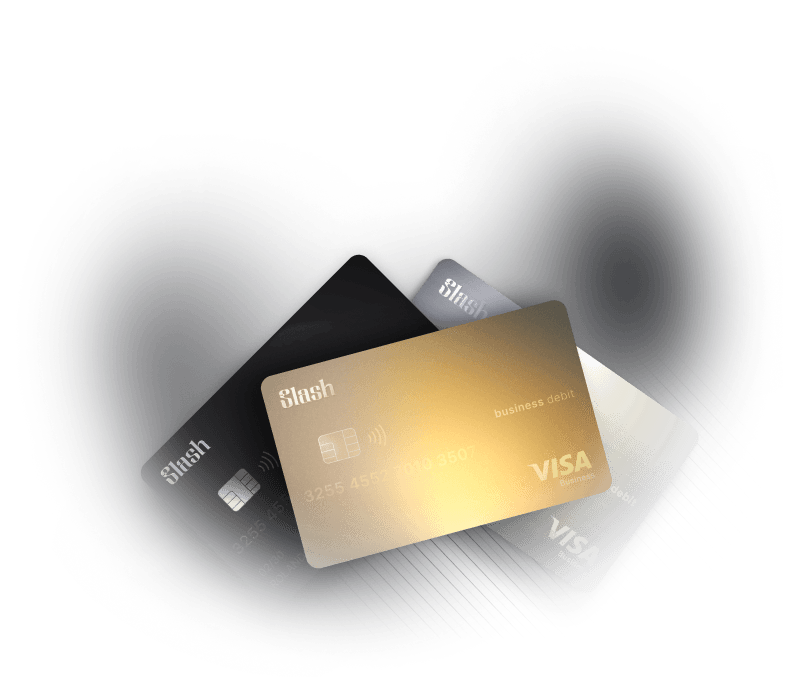
Slash works this way: its banking partner is Column N.A., Member FDIC. Before you open any fintech account, find the partner bank's name in the disclosures and confirm it is insured using the FDIC's BankFind tool.

How does a traditional business bank account work?
With a traditional bank, you open the account directly with the bank. The bank holds your deposits and usually has branches and ATMs. You can deposit cash, bring in checks, and talk to a banker in person. Many banks also offer business loans and lines of credit, and an existing deposit relationship can help when you apply.
The FDIC says opening an account directly with an insured bank is still the easiest way for most people to be confident their money is protected. The trade-off is that business software, such as spend controls or accounting sync, is often more limited or sold separately.
Are fintech business bank accounts FDIC insured?
They can be, through the partner bank. Coverage works in three layers.
Standard coverage: $250,000
The FDIC insures deposits up to $250,000 per depositor, per FDIC-insured bank, for each account ownership category. A company's deposits generally fall in the corporation, partnership, and unincorporated association category. All of your deposits in the same category at the same bank are added together.
Deposits placed through a third party are combined with deposits you hold directly at the same bank. If your fintech's partner bank is also your traditional bank, both accounts count toward one $250,000 limit.
Extended coverage through sweep networks
Some fintechs and banks offer coverage above $250,000 through deposit sweep or reciprocal networks. The FDIC describes these as networks of banks that place funds at other participating banks so depositors can receive insurance coverage for the entire amount of their deposits. Your balance is split into portions held at different insured banks, and each portion counts toward that bank's $250,000 limit.
Slash offers FDIC insurance up to $200M through Column N.A.'s insured cash sweep network. For limits by provider and ways to protect larger balances, see our FDIC insurance guide.
Pass-through coverage depends on conditions
When a third party places your money at a bank, insurance 'passes through' to you only if the FDIC's requirements are met. The FDIC checks them when a bank fails:
- You own the funds. The money must actually belong to you, not to the company that placed it.
- The bank's records show the arrangement. Account records must indicate that the account is held in a custodial or agency capacity, for example 'for the benefit of' customers.
- Ownership is traceable. Records must identify each owner and how much each one owns.
If these conditions are not met, the FDIC may insure the deposits as the third party's own money, up to $250,000 in total. That could leave customer funds uninsured.
Two more limits apply to every fintech. FDIC insurance covers the failure of an insured bank, not the insolvency or bankruptcy of the fintech, and recovering funds from a failed fintech can take time. The FDIC also notes that fintech app or website outages can temporarily block account access.
Fees and features: what do you actually get?
Fintech accounts usually compete on software. A typical fintech bundles checking, corporate cards, bill pay, invoicing, and accounting sync in one app. Traditional banks usually compete on breadth: branches, cash handling, treasury services, and lending.
Fees differ too. Some traditional business accounts charge a monthly maintenance fee that may be waived above a minimum balance. Many fintechs charge a flat plan fee or nothing, plus per-transaction fees for items like wires. Compare fees for the transactions you actually make.
As one example of the fintech model, Slash has a Free plan at $0 per month and a Pro plan at $25 per month, priced per entity with no per-user fees. Domestic wires cost $6 on Free and $0 on Pro. Both plans include unlimited virtual cards, bill pay with approval rules, invoicing, and integrations with QuickBooks Online, Xero, NetSuite, and Sage Intacct.
Can a fintech or a bank freeze your business account?
Yes. Any bank or fintech can review, restrict, or close an account for compliance reasons. This is not unique to fintechs.
FinCEN's Customer Due Diligence Rule requires banks to verify each business customer, verify its beneficial owners (anyone who owns 25% or more, plus one person who controls the company), understand the nature and purpose of the relationship, and monitor activity over time. That monitoring includes reporting suspicious transactions and, on a risk basis, keeping customer information up to date. Verifying a business this way is often called KYB, or know your business.
These rules apply when you bank through a fintech, too. The FDIC and other federal bank regulators have said that when a fintech handles tasks such as customer identification or due diligence for a partner bank, the bank remains responsible for compliance. So two companies may be looking at your account, and requests tend to arrive by email or in the app rather than from a banker you know.
How to avoid account surprises
- Keep business details current. Have formation documents, your EIN letter, and ownership information ready, and update your provider when owners, addresses, or your line of business change.
- Respond quickly to information requests. Answer fully and attach supporting documents such as invoices or contracts. Slow or partial answers can make a review last longer.
- Expect reviews when activity changes sharply. A large incoming wire, a new product line, or a sudden jump in volume can prompt questions. If you can, tell your provider before the change happens.
- Describe your business accurately at signup. Banks build a risk profile from what you tell them, so activity that does not match it is more likely to be questioned.
- Keep a second account. A backup account at another institution keeps payroll and vendor payments moving if one account is under review.
Which should you choose?
Choose based on how your business moves money.
- A fintech account fits if you operate mostly online, pay vendors by ACH, wire, and card, want built-in spend controls, and want transactions to sync to your accounting software.
- A traditional bank fits if you deposit cash regularly, want a banker you can meet, or plan to borrow from a bank that knows your deposit history.
- Both fit if you want modern payment tools and a branch relationship. Many businesses run a fintech operating account for daily payments and keep a traditional bank account for cash deposits, lending, or as a backup.
Whatever you choose, confirm which bank holds your deposits, understand how far its FDIC coverage extends, and keep your business information current.
Slash is a business banking and spend management platform for startups and small and mid-sized businesses. It offers business checking with FDIC insurance up to $200M through Column N.A.'s insured cash sweep network. It serves US-registered LLCs, C-Corps, and S-Corps; sole proprietorships are not eligible. Slash also offers working capital with 30-, 60-, or 90-day terms and no hard credit pull. Businesses that want in-person banking or long-term bank loans can pair it with a traditional bank.
Frequently Asked Questions
Is a fintech business account FDIC insured?
The fintech itself is never FDIC-insured. Your deposits can be insured if the fintech places them at an FDIC-insured partner bank and the FDIC's pass-through conditions are met: you own the funds, the bank's records show the custodial arrangement, and records identify each owner's share. Standard coverage is $250,000 per depositor, per bank, per ownership category.
Can a fintech freeze my business account?
Yes, and so can a traditional bank. Federal due diligence rules require banks to verify business customers and their owners, monitor activity, and keep information current, and a fintech's partner bank stays responsible for that compliance. Any account can be reviewed, restricted, or closed. Keeping documents current and answering information requests quickly lowers the risk of a long interruption.
Is Slash a bank?
No. Slash is a financial technology company that provides business banking and spend management. Its banking partner is Column N.A., Member FDIC, which also issues the Slash Visa Platinum Card. Slash offers FDIC insurance up to $200M through Column N.A.'s insured cash sweep network. As with any fintech, pass-through coverage depends on the FDIC's conditions being met.
What happens to my money if a fintech company goes out of business?
FDIC insurance covers the failure of an insured bank, not the failure of a fintech. If a fintech becomes insolvent, the FDIC says customers may recover some or all of their funds through a bankruptcy or insolvency process, but it can take time.
Is a fintech account safe for balances over $250,000?
It can be, if the provider uses a sweep or reciprocal network that spreads your balance across multiple FDIC-insured banks. Ask how much total coverage the program provides and which banks participate. If you also bank directly at one of those banks, the FDIC adds those deposits together in the same ownership category.
Can I have both a fintech account and a traditional bank account?
Yes. Many businesses use a fintech account for daily operations, cards, and bill pay, and a traditional bank for cash deposits, lending, or as a backup.
Apply in less than 10 minutes today
Join the 10,000+ businesses already using Slash.


