

6 Business Account Plans With Unlimited Virtual Cards, Priced Line by Line
A business account plan's monthly fee is only one part of its total cost. The real cost is that fee, plus the transfer fees on the payments you send every week, minus the cashback your card spend earns back. Slash, a business banking platform¹that issues unlimited virtual cards on both its $0 and $25 plans, pays up to 1.5% cashback on the $0 plan. Its $25 Pro plan raises that to up to 2% and charges $0 for domestic wires.
Cards carried more than three quarters of the 236.6 billion noncash payments made in the United States in 2024, counted by number, according to the Federal Reserve's 2025 triennial payments study released in July 2026. ACH carried almost three quarters of the value. For a business that puts its vendor spend on cards, card terms can outweigh the plan fee, as the worked example below shows.
Six plans are priced below on monthly fee, virtual card ceiling, cashback, the three transfer types that recur, and the deposit protection behind the account. Two are Slash's Free and Pro tiers, because the step between them shows how the math works.
Key Takeaways
- Once card spend passes about $5,000 a month, the extra half point of cashback on Slash Pro covers its $25 monthly fee before a single wire is counted, when both plans pay their top rates.
- Slash publishes unlimited virtual cards on its $0 and $25 plans, and Brex, Ramp and Mercury let a business issue as many as it needs on their free plans, so fees, cashback and entry conditions decide between them.
- Four of the six plans charge $0 a month and still differ on cashback, wire fees and who can qualify.
- Ramp requires $25,000 in cash in a US business bank account, which rules a business in or out before any fee is compared.
- Deposit protection runs from $3 million at Relay to $150 million at Slash, a gap that matters for any balance above $3 million.
What Does a Business Account Plan Actually Cost?
Four areas carry most of the cost difference between plans:
- Monthly fee. The published number, which across these six ranges from $0 to $120 at Relay Scale's list price.
- Transfer fees you actually pay. Domestic wires, same-day ACH and outgoing FedNow or RTP, multiplied by how many you send.
- Cashback forgone. The difference in rate applied to your real card spend, which grows with every dollar on cards while a plan fee stays flat.
- Entry conditions. Minimum cash, revenue and entity type, which decide whether the plan or its card is open to you at all.
Savings interest is a fifth line for a business holding reserves, and Relay pays 3.21% APY on Scale savings. The card ceiling matters if you give each vendor its own card, because a cap on virtual cards limits how finely you can track and stop spend.
1. Slash Free: $0 a Month With Unlimited Virtual Cards
Slash Free costs nothing and still issues unlimited virtual cards, each with its own spend limit, per-transaction ceiling and merchant restrictions. A business can give every vendor, subscription and contractor a separate card without paying for a tier. Physical cards are available for any team member, and card spend earns up to 1.5% cashback on the Free plan.
Bank transfers carry fees on Free. The pricing page lists same-day ACH at $1, domestic wires at $6 and international wires at $25. Deposits are FDIC-insured² up to $150 million through a sweep network of partner banks. More than 10,000 businesses use Slash, which raised a $100M Series C led by Ribbit Capital in April 2026.
"Slash's platform makes it easy to create virtual cards, support is fast and amazing, and the cashback helps cover our shipping and ad spend."
Jay-Jay P., Founder & CEO of Hike Footwear, on Slash's customers page
Free makes sense while card spend is modest and wires are occasional. With the Pro plan, cashback is elevated and domestic transfer fees are waived, which can make sense for high volume spending.


2. Slash Pro: $25 a Month for Up to 2% Cashback and $0 Domestic Wires
Pro costs $25 a month, or $300 a year. It raises cashback to up to 2% and takes same-day ACH, domestic wires and outgoing FedNow or RTP to $0. International wires stay at $25 on both plans.
Two lines pay for the step. The extra half point of cashback covers the fee by itself once card spend reaches about $5,000 a month, when both plans pay their top rates. A business that also sends domestic wires stops paying $6 for each one, so the step pays back sooner.
Nothing else changes. The Slash Visa® Platinum Card, its controls, unlimited virtual accounts, Bill Pay, invoicing, expense management and the same deposit coverage all come with Free too, so the choice rests on your card spend and transfer count.
3. Ramp Base Plan: A Fit for Businesses With $25,000 in the Bank and Firm Spend Policies
Ramp builds its controls into the card. A business can block categories and merchants before any spend happens, and cardholders send receipts by text or in the app. Ramp issues unlimited virtual and physical Visa cards with no personal credit check and no personal guarantee, according to NerdWallet's 2026 review.
The base plan is free, funded by interchange, with a paid tier above it. NerdWallet's June 2026 review puts rewards at 0% to 1.5%, set by Ramp for each customer, so you can't model the card line before you apply.
Ramp suits a US business that already holds a healthy balance and wants policy enforced on the card. It requires at least $25,000 in cash in a US business bank account and serves corporations, LLCs and limited partnerships whose operations are mostly in the US. A younger company below that balance has to wait.
4. Relay Scale: A Fit for Profit First Budgeting Across 50 Accounts
Relay is built for budgeting by account. Income splits across named checking accounts, each with its own routing and account number, the way the Profit First method works. Banking runs through Thread Bank, with FDIC sweep coverage up to $3 million.
Relay's pricing puts Starter at $0 and Grow at $30 a month. Scale lists at $120 and is currently $90 for a limited time. Starter and Grow allow up to 20 checking accounts and Scale allows 50, which is the main reason to pay for the top tier. On Scale, same-day ACH is free, domestic wires are $5 and SWIFT wires are $20.
Cashback comes from the Relay Visa Credit Card and rises with the plan, at 1% on Starter, 1.25% on Grow and 1.5% on Scale. Scale suits a business that budgets by account and has the revenue to qualify for that card. The card is invitation-only and excludes sole proprietorships. It requires $50,000 of average monthly revenue and 12 months in business, or $20,000 of average monthly revenue plus $25,000 held at Relay and 6 months in business. Relay also connects only to QuickBooks Online and Xero, so a company heading to NetSuite or Sage Intacct would outgrow it.
5. Brex Essentials: A Fit for Funded Startups That Send Wires Abroad
Brex keeps its own fees off both the plan and the transfers. Essentials costs $0 per user a month, and Brex charges no transaction fees on domestic wires, international wires, ACH or checks sent from the business account. Intermediary and recipient banks can still deduct their own fees, and a wire sent in another currency converts at an exchange rate Brex chooses.
A business can issue unlimited virtual corporate cards instantly, each with category, merchant and transaction controls. The card needs no personal guarantee, and Brex sets the limit from business financials such as revenue or cash raised. Funds swept through Vault are eligible for up to $6 million of FDIC coverage across 24 program banks.
Rewards are points, up to 7x by category, redeemable for cash back or credits, so the card's return depends on where you spend and how you redeem. Brex fits a venture-backed startup that wires money often, including abroad. It requires a US incorporation plus an equity investment, more than $500,000 a year in revenue, or a referral, which rules out a bootstrapped company under that revenue with no referral.
6. Mercury Free Plan: A Fit for Startups That Mostly Send USD Wires
Mercury's free plan charges no monthly fee and nothing for USD wires. Domestic wires cost nothing, and international USD wires are free with SHA coding. Mercury provides banking through partner banks, and deposits are eligible for up to $5 million in FDIC coverage through partner sweep networks.
The IO card pays a flat 1.5% with no annual fee. Mercury says a business can issue one physical card per team member and as many virtual cards as it needs.
Paid plans run $29.90 a month for Plus and $299 for Pro when billed annually, or $35 and $350 billed monthly. Mercury's FAQ says its enriched NetSuite automations need a paid plan starting at $35 a month, while its pricing page lists NetSuite categorizations under Pro. The free plan fits a startup on QuickBooks Online or Xero that pays in dollars, and a company moving to NetSuite should confirm the tier with Mercury first.
Side-by-Side Comparison
Provider figures reflect publicly published information as of September 2026 and are subject to change.
How to Choose a Plan Against Your Own Numbers
Take last month's activity and price each plan against it, in this order.
- Check the entry conditions first. A $25,000 cash floor, a revenue threshold or an entity rule takes a plan or its card off the list before any fee matters.
- Count the transfers you send. Wire and same-day ACH fees repeat every month, and four of these six plans charge nothing for a domestic wire.
- Multiply your card spend by the rate gap. Plan comparisons tend to leave this line out, and it grows with your business.
- Check the card ceiling against your vendor count. One card per vendor needs room for every vendor, and Relay's pages state its card limit more than one way, so confirm it with Relay.
- Size deposit protection to your balance. The gap between $3 million and $150 million only matters once you hold more than $3 million.
Take a business spending $60,000 a month on cards, or $720,000 a year, and sending eight domestic wires a month. On Slash Pro that spend returns up to $14,400 in cashback. The plan costs $300 a year and the wires cost $0, so Pro nets up to $14,100. Slash Free costs $0 and returns up to $10,800. Its 96 wires a year at $6 add $576, so Free nets up to $10,224.
Mercury's free plan returns $10,800 at 1.5% with no wire fees, if the IO limit covers that spend. Relay Scale returns $10,800 for a business that qualifies for its card. After $1,080 in plan fees at the limited-time price and $480 in wire fees, that nets $9,240, or $8,880 at the $120 list price. Ramp sets its rate after approval and Brex pays in points, so neither can be priced this way before you apply.
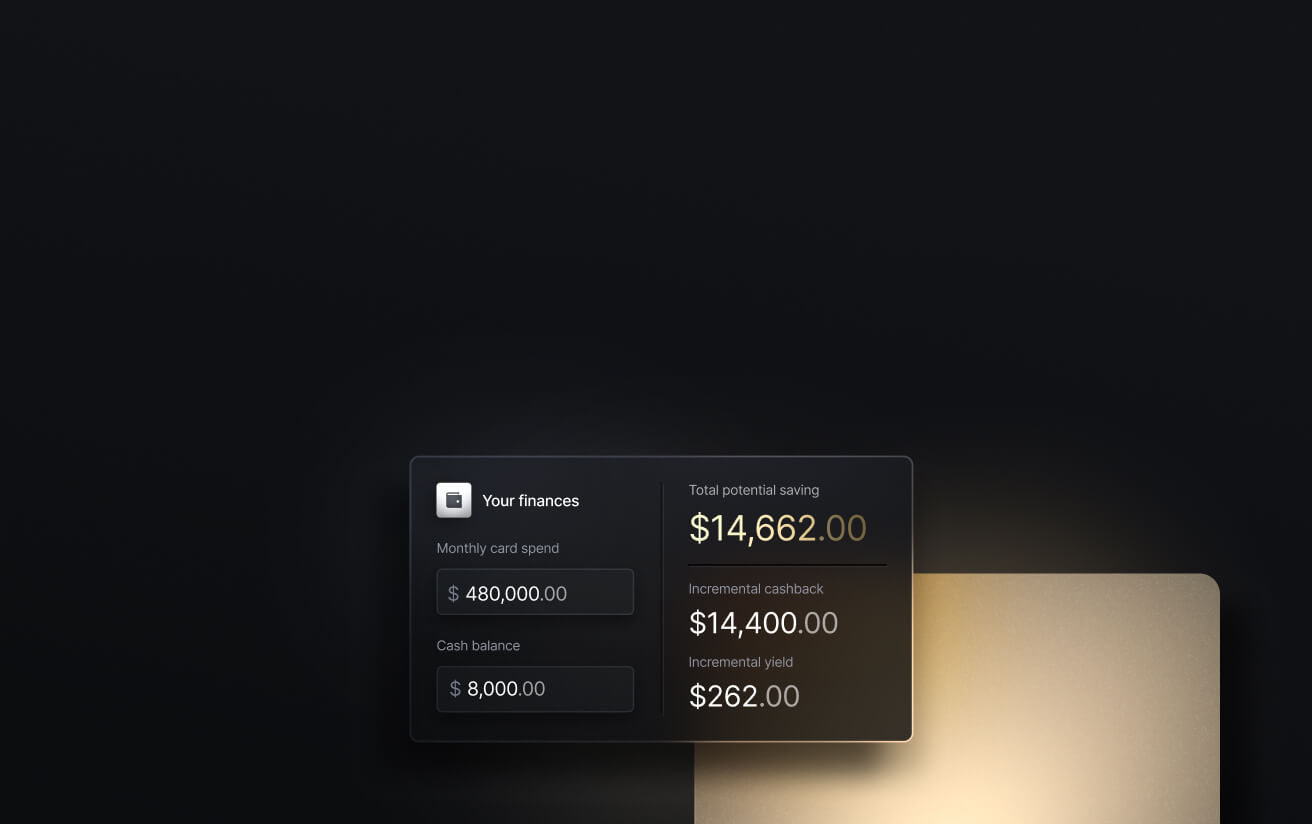
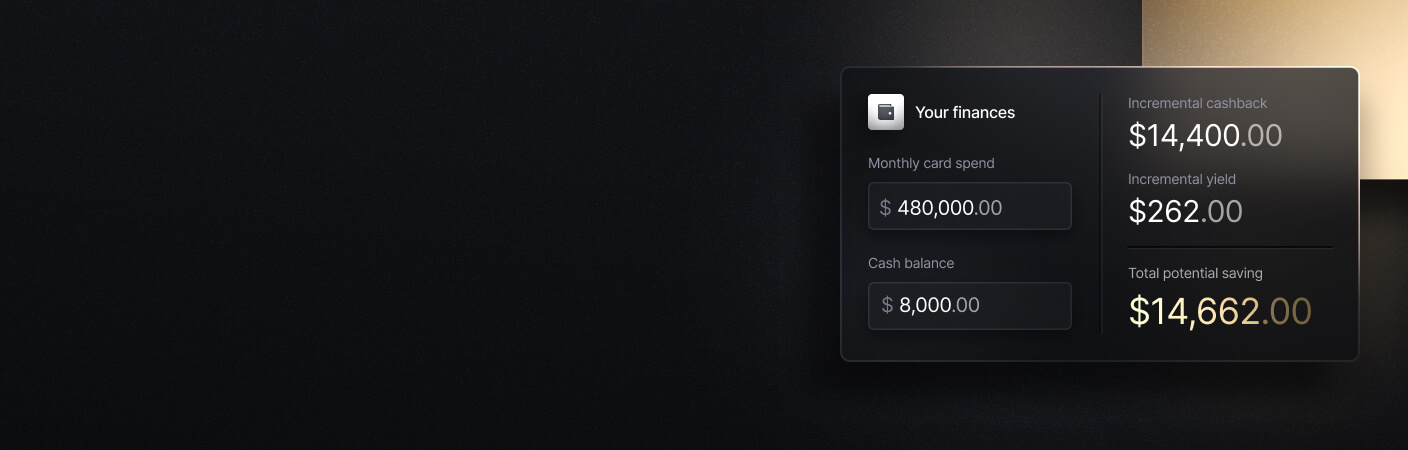
See the ROI behind your spend
Use this calculator to understand impact, then manage and track it all in Slash.
Putting the Plan to Work in Slash
- Issue a card per vendor. Give each one its own limit and merchant restriction, so a forgotten renewal declines instead of turning up on the statement.
- Separate money by purpose. Unlimited virtual accounts keep tax reserves and operating cash apart on either plan, each with its own account and routing numbers.
- Pay bills from the same account.Bill Pay reads uploaded or forwarded invoices and routes them through your approval rules before payment.
- Collect receipts at the swipe.Expense management texts the cardholder for a receipt photo right after an in-person purchase.
- Code before the ledger. Mapping rules categorize transactions against your chart of accounts before they sync to QuickBooks Online, Xero, Sage Intacct or NetSuite.
- Ask about balances and spend.Twin, an AI financial assistant in Slack and the dashboard, reads live balances and spend and can issue or freeze cards on request.
Conclusion
Priced line by line, cashback moves the most money between these six plans, thousands of dollars a year at $60,000 a month on cards. Transfer fees and the plan fee each move hundreds, in an order that depends on the plan. Entry conditions decide whether a plan is open to you.
Ramp suits a US business with cash in the bank that wants policy on the card, Relay a team budgeting by account, Brex a funded startup wiring abroad, and Mercury a startup that mostly sends USD wires. For a business issuing a card per vendor and sending wires every week, Slash Pro pays up to 2% cashback and charges nothing on domestic transfers for $25 a month. Free runs the same cards at $0 until your spend justifies the step.
Talk to the Slash team about which plan your own numbers pick.
Apply in less than 10 minutes today
Join the 10,000+ businesses already using Slash.
FAQs
1. Which business account plans include unlimited virtual cards?
Slash includes them on both its $0 Free plan and its $25 Pro plan. Ramp's free base plan includes unlimited virtual and physical cards behind a $25,000 cash requirement, Brex issues unlimited virtual cards on its $0 Essentials plan, and Mercury says a business can issue as many virtual cards as it needs.
What Is Needed to Open a Business Checking Account Online

2. Is a $25 plan worth it over a free plan?
Yes, once card spend passes about $5,000 a month at both plans' top rates, and sooner if you send domestic wires. On Slash, the step from Free to Pro costs $300 a year, raises cashback from up to 1.5% to up to 2%, and takes same-day ACH, domestic wires and outgoing FedNow or RTP to $0.
How Many Financial Tools Does a Business Need?

3. What is the real cost difference between these plans?
Cashback moves the most money at any meaningful card volume. A business spending $60,000 a month on cards earns up to $14,400 a year on Slash Pro, against a $300 annual plan fee. Transfer fees and the plan fee each move hundreds of dollars a year, and which is larger depends on the plan.
4. Do any of these plans require a minimum balance?
Only Ramp sets a cash minimum to qualify for the account or card, at least $25,000 in a US business bank account. Slash, Relay, Brex and Mercury set no minimum balance to open the account. Relay's credit card does need $50,000 of average monthly revenue, or $20,000 with $25,000 held at Relay, and Brex needs an equity investment, more than $500,000 a year in revenue, or a referral.
What are the Easiest Business Credit Cards to Get? Top Picks and How to Get Yours Approved
5. How much deposit protection does each plan carry?
Slash covers up to $150 million through a sweep network of partner banks. Brex offers up to $6 million through its Vault sweep, Mercury up to $5 million through its partner networks, and Relay up to $3 million through Thread Bank. Ramp describes its checking coverage as up to tens of millions of dollars per depositor.
FDIC Insurance Guide: Limits, Protection Strategies, and How to Elevate Your Coverage
Read more from us


