

What are the best Bluevine alternatives?
Quick answer: Slash is the best Bluevine alternative for most small businesses that have outgrown a debit card-based checking account. Its business banking¹ adds high-cashback corporate cards with card-level spend controls, bill pay with approval chains, and QuickBooks Online, Xero, NetSuite, and Sage Intacct sync on both the $0 Free and $25 Pro plans, priced per entity. Mercury is the pick for free wires on a $0 plan, Relay for many checking accounts, Brex and Ramp for expense automation at funded companies, Chase for branches, and Novo for sole proprietors. You may want to stay with Bluevine if you’re a fan of their interest on checking.
The tables below compare monthly fees, FDIC coverage, wire and same-day ACH pricing, cards, accounting sync, and sub-accounts. Where a provider doesn't publish a figure, the cell says “Not listed”.
Competitor details checked November 16, 2026, on each provider's own site.
Fees, rates, and coverage limits are subject to change. Confirm current terms with each provider before you open an account.
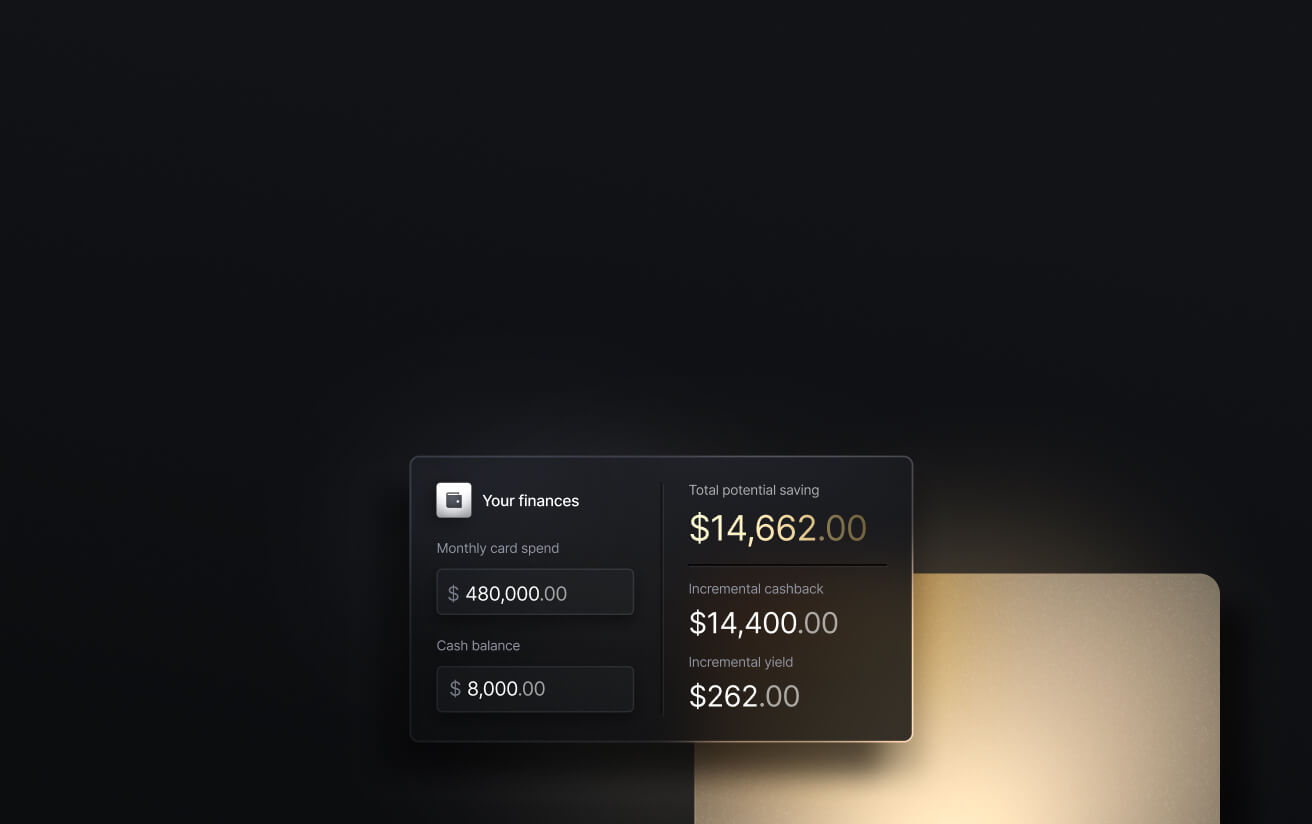
See the ROI behind your spend
Use this calculator to understand impact, then manage and track it all in Slash.

Which Bluevine alternative is best for your business?
- Best overall: Slash. Corporate cards with up to 2% cashback on eligible purchases, bill pay with approvals, and NetSuite and Sage Intacct sync for $0 or $25 a month per entity.
- Best for free wires on a $0 plan: Mercury. $0 ACH, domestic wires, and real-time payments on every plan.
- Best for many checking accounts: Relay. Up to 20 accounts on the free plan and 50 on Scale.
- Best for funded startups: Brex. Free same-day ACH and domestic wires, and up to $6M in FDIC coverage.
- Best for expense automation on a free plan: Ramp. For companies with $25,000 in the bank.
- Best for branches and cash: Chase. $5,000 in in-branch cash deposits each statement cycle at no extra charge.
- Best free account for sole proprietors: Novo. No monthly fee or minimum balance.
- Stay with Bluevine if: you want interest on checking or a line of credit up to $250,000.
Why do businesses look for a Bluevine alternative?
Bluevine is a solid no-fee checking account with up to $3M in FDIC coverage. Businesses usually outgrow it for three reasons:
- Debit cards only: Bluevine issues up to 50 debit cards with daily or monthly limits, and its plan pages list no business card that earns cash back.
- No ERP sync: It syncs with QuickBooks Online, Xero, Wave, and FreshBooks. NetSuite and Sage Intacct aren't listed.
- Fees on Standard: Wires cost $15 and same-day ACH costs $10. Waiving the Plus or Premier fee takes a $20,000 or $100,000 average daily balance plus $2,000 or $5,000 a month in debit card spend.
The best Bluevine alternatives in 2026
1. Slash
Best for: businesses that want corporate cards, bill pay, and ERP sync in the same account as checking.
Slash serves startups and established small and mid-sized businesses, with banking services from Column N.A., Member FDIC. Free is $0 and Pro is $25 a month, a flat fee per entity with no per-user fees.
- Card controls and spend policies: Issue unlimited virtual and physical cards, set limits by card, team, or individual, and see every transaction post in real time. Slash texts employees for receipts and matches them automatically to transactions.
- Alerts and approvals:Notifications for card authorizations, declines, and transfers arrive by push, email, or Slack webhook. Bill pay runs by ACH or wire with approval chains based on amount or requester.
- Integrations and accounts: QuickBooks Online, Xero, NetSuite, and Sage Intacct sync on both plans, virtual account numbers separate each client, project, or location, and FDIC insurance reaches up to $200M through Column N.A. and the IntraFi sweep network.
- Working capital financing: Access short-term financing⁵ with flexible 30-, 60-, or 90-day repayment terms to help bridge cash flow gaps.
- High-yield treasury: Earn up to 4.06% annualized yield⁶ on idle funds with money market investments from BlackRock and Morgan Stanley, managed directly within your Slash account.
Trade-offs: Sole proprietorships aren't eligible; Slash serves US-registered LLCs, C-Corps, and S-Corps. On Free, wires cost $6 and same-day ACH costs $1; both are $0 on Pro.
2. Mercury
Best for: teams that send wires often and want them free on a $0 plan.
Mercury is a fintech whose banking is powered by Choice Financial Group and Column N.A. It charges $0 for ACH, domestic wires, real-time payments, and USD international wires on every plan, with up to $5M in FDIC coverage. Its IO card pays 1.5% cash back, and card limits, merchant locks, and budgets are built in.
Trade-offs: Treasury requires a $250,000 Mercury balance, non-USD card transactions cost 3%, Sage Intacct isn't listed, and Mercury doesn't accept cash deposits.
3. Relay
Best for: owners who split cash across a bunch of accounts for taxes, payroll, and profit.
Relay is a fintech that banks through Thread Bank, with up to $3M in FDIC coverage. It offers up to 20 checking accounts on the $0 Starter plan and 50 on Scale ($90 for a limited time, regularly $120). Wires cost $8 on Starter and $5 on paid plans, the Visa credit card pays 1% to 1.5% cash back by plan, and cash goes in at Allpoint+ ATMs with no Relay fee.
Trade-offs: Relay's interest applies to savings, not checking, and its accounting integrations are QuickBooks Online and Xero.
4. Brex
Best for: funded startups that want cards, expense automation, and travel booking in one platform.
Brex pairs checking at Column N.A. with Vault, which spreads deposits across 24 program banks for up to $6M in FDIC coverage. Same-day ACH and domestic wires are free, and the $0 Essentials plan includes NetSuite; Premium ($12 per user per month) adds live budgets and advanced spend limit controls. Capital One has owned Brex since April 7, 2026.
Trade-offs: Funded startups need $50,000 in cash to qualify, and points are technically worth 0.6 cents each as cash.
5. Ramp
Best for: companies with $25,000 or more in the bank that want expense and AP automation on a free plan.
Ramp pairs a corporate charge card with expense management, bill pay, and Ramp Checking, which lists no fees or minimum deposits and 2% APY on eligible balances as of November 16, 2026. QuickBooks Online and Xero are on the Free plan; NetSuite and Sage Intacct require Plus at $15 per user per month plus a platform fee.
Trade-offs: the $25,000 qualification balance, an unpublished card cash back rate, and bill pay fees (such as $15 per domestic wire) when paying from an outside bank.
6. Chase Business Complete Banking
Best for: businesses that handle cash or want a banker they can visit.
Chase's entry-level business checking costs $15 a month unless you meet one of five waivers, such as a $2,000 minimum daily ending balance. It includes $5,000 in in-branch cash deposits each statement cycle at no extra charge, and card acceptance through Chase QuickAccept.
Trade-offs: Online domestic wires cost $25 ($35 with a banker), the account earns no interest, and FDIC coverage is the standard $250,000.
7. Novo
Best for: sole proprietors and freelancers who want a free account.
Novo is a fintech with banking support from Middlesex Federal Savings. Their account comes with no monthly fee or minimum balance, up to $5M in FDIC coverage, up to 20 Reserves for setting money aside, and up to $7 a month in ATM fee reimbursements. Eligible customers can get a credit card that pays up to 2% cash back.
Trade-offs: Domestic wires cost up to $45, same-day ACH costs 1.5% of the amount (up to $20), and checking earns no interest. See Bluevine vs Novo vs Slash.
How does Rho compare to Bluevine for real-time spend controls and budget alerts?
Rho has stronger card controls than Bluevine. Admins choose a limit type for each Rho Corporate Card (no limit, recurring, fixed, or single-use) and can lock it to up to 20 merchants or to merchant categories, with purchases outside those rules declined at the point of sale. Card alerts arrive in real time by email, SMS, and push, department owners can see their teams' card spend, and Rho charges no subscription or per-user fees. Bluevine offers daily or monthly limits on debit cards plus text alerts.
Neither Rho's expense management page nor Bluevine's plan comparison describes team budgets with threshold alerts. Slash's card groups enforce a team budget at the point of sale, and authorization and decline alerts go out by push, email, or Slack. Rho's card pays up to 1.25% cash back, or up to 2% with Rho Platinum. Slash's card pays up to 1.5% cashback on Free and 2% on Pro.
How does Mercury compare to Bluevine for per-card spending limits and real-time alerts?
Mercury is also ahead on card controls. Its employee cards support custom spend limits and merchant locks, budgets can restrict spending to merchant types such as airlines and lodging, and spending is tracked in real time across budgets, teams, and merchants. Mercury texts cardholders for receipts and can auto-lock cards with overdue tasks. Bluevine's debit cards get daily or monthly limits and text alerts, and its plan comparison lists no merchant restrictions. Slash adds transaction-size ranges and caps across a group of cards.
Where does Bluevine still win?
- Interest on checking: Standard pays 1.3% APY on balances up to $250,000 in months you meet an activity goal ($500 in debit card spend or $2,500 in customer payments). Plus pays 1.75% APY, and Premier pays 3.3% APY on all balances.
- A line of credit: Up to $250,000 with weekly or monthly repayments over up to 12 months, for corporations and LLCs with 12 months in business, $10,000 in monthly revenue, and a 625+ FICO score.
- Sole proprietors and cash: Bluevine checking accepts sole proprietorships and takes cash at Green Dot retailers ($4.95) and AllPoint ATMs ($1 plus 0.5%).
Slash Working Capital is a revolving line issued by Lead Bank and serviced by Slope, with each draw repaid over 30, 60, or 90 days and a soft credit pull to apply. A personal guaranty may be required. If you need longer repayment terms, Bluevine may fit better.
Slash verdict: the best Bluevine alternative for most businesses
For most businesses leaving Bluevine, Slash is the strongest replacement because it fixes the gaps people usually hit: debit-only cards, payment fees on the free plan, and accounting sync that stops at QuickBooks and Xero. You get a corporate card with up to 2% cashback on eligible purchases and team-level spend controls, bill pay with approvals, NetSuite and Sage Intacct on both plans, and FDIC insurance up to $200M through Column N.A. and the IntraFi sweep network, for $0 or $25 a month per entity.
Choose Mercury for free wires on a $0 plan, Relay for several separate accounts, or Brex or Ramp if you're a funded team that meets their requirements. Stay with Bluevine for interest on checking or longer repayment on a line of credit. If you're moving, our guide to switching business bank accounts has a checklist.
Slash is SOC 2 Type II and PCI DSS compliant, and more than 10,000 businesses use it. For head-to-head detail, see Slash vs Bluevine, Bluevine vs Mercury vs Slash, Bluevine vs Novo vs Slash, and Bluevine vs Relay vs Slash.
Apply in less than 10 minutes today
Join the 10,000+ businesses already using Slash.
Frequently Asked Questions
What are the best Bluevine alternatives?
Slash, for corporate cards with up to 2% cashback on eligible purchases, bill pay with approvals, and NetSuite and Sage Intacct sync at $0 or $25 a month per entity. Then Mercury for free wires, Relay for many accounts, Brex and Ramp for funded teams, Chase for branches, and Novo for sole proprietors.
How does Rho compare to Bluevine for real-time spend controls and instant budget alerts across teams?
Rho has stronger controls: a limit type on each card, merchant and category locks enforced at the point of sale, and real-time alerts by email, SMS, and push. Bluevine offers daily or monthly debit card limits and text alerts. For team budgets, Slash's card groups cap a team's total card spending, with alerts by push, email, or Slack.
How does Mercury compare to Bluevine for per-card spending limits and real-time alerts?
Mercury offers custom spend limits, merchant-locked cards, and budgets, tracks spending in real time, and texts cardholders for receipts. Bluevine sets daily or monthly limits on debit cards and sends text alerts. Mercury's IO card also pays 1.5% cash back; Bluevine's plans list debit cards only.
Bluevine vs. Mercury vs. Slash: Features and Best Use Cases for Small Businesses in 2026

Which Bluevine alternative pays interest on checking?
Ramp lists 2% APY on eligible Ramp Checking balances as of November 16, 2026; Relay pays 1.19% to 3.21% APY on savings. Bluevine pays 1.3% to 3.3% APY on checking. For idle cash, Slash Treasury has no minimum balance.
Bluevine vs. Relay vs. Slash: Business Banking Feature Comparison
Does Bluevine integrate with NetSuite or Sage Intacct?
No. Bluevine lists QuickBooks Online, Xero, Wave, and FreshBooks. Slash syncs with NetSuite and Sage Intacct on both plans, Brex includes NetSuite on Essentials, and Ramp puts both on Plus.
Can a sole proprietor use these Bluevine alternatives?
Novo, Chase, and Bluevine accept sole proprietorships, and Relay's Starter plan allows them up to 10 checking accounts. Slash serves US-registered LLCs, C-Corps, and S-Corps, and Ramp requires a US corporation, LLC, or LP. A sole proprietor who forms an LLC can apply to Slash.
Bluevine vs. Novo vs. Slash: Financial Platform Comparison for 2026

Read more from us


