

Why Do So Many Business Owners Still Use Their Personal Credit Cards?
Business cards were created for business owners. That’s their purpose, and that’s why they got the name. They’re meant to help separate your personal finances from your business finances. They're also purpose-built to make it easier to manage company spending.
So, why do millions of business owners prefer to use their own personal credit cards for their company expenses?
Mastercard and PYMNTS intelligence surveyed American business owners in early 2026 to learn about the way they use their company cards. They discovered that lots of them don’t use dedicated cards at all. 39% of SMBs don’t use a business card, and 30% put their professional expenses on their personal cards.
At first, you might think these answers are coming from the entrepreneurs in the earliest stages of their businesses. As it turns out, that’s not the case. When PYMNTS focused on the companies making more than $1 million in revenue a year, they found that 16% don’t use business cards and 27% run at least some company expenses through a personal credit card.
We’re talking about real, established businesses with impressive revenue. More than a quarter of them are buying inventory and paying vendors on the same piece of plastic they use to order furniture for their patio.
Business cards aren’t necessarily difficult to obtain. Many simply require applicants to have an active company and a healthy personal credit history. Slash doesn’t even do a hard pull of your personal credit as part of the underwriting process, which opens the door even wider.¹ And yet, millions of owners haven’t made the switch from their personal cards.
One reason for this may be the rewards that many consumer cards offer. That’s a very narrow way to look at the decision, however. Even if your personal card’s rewards are a smidge better than the business card you’re considering, it’s usually a bad, expensive idea to keep using it. Let’s dive into why:
Why You Shouldn’t Mix Personal and Business Spending
95% of businesses formed in 2025 were either an LLC or a corporation. If your business falls under one of these categories, you get “limited liability” protection, which means your personal assets are shielded from business debts. Those protections aren't automatic, though. If a creditor or plaintiff argues that you and your company are really the same financial entity, a court can set the separation aside and reach your personal assets. Commingled spending is one of the first things they look for, alongside missing corporate records and undercapitalization.
Commingling your expenses can also mess up your tax returns. When your business and personal expenses live on the same statement, deductions become a lot harder to parse. The IRS can disallow legitimate deductions simply because it can't confirm that they’re business expenses. If your card statement lists grocery trips next to software subscriptions, your purchases won’t look like they’re connected to your company. You might either overpay on your taxes because you couldn't substantiate what you were owed, or claim a wide array of deductions and cause auditors to come after you.
The problems don’t end there. Using your personal card instead of a business card can also hurt:
- Your personal credit: Utilization is scored continuously, so there's no safe threshold you stay under. The conventional guidance is to keep it below 30%, and running business spend through a personal card can blow past that in a single month of inventory purchases.
- Your cash flow forecasting: To determine your future liquidity and net profit, you’ll want to know what your business spends on a monthly basis. If each purchase is mixed in with your day-to-day expenses, that becomes a lot harder to figure out.
- Your future financing: Before loaning you money, investors and lenders want to see clean financials. If you’re still reliant on your personal card and your records require a lot of explaining, you've made yourself a harder “yes”.
These problems don’t all hit you at once when you decide not to apply for a business card. They sneak up on you after months or years of improvisational spending, and by the time you realize you shouldn’t have been using your personal card the whole time, it could be too late.
What You’re Leaving on the Table
By missing out on the features of a dedicated business card, you pay a high opportunity cost, which is kind of like an accounting term for FOMO. If you don’t save money by making one decision, you essentially pay that money by making the other decision.
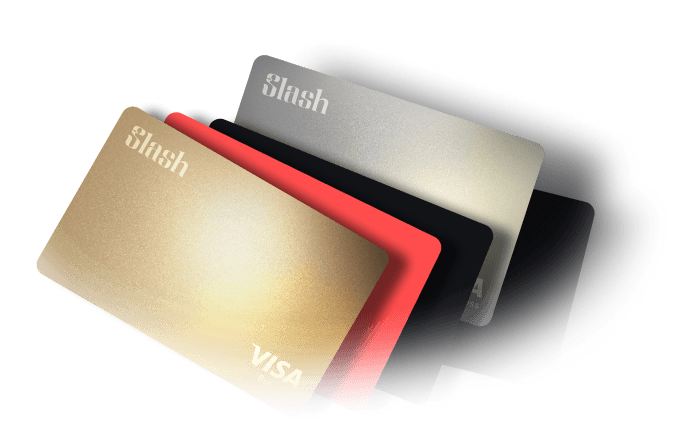
You might have compared the cash back rewards of certain business cards with your personal card, but rewards are far from the only perk. With the Slash Visa® Platinum Card, for example, you get access to a financial platform with a high-yield treasury account, sophisticated spend controls/fraud monitoring, stablecoin support, an agentic AI assistant, and a lot more.⁴,⁵ Plus, the Slash Card comes with up to 2% cash back on eligible business expenses, which makes it competitive with high-rewards personal cards.
With our platform, you can earn yield on treasury balances, save money with low-fee crypto transfers, and take control of your budgets with unlimited virtual cards connected to customizable subaccounts. It’s also worth noting that the Slash Card is a charge card with daily payment cycles, meaning you won’t get stuck with the kind of long-term, high APR debt that builds on a credit card. Since you don’t get any of these features with personal credit cards, you’d be paying a high opportunity cost by making another choice.
A lot of new founders simply haven’t researched the features that business cards can come with, and thus, they don’t realize they’re missing out on them. However, others are completely aware of the benefits they can get with business cards, and still choose not to apply for them. Why? The fees.
In their survey, PYMNTS found that only 28% of SMBs would be willing to pay a fee for a business card with rewards. When you look at some of the annual fees around the industry, that’s not a huge surprise. The Amex Business Platinum Card®, for example, costs $895 a year. Even the cards that come in at a more reasonable price, like the $150/year Capital One® Spark Cash Plus, can be tough to justify for a frugal business owner.
That’s why the Slash Visa® Platinum Card requires its users to pay an annual fee of exactly $0. If your business processes a high volume of wire transfers and real-time payments, we also offer an optional $25/month Pro Plan that allows you to waive domestic transfer fees.
If you’re deciding whether or not to use your personal card to buy supplies and pay vendors, here’s the choice you have to make: do you stick with your credit card and risk piercing the corporate veil, overpaying on your taxes, hurting your personal credit score, and more? Or do you sign up for a business card that keeps your personal and professional spending separate while unlocking a suite of tools that help make life as an owner easier? If all American business owners understood the stakes of the decision, 30% of them probably wouldn’t choose the former.
Apply in less than 10 minutes today
Join the 10,000+ businesses already using Slash.


