If you’re looking for a business banking platform with a checking account, payments, cards, automations, and more, you may be interested in both Slash and Bluevine. However, Slash offers quite a few features that Bluevine can’t compete with.
Slash’s card-issuing API lets businesses create and control card programs programmatically, while its MCP support allows compatible AI agents to create cards, send payments, manage invoices, and query transaction data. Meanwhile, Bluevine doesn’t advertise a customer-facing banking or card-issuing API.
Another one of Bluevine’s blind spots is in its crypto support; it doesn’t offer stablecoin payment rails at all. In fact, according to its terms, Bluevine won’t even do business with companies engaged with cryptocurrency. With the help of built-in on/off ramps that can convert tokens to and from fiat currency, Slash allows customers to both send and receive USDC and USDT.
Here are some other advantages Slash has over Bluevine:
- Agentic AI: Slash comes with an agentic AI assistant named Twin that can investigate activity, automate workflows, surface insights, and help operate financial processes while respecting existing approval rules and role-based access. Bluevine offers useful automation and reporting, but it doesn’t currently have an AI assistant.
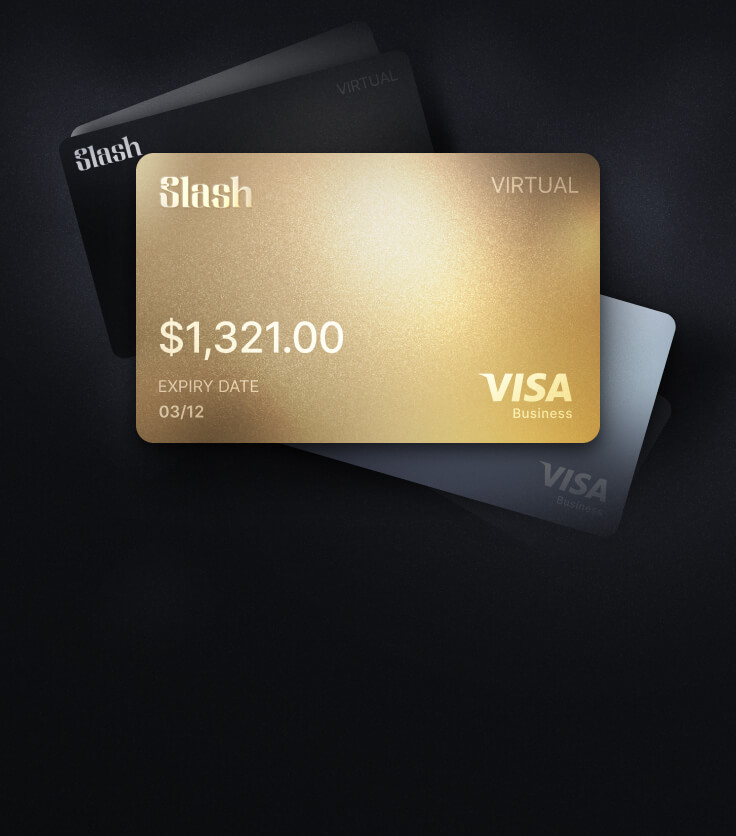
- Unlimited physical and virtual cards: Bluevine caps its physical and virtual card issuance at 50, while Slash allows you to issue cards to as many team members as you want.
- FDIC insurance: Bluevine does take advantage of sweep networks, insuring balances up to $3 million instead of the standard $250,000. Through Column N.A.’s sweep network, Slash balances of over $100 million can be FDIC-insured.
With Slash, you can send your money in more ways, analyze it more deeply, and protect it more thoroughly than you can with Bluevine.