

Nostro and Vostro Accounts Explained: Why Cross-Border Payments Use Correspondent Banks
Every international wire transfer passes through accounts most people have never heard of. Nostro and vostro are two names for the same type of correspondent bank account viewed from opposite sides. The terms come from Italian (“ours” and “yours”) and date back to medieval merchant banking. They help banks hold and move money in foreign currencies, which makes international payments possible even when two banks don’t have a direct relationship in the same country.
In this article, we’ll discuss how nostro and vostro accounts work, the mechanics of international payments, and how modern infrastructure like SWIFT GPI and ISO 20022 help businesses send money across borders. We’ll also take a look at Slash, a neobank that helps businesses manage global money movement with a wide range of modern payment options.¹ By combining payment flexibility, transaction visibility, and accounting integrations in one platform, Slash gives finance teams more context when international payments need speed and cost control.
The standard in finance
Slash goes above with better controls, better rewards, and better support for your business.


What Nostro and Vostro Accounts Mean
The difference between nostro and vostro accounts depends on perspective. A nostro account means “our account with you” and is held in a foreign currency from the holder’s point of view. A vostro account means “your account with us” and is typically denominated in the local currency of the bank that hosts it.
For example, a U.S. bank may hold a euro account at a bank in Germany. From the U.S. bank’s perspective, that’s a nostro account because it’s “our” account held with “you,” denominated in a foreign currency (euros). From the German bank’s perspective, it’s a vostro account because it’s “your” account held with “us,” denominated in the German bank’s local currency (also euros). The currency dimension is what makes the labels meaningful: a vostro is typically the host bank’s home currency, while a nostro is typically the holder’s foreign currency.
A related term sometimes appears in this context: a loro account, meaning “their account,” which refers to the same relationship described from the perspective of a third bank that is not party to it. Loro accounts are less common in everyday usage but complete the framework.
Here are their three characteristics written out:
- Nostro accounts are foreign-currency accounts held with another bank: A bank uses a nostro account to hold money in a currency or country where it needs access, allowing the bank to settle payments without maintaining a full local branch in every market.
- Vostro accounts are accounts held for another bank in the host bank’s local currency: The bank that hosts the account calls it a vostro account. It maintains the ledger, processes entries, and helps the foreign bank access the local payment system or currency.
- The same account has two labels: The labels do not describe two separate accounts, but two separate sets of books. Each bank keeps its own ledger entries for the relationship. One bank’s nostro is the other bank’s vostro, which is exactly why reconciliation between the two sides matters.
Why Cross-Border Payments Use Nostro and Vostro Accounts
While a domestic payment can move smoothly through local clearing systems, an international payment often requires banks to coordinate across different systems, currencies, and regulatory environments. These payments utilize nostro and vostro accounts in order to efficiently settle value across currencies and countries.
For example, if a U.S. business pays a supplier in euros, the sending bank needs a way to deliver those euros. Holding a euro-based nostro account with a European bank gives the sending bank access to euro settlement. Since the sender in this case is funding the payment in dollars and the recipient needs euros, a conversion must occur. Depending on the payment setup, the sending bank or receiving bank may handle the foreign exchange. It may also occur along the way with the help of a correspondent bank.
While nostro and vostro accounts represent the beginning and end of this journey, correspondent banks often provide the bridge in between. They hold accounts for other banks, exchange payment messages, and help settle transactions when the sending and receiving banks do not connect directly. A cross-border wire or SWIFT payment doesn’t always involve money moving in a straight line from one account to another. With SWIFT’s GPI (Global Payments Innovation) service, which now handles the majority of SWIFT cross-border volume, a large share of payments reach the beneficiary within minutes; SWIFT reports that roughly 60% of GPI payments are credited within 30 minutes and nearly all within 24 hours. Older or more complex routes that pass through multiple correspondents can still take several business days, particularly in less common corridors.
How a Payment Moves Through Nostro and Vostro Accounts
Let’s take a look at an average payment journey as an example. A U.S. clothing company wants to pay a German supplier in euros. When the U.S. company instructs its bank to send the payment, that bank may debit the company’s dollar account, convert dollars to euros, and use its euro nostro account at a European correspondent bank. The correspondent bank then credits or routes the euros toward the German supplier’s bank.
Step-by-step, the flow looks like this:
- The sender initiates the international payment: The business provides the relevant beneficiary details, currency, amount, and purpose information. The sending bank checks compliance requirements and determines the payment route.
- The sending bank uses a correspondent relationship: If the sending bank has a nostro account in the destination currency, it can use that account to settle. If it doesn’t, another intermediary may be needed. Each additional bank can add time and fees, though BIS analysis of SWIFT GPI data shows most cross-border payments now pass through only about one intermediary on average.
- The receiving bank credits the beneficiary: Once settlement reaches the receiving bank, the beneficiary’s account is credited according to local rules and the bank’s processing times. The final amount may reflect fees or conversion differences, depending on charge settings.
Slash business banking
Works with cards, crypto, plus cards, crypto, accounting, and more.
Modern Infrastructure: SWIFT GPI and ISO 20022
The traditional picture of correspondent banking, in which payments crawl across multiple intermediaries with little visibility, has been changing meaningfully over the past several years. Two industry-wide initiatives matter for businesses making international payments today.
SWIFT GPI
Launched by SWIFT in 2017, the global payments innovation (GPI) service adds end-to-end tracking, fee transparency, and faster processing to the existing SWIFT network. Each payment is assigned a unique end-to-end transaction reference (UETR) that allows the originating bank, intermediaries, and beneficiary bank to track status in near real time. According to SWIFT, the majority of GPI payments are credited within 30 minutes, with most credited within 24 hours. For businesses, this changes what is reasonable to expect from a wire and gives finance teams a way to track stuck payments rather than waiting blindly for confirmation.
ISO 20022
The global migration from legacy SWIFT MT messages to the ISO 20022 standard (pacs.008 for customer credit transfers, among others) finished its main coexistence period in late 2025. ISO 20022 carries richer, structured remittance data, which improves reconciliation and reduces manual matching. It also changes some long-familiar terminology: the older OUR / BEN / SHA charge codes have ISO 20022 equivalents of DEBT / CRED / SHAR. The underlying mechanics are the same, but the field names businesses see on bank forms may differ depending on which standard their bank surfaces.
The G20 Cross-Border Payments Roadmap
Behind the scenes, the Financial Stability Board (FSB), the Bank for International Settlements (BIS), and the Committee on Payments and Market Infrastructures (CPMI) are coordinating a G20 roadmap aimed at reducing the cost, increasing the speed, and improving the transparency and access of cross-border payments. The work touches everything from correspondent banking, to interlinking faster payment systems, to data harmonization through ISO 20022. For finance teams, the practical takeaway is that the infrastructure underneath international payments is actively being modernized, and the picture five years from now will likely look meaningfully different from the picture today.
Nostro and Vostro Account Reconciliation
From an accounting perspective, nostro accounts require continuous reconciliation. A bank’s own general ledger records of a nostro account balance may differ from the statement balance at the correspondent bank due to timing differences. Transactions may be initiated but not yet settled, interest can accrue, and processing delays may occur without being noticed.
Reconciling nostro accounts is an important function at international banks because unexplained discrepancies can indicate transaction errors, fraud, or settlement failures. Historically, nostro reconciliation was a labor-intensive manual process; today it is typically handled by specialized treasury management systems that match transactions automatically and flag exceptions for human review.
For businesses, nostro reconciliation can be frustrating; a wire can appear “sent” from the originating bank’s records while still being unresolved from the recipient’s perspective. The funds are somewhere in the correspondent chain, but the ledger entries haven’t caught up across all institutions in the sequence. SWIFT GPI’s payment tracker has reduced this opacity at the bank level by giving each payment a UETR, but the underlying double-bookkeeping that nostro and vostro accounts represent still creates timing gaps that have to be reconciled.
Who Pays the Fees? OUR, SHA, and BEN
On a SWIFT international wire, the sender chooses how correspondent and beneficiary bank fees are allocated. This choice appears in Field 71A of the MT103 message (“Details of Charges”), or as the “Charge Bearer” in ISO 20022’s pacs.008 message. There are three standard options:
- OUR (ISO 20022: DEBT) —The sender pays all transfer fees, including intermediary and correspondent bank charges. The beneficiary receives the full invoice amount. This is the safest option when an exact amount needs to land.
- SHA (ISO 20022: SHAR) —The sender pays their own bank’s outgoing fee; intermediary and beneficiary fees are deducted from the payment amount. SHA is the default on most international wires and is the most common reason recipients receive less than expected.
- BEN (ISO 20022: CRED) —The beneficiary pays all transfer fees, deducted from the payment amount before it reaches their account.
For businesses paying exact invoice amounts to foreign suppliers, the practical takeaways are that SHA, the default, almost always leads to shortfalls; OUR eliminates shortfalls but increases the total fee paid by the sender; and ISO 20022 forms may show DEBT/CRED/SHAR rather than OUR/BEN/SHA, but the meaning is the same. Without a deliberate choice of OUR (or sending more than the invoice to absorb anticipated deductions), the recipient is likely to come back with a shortfall claim, requiring a follow-up payment and another round of correspondent fees.
How the Correspondent Banking System Affects Businesses
For better and for worse, the nostro and vostro framework is directly tied to international wires and the correspondent banking system. Here are some things to keep in mind if you’re a business working with these accounts:
Settlement delays
With SWIFT GPI, many cross-border wires in major corridors now settle within hours, sometimes within minutes. However, businesses still shouldn’t assume every payment will settle that quickly. Major corridors like US-EU or US-UK typically settle within hours to one business day; less common currency pairs may take 1–3 days; corridors with multiple correspondents or capital controls can take longer. Cutoff times and time zones still matter: a wire submitted late Friday in New York may not be processed at a European correspondent until Monday, depending on the banks involved and whether the route is GPI-enabled.
Recipient shortfalls
When paying a foreign supplier an exact invoice amount under the default SHA instruction, correspondent bank fee deductions mean the recipient often receives less than the invoice total. Businesses have two options: send more than the invoice amount to account for anticipated deductions (which requires knowing the likely deduction amount in advance), or use the OUR (DEBT) fee instruction, which charges all correspondent fees to the sender rather than deducting from the payment amount. The OUR instruction eliminates recipient shortfalls but increases the total fee paid by the sender. Without one of these approaches, the recipient is likely to come back with a shortfall claim.
De-risking
Since the early 2010s, many major global banks have reduced their correspondent banking relationships, particularly in higher-risk jurisdictions. The common explanation is that this reflects AML and sanctions compliance pressure, and that is part of the story. However, the U.S. Department of the Treasury’s 2023 de-risking strategy report observed that the pace of decline has been steady over the past decade and is at least as consistent with profitability-driven consolidation, in which banks concentrate cross-border volume into a smaller number of high-volume corridors, as it is with AML/CFT-driven decisions.
Regardless of the cause, for businesses operating in or transacting with affected regions, the effect is the same: fewer payment options, higher costs, and in some cases corridors that are effectively inaccessible through traditional correspondent banking. The solution is typically a combination of alternative payment rails from fintech providers like Slash that can local payment infrastructure via global ACH settlement.
Various currency corridors
Payments between the US, UK, EU, Canada, and Australia move through well-established correspondent relationships with efficient routing and predictable timing. Payments to less common destinations, such as smaller African markets or parts of Southeast Asia, may have fewer correspondent bank options, higher fees, and less predictable settlement timelines. For businesses with regular payment needs in these corridors, considering the timing and cost variability into your planning is wise.
Simplify Cross-Border Payment Operations with Slash
Most of the friction in international payments comes from the correspondent banking system itself. Multiple intermediaries, opaque fee deductions, settlement delays, and recipients who get less than what was sent —they're features of how nostro and vostro accounts have worked for centuries. The infrastructure is improving with SWIFT GPI and ISO 20022, but the underlying mechanics haven't changed.
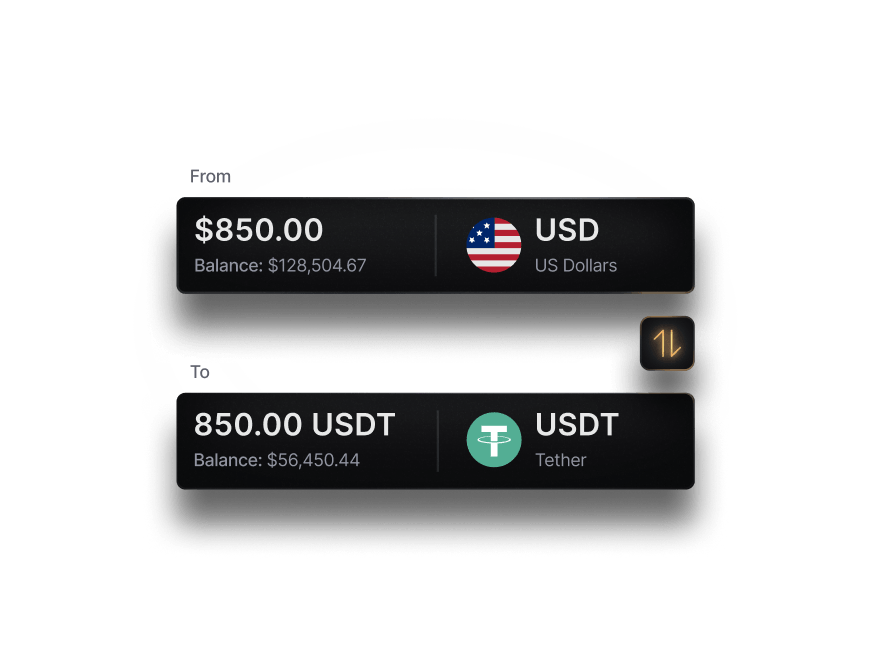
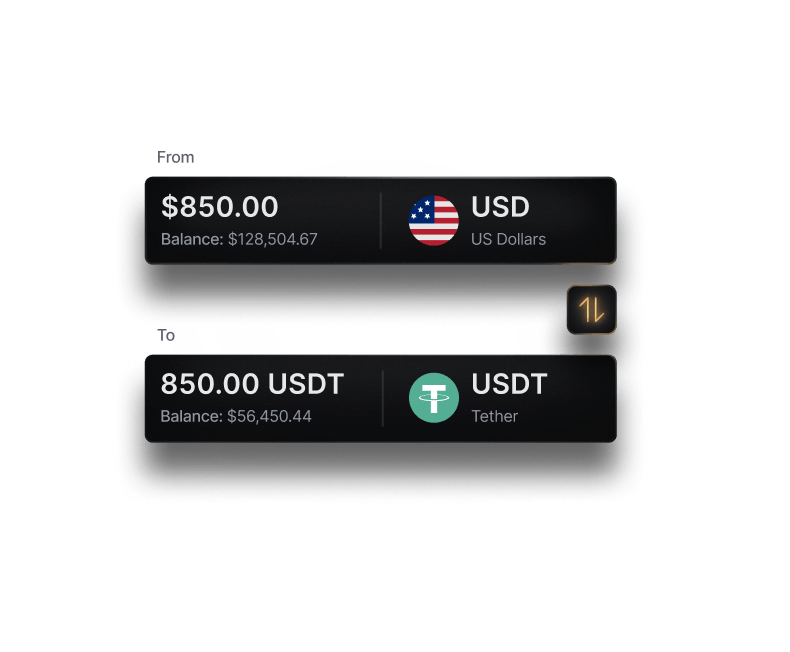
Stablecoins skip the system entirely.⁴ A USDC or USDT transfer doesn't sit at a European bank over the weekend. It settles on-chain in minutes, runs 24/7, and the sender sees exactly what the recipient gets. For corridors where speed and cost matter more than institutional familiarity, or where de-risking has thinned out the available correspondent options, access to crypto can revolutionize how your business moves money across borders.
Slash gives businesses access to both. International wires to 180+ countries are there when a recipient requires them. Stablecoin on/off ramps are there when you can use something better. USDC and USDT are supported across eight blockchains, with the same dashboard, the same accounting sync, and the same payment status visibility as every other payment method on the platform. Finance teams can pick the rail that fits the payment instead of routing everything through the same expensive default.
Other Slash features that can help global businesses include:
- Accounting & ERP integrations: Sync transaction data with QuickBooks Online, Xero, or Sage Intacct to streamline reconciliation, reporting, and month-end close.
- AI-powered finance: Our platform comes with Twin, a built-in AI agent that can be prompted with natural language to complete complex tasks. Users can ask it to create cards, pay invoices, review your cash flow, and much more.
- Slash Visa® Platinum Card: The Slash Card allows you to set customizable spending controls and issue unlimited virtual cards for handling team expenses, vendor payments, subscriptions, and more. Users can also earn up to 2% cash back on business purchases.
- High-yield treasury: Earn competitive annualized yield on idle funds with money market investments from BlackRock and Morgan Stanley, managed directly within your Slash account. Current rates are disclosed in-product.⁶
Try Slash today and see how it supports businesses managing cross-border payments at scale.
Apply in less than 10 minutes today
Join the 10,000+ businesses already using Slash.
Frequently Asked Questions
What’s the difference between nostro and vostro accounts?
A nostro account is “our account with you” from one bank’s perspective, typically denominated in a foreign currency. A vostro account is “your account with us” from the other bank’s perspective, typically denominated in the host bank’s local currency. The same correspondent account is referred to as nostro by one bank and vostro by the other, but each bank keeps its own ledger entries.
Why do banks need nostro and vostro accounts?
Banks use nostro and vostro accounts to access foreign currencies and local payment systems. They help international payments settle when the sending bank and receiving bank do not have a direct relationship.
Do businesses open nostro or vostro accounts?
Usually, no. Nostro and vostro accounts are typically bank-to-bank accounts. Businesses use international payment services that rely on those correspondent banking relationships in the background.
International B2B Payments: Different Methods and Challenges Explained

How has SWIFT GPI changed cross-border payments?
SWIFT GPI adds end-to-end tracking via a unique transaction reference (UETR), fee transparency, and faster processing to the SWIFT network. The majority of GPI payments are credited to beneficiaries within 30 minutes, and most within 24 hours, which changes the timing expectations many businesses still have about international wires.
Is SWIFT a Banking System? What It Is and How It Works
What’s the difference between OUR, SHA, and BEN?
OUR (or DEBT in ISO 20022) means the sender pays all fees and the beneficiary receives the full amount. SHA (SHAR) is the default and splits fees, usually causing the recipient to receive less than sent. BEN (CRED) means the beneficiary pays all fees, deducted from the payment amount.


