

Fuel Card or Corporate Card for a Trucking Company in 2026: Merchant Locks, a Card per Truck and What Each Costs
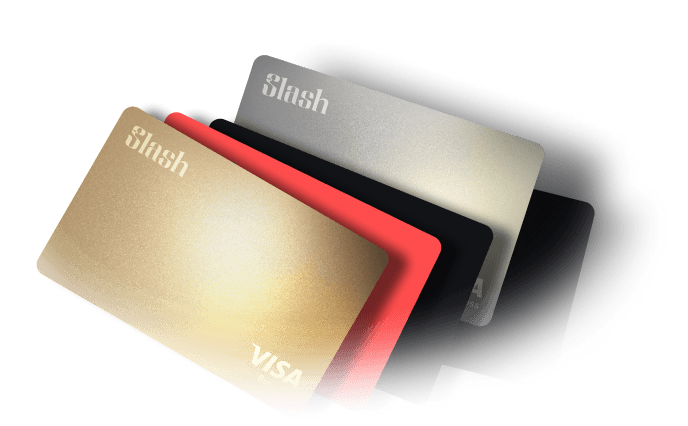
A fuel card earns its keep on diesel bought at network truck stops, and a corporate card covers the rest of what a trucking company pays for. Slash, a business banking platform¹, issues a physical card in each driver's name that you can lock to fuel station merchant categories, plus virtual cards for software, parts orders and travel. A fleet can run both, with a fuel card at the pump and Slash for everything else.
The US average on-highway diesel price was $6.276 a gallon on October 19, 2026, $2.656 more than a year earlier, according to the Energy Information Administration. At that price, a discount in cents per gallon and cashback as a percentage return very different amounts, and the two kinds of card also differ on fees, pump data and controls.
Key Takeaways
- Slash charges $5 for each physical card, standard shipping included, and card groups with merchant category locks are available on both the $0 Free and $25 Pro plans.
- At $6.276 a gallon, cashback of up to 2% returns up to about 12.6 cents per gallon of diesel, against AtoB's 42-cent average discount at its network truck stops and TCS's 49-cent in-network average.
- A merchant category lock decides which kind of merchant a card works at. In Visa's own example a service station codes its inside sales, snacks included, as 5541, so product-level fuel restrictions come from fleet card programs.
- AtoB's credit card costs $15 a month for up to five cards and $3 for each card after that, while Mudflap lists no monthly or per-card fees and TCS no monthly fee.
- IFTA returns claim tax-paid gallons by jurisdiction, and New Mexico's instructions require vendor invoices behind the gallons claimed, so every fill needs an itemized statement or a receipt.
Should a Trucking Company Use a Fuel Card or a Corporate Card?
Margins leave little room for waste. ATRI's 2026 operating cost study put the cost of running a truck at $2.336 a mile in 2025, with truckload and refrigerated operating margins still below 1.0 percent. Whether diesel goes on a fuel card, a corporate card or both comes down to a handful of things you can price.
- Per-gallon discounts at the stops you use. A fuel card's discount network pays off only on the lanes your drivers actually run.
- What the card can buy. A merchant lock limits the type of business. A fleet program can limit the product at the pump.
- Data at the pump. Driver and odometer prompts, gallons and fuel type, and the itemized statements an IFTA return relies on.
- Cost per card. Setup fees, monthly fees per card and out-of-network charges add up across a fleet.
- Everything that isn't diesel. Repairs, tires, tolls, hotels, load board and ELD subscriptions, and how all of it reaches the ledger.
1. Slash: A Physical Card per Truck, Locked to Fuel Merchant Categories
Slash issues a trucking company's cards from the company's business account, so pump spend and tire-shop spend draw on one balance and sync to one ledger. The Slash Visa® Platinum Card is a corporate charge card, and Slash's guide to how fuel cards work pairs it with a fuel card that handles the station transactions.
What Slash Does for a Trucking Company
- A physical card for each truck. A physical card shows the driver's name, uses a PIN, and can take the unit number as its nickname.
- Merchant category and MCC locks.Spend limits allow or block merchant categories, MCCs such as 5541 and 5542, merchants and countries, with caps per transaction and per day, week or month.
- Card groups. A card group applies one set of rules to every driver's card and caps their combined spend. Slash's launch post used a "Gas Only" group as its example.
- Receipts by text.Submission policies can require a receipt or memo by merchant category, and Slash texts the cardholder after an in-person purchase.
- Virtual cards and ledger sync. Virtual cards on both plans cover load boards, ELD software and hotels. Mapping rules send the fuel group to your fuel account, and the accounting integration syncs both ways with QuickBooks Online, Xero, Sage Intacct and NetSuite.
"Slash lets us issue cards with the right permissions and controls, so our employees can spend only where they're meant to spend," said Rikki Agarwal, Co-Founder & CBO of Blink Digital.
What It Costs
Free is $0 a month with up to 1.5% cashback. Pro is $25 a month with up to 2% cashback and $0 same-day ACH, domestic wires and outgoing FedNow and RTP, per the pricing page. The non-rewards list names no fuel station chain.
Physical cards cost $5 each with standard shipping, or $10 more expedited, and virtual cards are free.
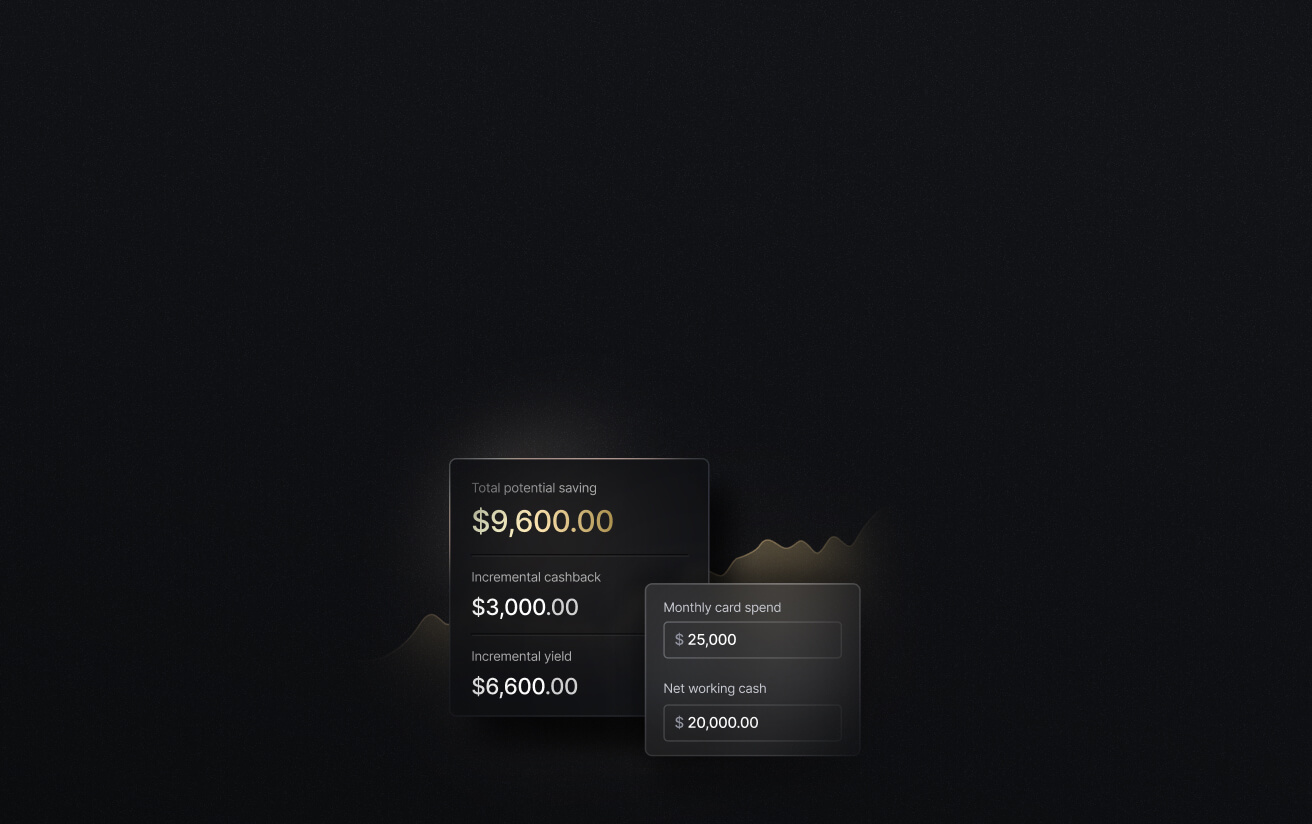
See the ROI behind your spend
Use this calculator to understand impact, then manage and track it all in Slash.

2. AtoB: A $35 Setup Fee and Monthly Fees per Card, on Mastercard
AtoB sells two fuel cards that work anywhere Mastercard is accepted. On its fuel card page, Flex, the credit product, costs a $35 setup fee and $15 a month for up to five cards, then $3 a month for each card after the fifth. Unlimited, the prefunded product, costs the same $35 to set up and $3 per active card a month. AtoB Premium costs $3 more a month, and operating hours and merchant whitelists are Premium features.
The same page puts the AtoB Discount Network's average at 42 cents off a gallon of truck diesel in the second half of 2025, with up to $2.00 off, and 5 cents on unleaded. AtoB says its cards return level 3 fueling data, including fuel type and volume on each transaction, and it lists IFTA reporting and an accounting export for both cards.
Flex asks for three months of revenue records and takes one to seven days to decide, and non-fuel spend on Flex is subject to approval.
3. Mudflap: No Card Fees, and Up to $1.00 Off a Gallon at 3,600+ Partner Stops
The Mudflap Fuel Card is a Visa card with weekly credit terms, subject to credit approval. Mudflap's card page lists no activation, monthly, annual, per-card, per-swipe or out-of-network fees. Fees do apply to returned and late payments and to payments made by anything other than ACH.
Fleet managers set spend limits by category, driver or vehicle, connect an ELD for vehicle tracking and fraud checks, and pull itemized digital receipts and one-click IFTA reports from the dashboard. Discounts run up to $1.00 a gallon at more than 3,600 partner truck stops, where the card gets the same price the Mudflap app shows. Away from those stops the discount is at least 2 cents a gallon.
4. TCS: A Cash-Secured Card at 2,300+ In-Network Stops, With Prompts at the Pump
TCS issues prefunded fuel cards on the EFS and Comdata networks, accepted at more than 12,000 truck stop fueling locations. Its FAQ says accounts are cash-secured with no credit check, funded by ACH, wire, Zelle, card or third-party check. TCS charges no annual, monthly, membership or activation fee, and fuel bought at its more than 2,300 in-network locations carries no transaction fee.
In-network clients saved an average of 49 cents a gallon from January to September 2026, by TCS's count. Out of network, transaction fees vary by location. At any stop the pump shows the retail price, and the discount appears in the TCS account after the purchase. TCS's own guide says drivers enter a PIN and may be asked for a unit number, mileage, or driver or trip number, and owners can set product and location controls. Its itemized statements support IFTA reporting.
Side-by-Side Comparison: Fuel Cards and a Corporate Card for Trucking
Provider figures reflect publicly published information as of October 2026 and are subject to change.
How to Choose Between a Fuel Card and a Corporate Card for Your Trucking Company
- Price diesel by the gallon, at your volume. Ten trucks burning 1,500 gallons each a month is 15,000 gallons, or $94,140 at $6.276. Cashback of up to 2% returns up to $1,882.80, while AtoB's 42-cent average comes to $6,300 and TCS's 49-cent average to $7,350, if every gallon is bought in network. Map your lanes against each network first, because Mudflap's minimum out-of-network discount is 2 cents a gallon, or $300 on the same volume.
- Count the cards. Ten physical Slash cards cost $50 once. Ten AtoB Flex cards cost $30 a month, or $360 a year, before Premium. Mudflap lists no per-card fee, and TCS lists no monthly fee.
- Decide whether you need product-level control.Visa's merchant rules require pump sales to carry MCC 5542, and in Visa's own example a service station codes its inside sales, oil, drinks and snacks included, as 5541. A card locked to both still works at the counter. Fleet card programs add prompting and product-level restrictions at the pump, as Visa's fleet program rules describe, and TCS lists product controls on its cards.
- Keep the paperwork your IFTA return needs. An IFTA return reports miles and tax-paid gallons for each state your qualified trucks run in, and New Mexico's IFTA instructions say tax-paid fuel purchases "must be supported by invoices from the vendor". A fuel card's itemized statement does that for you. On a corporate card, require a receipt on every fuel purchase.
- Put everything else on the corporate card. Hotels, software, office supplies and the repair shop a driver finds on the road all need a card, with limits, receipts and a ledger account like any other spend.
Putting a Fuel Card and Slash to Work Together
- Create a card group named Fuel, allow MCCs 5541 and 5542, and set a transaction size limit above a full fill. A 200-gallon fill at $6.276 is $1,255.20.
- Order a physical card in each driver's name, nickname it with the unit number and add it to the group. Each physical card is ordered on its own.
- Add a submission policy that asks for a receipt and a memo on every fuel purchase, where the driver can note the odometer reading.
- Map the Fuel card group, and the fuel card company as a payment recipient, to the same fuel account in your ledger.
- Pay the fuel card's statement or top up its prefunded balance from Slash by ACH, which is $0 same-day on Pro and $1 on Free.
Conclusion
AtoB charges monthly card fees and keeps merchant whitelists in Premium. Mudflap's deepest discounts stop at its 3,600 partner stops, with at least 2 cents a gallon elsewhere. TCS needs a prefunded balance, and its out-of-network fees vary by stop. Each one is built around fuel and vehicle spend, and software, travel and the rest of the business still need a card.
Slash covers that side of the business. A $5 physical card per truck can be locked to fuel merchant categories for fleets that fuel outside a discount network, and the same account issues cards for everything else and syncs it all to one ledger. A fleet that buys most of its diesel in network can pair a fuel card at the pump with Slash for the rest.
Talk to the Slash team about setting up a card per truck and a fuel card group for your fleet.
Apply in less than 10 minutes today
Join the 10,000+ businesses already using Slash.
FAQs
1. Can I restrict a Slash card to fuel purchases?
Yes, by merchant type. Add the card to a card group that allows only MCCs 5541 and 5542, or allow specific truck stop chains by name. The lock works on the merchant's category, so an in-store purchase at a service station coded 5541 still goes through.
How Do Fuel Cards Work? A Guide for Business Owners

2. Does Slash record gallons, odometer readings or driver IDs at the pump?
Slash's card and help pages describe no pump prompts or fuel quantity data. Slash records the merchant and amount and texts the driver for a receipt photo, and a memo requirement gives the driver a place to enter the odometer reading. Fleets that need gallon-level reports for IFTA get them from a fuel card's itemized statements.
3. How much does a physical Slash card for each driver cost?
$5 per card, which includes standard shipping, on both plans. Expedited shipping costs $10 more, and virtual cards are free.
4. Which accounting software does Slash sync fleet spend with?
QuickBooks Online, Xero, Sage Intacct and NetSuite, two-way, on both plans. Mapping rules can send every card in a fuel card group, and every payment to your fuel card company, to the same fuel account.
What Is Oracle NetSuite? Features, Benefits & Use Cases

5. Is a fuel card discount worth more than cashback on diesel?
On the published averages, yes, at network truck stops. At $6.276 a gallon, cashback of up to 2% is about 12.6 cents, while AtoB averages 42 cents and TCS 49 cents in network. Off network, Mudflap's minimum is 2 cents a gallon, and on unleaded at $4.284, up to 2% is about 8.6 cents against AtoB's 5-cent average.


