

A Guide to Fuel Cards: How They Work and What to Expect
Fleet management brings a wide variety of costs, including insurance, maintenance, tolls, and gas. Fuel costs in particular are one of the most visible and controllable expenses for any business that relies on vehicles. Without the right tools, they can also become one of the easiest to lose track of. This is why many of today's fleet managers utilize fuel cards.
A fuel card is a payment tool that gives business owners a direct way to manage the costs associated with filling their vehicles up at the pump. Fleet managers and owner-operators may give fuel cards out to their drivers to help track expenses, streamline payment operations, and access cheaper gas prices.
Choosing the right fuel card can depend on your fleet's vehicles, spending patterns, and even travel routes. This guide will cover what fuel cards are, how they work, ways to get the most out of them, and what their key benefits are for fleet managers. We’ll also look at Slash, a banking platform offering a charge card with built-in expense categorization, spend controls, and fraud detection.¹ Although it’s not a fleet management system, it can still help transportation-heavy businesses optimize spending with up to 2% cash back and real-time analytics.
What Are Fuel Cards?
A fuel card is a specialized payment card issued to businesses to cover fuel and vehicle-related expenses. Unlike corporate credit cards or debit cards that can be used anywhere, fuel cards are designed specifically for businesses that operate vehicles, and aren’t used as general-purpose spending tools. The term “fleet card” is sometimes used interchangeably with “fuel card”, but there’s a key difference: a fleet card’s payment abilities often extend to maintenance, tolls and other vehicle-related expenses, while fuel cards typically stay tied to gas.
Fuel cards come in two different forms: charge cards and prepaid gas cards. Prepaid gas cards require businesses to load funds before drivers can make purchases, providing extra control over spending but requiring more active cash management. Charge cards let you borrow funds to make purchases, but they don’t offer a revolving line of credit the way a corporate credit card does. Their balance must be paid in full at the end of each period.
While a corporate credit card might offer broad rewards on dining or travel, a fuel card focuses specifically on gas purchases. Many fuel cards offer discounts at participating gas stations, spending controls tailored to fleet operations, and detailed transaction reporting. Understanding these distinctions can help business owners select the right card type and configure it appropriately for their fleet.
How Do Fuel Cards Work?
Let’s take a look at how fuel cards are used and the ways they can provide greater cash flow visibility for fleet managers:
The Transaction Process
When it’s time to fill up the tank, the driver inserts or taps their fuel card at the pump terminal. To identify who’s making the purchase, the system then requests verification details such as a driver ID number, vehicle number, or PIN. Some fuel card systems also require drivers to enter the vehicle's current odometer reading, allowing businesses to track mileage and calculate fuel efficiency.
The transaction request routes through the provider's authorization network, which checks that the card is active, the driver’s credentials are valid, and the purchase falls within any configured rules. If the card has restrictions like spending limits or merchant restrictions, the authorization system may enforce these controls automatically before approving the transaction.
Data Collection and Reporting
Every fuel card transaction automatically captures information including the gas station’s brand and location, type of fuel purchased, gallons pumped, price per gallon paid, date and time of purchase, driver ID, and vehicle identifier or odometer reading. All this data flows directly to the provider's online portal or dashboard.
Thanks to digital reporting, drivers no longer have to save their paper receipts and/or log their gas purchases. This saves time and greatly reduces the frequency of errors that can arise with manual recording. Some corporate charge cards, such as the Slash Visa® Platinum Card, apply this level of digital reporting to all business expenses. The Slash card automatically displays all card transaction data on a dedicated dashboard, enabling visibility that allows for easy analysis, forecasting, and end-of-month reconciliation.
Billing and Payment
Billing methods depend on whether your company utilizes prepaid gas cards or charge cards. Prepaid gas cards require businesses to deposit funds into an account before drivers can make purchases. Any time the balance runs low, a manager can add more funds. Because drivers can’t exceed the available balance, this model offers tight control over spending. In turn, active management may be required to ensure cards always have enough funds to avoid transaction declines.
Charge cards, on the other hand, allow balances to be built up over a given period (often a month) and payment to be made after a period’s end. This model gives businesses extra flexibility by allowing them to use fuel before paying for it. Charge cards can also sync in real time with a dedicated dashboard or piece of software, which enables more granular insights into a fleet’s finances.
Using a Fuel Card: Best Practices
When adopting a fuel card, it's smart to establish consistent practices from the start rather than learning through trial and error. Fleet management can become a breeze when you follow these tips:
Assign Cards Individually, Not by Team
Assigning a card to each driver or vehicle can strongly improve expense tracking and accountability. When multiple drivers share a single card, transaction data shows the team’s purchases, but not who made them. Some fleet managers may want to track each driver’s fuel efficiency, spending patterns, and purchase trends. Individual tracking can also lead to the discovery of unauthorized transactions, which can occur with fuel cards that aren’t locked to specific vendors or categories.
Set Controls Before the First Swipe
Spending limits, gallon caps, and merchant restrictions should be configured before cards are distributed to drivers. Some fuel card providers offer other granular controls like daily gallon limits, specific hours when cards can be used, and geographic usage limitations.
Setting these controls prevents problems upfront by preventing unauthorized transactions from being approved. For instance, a driver who tries to buy $100 of lottery tickets will be declined automatically with properly configured controls. Without controls, that purchase will go through, constituting fraud and creating an accounting headache. Plus, the driver probably won’t even win any money.
Match the Card's Network to Your Actual Routes
Drivers who take consistent routes may consistently visit the same gas stations, whether they’re a string of highway rest stops or a particular station close to the warehouse. This can actually help determine the fuel card that’s right for your fleet.
Some fuel cards are “branded”, meaning they offer deep discounts at specific gas stations like Mobil or Shell. Others are “universal” and can be used at almost any station, but their perks aren’t necessarily as good as those found on branded cards. Before choosing a card, map the routes your drivers take and ask them what fuel stations they spend the most time using. You may find an opportunity to save money by pairing with a certain chain.
Review Reports Regularly, Not Just at Month-End
Checking transaction reports weekly helps catch suspicious expenses early before they become problems at the month’s end. This still applies to cards that are restricted to fuel-only purchases, as you could discover that a driver is visiting unnecessarily expensive stations or stopping for top-offs more often than their colleagues.
In any case, using a corporate card with AI-powered transaction monitoring can help managers catch large, unauthorized purchases. With the Slash Visa® Platinum Card, suspicious transactions are automatically flagged for review, keeping your finances safe and your reviews streamlined.
Deactivate Cards Immediately When Something Changes
Quick deactivation reduces fraud risk if a card is lost or when a driver leaves the company. Many fuel card providers offer instant card deactivation through their online portals or mobile apps. When deciding between fuel cards, ask providers about the deactivation process. Any window of time or delay in deactivation invites misuse from a stranger that found the card or an employee that just quit. The moment you learn a card should no longer be active, shut it down.
Fuel Card Benefits for Your Business
With a fuel card, fleet managers obtain clearer visibility into fuel costs and more consistent control over fuel purchases. Here’s a full list of the benefits these cards can offer:
- Spending controls: Fleet fuel cards allow businesses to set spending limits tied to drivers, vehicles, or fuel types. These restrictions can flag unauthorized purchases and suspicious patterns without the need for managers to actively monitor transactions.
- Fuel savings: With universal or brand-specific fuel discounts, many fuel card programs secure wholesale pricing from participating gas stations. Some programs also offer rebates based on monthly gas spend that show up as credits on invoices. These discounts and rebates can compound quickly for busy fleets.
- Fraud protection: Automated fraud detection systems can flag anomalies, alert managers, and decline unauthorized purchases at the point of sale. Additionally, if a card is lost or stolen, multi-step verification at the pump makes it nearly impossible for a stranger to access company funds.
- Automated reporting: Fuel cards can automatically record each transaction, simplifying expense tracking and reporting for finance teams. With automation, drivers no longer have to collect paper receipts and manual gas logs. Some fuel card programs can also integrate with accounting software for cost analysis and tax preparation.
- Driver accountability: Linking transactions to specific drivers and vehicles creates a clearer picture of gas usage across a fleet. Separating purchases by driver ID allows managers to compare fuel efficiency across drivers, identify who consistently finds the best prices, and spot unusual spending patterns.
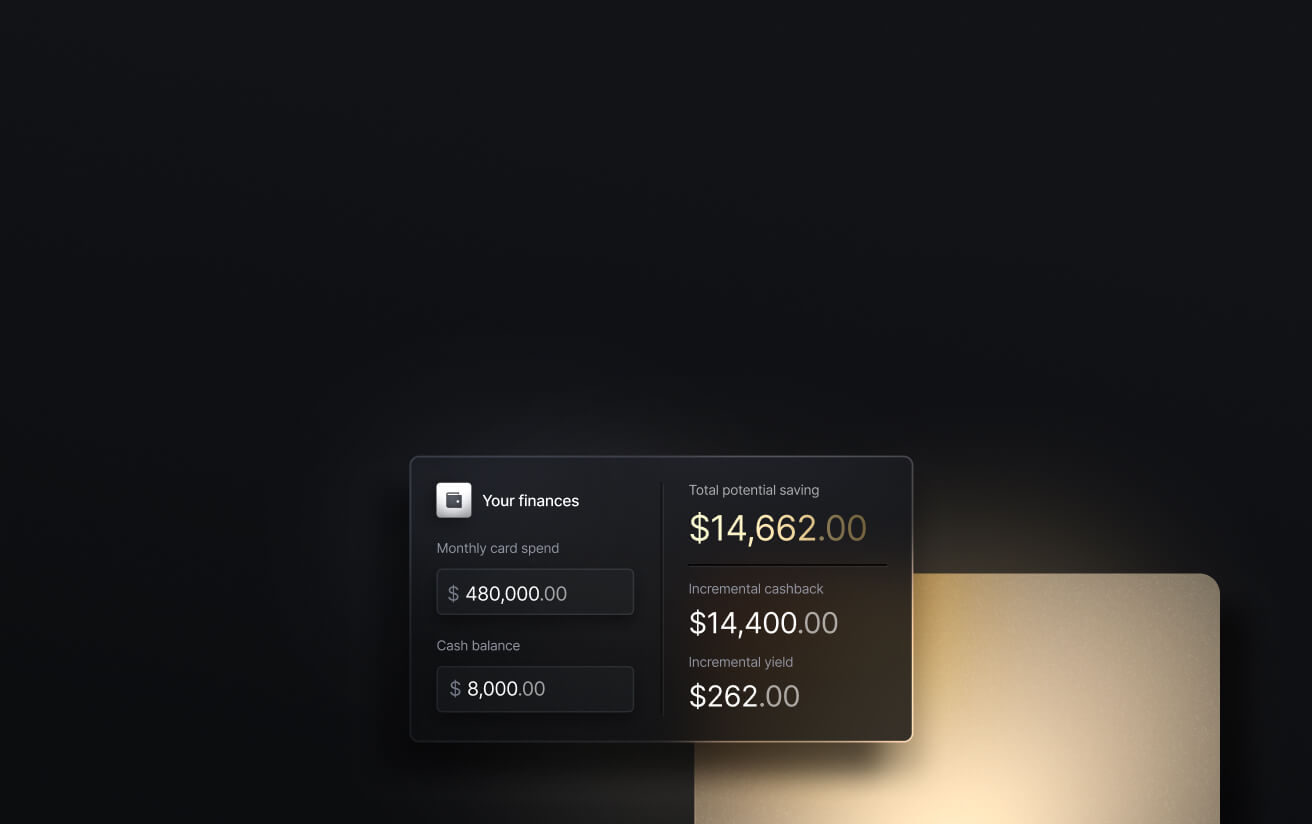
See the ROI behind your spend
Use this calculator to understand impact, then manage and track it all in Slash.

Why Fleet Managers Should Consider Slash
A fuel card simplifies gas purchasing, provides transaction-level data on fuel spending, and delivers savings through discounts and rebates at participating stations. The Slash Visa® Platinum Card can take the benefits of a fuel card and apply them to a fleet’s entire operations. While your fuel card handles gas station transactions with specific discounts and tracking, Slash can manage other categories of business spend with the same principles: clear transaction data, spending controls, and simplified expense management.
Whether purchasing fuel, airline tickets or office supplies, all transactions made with the Slash card sync instantly with our all-in-one dashboard. Each expense is automatically categorized and sorted, making it easy to analyze finances and keep accounting streamlined. You can also earn up to 2% cash back on all business expenses, putting valuable capital back into your pocket.
End-of-month reconciliation becomes even easier when Slash connects with your existing accounting platform, whether you use QuickBooks Online, Xero, or Sage Intacct. All employee card spend and transaction data is instantly pushed to your accounting software, eliminating manual entry and reducing errors.
The Slash platform also offers features such as:
- Reimbursements: Drivers may need to submit reimbursements for expenses that a fuel card doesn’t cover. Instead of managing reimbursements across multiple tools, teams can now submit, review, and approve reimbursements directly inside the Slash dashboard.
- Working capital financing: With Slash’s working capital, users can choose between flexible 30, 60, or 90 day repayment terms so companies can continue to scale while still supporting liquidity for daily operations.⁵
- High-yield treasury: Businesses can earn 3.83% Yield on their idle cash through treasury accounts backed by Morgan Stanley and BlackRock money market funds.⁶
For fleets looking to unlock extra visibility and savings on expenses beyond fuel, the Slash business banking platform could be the answer.
Apply in less than 10 minutes today
Join the 10,000+ businesses already using Slash.
Frequently asked questions
Is there a difference between fuel cards, fleet cards, fleet fuel cards, and gas cards?
When doing research, you may run into a lot of different names for these cards. Generally speaking, fuel cards and gas cards refer to cards that exclusively cover gas expenses, while fleet cards and fleet fuel cards refer to similar cards that may also cover vehicle-related expenses like tolls and maintenance.
Do fuel cards come with fees?
Fees largely depend on provider, but some fees you may expect include:
- An account setup fee
- A monthly fee per active card
- A flat or percentage based per-transaction fee
6 Best Cash Back Business Credit Cards for your Company

Do fuel cards work differently for truck-based fleets vs car-based fleets?
Fuel cards don't function differently between types of vehicles, but a card provider may offer discounts on different types of fuel in order to target certain fleets. If their user base consists mostly of truckers, they'll offer specific discounts on diesel to battle high fuel prices. If they're catering to a wide audience, their perks may apply to any type of fuel a gas station offers.


