

Bookkeeping Tips for Startups: A Beginner's Guide
Bookkeeping is one of the more annoying checkboxes on the monthly to-do list, especially for busy founders. More specifically, it’s an annoying series of more than a dozen checkboxes. Between the need to build audit trails and maintain tax compliance, bookkeeping can be a tricky responsibility for founders that want to focus most of their time on scaling their startups.
In this guide, you’ll learn 10 of the most important bookkeeping tips for startups, how some of the processes are unique for early stage businesses, and the difference between bookkeeping and accounting. You’ll also get to know Slash, a financial platform that comes with both built-in tools and two-way integrations that can help startups balance their books more efficiently.¹

Key Takeaways
- Separating business and personal finances both helps you stay organized and protects the liability shield your corporation or LLC can provide.
- Since investors (and GAAP) expect accrual accounting, you should run accrual books even if you file taxes on cash basis.
- The 1099-NEC reporting threshold rose from $600 to $2,000 for payments made in 2026.
- To make everything easier, you may either want to use a dedicated software that comes with automation tools, or hire a bookkeeper that can take care of everything for you.
What Does Bookkeeping Look Like For a Startup?
Bookkeeping is the process of recording financial transactions, tracking money in, money out, what it was for, and which account it belongs to. That's the case within both solo startups and 10,000 employee companies. What changes between those two businesses is who does it and why.
At a large company, it's usually managed by a small team or department. At an established small business, it's probably a part-time bookkeeper on a predictable monthly cadence. At a startup, it's often the same founder that does everything else.
When you’re bookkeeping for a startup, there are actually more factors at play than there are with a typical small business. Your books tell you how much runway you have, which affects all your hiring and spending decisions. They’re also particularly important for fundraising; an investor asking for two years of monthly financials is basically asking whether you know how your own company works. To potential lenders and investors, clean bookkeeping can both demonstrate your startup’s profitability and your financial prowess in general.
What's the difference between bookkeeping and accounting?
There isn’t as much overlap between bookkeeping and accounting as most people think. Bookkeeping is the act of recording what happened, while accounting is the act of interpreting it and deciding how it should be treated.
In practice, bookkeeping is the daily work: logging transactions, categorizing expenses, reconciling the bank account, sending invoices, and chasing unpaid ones. These tasks tend to be tedious, but ultimately straightforward, which is why platforms like Slash come with tools that can automate many of them.
Accounting is more complex. It involves producing financial statements, deciding when revenue is earned rather than merely collected, determining whether a purchase gets expensed now or capitalized over years, choosing a tax position, and telling you what the numbers mean. There’s a lot more judgment with these sorts of responsibilities. With the help of Twin, an agentic AI assistant that can analyze your financial data, Slash can also help optimize your accounting.
You can’t practice good accounting without clean bookkeeping. While the two processes are separate, they complement each other, and getting them both right can help you understand your cash flow more deeply.
The 10 Most Important Bookkeeping Tips For Startups
If you’re new to the idea of bookkeeping, we’ll shoot straight: you have a lot to learn. Don’t worry, though, that’s why you’re here. Below, we’ve gathered ten of the most important tips founders should know as they begin balancing their startup’s books:
1. Keep business and personal finances separate
This is a bigger deal than some entrepreneurs realize. Before you spend any money on your startup, open a business bank account and get a business card, then run every professional expense through them. This keeps your books a lot cleaner, since you and your investors won’t have to sift through grocery trips to analyze your liquidity and cash flow.
That said, there’s also a more serious reason to separate your expenses: the legal consequences. When you mix your personal and business purchases, you won’t be seen as legally separate from your business entity, and you could be on the hook for debts and obligations. The “corporate veil”, as they say, will become pierced. If money must move between you and the company, it’s wise to record it as an owner contribution, distribution, or loan.
2. Use cash basis accounting
A key part of bookkeeping is actually planning ahead for your accounting steps. You’ll be looking at two types of accounting methods: cash basis accounting and accrual basis accounting. Cash basis records income when money arrives and expenses when money leaves, while accrual records them when earned or incurred, regardless of timing. Cash basis is simpler, and as long as you make under $32 million in average annual gross receipts, it’s legally acceptable.
Startups, however, will actually want to run accrual basis accounting for the sake of their potential investors. That’s because it’s the only basis that tells you what a month actually costs. If you collect a year of subscription revenue in January, cash basis would show a wildly profitable Q1 and a slow Q2-4. Accrual basis gives a steadier picture, which is important when evaluating a business’s early stages.
3. Get used to tracking and record-keeping
A big part of bookkeeping is the process of capturing events and expenses. When you’re not on your game, the transaction happens, the receipt disappears, and you’ll never remember each of the charges you meant to log.
So, record things as they happen. Photograph receipts at purchase, add a memo to unusual transactions that aren’t easy to gauge, and keep contracts and invoices organized somewhere easy to access. The IRS generally expects records kept at least three years after filing, whether the copies are digital or physical.
4. Build an audit trail
In simple terms, an audit trail lets you answer why a number is what it is by following it back to its original documents and actions. It matters during both a tax audit and fundraising due diligence, since someone may ask about extra information regarding one of your line items.
To help create these audit trails, every transaction should connect to something like a receipt, an invoice, a contract, or a written note. It’s important to correct mistakes in records instead of deleting and re-entering, since you want to preserve the trail without scrubbing it clean.
5. Categorize your business expenses
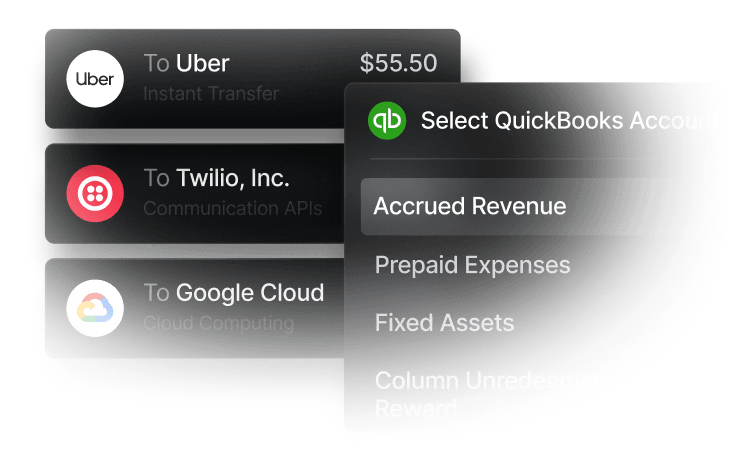
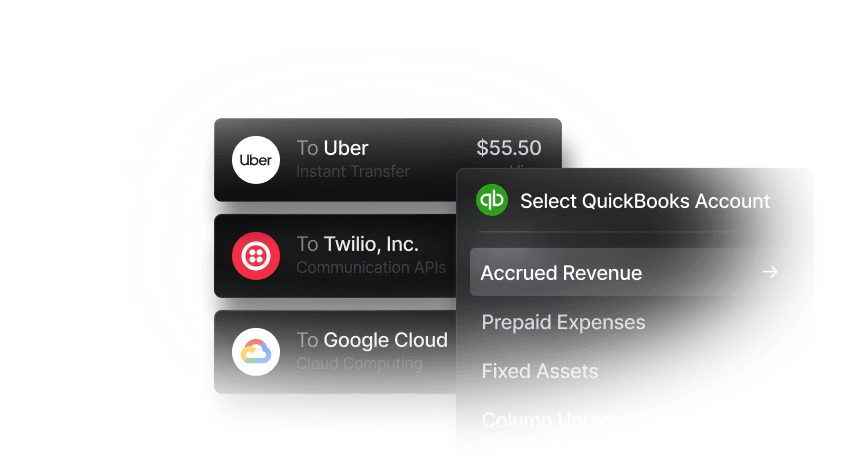
As you track your purchases and build your trails, you’ll also want to create categories for each expense. You need to know both what you spent and what you’ve been spending it on, after all. As a piece of advice, it’s not necessarily better to create several dozen niche categories, since they can be almost as difficult to manage as a complete lack of labels. Instead, narrow your categories down to 12-18.
Categories also determine tax deductibility, which is a good opportunity to get a little capital back in your pocket during tax season. For example, business meals are generally 50% deductible, and most ordinary expenses like software subscriptions and marketing are 100% deductible.
6. Set regular review dates
To make sure you’re on top of everything throughout the month, it’s helpful to put a recurring block on the calendar. Each week, you could categorize new transactions and chase overdue invoices. Each month, you should reconcile every account against its statement and check your cash flow against expectations. During monthly reconciliation, you’ll often spot duplicated charges, unused subscriptions, and payments that never arrived.
7. Set up a chart of accounts
A chart of accounts is the list of buckets every transaction lands in, organized by assets, liabilities, equity, revenue, and expenses. This is when you may want to consider a piece of bookkeeping/accounting software, since most include a chart of accounts by default.
Just like expense categorization, you don’t need to overcomplicate it. When founders create an account for everything, it ends up producing a chart nobody can navigate and reports nobody reads. In general, you’ll only want to add accounts when you need to see something separately. If you do want to make adjustments, do it early, since you don’t want to re-categorize months of money movement.
8. Know your tax forms and requirements
Let’s break down some important tax information for startups. C corporations file Form 1120, S corporations 1120-S, and partnerships 1065, with corporate returns generally due in April and pass-through returns in March. Once you have employees, Form 941 is due quarterly and Form 940 annually, with W-2s out by January 31. Contractor payments go on Form 1099-NEC – and remember, the threshold rose from $600 to $2,000 for payments made in 2026.
There are a couple stipulations if you incorporated in Delaware, which lots of founders do due to their corporate-friendly rules. In Delaware, the annual report and franchise tax are due March 1. Additionally, Delaware bills on the authorized shares method by default, which can produce a figure in the tens of thousands, while the assumed par value capital method usually brings it near the $400 minimum.
9. Use software with automated tools
While there are a lot of factors to keep in mind as you balance your books, a lot of the actual tasks can be automated. Apps like QuickBooks can automate daily data entry, categorization, invoicing, and reporting, giving you time to focus on exceptions and more pressing responsibilities.
If you use a platform like Slash, you can automate many of your bookkeeping processes in the same place that your business checking account and corporate cards live. Slash auto-categorizes purchases, supports receipt upload through email and SMS, and gives you the financial history and audit trails you need to reconcile your books more cleanly at the end of the month. The platform also syncs two-ways with QuickBooks Online, Sage Intacct, NetSuite, and Xero, allowing your banking and accounting data to work together.
10. Know when you may need a bookkeeper
Doing everything yourself is reasonable early on, but it may stop being reasonable once you pass your first seed round and start scaling. If you're spending more than a few hours a month on it, or you're far behind and struggling to catch up, you might need to hire a bookkeeper. Remember that a bookkeeper is different from a CPA, who handles tax and judgment calls.
That said, accounting solutions like Xero and banking platforms like Slash exist to help you streamline many of your bookkeeping tasks before you have to consider adding headcount. Ultimately, it’s your call, but we’d recommend giving dedicated software a try before jumping to a new hire.
Let Slash Help Your Startup Manage Its Bookkeeping
Good bookkeeping practices start with good organization. If your business spend is spread across cards and tools, your receipts are missing, and nothing’s categorized accurately, you’ll be doomed from the start. Slash is a business banking platform built around that problem. Every transaction, whether it’s made via card, ACH, or even crypto, is visible with relevant details on our real-time financial dashboard. Additionally, our high cashback corporate cards let you keep your personal and business expenses separated without having to give up rewards.
If you need any extra help balancing your books at the end of the month, try asking our agentic AI assistant, Twin. Twin can dive into your data and provide insights, surface specific numbers, and create graphs that make it all easier to digest. It can even execute more complex tasks when prompted, like creating/freezing cards and making online purchases.
Startups can also take advantage of the following Slash features:
- Business banking: FDIC-insured business checking, protected up to $150M through Column N.A.'s insured cash sweep network.²
- Working capital financing: Access short-term financing with flexible 30-, 60-, or 90-day repayment terms to help bridge cash flow gaps.⁵
- High-yield treasury: Earn up to 3.85% annualized yield on idle funds with money market investments from BlackRock and Morgan Stanley, managed directly within your Slash account.⁶
- Diverse payment rails: Slash supports a wide range of payment methods, including card spend, global ACH, international wire transfers to over 180 countries via SWIFT, and real-time domestic payments through RTP and FedNow.
- Global USD: The Slash Global USD account is designed as an alternative for foreign founders who want access to USD without forming a US entity.³ Accounts are backed on Base by a balance held in USDC, which is designed to maintain a one-to-one value with the US dollar.
Apply in less than 10 minutes today
Join the 10,000+ businesses already using Slash.
Frequently Asked Questions
Does my startup need bookkeeping if it has no revenue yet?
Yes, maybe even more than a revenue-generating business does. Pre-revenue companies still have expenses that determine deductions, and clean records make a due diligence request more straightforward later.
Bookkeeping For Startups: Setup & Best Practices

Can I throw away paper receipts if I have digital copies?
Sure, although there’s nothing wrong with keeping backups. The IRS accepts electronic records as long as they're legible, complete, and retrievable, so a photographed receipt in your accounting system or banking platform counts as documentation. Keep records at least three years after filing.
What should I do if I've already been mixing personal and business expenses?
First, fix it going forward by opening separate accounts, then work backward to identify which transactions in the mixed period were business. Record personal spending on business accounts as an owner draw or shareholder loan rather than deleting it. After that, you might want to have an accountant review the cleanup, especially if it spans a tax year you've already filed.
Should You Put Business Expenses on a Personal Credit Card?


