

What Are EFT Payments and How Do They Work?
Money doesn't change hands the way it used to. Today, most financial transactions are digital. An electronic funds transfer, or EFT, is an umbrella term that describes any transfer of money initiated and completed electronically. EFT payments include everything from ACH transfers to credit card payments — even cryptocurrency payments in some contexts. If money moves from one bank account to another without cash or physical checks changing hands, it's almost certainly an EFT. Below, we also outline how EFT works across common payment rails.
Because the term "EFT payments" covers such a wide range of payment methods, the category is almost too broad to be useful. Each payment type relies on different infrastructure, settles on different timelines, and is suited to different scenarios. Understanding these distinctions can help businesses build a more efficient payment strategy.
In this guide, we explain how businesses can use different types of electronic funds transfers to their advantage. We'll cover how each EFT payment method works, when to use specific transfer types, and how to implement modern business payment solutions effectively.
Modern business banking platforms like Slash, have advanced capabilities for managing payments.¹ With Slash, businesses can diversify their EFT payment methods, automate expense management, and gain granular, real-time insights into company spending. This includes support for cryptocurrency payments where appropriate.
The standard in finance
Slash goes above with better controls, better rewards, and better support for your business.
How EFT payments work in business operations
Even if you aren't familiar with the acronym "EFT," you're probably familiar with at least one of the payment methods it describes. EFT payments encompass ACH transfers, wire transfers, credit and debit card transactions, ATM transactions, cryptocurrency payments and transfers, eChecks, and peer-to-peer payments and services.4 We'll explore each of these payment types in more detail in the next section, but for now, it's helpful to think of EFTs as a broad category that includes all of these electronic transfer methods.
At a high level, most electronic funds transfers begin when a sender initiates a payment through a bank, payment platform, or online banking interface. The payment instruction is transmitted electronically through one or more payment systems, after which the recipient's financial institution verifies the transaction details and credits the funds to the appropriate account. If you're evaluating how EFT works for your organization, the following examples show common use cases.
In business operations, EFT payments support a wide range of everyday financial activities, including:
- Managing payroll: Direct deposit allows employers to send payroll funds electronically to employees' bank accounts on a scheduled basis. This can reduce administrative overhead, eliminate the need for paper checks, and improve reliability for employees.
- Sending payments to suppliers: EFT payments are used to pay vendors for goods and services. ACH and wire transfers are standard options, while cryptocurrency transfers and cryptocurrency payments are becoming increasingly popular. With Slash, your business can leverage multiple different rails to meet supplier preferences and payment timing requirements.
- Covering contractors' materials and labor costs: Contractor payments fall outside of your company's payroll, so businesses often rely on ACH transactions, wire transfers, or electronic checks to pay contractors efficiently.
- Processing payments from customers: Digital payment gateways make it possible to receive EFT payments for your business's goods and services via card payments, eChecks, and more.
- Engaging in international business: Companies with overseas suppliers, subsidiaries, or partners rely on EFT payments to manage cross-border business operations. Instead of waiting weeks for paper checks or money orders to arrive by mail, businesses may utilize wire transfers on the SWIFT network, global ACH, cryptocurrency payments, and other electronic transfer methods to move money internationally.
In the past, managing these different use cases may have involved using several disconnected systems, including phone calls with your bank, navigating online banking portals, and relying on third-party software for specialized payment services. Slash centralizes EFT capabilities in a unified dashboard, enabling businesses to send and receive payments across multiple rails, manage corporate card spending, leverage cryptocurrency, and automate expense management as part of comprehensive business payment solutions.
Another major advantage of EFT payments is the ability to capture and store transaction data automatically. Instead of tracking paper receipts or manually updating spreadsheets, electronic payments generate digital records that can be organized, analyzed, and exported into accounting or ERP systems. This increased visibility into spending can help businesses make better cash flow decisions, streamline procurement, simplify expense reporting, and improve tax preparation.
8 different types of EFT payments
Electronic funds transfers encompass a broad range of payment methods. Below are some of the most common EFT payment types used today:
ACH transfers
ACH payments are executed through the Automated Clearing House (ACH), a U.S.-based payment network operated by banks and financial institutions. ACH transactions are typically processed in batches. While this makes them slower to process than some other electronic payments, it also makes them one of the most cost-effective EFT options available. ACH transfers are widely used for direct deposit, bill payments, and general business-to-business transactions.
Global ACH connects the U.S. ACH system to foreign clearing house networks, such as SEPA in the European Union or BACS in the United Kingdom. Global ACH transfers allow businesses to send money internationally at lower costs than wire transfers, though settlement times may be longer.
Wire transfers
Wire transfers are another common form of electronic funds transfer. Unlike ACH payments, which are processed in batches, wire transfers are processed individually. This means that wire transfers generally process faster, but they may have additional fees over ACH. Businesses often use wire transfers for high-value transactions, time-sensitive payments, or international transfers.
International wire transfers are routed through bank-to-bank messaging networks such as SWIFT, which connects thousands of financial institutions worldwide. With Slash, you can send wires via the SWIFT network to over 180 countries in 135+ different currencies.
Peer-to-peer payments
Peer-to-peer payments generally refer to transfers made through digital wallet providers such as PayPal, Zelle, and Wise. These services send money electronically on closed-network rails separate from traditional banking networks. P2P electronic payments are frequently used as substitutes for cash in smaller transactions, including reimbursements and personal transfers.
While convenient, these payment methods often come with low transfer limits and less comprehensive compliance measures, which may make them less suitable for regular business use.
Cryptocurrency payments
Cryptocurrency and stablecoin payments are growing in popularity as a form of electronic transfer, particularly in global business contexts. These transfers bypass traditional banking networks by using the blockchain, a secure, decentralized network that eliminates the need for intermediary processing. In short, blockchain-based transfers are generally much faster and lower-cost than traditional bank transfers.
Stablecoins, which are digital assets pegged to the value of fiat currencies, are most commonly used for business EFT payments due to their reduced volatility. Slash natively supports holding, sending, and receiving two USD-pegged stablecoins—USDC and USDT—across 8 supported blockchains. You can easily on- and off-ramp stablecoins into USD within the Slash account.³
Real-time payments
Real-time payment networks are emerging as a modern alternative to standard bank transfers such as ACH and wires. Although real-time networks generally do not support international transactions, they can send funds near-instantly between some U.S. banks.
The two leading real-time networks are RTP, a private network operated by The Clearing House, and FedNow, a public network operated by the Federal Reserve. Slash enables users to use both RTP and FedNow for near-instant domestic transfers.
Credit and debit card payments
Credit card and debit card transactions are also classified as EFT payments. These electronic payments are processed through card networks operated by providers such as Visa, Mastercard, and American Express, rather than through direct bank-to-bank transfer systems.
Card payments differ from ACH and wire transfers in that funds are typically pulled from an account by the recipient, rather than pushed by the sender. As a result, credit and debit card transactions are subject to distinct regulations, interchange fees, and consumer protections.
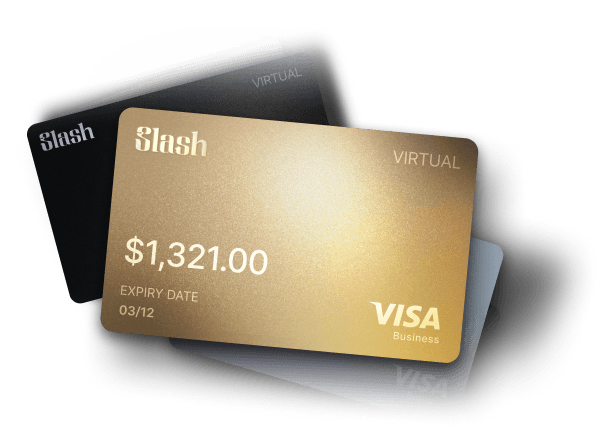
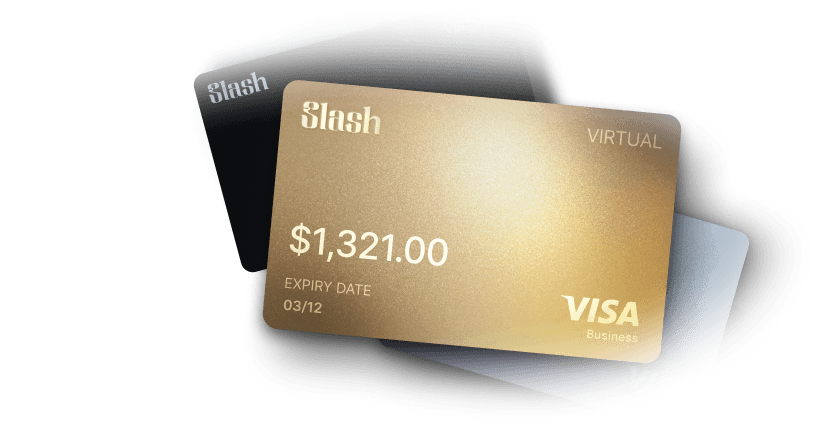
The Slash Visa Platinum Card is a corporate charge card designed to simplify employee spend management, allowing teams to preset spending limits by category or amount, monitor transactions in real time, and enforce company spending policies. Businesses can also earn up to 2% cashback on eligible company spending.
ATM transactions
Transactions conducted at automated teller machines (ATMs) are another form of electronic funds transfer. When a customer withdraws cash, checks an account balance, or transfers funds at an ATM, the request is processed electronically between the ATM operator and the customer's financial institution.
Electronic Checks
Instead of mailing physical checks, businesses can send electronic checks, also known as eChecks, that draw funds directly from a bank account using ACH payment systems. eChecks combine the familiarity of checks with the efficiency of electronic payments, making them useful for bill pay and certain vendor transactions.
When to use EFT payments: Benefits and drawbacks
There are three alternatives to EFT payments: cash, paper checks, and money orders. While these methods are accessible, paper-based payments can be slow to send, difficult to track, and incompatible with modern automation or analytics tools. Below is a more detailed comparison of EFT payments versus traditional, paper-based payment methods:
Benefits of EFT payments
- Automation capabilities: Using a financial platform like Slash to manage EFT payments allows businesses to automate payment approvals, schedule recurring payments, and track spending patterns in real time. By syncing transaction data with accounting systems like QuickBooks, teams can also streamline reconciliation, expense reporting, and tax preparation.
- Compliance measures: EFT payments are monitored by banks and financial institutions to meet customer due diligence and anti-money laundering requirements. These safeguards help reduce the risk of fraud and identity theft and are especially important for businesses operating in highly regulated industries, where compliance failures can result in penalties.
- Faster processing speeds: While settlement times vary by payment type, some EFT methods—such as real-time payment rails and cryptocurrency transfers—can settle in minutes. For domestic or international B2B transactions, paper-based payment methods cannot match the speed of modern electronic rails.
- Expense tracking: Relying on cash or paper checks often means managing stacks of receipts and invoices. Using Slash's cards and payment tools for day-to-day spending ensures transaction details are recorded automatically across your organization, reducing errors and saving time on recordkeeping.
- Consumer protections: The Electronic Fund Transfer Act (EFTA) establishes consumer rights related to disclosures, error resolution, and liability for unauthorized EFT transactions, providing added protection for electronic payments.
The standard in finance
Slash goes above with better controls, better rewards, and better support for your business.

Drawbacks of EFT payments
- Bank account fraud: Managing digital bank accounts and electronic payments carries some risk of fraud, such as unauthorized transactions or payments sent to incorrect accounts. That said, fraud risk can be mitigated by working with a financial provider like Slash, which encrypts account information during card transactions and meets all relevant KYC, KYB, and AML standards. Slash also protects customer funds with FDIC insurance backing of up to millions of dollars through an insured cash sweep network.
- Processing fees: Certain EFT payment methods, including wire transfers and card payments, may involve higher fees, particularly for international transactions. However, platforms like Slash offer access to lower-cost options such as cryptocurrency transfers and low card FX fees to help businesses manage and reduce payment costs.
Making the right financial move with Slash
Credit cards, ACH transfers, and digital wallets are standard payment tools for most businesses today. But access to these methods alone doesn't solve the operational challenges that come with managing payments across multiple platforms. Businesses still need ways to reduce transaction costs, speed up settlement times, and get better visibility into company spending. Modern business payment solutions like Slash address these needs by consolidating payment management and expanding the range of available options.
Slash supports emerging payment methods like cryptocurrency and real-time networks, but its value goes beyond just offering more payment rails. The platform includes corporate card controls, flexible financing, and direct integrations with accounting software—tools designed to give finance teams better control over how money moves through the business. Here's how Slash's features can improve the way your company handles payments:
- Leverage multiple payment options: Send payments via Global ACH, wire transfers to 180+ countries in 135+ currencies, or cross-border transfers on the blockchain. Access both RTP and FedNow networks for near-instant domestic transfers. Choose the rail that best fits each transaction's speed, cost, and destination requirements.
- Spend with the Slash Visa Platinum Card: Issue unlimited physical and virtual corporate cards with customizable spending controls. Set limits by category or amount and monitor transactions in real time. Plus, earn up to 2% cashback on company spending.
- Native cryptocurrency support: Hold, send, and receive USDC and USDT across eight supported blockchains. On- and off-ramp between stablecoins and USD seamlessly within your Slash account. Ideal for international transfers that need to be both speedy and cost-efficient.
- Earn on idle funds: Use a Slash high-yield treasury account to invest company funds in BlackRock or Morgan Stanley money market funds earning up to 4.1% annualized yield.⁶
- Access flexible financing: Slash Working Capital provides tailored credit lines for short-term liquidity needs. Access funds directly through the dashboard with flexible repayment terms of 30, 60, or 90 days.⁵
- Streamline accounting: Sync transaction data automatically with accounting platforms like QuickBooks. Export detailed payment records, streamline reconciliation, and eliminate manual data entry across your finance stack.
Apply in less than 10 minutes today
Join the 10,000+ businesses already using Slash.
Frequently asked questions
Are international transfers EFT payments?
Yes, international transfers can be considered EFT payments. International transfers conducted electronically through wire transfers, global ACH networks, blockchain networks, or other digital payment systems are considered EFT payments.
Cross-Border Payments: Everything You Need to Know

Can EFT payments be reversed?
Under EFTA Regulation E, financial institutions must investigate reported EFT errors and correct qualifying issues within 1 business day. However, reversals are limited and depend on timing, authorization status, and the nature of the transaction.


