
Unknown chargesmean unknown risk
Understand your business exposure before it compounds.
Seeing a MICROSOFT EDI PAYMENT charge on your statement?
Common ways MICROSOFT EDI PAYMENT charges might appear on your statement
MICROSOFT 1507 EDI PAYMENT
MICROSOFT EDI PAYMENT
MICROSOFT EDI PAYMNT
MICROSOFT 1507 EDI PAYMNT PPD
What is MICROSOFT EDI PAYMENT?
This descriptor reflects a transaction processed by Microsoft Corporation via an Electronic Data Interchange (EDI) billing method. According to Microsoft’s own guidance, if you see an unfamiliar charge from Microsoft you should check your account’s billing history for subscriptions or in-app purchases. Learn more at microsoft.com.
Common reasons why you may be seeing this charge
- Subscription renewals for Microsoft 365, Xbox Game Pass, Azure, or Dynamics services billed directly through Microsoft’s enterprise or consumer billing system.
- Business-to-business (B2B) license payments handled through Microsoft’s EDI network; common for enterprise customers or partners using automated billing for software or cloud credits.
- Cloud consumption charges for Microsoft Azure services (e.g., compute time, storage, API calls) are tied to a corporate or developer account.
- One-time invoice settlements for enterprise products or software agreements (for example, Microsoft Volume Licensing or Microsoft Partner Network accounts).
- Marketplace transactions or partner-service fees billed via Microsoft’s commercial marketplace (such as app or SaaS subscriptions sold through Microsoft Commerce).
- Automated renewals are linked to a stored payment method in your Microsoft Account or Azure Portal, which may not specify the product name on your bank statement but will display it in your Microsoft billing history.
- Refund adjustments or pro-rated billing from a prior Microsoft service change; these may appear under the same “EDI PAYMENT” descriptor even when crediting funds back to the account.
Decoding MICROSOFT EDI PAYMENT charge tags
- MICROSOFT is the merchant (Microsoft Corporation).
- EDI indicates “Electronic Data Interchange,” denoting the method of billing rather than a specific product.
- PAYMENT / PAYMNT shows that the transaction is a payment or debit rather than a purchase of goods.
- Variants like 1507 or PPD ID: ... may appear; they serve as internal billing codes rather than consumer-facing product names.
What to do
if you
don’t recognize this charge
Spot, verify, and resolve suspicious charges in minutes.
Contact your bank.
Call your bank using the number on the back of your card.
Contact the merchant.
Call their customer service to verify the charge and get transaction details.
Dispute the charge & monitor account.
If it appears fraudulent, report it to your bank or card issuer.
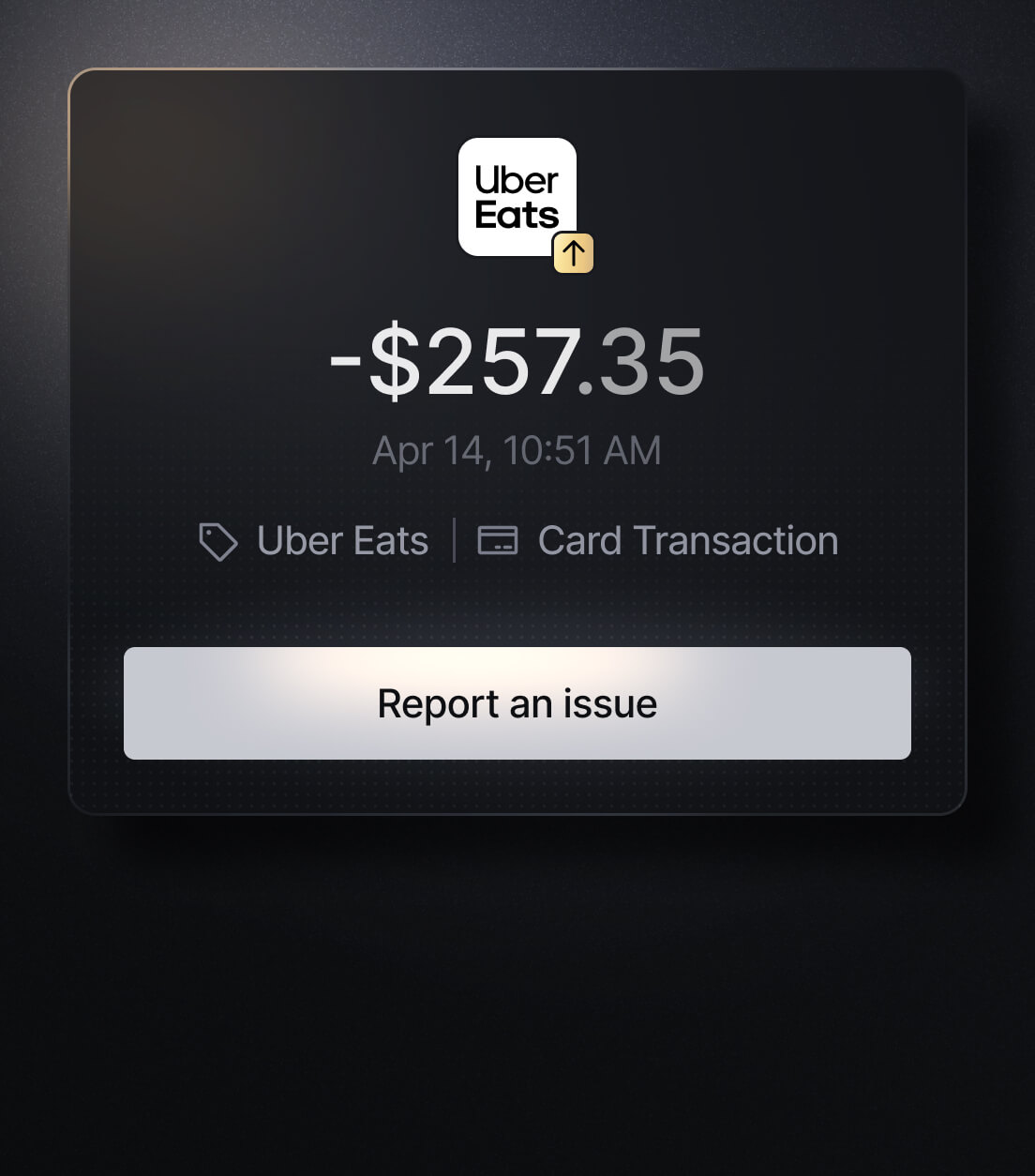
Easily Identify Every Charge with Slash
See exactly where, when, and how each charge occurred, complete with merchant names, payment types, and connected team cards with Slash’s detailed card logs and expense tracking tools.
Discover more insights


Apply in less than 10 minutes today
Join the 10,000+ businesses already using Slash.