

Slash vs Chase Business: Features and Cards Compared in 2026
While they both offer checking accounts, corporate cards, and financial management tools, Slash and Chase approach business banking from two very different angles.¹ Chase is a traditional bank that operates over 5,000 branches across the United States, while Slash is an all-in-one financial platform that gives users access to a strong suite of tools on both desktop and mobile.
Recently, Chase made an announcement regarding their card rewards that further separated the two products. Effective November 15th, 2026, Chase Sapphire Reserve Card users will stop earning 3x points on advertising when they reach $1 million in annual spend. Meanwhile, the Slash Visa® Platinum Card earns up to 2% cashback on eligible purchases without any category caps.
We wrote this article to compare Slash and Chase based on their banking products, the features they come with, and the business cards they offer. If you happen to hold a Chase Sapphire Reserve Card and you’re worried about the new advertising rewards ceiling, Slash is currently offering a sign-on bonus and extra cashback to those who make the switch. Keep reading to learn more about what that entails.
Key Takeaways
- Chase's Sapphire Reserve for Business stops earning 3x points on advertising past $1 million in annual spend on November 15, 2026, which a team with a $3 million ad budget could exhaust before the end of Q2.
- Chase's business bank accounts carry monthly fees of $15, $40, and $95, though they can be waived by holding certain balances.
- Chase deposits are FDIC insured to $250,000, while Slash reaches up to $150 million through Column N.A.'s sweep network.²
- The Slash Visa® Platinum Card is a charge card settled at the end of each business day, while most of Chase’s cards are standard credit cards.
- Slash's cashback is uncapped, while Chase's bonus categories carry ceilings, including $25,000 on Ink Business Cash categories and $150,000 on Ink Business Preferred.
Slash vs Chase: Business Banking
A good business banking solution should cover the accounts and tools used to receive revenue, pay vendors, store cash, issue cards, and control spending. Chase approaches those jobs through traditional bank accounts and separately selected products, while Slash begins with an online checking account and builds cards, automation, accounting integrations, and more around it.
Chase Business Banking
Chase offers three primary checking tiers:
- Chase Business Complete Banking costs $15 per month unless the business meets certain waiver conditions, such as maintaining a $2,000 minimum daily balance. It includes digital invoices, QuickAccept card processing, online bill pay, wire transfers, debit cards, and $5,000 in branch cash deposits per statement cycle.
- Chase Performance Business Checking costs $40 monthly (waived with $35,000 in average balances) and includes 250 teller transactions, $20,000 in branch cash deposits, free incoming wires, and two free outgoing domestic wires per cycle.
- Chase Platinum Business Checking costs $95 (waived with a $100,000 average balance) and raises those allowances to 500 transactions, $25,000 in cash deposits, four free outgoing wires per cycle, and access to additional support.
Chase’s main strength is its physical infrastructure. Businesses that collect cash and prefer in-person visits have access to a national branch and ATM network. However, its shortcomings tend to outweigh its strengths, especially for businesses that don’t use cash.
Transfer fees, transaction limits, and cash-deposit allowances vary by tier, and you may need to spend some time actively managing your account to dodge the monthly charges. Features such as native crypto transfers, unlimited virtual cards, multi-entity oversight, and more are also missing. Businesses with deep pockets also take a bit of a risk when holding balances in Chase; deposits are only FDIC insured up to $250,000, which falls far short of the sweep network-based FDIC insurance that Slash offers.
Slash Business Banking
Slash is a financial technology company rather than a bank, with banking services provided by Column N.A., Member FDIC. Their two tiers, Free and Pro, only vary in their fees and reward rates. Slash Free costs $0 per month and includes $1 fees for same-day ACH, $6 for domestic wires, $5 for outgoing RTP or FedNow transfers, and up to 1.5% cashback on eligible spend with the Slash Card. Pro costs $25 a month, removes those domestic transfer fees, and allows up to 2% cashback on eligible spend.
Once you take a look at the Slash platform itself, you can really start to see the ways it stands above Chase. Slash supports stablecoin payments, deep expense management tools, automated invoicing, multi-entity management, and offers an agentic AI assistant named Twin that can help manage it all for you. Additionally, through Column N.A.’s sweep network, deposits of up to $150 million can be fully insured.
While Chase and Slash both sync with accounting solutions like QuickBooks and Xero, Slash adds NetSuite and Sage Intacct, which are better fits for more mid-sized companies. For teams that want to build custom connections, Slash also offers flexible API tooling that Chase doesn’t match.
Slash doesn’t have brick-and-mortar branches, nor does it support ATM withdrawals/deposits. For more online-native companies, however, it can synthesize your checking account, card manager, expense tracking, accounting workflows, invoicing tools, and more all on one screen.
Slash vs Chase: Business Cards
Chase’s cards are business credit cards, although its higher-end options are hybrid models that allow both a pay-in-full balance and a revolving balance that can accrue interest. The Slash Visa® Platinum Card is a charge card whose settled purchases are automatically repaid from the Slash cash account at the end of each business day. Now that you understand their structures, let’s take a closer look:
Chase Business Cards
Chase offers five core cards use distinct rewards and payment structures:
- Ink Business Unlimited: No annual fee, unlimited 1.5% cash back, and 0% introductory APR for 12 months.
- Ink Business Cash: No annual fee, 5% cash back on the first $25,000 spent annually at office-supply stores and on internet, cable, and phone services; 2% on the first $25k at gas stations and restaurants; and 1% elsewhere.
- Ink Business Preferred: A $95 annual fee, 3x points on the first $150,000 in combined annual travel, shipping, online advertising, and telecommunications purchases, and 5x points on Lyft rides.
- Ink Business Premier: A $195 pay-in-full credit card with Flex for Business, its credit line feature. It earns 2.5% cash back on purchases of $5,000 or more, 2% on other purchases, and 5% through Chase Travel. The Flex APR is 17.74%–28.49%.
- Sapphire Reserve for Business: A $795 pay-in-full credit card, also with Flex for Business. It earns 8x through Chase Travel, 4x on flights and hotels booked directly, 3x on social-media and search advertising (soon to be capped), and lounge access.
If you manage a small business and you’re in the market for a credit card, the Ink Business Unlimited and Cash are solid no-annual-fee options. For finance teams at mid-sized companies that want rewards on travel and advertising, the Sapphire Reserve for Business has long been the right choice. The problem is that Chase’s recent rewards cap announcement puts a damper on the potential that card offers.
Now that Sapphire Reserve cardholders can no longer earn 3x points on advertising purchases after $1 million, it doesn’t make sense for some high-spend teams to run their ad spend through Chase. If you have a $3M annual marketing budget, you could run out of rewards multipliers by Q2. That isn’t a problem with the Slash Card.
The standard in finance
Slash goes above with better controls, better rewards, and better support for your business.

Slash Visa® Platinum Card
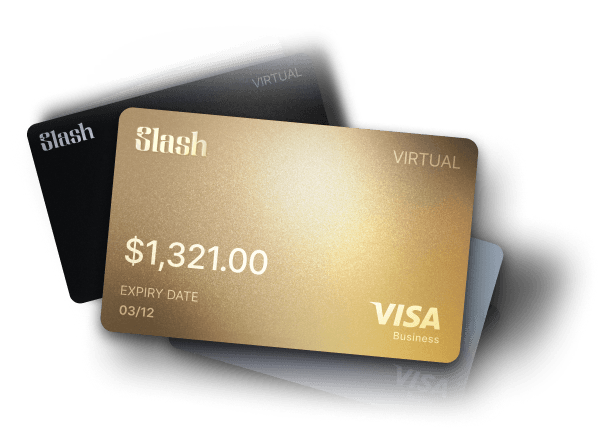
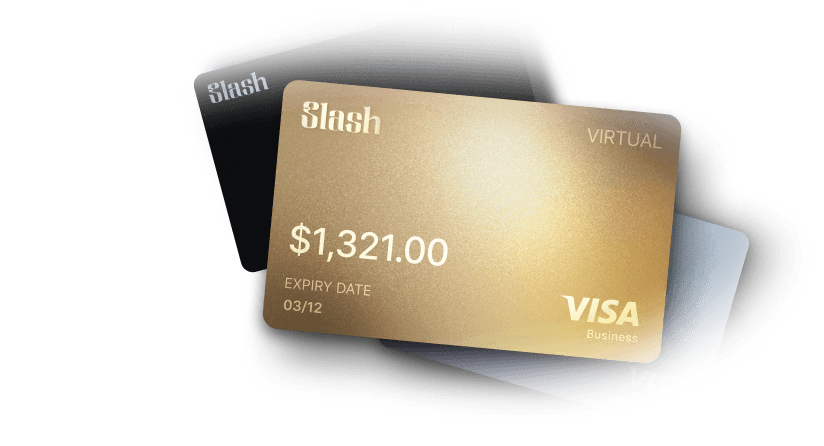
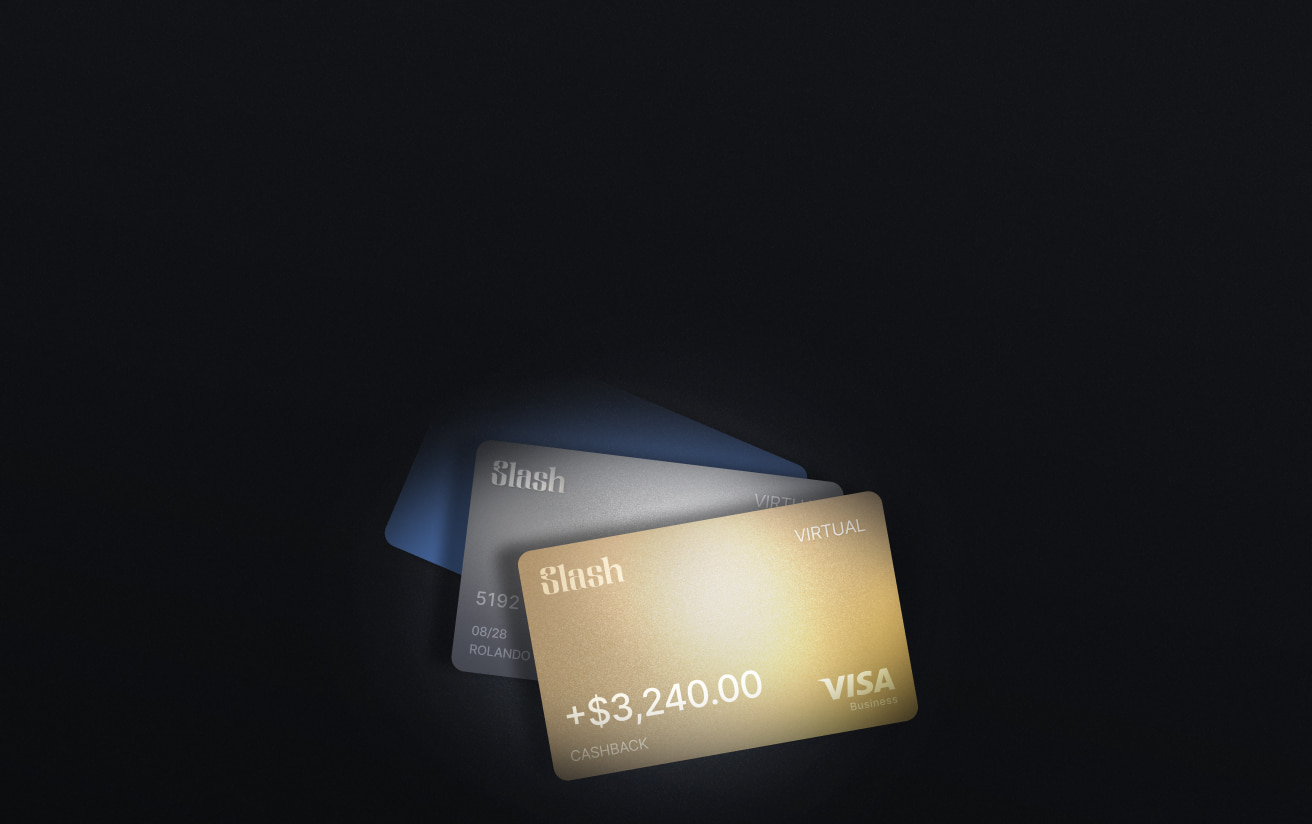
The Slash Visa® Platinum Card is a charge card that offers up to 2% cashback on eligible purchases under the Pro Plan. These rewards are completely uncapped, meaning you can earn real capital on every dollar spent from a $10M advertising budget. With flat rate cashback, the math also becomes a lot simpler than it is with points; you don’t have to navigate complex redemption paths or prioritize certain categories over others.
Outside of rewards, leaders can use the Slash Card to take full control over company expenses and employee spending. Each purchase made with a Slash Card syncs directly to the Slash dashboard, where businesses can view real-time spending analytics, receive alerts, and export clean data directly into their connected accounting app. Admins can issue unlimited virtual and physical cards to team members, each with their own spending limits and merchant restrictions. If a purchase or pattern of activity is deemed suspicious by fraud detection tools, Slash can flag it for review and give finance teams the ability to freeze the card on the spot.
As a charge card-based program, Slash settles completed card purchases from the company’s cash account daily and you can’t carry revolving credit forwards. While this doesn’t allow for as much flexibility, it does encourage responsible spending and give you a clearer look at your company’s live liquidity.
Slash vs Chase Business Cards at a Glance
The rates below reflect published terms available on September 18, 2026.
How Slash Can Save the Day For Sapphire Reserve Cardholders
If your company spends millions on advertising each year through the Chase Sapphire Reserve for Business card, you were probably pretty happy with the 3x points. Those days are coming to an end. Fortunately, you don’t have to start a wide hunt for a card that offers advertising rewards; the Slash Visa® Platinum Card is right here.
Sapphire Reserve cardholders that make the switch to Slash before October 31st, 2026 can unlock:
- $10k sign-on bonus after $1m in qualifying spend
- up to 2.3% cashback
- net 30 terms for eligible companies
If you hold onto your Sapphire Reserve card, you’ll stop earning 3x points once you hit $1m in ad spend. With the Slash Card, you’d get $10,000. It’s a no-brainer. All you have to do to claim the offer is like and reply to this tweet, then open up an account with us.
After you sign on, you’ll be eligible for the promotion-specific perks, and you’ll also get access to the following:
- Agentic AI-powered finance: Our platform comes with Twin, a built-in AI agent that can be prompted with natural language to complete complex tasks. Users can ask it to create cards, pay invoices, review your cash flow, and a lot more.
- Working capital financing: Access short-term financing with flexible 30-, 60-, or 90-day repayment terms to help bridge cash flow gaps.⁵
- High-yield treasury: Earn up to 3.84% annualized yield on idle funds with money market investments from BlackRock and Morgan Stanley, managed directly within your Slash account.⁶
- Native cryptocurrency support: Send and receive USD-pegged stablecoins USDC and USDT across 15 supported blockchains for faster, lower-cost global payments.⁴
- Diverse payment rails: Slash supports a wide range of payment methods, including card spend, global ACH, international wire transfers to over 180 countries via SWIFT, and real-time domestic payments through RTP and FedNow.
Apply in less than 10 minutes today
Join the 10,000+ businesses already using Slash.
Frequently Asked Questions
Are points multipliers better than cashback?
Neither is objectively better than the other. However, it’s often easier to redeem flat rate cashback than it is to redeem points values, as you may have to spend your points through a travel portal or take a penalty when you apply them to your balance.
Are Points Better Than Cash Back?

What happens to my Chase points if I close the card?
Points in an Ultimate Rewards account are generally forfeited when the account that holds them is closed, so the usual advice is to redeem or transfer them to a travel partner before closing anything. If you hold another Chase card that earns Ultimate Rewards, you may be able to move the balance there instead.
Does the Slash Card require a personal credit check or personal guarantee?
No. Applications can use the founder’s EIN rather than their personal credit file, and no personal guarantee is required.
Business Credit Cards With No Personal Guarantee: Top Picks and How To Apply


