

Why Slash Spent 2026 Building for Bigger Companies
Here’s a parable. A lumberjack decides that stopping to sharpen his axe is a waste of time. As the blade dulls, every swing takes more effort. He tires sooner, and each tree takes longer to fall. By the end of the day he is exhausted, half the trees he meant to fell are still standing, and he finally understands his mistake.
Maybe your company picked its corporate card and accounting software when it had a hundred employees. As your business grew, you worked around each tool's shortcomings and decided, again and again, that switching would cost more time than it saved. Two years later, when your headcount has quadrupled and your sales have grown tenfold, you finally realize that your financial setup can’t keep up.
Half of finance teams need six or more business days to close their books each month, according to a 2025 survey of 100 finance professionals by Ledge. The most common cause of delay, cited by 56% of respondents, was waiting on information from other departments. Much of the work goes to tracking who spent money and why, and the burden grows with every new employee who carries a company card.
Since March, Slash has released new features nearly every month for finance teams at larger companies. Nearly every update came from a user request, and most target the work that piles up as a finance team grows: chasing receipts, correcting vendor records, tracing who approved a charge. The aim is to keep the axe sharp, so you never have to choose between keeping up with the work and fixing the tools you use to do it.
The standard in finance
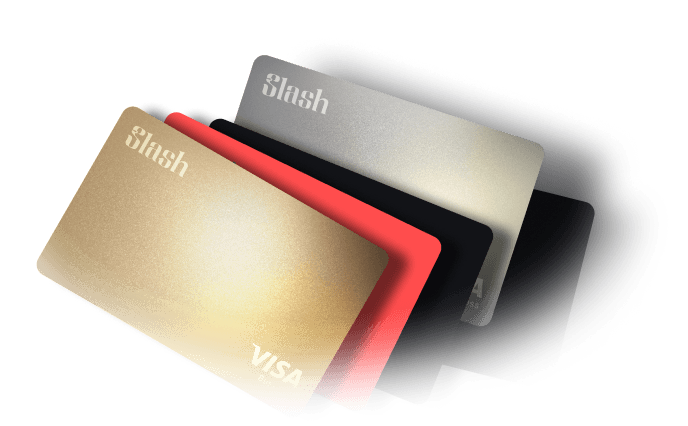
Slash goes above with better controls, better rewards, and better support for your business.


An ERP Is Only as Good as the Data Going Into It
QuickBooks and Xero handle most of what a small or midsize business needs from its accounting software: invoicing, bill payment, reconciliation and reporting. However, they can start to strain as a company's structure gets more complicated.
Many companies move to an enterprise resource planning system, or ERP, such as NetSuite or Sage Intacct, when they add subsidiaries or offices abroad that need consolidated books, prepare for an audit or a funding round, or need to track spending across more departments, locations and projects than their current accounting software can handle. The trouble is that ERP systems are immensely complex, and without the right complementary financial tools, a finance team can miss out on some of the most powerful time-saving features.
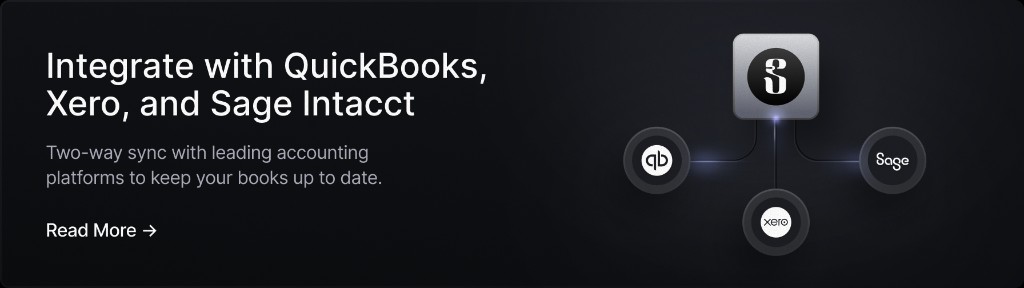
In March, Slash launched its first direct ERP integration with Sage Intacct, two weeks after releasing an MCP connector, which lets AI tools like Claude and Cursor connect to a Slash through Slash's API. NetSuite and DualEntry integrations followed in June, bringing Slash to five accounting integrations. Today, Slash supports native integrations for seven different accounting platforms and ERPs, now including Rillet and Campfire.
Slash also began categorizing transactions automatically, and each transaction can now carry the department and budget labels a larger accounting system expects. In July, Slash began letting reviewers save the way they categorized one transaction as a reusable rule, which Slash uses to help fill in the same fields on similar transactions. An accountant can approve thousands of transactions at once and send them to the accounting software in one step, rather than one at a time.
Handling Expense Management at Scale
A common problem is employees signing up for subscriptions as they need them on the company card and doing it incorrectly. The receipt might go to the employee’s own inbox and get buried after a month, or the charge still traces back to an engineer who has since left the company. Seeing that the charges are happening is one thing, but compiling the trail of invoices and receipts later on can be a painful process.
A lot of large companies already use expense management apps that ask employees to photograph a receipt after each purchase, but there are still the emailed receipts for subscriptions and vendor invoices leftover. At a few thousand transactions a month, the missing receipts pile up before every close. Businesses generally need receipts to back up the expenses they deduct, and auditors ask to see them.
Slash rebuilt its expense tools in March so employees can send receipts by text, email or upload, and Slash attaches each receipt to its transaction. In June, Slash began letting companies approve additional email addresses or their whole company domain to send in receipts. A receipt emailed to a billing inbox or an engineer's address now reaches the right charge.
In July, expense reports also gained the same department and budget labels as card transactions, so reimbursements and card spending are categorized the same way in the ERP.

Don’t Let Small Decisions Slow Down Month-End Close
Card statements often list vendors under cryptic names, like an abbreviation or a parent company the team does not recognize. When a vendor has no record in your system, the reviewer has to stop, look them up, create the record and return to the queue. Across a few thousand charges, the detours can add days to the month-end close.
Slash has long made it simple to store vendor records, but this year vendor management got smarter. In July, Slash began suggesting which vendor a charge belongs to during review, a feature companies can turn on or off depending on its preferences. Reviewers can create or correct a vendor record without leaving the review screen. The screen also shows how each transaction was paid, whether by card, bill payment or another method, and clearer labels show what each button will do before anyone clicks it.¹
Accounts Payable That Keeps Up as the Invoices Multiply
Contractors, suppliers and software vendors usually bill large companies by invoice rather than by card. The invoices arrive as email attachments, often sent to whichever employee signed the contract, and the company's accounts payable team has to collect them, enter each one into the accounting system, route it for approval and schedule the payment.
Vendor details that arrive by email are also a favorite target for fraud: business email compromise affected 74% of organizations in 2025, according to the Association for Financial Professionals. Standardizing how details arrive and who is approved to add them is one of the methods your company can use to prevent a mishap.
In May, Slash introduced bill pay, built around a dedicated email inbox for invoices. Vendors can send bills straight to the inbox, and employees can forward bills they receive. Slash reads each bill, saves a digital copy, records it in the company's accounting software and prepares the payment. Since July, a bill paid through Slash appears in the accounting software as both the bill and the payment, so no one has to match the two by hand.
Your vendors also may change their payment details and addresses, and the updates often arrive by email and get typed in by hand, if they arrive at all. In September, Slash added vendor information requests, which let a company ask a vendor to fill in or update its own payment information, address and tax details.
Spend Controls to Know Who Changed What, and When
At a large company, dozens of administrators and managers may have permission to issue cards, change spending limits, approve payments or edit vendor details. When a limit changes or a payment goes out unexpectedly, the finance team needs to know who made the change and when. Without a central log of activity, reconstructing the details related to a change can be needlessly complicated – or worse, incomplete.
In August, Slash introduced Activity Logs, a running record of more than 70 kinds of actions taken in an account, including payments, issuing or canceling cards, changes to bills and expenses, and edits to spending rules. Each entry shows what happened, when, who did it and what changed. Finding the person who changed a setting no longer requires searching old emails.
A related annoyance at scale is keeping track of who has access to your financial tools. Removing a departing employee from a 30-person company's systems may take a few minutes. At a larger company, a departing employee may belong to several card groups or be an approver for several other colleagues’ expense requests, and rebuilding the approval structure from scratch can take hours.
Slash's organization chart, released in October, gives administrators a visual map of the company's teams and who manages them. The chart connects to the account's controls, so administrators can set spending rules for card groups, assign approvers and remove departing employees in one place. The Action Center, added in May, gives employees and administrators one view of all the pending actions waiting for them in their account, from approval outcomes to document requests.
Slash: Built to Scale From the First Hire to the Thousandth
Each of Slash's 2026 updates gives finance teams one fewer reason to stop and fix their tools.
For teams that want automation, Slash can handle it: accounting mappings that run on autopilot, an API for spinning up cards and managing accounts, and an MCP connection that brings your finances into the AI tool you already use.
For finance teams that need the granularity and control of a large organization, Slash can do that too, with intuitive interfaces for managing employees, checking alerts and crunching the numbers, plus unlimited virtual cards with atomic-level controls.
Whether a company uses Slash to automate its finances, control them or both, the pricing and protections underneath stay the same:
- Slash Pro costs $25 a month for the entire business, with no per-user fees, and waives charges on domestic wires, same-day ACH and FedNow or RTP transfers.
- Pro users can earn up to 2% cash back on eligible card spend, and every plan includes unlimited virtual cards.
- Idle cash can be placed into Slash Treasury, which currently offers yields of up to 4.01% through money market funds managed by BlackRock and Morgan Stanley.⁶
- Deposits held in Slash accounts are eligible for hundreds of millions of dollars in FDIC insurance coverage through Column N.A. and its insured cash sweep network.²
If your finance team is working around its tools, talk to the Slash team about what a switch would look like, or open an account and get started today.
Apply in less than 10 minutes today
Join the 10,000+ businesses already using Slash.
Read more from us


