

AI Advertising: What Businesses Should Know in 2026
AI platforms are opening up to advertising, and ad inventory is usually cheapest and least contested before everyone arrives. The businesses buying placements now are building performance data their competitors won't have for another year, and that head start gets more expensive to buy the longer you wait.
There's more than one way into advertising on AI platforms, and they don't all cost money. In this guide we'll break down what you need to know to get started: the different strategies to get AI placements and mentions, the tools businesses are using for paid advertising management, the emerging ad network providers for AI models, and the future trends to watch for in the space.
If your business is looking for a better way to run its advertising, consider Slash. With Slash, you can earn up to 2% cash back on qualified card spend, issue unlimited virtual cards with their own limits and rules for each channel or campaign, and open separate business accounts to keep budgets segmented, all with no required monthly fees.¹ Exclusive deal for Slash users: run contextual ads across Gravity's network of third-party AI apps, assistants, and developer tools, and earn up to 5% cash back on qualified ad spend paid with a Slash card.
What is AI Advertising?
"AI advertising" can refer to two different things. The first is advertising inside AI products: paid placements that appear in a chatbot's response or inside an AI-powered app. The second is using AI to run advertising you already buy on Google, Meta, and programmatic networks, where models handle bidding, targeting, and creative testing. In this guide, we'll be talking about the former.
Native advertising placements
In February 2026, OpenAI became the first major AI company to explicitly support advertising in its models, opening ChatGPT to sponsored placements on its free and lower-priced tiers. Ads appear in a labeled box below the model's answer, and OpenAI has said placements do not influence the response itself.
The rollout has moved quickly: reporting through the first half of 2026 describes expansion into Canada, Australia, New Zealand, the UK, Japan, Brazil, and several other markets.
Advertising networks for AI
OpenAI is the only frontier model natively supporting ads; however, another method for placements is emerging. Ad networks built specifically for AI apps, such as Gravity, place sponsored product suggestions inside third-party assistants, chat interfaces, and developer tools by matching the user's stated intent against advertiser inventory. That gives smaller AI products a way to monetize conversations and gives advertisers reach beyond the handful of large model providers.
Why Invest in AI Advertising?
AI is changing how people see your business online. You've probably seen it yourself – AI overviews on Google that stop you from clicking through to a site, or asking ChatGPT or Claude to weigh in on a purchase. Your website used to be where you had power to control the narrative about your product, but AI is increasingly removing that control from businesses and instead shifting the priority to brand visibility.
AI is changing how people search online
Analyses in 2026 found Google's AI Overviews appearing on more than 20% of all searches, well up from the year before. Studies through 2025 and 2026 put zero-click rates on Google at 68% in the first four months of 2026, and click-through falls further on queries where an AI summary appears.
Now, a potential buyer can research your category, read a synthesized comparison, and settle on a shortlist without loading a single website. Paid placements are one of the few ways left to reach that buyer. SEO and paid search still work on the traffic that clicks through, and plenty of people still click, but neither one gets you in front of someone who stopped at the answer.
Reaching buyers at the point of intent
When someone asks AI to help them with a purchase, that's the most clear cut information you can have to act on intention. Not only that, buyers will often give an AI lots of important information: the problem they're trying to solve, the constraints, sometimes the budget and timeline.
Getting your business in the answer pool for these high intent scenarios is an important opportunity for conversion. If an AI explains to a buyer that your product can feasibly solve their problem or fit their situation, it's doing the job a sales representative would do at the exact moment the buyer is deciding. A user asking how to handle vendor payments across three entities has said more about what they need than any keyword bid could capture, and your placement gets matched against that description rather than against a phrase.
Lower competition while the space develops
Ad inventory tends to be cheapest and least competitive before measurement standards settle, and the businesses experimenting in 2026 are building performance data their competitors will not have. However, there is still uncertainty about attribution, so it's best to determine ways to test AI ad performance before throwing a big budget at it.
How to Get Ad Placements in AI: 3 Different Strategies
There are three routes into AI visibility, and they differ in cost, control, and how quickly they produce anything:
- Buying directly from a model provider: OpenAI's advertising program is sold through its own interface with contextual matching based on conversation topic and, depending on user settings, prior chat history. Third-party estimates in mid-2026 put CPMs roughly in the $25 to $60 range with cost-per-click bids starting around $3 to $5 and running higher in B2B categories.
- Using an AI ad network: Even though internal policies govern ad placements on the core platforms for models like Claude (Anthropic doesn't support ads), the wrappers built on those models often do support ads. Ad networks keep an inventory of wrappers and serve your placement when a conversation shows intent that matches your campaign, with the app inserting the ad into its own interface once the model's answer comes back. That's how you can reach someone working in Claude even though Anthropic sells no ads.
- AEO/GEO: This is the strategy that costs nothing and gives you the most control over your message, but it isn't advertising in the traditional sense. AEO earns mentions by making your website content the thing models cite when answering a question. It's similar to SEO; you're targeting queries that your business is an authority on and trying to seize on intent. However, unlike SEO, the final answer isn't yours to write.
There is one common thread across all three strategies: you should make it easy for a model to describe your product correctly. That means plain, current pages covering what you sell, who it's for, what it costs, and how it compares, with consistent naming and specifics a model can lift verbatim rather than marketing copy it has to interpret. Analyses of AI citations consistently find freshness matters more than it does in classic SEO, so pages that get reviewed and updated tend to get cited more often.
Tools for Effective AI Advertising Campaign Management
The tools in this space fall into three groups: ad networks that sell AI inventory, native automation inside the big ad platforms, and third-party layers that manage or report ad performance across accounts. Here’s the shortlist of some of the leading tools available today:
Gravity
Gravity is an ad network built for AI surfaces rather than web pages. It analyzes what a user is asking an AI app, determines whether any advertiser in its inventory is relevant, and serves a sponsored suggestion inside the response, handling bidding and inventory allocation across its publisher network. For advertisers, the appeal is access to conversational inventory across many smaller AI products through one buy, with an API for publishers on the supply side.
- What it's for: Buying contextual placements inside third-party AI apps, assistants, and developer tools.
- Price: No published rate; pricing is bid-based, so ask for CPM ranges in your category before committing.
Google Performance Max
Performance Max runs a single campaign across Search, Shopping, YouTube, Display, Discover, Gmail, and Maps, with Google's models deciding placement and bid. It performs best with a strong asset library and reliable conversion tracking, and it gives you less visibility into placement-level performance than manual campaign types.
- What it's for: Automating bidding, placement, and creative testing across Google's surfaces from one campaign.
- Price: No platform fee beyond media spend. Benchmarks put average Google Ads CPMs near $13 in 2025 and 2026, with Display placements much cheaper (closer to $3) and connected TV far higher, and CPCs varying widely by industry.
Meta Advantage+
Advantage+ automates audience, placement, and budget within Meta's properties. It is free to use and tends to work well for direct response with volume, while offering limited control for advertisers who want to enforce specific audience boundaries.
- What it's for: Automating audience, placement, and budget allocation across Facebook and Instagram.
- Price: No platform fee beyond media spend. Meta CPM benchmarks for 2026 average in the low-to-mid teens, up roughly 20% year over year, with health and wellness inflating fastest.
Smartly
Smartly is the enterprise option of the group, built around producing and assembling creative at scale: feed-driven ads, template-based video, and coordinated launches across Meta, TikTok, and Pinterest from one interface. It fits teams whose bottleneck is creative volume across several networks rather than tuning a single account.
- What it's for: Creative production and cross-network campaign orchestration at enterprise scale.
- Price: Platform fee on top of media, quoted pricing rather than published. CPMs depend on whichever networks you buy through.
Madgicx
Madgicx aims at direct-to-consumer advertisers who want audience automation and creative diagnostics without hiring an analyst to interpret the data. The value is mostly in seeing which creative is fatiguing and which audiences are still producing, in one place.
- What it's for: Audience automation and creative fatigue analysis, mainly for DTC brands on Meta.
- Price: Tiered by the ad spend it manages and quoted in the app rather than published, with a 7-day free trial. Media costs are separate and carry Meta's CPMs.
Revealbot
Revealbot is the rules engine of the set. You define conditions and the actions that follow, stacking multiple conditions into a single rule, for example pausing an ad once frequency passes a threshold while click-through has fallen and spend has crossed a floor. It suits advertisers who know exactly what they want automated and would rather write the logic themselves than delegate decisions to a model.
- What it's for: Rule-based automation for advertisers who want to specify the logic rather than delegate it.
- Price: From $99 per month, tiered by managed spend.
Improvado
Improvado is not an automation tool at all; it consolidates marketing data across channels into unified reporting and attribution models. That distinction matters for AI placements specifically, since the hard part of a test is usually assembling comparable numbers across surfaces that report differently.
- What it's for: Consolidating cross-channel marketing data into one reporting and attribution view.
- Price: Quoted enterprise contracts that include connectors and implementation services rather than published tiers.
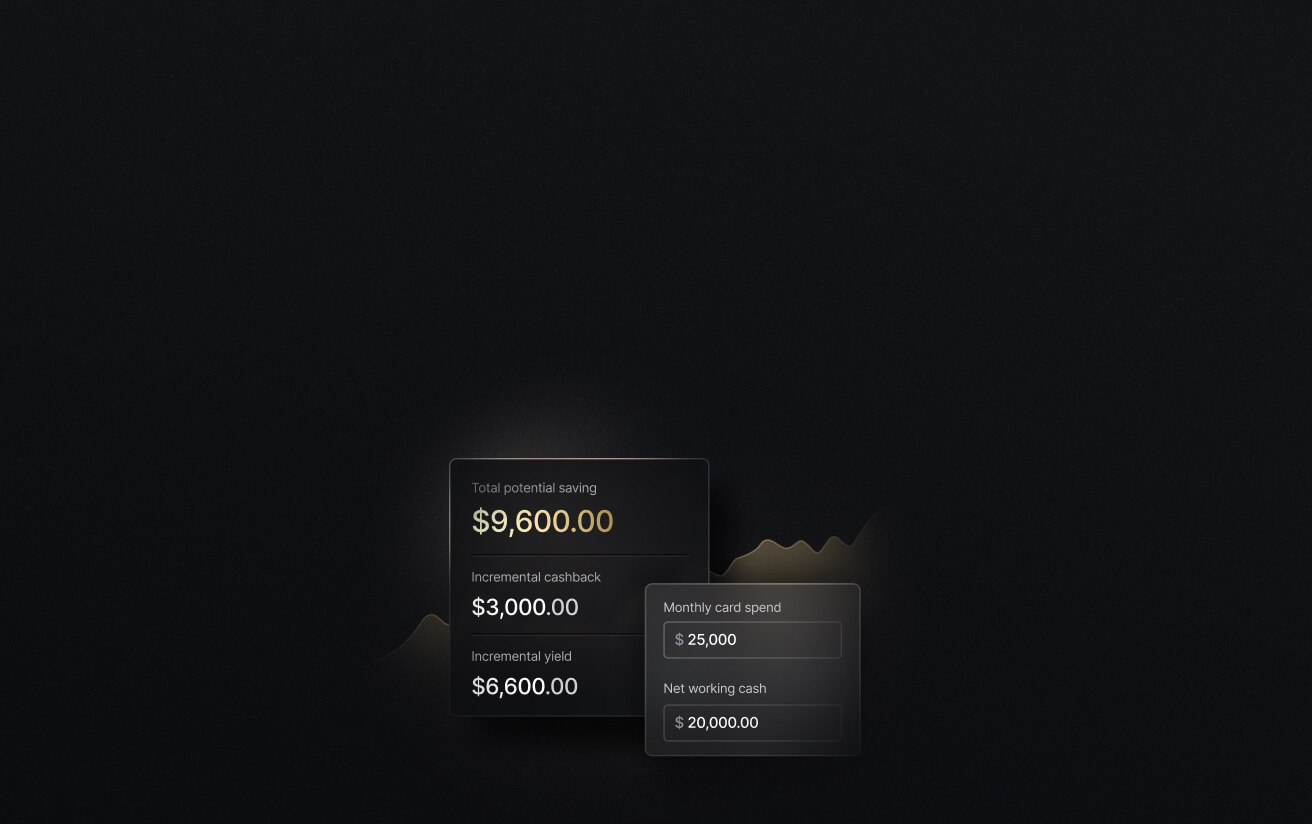
See the ROI behind your spend
Use this calculator to understand impact, then manage and track it all in Slash.

AI Advertising Trend Forecast: What Challenges Will Businesses Encounter?
Most of what's unsettled about AI advertising is operational rather than conceptual. Placements exist and people are buying them; what hasn't caught up is the reporting, the controls, or any stable sense of what the inventory should cost. Here's what's worth watching, and what to do about each in the meantime:
Measurement
When a model answers a question, plenty of buyers never click at all, so click-through rate and last-touch conversion can't be relied on to understand what happened in a conversion. The workable response is to stop expecting AI placements to report like search: use holdout tests or geo splits, watch branded search volume and direct traffic during flights, and add a "how did you hear about us" field at signup. None of that is as tidy as a conversion pixel, but it is closer to the truth.
Expect this to improve, because advertisers are pushing for it. OpenAI has already added pixel-based measurement and a Conversions API for ChatGPT ads, though the reporting you get back stays aggregated.
Brand safety
AI answers are written fresh for each user, so there's lots of room for variability in how your brand is presented. Two questions are worth asking any network before you buy: which categories of conversation it excludes, and what happens if your product gets suggested somewhere you wouldn't have chosen. It's also worth confirming placements are visibly labeled as sponsored, since that's what keeps a recommendation from reading as an endorsement the model made on its own.
In 2026 surveys, media buyers ranked having ads appear near AI-generated content among their top media challenges, and the controls available to advertisers are still behind what they're used to in programmatic.
Spend discipline
CPMs are still in flux. Although the impressions with AI may be lower than organic search, the value of the intent could drive up prices. Inference isn't cheap, and providers under pressure to cover those costs tend to pass them along, so it's reasonable to expect rates to move more than they would in a mature auction.
Decide on a test spend ceiling, put each channel on its own virtual card with a hard limit, and set the review date in advance. Slash makes that easy to run: issue a separate virtual card per channel or campaign with its own limits and rules, keep test budgets in their own accounts, and read spend across all of them in one consolidated view instead of unpacking a statement at the end of the month.
Agent context
The next expansion is likely to be beyond chatbots, into agents that carry out tasks: booking the travel, reordering the supplies, shortlisting the vendors. That changes what influence looks like. When software rather than a person is comparing options, what gets your product considered is probably structured, checkable information (current pricing, specifications, availability, integrations) rather than persuasive creative content.
The same advice applies: keep the facts about your business accurate and machine-readable, because both the ads and the answers are drawing from it.
Elevate Your Ad Spend with Slash
If contextual ads in AI apps are your next test, Slash can make your budget go further. Run campaigns across Gravity's network of third-party AI apps, assistants, and developer tools, and earn up to 5% back on qualified Gravity ad spend paid with a Slash card. Outside that offer, Slash cards earn up to 2% cash back on eligible spend, which is a strong rate to have on any media budget whether or not Gravity ends up in the mix.
The Slash platform also gives you the tools you need to run your campaigns more efficiently:
- Issue unlimited virtual cards so every campaign, channel, and tool subscription has its own limits and rules.
- Open as many business accounts as you need to keep budgets separated, FDIC insured up to $150M from Column N.A. 's cash sweep network.²
- Inbound and outbound payments via same-day ACH, wires to 180+ countries, RTP, FedNow, and native support for USDC and USDT stablecoins.⁴ No per-transaction fees for domestic payments with Slash Pro.
- Two-way sync with QuickBooks, Xero, NetSuite, and Sage Intacct means ad spend arrives in your books already categorized.
- With Twin, Slash's AI financial assistant, you can ask exactly what a campaign cost, tell it to freeze a card or raise a limit mid-flight, and have it chase your team for the receipts nobody remembered to send, all within the permissions and approvals you've set.
- Slash Perks includes exclusive discounts on marketing tools your team may already pay for, including HubSpot and Intercom.
Apply in less than 10 minutes today
Join the 10,000+ businesses already using Slash.
Frequently Asked Questions
Can AI fully replace media buyers?
Not at present. Automated campaign types handle bidding, placement, and budget shifts faster than a person can, but they optimize toward whatever goal they're given and can't decide your offer, your creative direction, or whether the conversion event you're paying for reflects real value. The practical question is which decisions to delegate and which to keep under review.
How do I automate paid advertising?
Start with the automation built into platforms you already use, such as Performance Max on Google or Advantage+ on Meta, since both are included with the ad account. Before switching anything on, confirm your conversion tracking is accurate and that you have enough creative variants for the system to test, because automation amplifies whatever signal it's given. Add a third-party tool like Revealbot or Madgicx only once you can name the specific decision you want automated.
Finance Automation: What It Is and How It Works

How much do ads in AI answers cost?
There's no published rate card from the major providers, and third-party estimates from mid-2026 vary widely, with reported CPMs in the range of roughly $25 to $60 and higher click costs in B2B categories. Treat any figure you find as an estimate that may already be stale, and budget for a capped test rather than a fixed cost per acquisition.
The Best Business Credit Cards for Ad Spend in 2026

What is the difference between AEO and SEO?
SEO gets your pages indexed and ranked in search results, while AEO (sometimes called GEO) structures the same content so AI models can extract and cite it inside a generated answer. AEO builds on SEO fundamentals rather than replacing them, with more weight on direct answers, question-shaped headings, schema markup, verifiable sourcing, and keeping pages current.


