

How to Categorize AI Token Costs in Accounting
It only took a few years for modern artificial intelligence to grow from a cool image generator to an enormous line item at Fortune 500 companies. In fact, Salesforce CEO Marc Benioff recently said that he expected to spend around $300 million on Anthropic in 2026. As spending on AI increases, finance teams have to ask themselves quite a few questions about their budgets and their long-term strategies. Another question relates directly to accounting for it all: how do we categorize AI token spend?
For the most part, business expenses typically fall into clear buckets. Manufacturing materials should be treated as part of Cost of Goods Sold (COGS), rent is an operating expense (OpEx), and something like real estate may be a capital expenditure (CAPEX). The versatility of AI means there often isn’t a clear place token purchases belong, as they can be used for the sake of research and development, content creation, or tools within your own product.
This guide helps explain what AI tokens are, how companies are spending money on them, and how to categorize AI token spend correctly. We’ll also take a look at Slash, a business banking platform that comes with tools that can automatically categorize and sort your company expenses.¹ One of the tools Slash uses to do this is Twin, an agentic AI assistant that doesn’t cost any extra tokens to use.
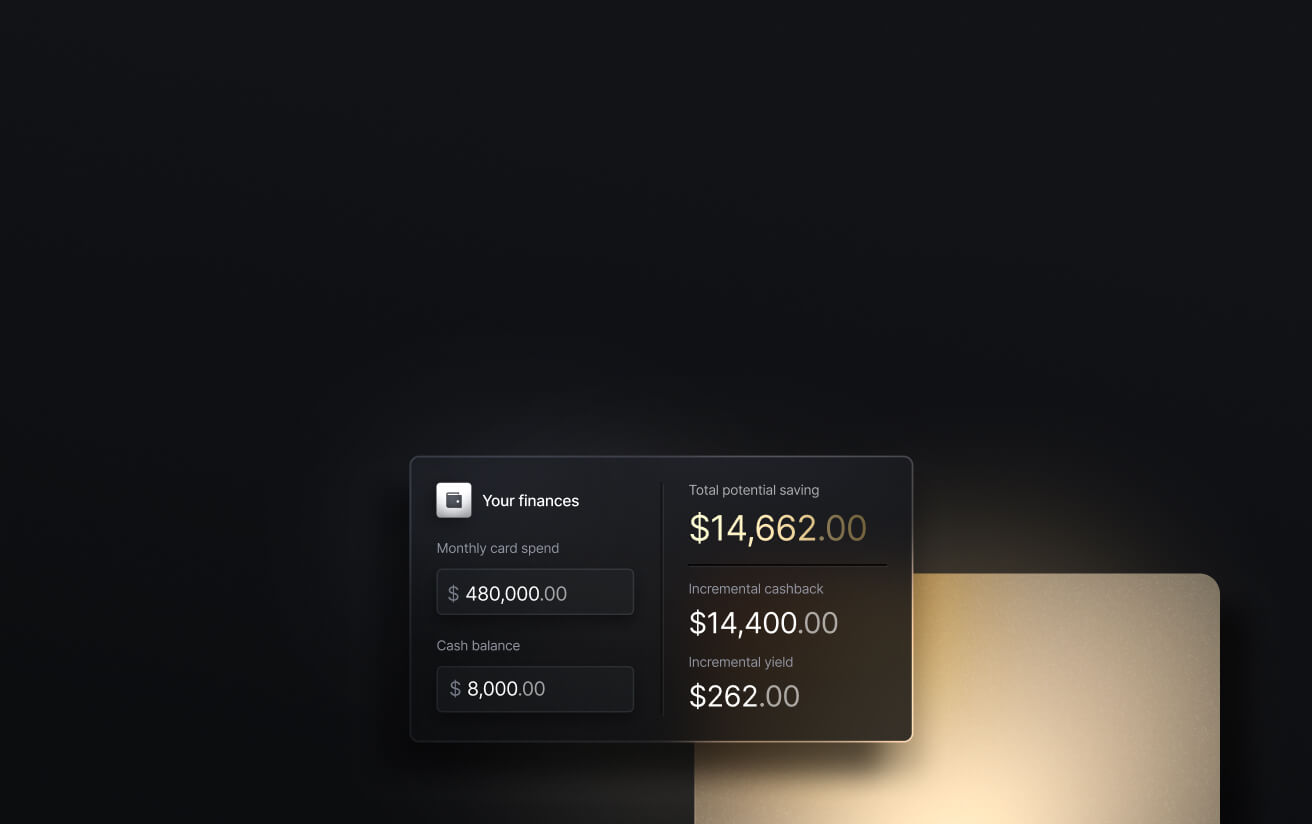
See the ROI behind your spend
Use this calculator to understand impact, then manage and track it all in Slash.

What Are AI Tokens?
Before getting into accounting, it helps to understand what you're actually paying for. When a company sends a prompt to an AI model like Claude or ChatGPT and receives a response, both the input and the output are measured in tokens. A token is roughly four characters of English text, or about three-quarters of a word. The phrase "How are you?" is five tokens, while a 1,000-word document is approximately 1,300 tokens.
AI providers charge separately for input tokens (what you send) and output tokens (what you receive), and the price varies by model. Currently, OpenAI’s GPT-5.4 costs $2.50 per million tokens input and $15 per million tokens output. Meanwhile, Anthropic’s Claude Opus can cost as much as $10 per million input and $50 per million output, depending on the mode. Most companies pay for these expenses either through pay-as-you-go billing or monthly subscriptions.
What makes token costs tricky from an accounting standpoint is that they're consumption-based, not seat-based. Unlike a software subscription where a per-seat charge connects to a named user, token costs fluctuate based on how often AI is called, how long the prompts are, and which model is being used. The same team can generate wildly different token bills each month depending on what they're building, and the actual purpose of each AI task may change along the way. That variability is why accounting for AI has become such a big challenge throughout the last couple years.
How Companies Spend Money on AI
Some companies build AI directly into their products, while others use AI tools in the workplace to help their teams work faster. Both may spend tokens at a similar rate, but neither should categorize them the same way.
Before deciding how to classify your token spend, it’s helpful to map out some of the places AI is usually used and determine what it looks like in your team’s workflow. Many businesses see AI costs show up across a few distinct categories, including:
- Customer-facing product features: When AI is embedded in what a customer buys, such as an AI assistant inside a SaaS platform or recommendation tool in an e-commerce product, the token costs to generate those responses are directly tied to revenue delivery. As an agentic AI assistant, Slash’s Twin is an example of one of these.
- Software development and R&D: Engineers using AI coding tools like Claude Code or Cursor consume tokens as part of building, testing, and maintaining software. According to Menlo Ventures, 55% of all AI token spend in modern workplaces is on coding.
- Internal productivity tools: When marketing teams write SEO-based articles, sales teams summarize call notes, and graphic design teams generate images, tokens are used without a direct connection with the company’s product or service.
- Sales and marketing demos and trials: If your company hosts a free trial environment where prospective customers can interact with AI features and assistants, tokens are spent in the same way as they would be in the real product. However, these token expenses may be a better fit within the sales and marketing category, since they’re used with intent to land a sale, and aren’t technically part of the platform.
- G&A and enterprise AI licenses: Company-wide subscriptions to tools like ChatGPT Enterprise or Claude for Teams should show up as general overhead in the same way that an Adobe subscription does.
Classifying AI Token Spend
Once you know where token costs are coming from, the next question is where they belong on the income statement. As of an update in June 2025, this is actually addressed in the U.S. GAAP (Generally Accepted Accounting Principles). Per section ASC 350-40, which governs accounting for internal-use software, token spend used to run or maintain existing software should be expensed as incurred. There's no deferral or capitalization for costs that keep existing systems running.
To answer the question of classification, you have to figure out what kind of spend your tokens are connected to and what they produce. For finance teams trying to manage this ahead of time instead of trying to figure it out later, it can be helpful to set up separate virtual accounts that establish expense categories organized by team or project. Slash supports unlimited virtual accounts that can give business owners a clear view of where their token spend is originating before it flows into accounting. These sub-accounts can also be connected to the Slash Visa® Platinum Card, allowing users to earn up to 2% cash back on token spend.
From a top-down perspective, most AI token expenses will either be considered a Cost of Goods Sold (COGS) or an Operating Expense (OpEx). Here’s what these two situations might look like:
When It's Categorized as Cost of Goods Sold
If AI is embedded in your product and token costs are incurred every time a customer uses a feature, those costs should be recorded as Cost of Goods Sold. For example, when a SaaS company processes a customer's document through an AI tool, or when an AI-powered search feature queries a language model to generate a response, the tokens consumed are a direct input to delivering the product. They’re sort of like cloud hosting costs or third-party API fees that software companies sort into their COGS.
Outside of the world of tokens, you’ll also likely either spend money on APIs from model providers like Claude or ChatGPT, or GPU costs if your company self-hosts a model instead of calling an external API. When it comes to GPU costs, you’ll sort them in the same way you sorted any previous GPU costs, although you can probably expect them to rise as you develop a native AI. If you operate with a provider’s API key, the API bill may still generate COGS in one context and an operating expense in another, depending on whether it’s meant for a paying customer or an employee.
As a general tip, finance teams may want to create a dedicated COGS line for AI token costs rather than including them in hosting or infrastructure. As AI spend rises among many companies, it can be a key way to calculate profit that you wouldn’t want to bury somewhere else.
When It's Categorized as an Operating Expense
Token costs that aren’t part of the customer-facing service almost always belong in Operating Expenses (OpEx). However, there are a few subsections within OpEx that are also helpful to keep distinct:
- Research and development is typically the right bucket for AI token costs incurred while building and improving software. Engineers using AI to write code, generate test suites, or document new features are consuming tokens as part of the development process. Under ASC 350-40, if those tokens are used during the development stage of a new piece of internal software, you may actually capitalize them (record them as a long term asset) instead of expensing them (deducting their cost). That decision is up to you and your accounting team.
- Sales and marketing expense is often the right category for AI costs tied to generating customer pipeline rather than product delivery. This can include token spend on free trial accounts, website chat assistants, writing/social media work, and AI-powered sales content.
- General and administrative expenses should absorb AI costs that serve overhead functions that don’t fall into the two previous categories. For example, this can include finance teams using AI for analysis, HR using it for documentation, and accounting teams using it to speed up some math. However, G&A shouldn’t become a default bucket for any AI spend that's hard to classify. To keep your classifications clean, put a little extra thought into what the goal of a token expense is, and sort it as such.
Automate AI Expense Tracking with Slash
While AI token costs are a new kind of expense, the task of categorizing and sorting evolving types of technology has been a challenge for a long time. With the fact that token costs can spike mid-month, come from multiple providers, and be consumed by just about every team, AI spend can be especially tough to get a handle on.
In order to understand whether your token spend belongs in COGS or operating expenses, you have to know who and what generated it, which is a tracking problem as much as an accounting one. Slash is a business banking platform designed to give finance teams exactly this kind of visibility.
Slash comes with unlimited virtual accounts that can be attached to the Slash Visa® Platinum Card, our corporate charge card. Business owners can issue Slash Cards for different pockets of AI token spend, unlocking a clear look into each type of AI expense on Slash’s real-time dashboard. Each card also comes with granular controls, meaning you can set a strict budget on AI for one department while allowing a high ceiling for another.
Twin, our agentic AI assistant, can lend a hand by automatically categorizing transactions and flagging misclassified expenses. With simple English prompts, Twin can be asked to create custom charts and analyze data that can help you organize messy token spend after the fact.
Slash offers quite a few features beyond expense management, including:
- High-yield treasury: Earn up to 3.80% annualized yield on idle funds with money market investments from BlackRock and Morgan Stanley, managed directly within your Slash account.⁶
- Accounting & ERP integrations: Sync transaction data with QuickBooks Online, Xero, NetSuite, or Sage Intacct to streamline reconciliation, reporting, and month-end close.
- Native cryptocurrency support: Send and receive USD-pegged stablecoins USDC and USDT across eight supported blockchains for faster, lower-cost global payments.⁴
- Diverse payment methods: Slash supports a wide range of payments, including card spend, global ACH, international wire transfers to over 180 countries via SWIFT, and real-time domestic payments through RTP and FedNow.
If your business is ramping up spending on AI in 2026, you’re not alone. Slash’s expense management features can help you track your token spending properly from the start.
Apply in less than 10 minutes today
Join the 10,000+ businesses already using Slash.
Frequently Asked Questions
How many tokens does it cost to generate AI images?
It depends on the model, but a standard 1024×1024 image often consumes between 1,000 and 2,000 output tokens. As you can imagine, this cost multiplies exponentially for videos.
ChatGPT for Finance: Real Use Cases for Modern Teams

How do you pay for AI tokens?
You’ll generally pay for tokens in one of two ways: pay-as-you-go billing or flat-rate subscriptions. If you run out of allocated tokens on a subscription plan, you can often top up with more.
How much does AI use cost in the context of your GPU?
You can either rent a cloud GPU to handle your AI use, or you can build out a local infrastructure with PCs and dedicated GPUs. Cloud GPUs will cost you money in a traditional purchase/subscription sense, while a local setup will cost you money in supplies and electricity.
AI in Accounts Payable: Impact & Use Cases for Businesses


