

What Is Procurement? Key Strategies for Effective Resource Management
Procurement is the process a business uses to obtain the goods and services it needs to operate, and it’s much more involved than simply making a purchase. Procurement is mostly strategy: identifying suppliers, negotiating terms, planning when to release payment, and learning from past mistakes. Purchasing is just the end result.
Say your team needs ten laptops. Procurement asks whether you need all ten now or six now and four when the new hires start in September, which spec will still be usable in three years, whether a second reseller would beat the quote, and whether the vendor takes net 30 so cash leaves after your next client payment lands. It doesn’t stop once the laptops arrive, either: someone checks that ten showed up and that the quote, the delivery, and the invoice all match before a payment goes out. It’s a lot to keep track of, which is why most teams rely on software and a few helpful strategies to keep track.
In this article we break down the stages of the procurement life cycle, compare direct versus indirect procurement, explain what procurement software actually does, and cover the practices behind a controlled process. And if you need the financial infrastructure to run it on, consider Slash: cards, bill pay, and supplier payments in one place, so you control exactly how and when cash leaves your business.¹
The standard in finance
Slash goes above with better controls, better rewards, and better support for your business.
The Procurement Life Cycle
The procurement life cycle is a loop, not a straight line. It has three phases: strategy, where you decide what you need and how you'll buy it; acquisition, where you go to market, choose a supplier, and agree terms; and delivery, where the contract gets executed and eventually closed. The review at the end informs the next round of planning, which is what makes it a cycle. Below are the steps involved:
Phase 1: Strategy
The strategy phase is everything that happens before a supplier hears from you. You establish what the business needs, what it should cost, when it's needed, and how you intend to buy it. Doing this early is what keeps you from making rush orders, receiving quotes from a single source, or negotiating where you have no time and therefore no leverage. It's also where the previous cycle lands, since the record of how your last suppliers performed is the most useful input available.
- Applying lessons learned: This is where you’ll evaluate how your last procurement cycle went. You’ll look at how a supplier performed on delivery, quality, and responsiveness, plus what the specification or the process got wrong. Even though we’re listing it here at the top, it’s really the last step in the previous cycle carried over to the next.
- Planning procurement: Define the specification, quantity, budget, and timing in enough detail that offers can be compared later. Decide whether to buy at all versus building it or extending an existing contract, choose the sourcing approach, and confirm who has authority to commit the money.
What you should have as a result of planning is a requirement, which in the context of procurement refers to a written description of what your business needs to purchase. It should include details about the item(s), the quantity, the product specifications, and the date by which you need it.
Phase 2: Acquisition
Acquisition is where you find a supplier and agree on terms. If you're reordering from a supplier you already have a contract with, most of this work is already done, which is the whole point of having a contract. For a first-time purchase, a large one, or anything where you don't know what a fair price looks like, you work through all three steps.
- Going to tender: This is where you put your requirement in front of suppliers. An RFI (request for information) surveys what's available, an RFQ (request for quotation) works when the specification is fixed and price is the variable, and an RFP (request for proposal) is for when you want suppliers to propose an approach as well as a price.
- Selecting supplier: Score responses against criteria set before the bids arrive, covering price, capability, lead time, financial stability, and references. Deciding the criteria afterward is how businesses can talk themselves into a suboptimal bid.
- Negotiating contract: Once you narrow down your suppliers, you’ll want to talk with them about settle price, quantities, lead times, service levels, and remedies if delivery slips, along with payment terms. Terms deserve as much attention as price, because they determine when cash leaves your account.
Phase 3: Delivery
Delivery covers everything after the contract is signed: you place the order, the goods or services show up, the invoices come in, and you pay them. It's the longest phase, and it's where businesses can lose money on a deal they negotiated well. Two mistakes to watch out for: an invoice gets paid without anyone checking it against what actually arrived, or a contract renews at a higher price because nobody was watching the date.
- Commencing contract: Your business will issue a purchase order (PO), set the supplier up in your systems with verified banking details, confirm the delivery schedule, and agree who to contact when something goes wrong. Some businesses may use a simple contract instead of a purchase order here.
- Administering contract: Once you’ve taken delivery, verify what you received against the order and run a three-way match (the invoice against the PO and the receiving record) before anything gets paid. If everything lines up, release payment on the agreed upon terms, and track performance against what the contract promised.
- Closing contract: Confirm final delivery, pay the final invoice, release any retentions or deposits, and close out remaining obligations. Do this ahead of the renewal notice period, since that's while you still have a choice about whether to continue.
Procurement Methods: Direct vs. Indirect Spend
How you handle procurement depends on what you're buying. The main split is between the things you buy in order to make and sell your product and the things you buy to keep your business running. The two strategies are different enough that they usually end up with different oversight, different rules, and different problems. Here’s what to know:
Direct Procurement
Direct procurement is anything that ends up in what you sell: raw materials, components, packaging, or finished goods you resell. A coffee roaster buying green beans, bags, and labels is doing direct procurement. This spend is usually high volume, contractual, and planned against a sales forecast. It gets measured on unit cost, quality, and whether deliveries arrive when promised. Direct suppliers tend to become long-term relationships because finding and vetting a replacement for a specific material can take months.
Indirect Procurement
Indirect procurement is everything you buy to operate: software subscriptions, laptops, office space, travel, advertising. For that same roaster, it's the point-of-sale system, the bookkeeper, and the insurance on the delivery van. Indirect spend responds to visibility and limits: usually, one person at your company is named as the owner of a category (software, travel, supplies). From there, they’ll be in charge of setting the dollar threshold above which a purchase needs approval and managing the cards with fixed limits.
Services Procurement
Services procurement is a third category, and it means buying someone's time and expertise rather than a product: a contract developer, an agency, an outside accountant. It's harder than buying objects because whether the work is finished is a matter of opinion unless you've written down what finished means. Most of the protection comes from a scope of work that names the deliverables, the dates, and what happens if the work misses them.
Common Procurement Services
It’s common for larger companies to outsource some or all of the work involved in procurement, since it is a highly specialized, analytical process. Below are some examples of common procurement-related services:
- Group purchasing organizations (GPOs): Aggregate demand across many member businesses to negotiate pricing that individual members couldn't reach alone. Common in healthcare, hospitality, and food service, and increasingly for indirect categories like shipping and office supplies.
- Procurement consultants: Engaged for a specific project, such as renegotiating a category, running a competitive bid, or building a procurement policy from scratch.
- Procurement outsourcing (BPO): A provider runs some or all of the process on your behalf, from sourcing through PO issuance and invoice handling.
- Sourcing agents: Common in overseas manufacturing, where an agent identifies suppliers, inspects factories, and manages quality control on the ground.
- Tail spend management: Focused specifically on the long tail of small, one-off purchases that individually don't justify attention but collectively can represent a meaningful share of spend.
- Supplier risk and compliance screening: Third-party checks on financial stability, sanctions lists, insurance, and certifications before you onboard a vendor.
What Is Procurement Software Used For?
Procurement software keeps requests, orders, invoices, and payments in one place and leaves a record of each one. You'll sometimes see software referred to as e-procurement or as procure-to-pay (P2P) when it covers the full path from the initial request through paying the invoice. Below is a more in-depth overview of what a robust procurement system can handle:
- Requests: The entry point, and the reason a purchase is on the record before any money is committed. An employee fills in a form saying what they need and why, and the software passes it to whoever has to approve it.
- Approval rules: The logic that decides who signs off on what. You set the thresholds once, by amount, category, or who's asking, and every request follows them, so a $50 order clears with a manager while a $50,000 one goes to finance.
- Supplier and contract records: One file per supplier, holding their banking details, tax forms, agreed pricing, and the date their contract renews. It's what stops two teams setting up the same supplier twice, and what surfaces a renewal date before it passes.
- Purchase orders: The document that commits you to buy a set quantity at a set price, and the reference every later document gets checked against. The software creates POs, sends them to suppliers, and tracks which are still open, meaning ordered but not yet delivered or invoiced.
- Invoice capture and matching: The step that decides whether an invoice should be paid at all. Optical character recognition (OCR) reads the supplier, date, amount, and line items off the invoice so someone reviews a filled-in draft instead of typing it out, then the software compares those numbers against the PO and the record of what arrived. Anything that disagrees gets flagged rather than paid.
- Payments: The point where money leaves. Approved invoices get paid by ACH, wire, or card depending on what the supplier accepts and how quickly the funds need to arrive, with the payment logged against the invoice it settles.
- Spend reporting: Data showing what you spent, with which suppliers, by which team, measured against what you budgeted. This is what tells you which categories are worth renegotiating.
Procurement software has a wide range of capabilities. Enterprise systems cover the entire cycle, including running tenders and onboarding suppliers, and generally take months to set up. Spend management platforms combine corporate cards, expense reports, and accounts payable, and are built for mid-sized companies. Standalone AP tools handle invoices and payments only, then sync to your accounting software. Business banking platforms keep cards and bill pay in the same place as the accounts the money leaves from, so there's no separate spend tool to connect to your bank.
Whichever you choose, confirm it syncs with the accounting software you already use. Slash integrates with QuickBooks, Xero, NetSuite, Sage Intacct, and DualEntry, so card spend and bill payments show up in the ledger already categorized instead of being keyed in twice.
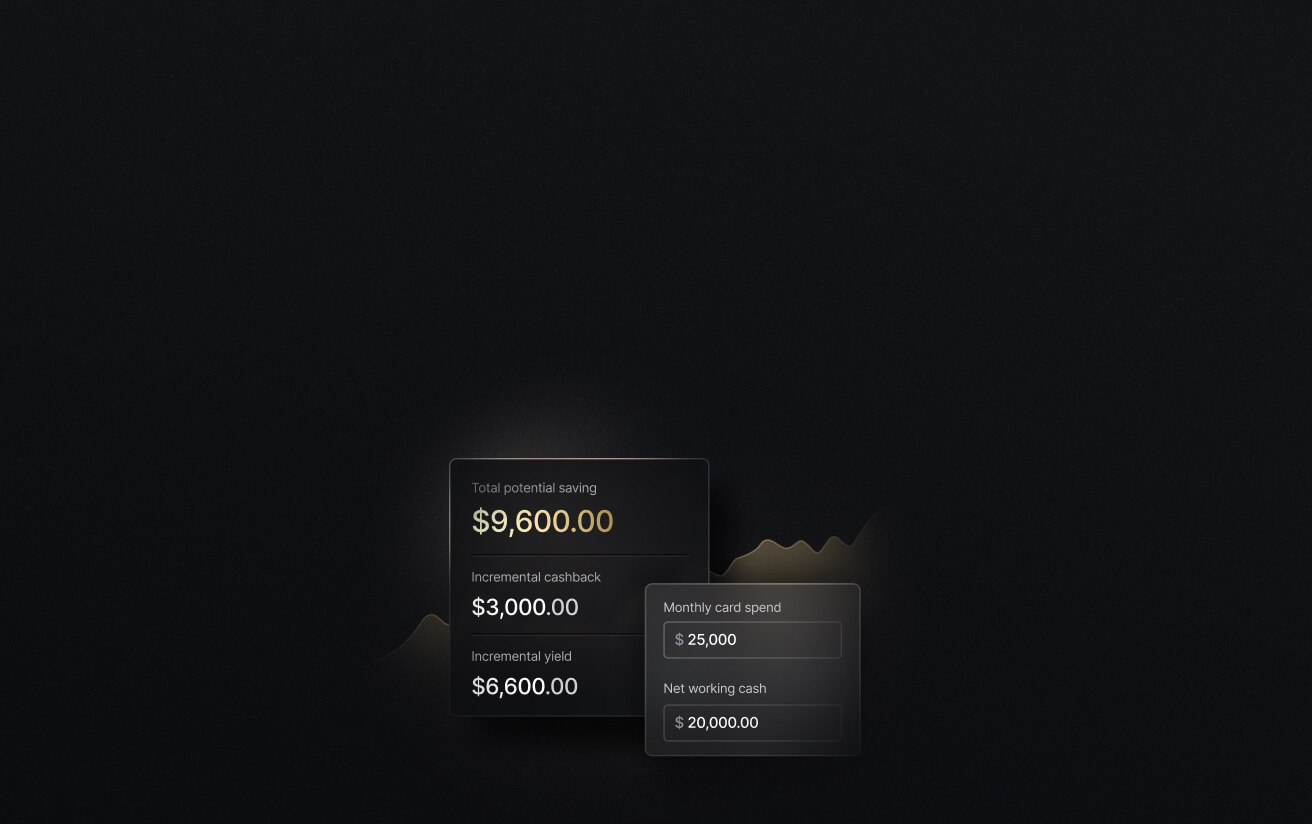
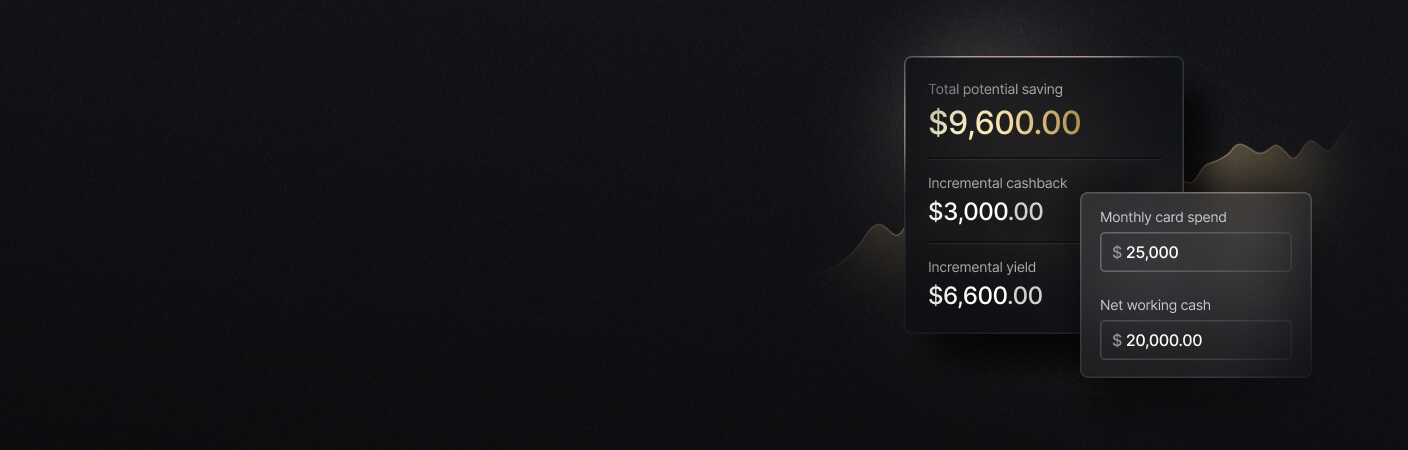
See the ROI behind your spend
Use this calculator to understand impact, then manage and track it all in Slash.
Benefits of Implementing Procurement Software
Procurement software rarely pays for itself with one big saving, which is what can make a full procure-to-pay system a hard purchase to justify for a small business. The benefits are iterative. They come from a finance team running the same process every month and shaving time and errors off it, so they only add up once there's enough volume and enough people spending for that work to be significant.
Larger businesses implementing a procurement system into their sourcing usually are after these downstream benefits:
Improved visibility into business spend
Most small companies can tell you their total spend but not the breakdown. The information exists, it's just scattered across bank statements, card statements, receipts sitting in email, and invoices in someone's downloads folder. A simple question like "how much did we pay this supplier last year, and who approved it?" becomes an afternoon of assembly work, which is why nobody asks it.
A procurement system records each purchase as it happens: the supplier, the amount, the category, the team that requested it, and the person who approved it. The same question becomes a report you pull in a minute. That changes what you can do in a negotiation, because suppliers price on volume. If you can show a vendor that four teams are spending $60,000 a year with them across separate accounts, you have grounds to ask for better pricing. Without that number, you're asking for a favor.
Spend controls that prevent overspending
Controls in a procurement system work before the purchase. You set an approval threshold, say $1,000, and anything above it needs sign-off before it can be bought. You set a limit on a card, and a charge above that limit is declined at the point of sale.
Virtual cards can make this more precise. A virtual card is a card number generated for one specific vendor or subscription, with its own cap and rules attached, so if a software vendor raises the price at renewal from $200 to $300 a month, the charge doesn't go through on a card capped at $200. Cancelling a tool works the same way: you switch the card off instead of emailing the vendor and hoping someone processes the request.
Faster purchase approval workflows
Managing procurement through an email inbox can lead to miscommunications. Your team may leave a request sitting unread in an inbox or a requester doesn’t know who's meant to approve it. A week can pass by with nothing happening on a deal, which makes it harder to maintain solid vendor relationships.
Approval routing is not only a compliance control, but it can be an efficiency booster, too. The request goes automatically to the named approver for that amount and category, a second approver is on file for when the first is away, and anyone can see where it's sitting. Purchases clear in a day or two rather than a week. Speed also makes early payment discounts easier to chase.
Fewer duplicate payments and less invoice fraud
Comparing invoices against purchase orders or contracts can help prevent overbilling and duplicate invoice approval. Two types of error are most common in manual invoice review: not realizing that you’ve already approved the same invoice two weeks ago, or not catching that you were billed for 12 units when you only received 10. Procurement software can catch these discrepancies automatically.
These same controls also can safeguard your business against invoice fraud. Say an email arrives that looks like it's from a supplier you use saying their bank details have changed and asking that the next payment go to a new account. When supplier details live in a system with one verified record per vendor and changes require verification, that's much harder to pull off. The rule of thumb holds regardless of what software you use: verify any change to payment details by calling a number you already have on file, never by replying to the message that asked.
Simpler month-end close
Closing the books each month means matching every transaction to a receipt or invoice, coding it to the right category, and confirming the totals agree with the bank. Done manually, most of that is detective work: finding the receipt, working out what a charge was for, and chasing whoever made it.
When purchases run through a system, most of it is captured already. Card transactions arrive with the supplier, amount, and date attached. Many platforms text the cardholder for a photo of the receipt at the time of purchase and match it to the transaction automatically.
How to Measure Procurement Effectiveness: Strategies & KPIs
Procurement is easy to describe and hard to prove. Someone says the new supplier is working out or that a renewal went well, but that’s a hard claim to substantiate without some numbers to support it. The numbers come out of a spend analysis, which is the exercise of pulling transaction data and cleaning it up so vendors aren’t duplicated and everything sorts into workable categories.
Once your financial data is all together, these are the metrics that matter most for judging how your procurement process is working:
- Spend under management: The share of your total spend that runs through a defined process with negotiated terms, as opposed to purchases made ad hoc. Everything outside that share is spend you have no bargaining position on, so this number usually shows you where the next savings are before any other metric does.
- Cost savings: Reductions against what you paid before, on comparable volume. This is the headline number and the easiest one to overstate, so write down the baseline before you claim the saving.
- Cost avoidance: Increases you negotiated away, like talking a 9% renewal increase down to 3%. It's real money, but it never shows up as a lower number on the P&L, so track it separately rather than blending it into savings.
- Purchase price variance: The gap between what you actually paid and the price your contract says. Small variances happen. A persistent gap means the agreed pricing isn't being applied, which is more common than most businesses expect and is worth raising with the supplier.
- Supplier on-time delivery: The percentage of orders that arrive complete and on schedule, tracked per supplier. Measured over time, this is what makes a renewal conversation a matter of evidence rather than impressions.
- Supplier quality: The share of orders or engagements that arrive damaged, incorrect, or short, again by supplier. Read it alongside price, since a low unit cost paired with a high defect rate is not a good deal.
- Purchase cycle time: How long a request takes to become an approved order. This is the best early warning you have, because when the process is slow, people stop using it, and the spend goes back to being invisible.
Aside from these procurement-specific metrics, you can also incorporate the classic measures of accounts payable effectiveness, since the two are closely related. You can learn more about accounts payable management by clicking here.
Make the Right Financial Move with Slash
A procurement process is only as good as the controls behind it. Spend limits should be set at the card level, vendor bills should reach the right approver on their own, and payments should settle on whichever rail fits the speed you need and the options your supplier accepts. Slash isn't procure-to-pay software, but it is a business banking platform built around those controls, with rewards on the spend you're already making and tools for managing the money behind it.
With Slash, you get:
- The Slash Visa Platinum Card: Earn up to 2% cash back on eligible vendor spend. Issue unlimited virtual cards to get better controls on individual bills. Each card can have its own spending limit and rules, so purchasing policy is enforced automatically rather than reviewed after the fact.
- Accounts payable tools: Upload vendor bills into Slash and have the details parsed for you, route them to the right approver, and schedule a payment to execute automatically based on the terms you negotiated. Send outbound payments via same-day ACH, wires to 180+ countries, RTP, FedNow, or USDC/USDT stablecoins.⁴
- Real-time cash flow data: See metrics about how much you’re spending, who you’re spending with, and how you’re moving money. At a glance, you can get the info you need to make a strategic decision about releasing a payment or renegotiating with a high-spend vendor.
- Transaction-level visibility: Every outbound payment is logged, categorized, and matched to its supporting invoice or receipt automatically.
- Accounting integrations: Slash syncs in two-ways with QuickBooks, Xero, Sage Intacct, NetSuite, and DualEntry, so your books stay current without re-entry.
- A full banking stack: Open unlimited virtual business accounts from the dashboard, with balances FDIC-insured up to $150M through partner bank Column N.A.'s insured cash sweep network.² Cards and bill pay draw on your actual operating balance, so there's no preloading a budget into a third-party spend tool and reconciling it back to your bank later.
Apply in less than 10 minutes today
Join the 10,000+ businesses already using Slash.
Frequently Asked Questions
What's the difference between procurement and supply chain management?
Procurement is the function that acquires goods and services from suppliers, ending when the invoice is paid. Supply chain management is broader, covering the full flow of materials and products through your business, including logistics, warehousing, inventory management, production planning, and distribution to customers. Procurement is one component of the supply chain, focused on the inbound supplier side.
Who handles procurement in a small business?
In companies without a procurement team, it's usually split between the founder, an operations lead, and whoever owns the budget for a given category, with finance handling payment. That works as long as the thresholds and approval paths are written down. The common failure is not the absence of a procurement hire, it's that nobody has defined who can commit company money and at what amount.
The Top Business Cards for Small Businesses in 2026

What is a procurement policy and what should it include?
A procurement policy is the internal document stating how purchases get made. At minimum it should cover approval thresholds by dollar amount, who approves what, preferred suppliers by category, required documentation, payment terms standards, and the process for onboarding a new vendor. One or two pages is usually enough for a small business, and a policy people actually read beats a comprehensive one they don't.
Do small businesses need procurement software?
It depends less on headcount than on how many people spend money and how many suppliers you pay. A handful of vendors and one approver can run on a spreadsheet and a shared calendar for renewals. Once multiple people are making purchases or invoice volume outgrows manual review, the case for a system is mostly about control and audit trail rather than time saved.
How can procurement reduce costs without switching suppliers?
Consolidating volume with existing suppliers, negotiating at renewal rather than accepting the increase, capturing early payment discounts, and eliminating duplicate or unused subscriptions all reduce cost without changing vendors. Spend analysis is what makes these visible, since most of the opportunity sits in purchases nobody has looked at as a group.
Profit & Loss Management: How to Track, Analyze, and Improve Profitability


