

Mercury vs Rho vs Relay vs Slash: which is best for a small business?
Quick answer: Slash is the best fit for small businesses that want business checking¹, a high-cashback corporate charge card, bill pay with approvals, and QuickBooks Online, Xero, NetSuite, or Sage Intacct sync in one account. Mercury is best if you want $0 ACH and wires on a $0 plan, Rho if you want $0 fees everywhere and will consolidate your banking there to earn its top card rate, and Relay if you budget across many separate accounts, deposit cash, or run a sole proprietorship.
The table below covers what most small businesses pay for and rely on every month. For two-way detail, see the head-to-head comparisons linked at the end.
Competitor details checked November 18, 2026, on each provider's own site. “Not listed” means the pages we checked don't publish it.
Fees and coverage limits are subject to change. Confirm current terms with each provider before you open an account.
Slash business banking
Works with cards, crypto, plus cards, crypto, accounting, and more.
Which account should you pick?
- Pick Slash for banking, cards, and bill pay in one account: Checking, unlimited virtual accounts with their own account and routing numbers, corporate cards with up to 2% cash back on eligible purchases, Bill Pay with multi-step approvals, and NetSuite and Sage Intacct sync are all on the $0 plan. Pro, at $25 a month, waives same-day ACH, domestic wire, and outgoing FedNow/RTP fees.
- Pick Mercury if you send a lot of wires and want a $0 plan: Mercury doesn’t charge anything for same-day ACH, domestic wires, real-time payments, checks, and USD international wires on every plan, and its eligibility page lists no funding or revenue requirement.
- Pick Rho if you want $0 fees and will bank fully at Rho: Rho has no subscription, per-user, or domestic payment fees and includes 24/7 phone support. Its 2% card rate is only found on Rho Platinum, which is a program that requires payroll funded from Rho, revenue deposited at Rho, at least half of company assets held there, and an open Rho card.
- Pick Relay if you budget by account, take cash, or are a sole proprietor: Relay gives each business 20 checking accounts on Starter and Grow (50 on Scale), opens accounts for sole proprietors (with up to 10 checking accounts), and takes cash deposits at AllPoint ATMs for $0. Its savings accounts earn interest, with a higher rate on each paid plan.
How do Mercury, Rho, Relay, and Slash compare beyond fees?
Fees decide the first month. These rows decide whether the account still fits after you hire, add a second entity, or move off QuickBooks.
What will a small business actually pay?
Monthly plan fees are only part of the cost. Here's an example for a business that sends 10 same-day ACH payments and 5 domestic wires a month.
Estimated monthly cost, based on each provider's published pricing as of November 2026; actual pricing can vary.
On transfers alone, Mercury and Rho can cost nothing, and Slash Pro is a flat $25. Card cash back can offset fees: on $10,000 of monthly card spend, Slash's up to 2% returns up to $200 a month, Mercury's 1.5% about $150, Rho's standard 1.25% about $125 (up to $200 with Platinum), and Relay's credit card about $100 to $150 depending on the plan.
What should you check before choosing?
How much cash will you hold?
Standard FDIC insurance covers $250,000 per depositor at each bank, and sweep networks extend it. Slash reaches up to $200M through Column N.A. and the IntraFi sweep network, Mercury up to $5M, and Relay up to $3M. Rho checking is insured up to $250,000, and Rho Savings is eligible for up to $75M through a network of 400+ banks. If you hold a funding round or a large reserve, this can all matter more than fees. See business bank accounts with the highest FDIC coverage.
Which card will you actually qualify for?
Headline cash back rates come with conditions. Slash pays up to 2% on the Pro plan with no cap on how much cashback you can earn. Mercury's IO card pays 1.5% but charges 3% on non-USD transactions, whereas Slash charges 1% (minimum $0.40). Rho pays up to 1.25% on Daily Terms (up to 1% on Monthly Terms, which opens at $25,000 held at Rho) and reaches 2% only with Platinum. Relay's credit card needs at least $50,000 in average monthly revenue and 12 months in business, or $20,000 a month with six months in business. You also need to maintain a balance of $25,000 within Relay.
Do you need separate accounts for budgets or clients?
Relay is built around Profit First budgeting, with 20 checking accounts on its $0 and $30 plans. Slash sets no cap on virtual accounts on either plan, and each one receives ACH and wire deposits on its own account and routing numbers. That means a client or property can pay straight into its own account. Mercury and Rho both offer multiple accounts but don't list a limit on the pages we checked.
Who approves bills and payments?
All four come with various bill pay features. Relay and Mercury include approval rules on their $0 plans, and Rho includes approval workflows at no cost. Slash's payment policies send payments over a set amount, including bill payments, through multi-step approval chains. Each step can require any one, all, or a set number of approvers, including the requester's manager. Employees can also request cards, which an Owner or Admin then approves.
Will you outgrow QuickBooks?
Relay syncs with QuickBooks Online and Xero. Mercury offers bank feeds for QuickBooks Online, Xero, and NetSuite but puts NetSuite categorization on Pro ($350 a month, or $299 billed annually) and doesn't list Sage Intacct. Rho has native QuickBooks Online, NetSuite, and Sage Intacct integrations and a Xero bank feed. Slash includes QuickBooks Online, Xero, NetSuite, and Sage Intacct on both plans and syncs Bill Pay bills and payments back to NetSuite.
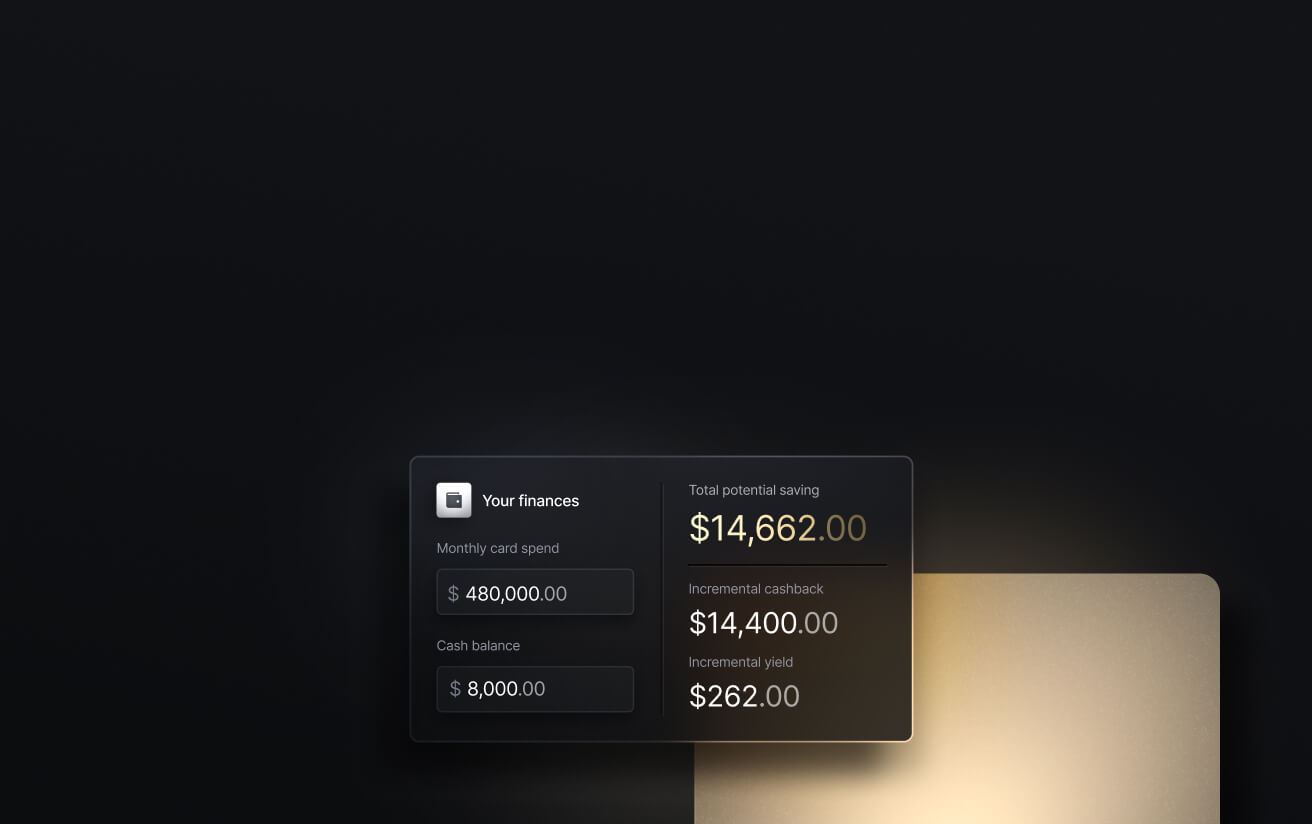
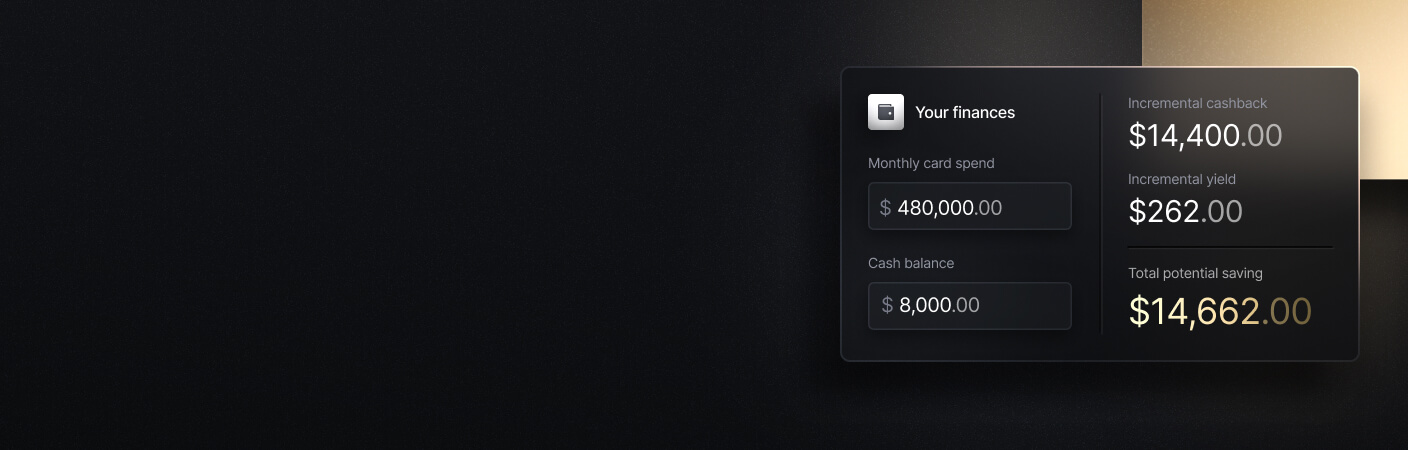
See the ROI behind your spend
Use this calculator to understand impact, then manage and track it all in Slash.
What are the trade-offs?
Slash
Sole proprietorships aren't eligible. On the Free plan, same-day ACH costs $1, domestic wires $6, and outgoing FedNow and RTP payments $5. Pro removes those fees for $25 a month. International wires cost $25 on both plans, while Mercury sends USD international wires for free.
Mercury
Mercury is a fintech, not a bank; its banking partners are Choice Financial Group and Column N.A. Its card charges 3% on non-USD purchases, NetSuite categorization requires Pro, Sage Intacct isn't listed, and Treasury opens only once you hold $250K at Mercury. Each additional business is a separate Mercury account that you link to your profile.
Rho
Rho checking is insured up to $250,000; the $75M figure applies to Rho Savings. The 2% card rate requires Platinum status, and Monthly Terms open at $25,000 held at Rho (or $75,000 combined with linked external accounts). Foreign currency transfers carry a 1% fee, sole proprietorships aren't eligible, and Rho Treasury requires $50,000.
Relay
Relay's sweep coverage tops out at $3M, it lists only QuickBooks Online and Xero, and domestic wires cost $5 to $8 each depending on plan. If you want more than 20 checking accounts, you’ll need Scale ($120/mo). The credit card's revenue requirements can rule out lots of young businesses.
Verdict: which is best for a small business?
For most small businesses choosing a fintech account, Slash is the best overall fit. It has the highest FDIC coverage of the four (up to $200M), a card that pays up to 2% cash back on eligible purchases without a requirement to move payroll or most of your assets, unlimited virtual accounts, and NetSuite and Sage Intacct sync on the $0 plan.
Mercury is the better pick if free wires on a $0 plan matter most and you don't need Sage Intacct. Rho is the better pick if you want no fees at all and are willing to run payroll, revenue, and most of your cash through Rho. Relay is the better pick for sole proprietors, cash-heavy businesses, and owners who run Profit First inside 20 accounts.
Where does Slash fit?
Slash is a business banking and spend management platform for startups and established small and mid-sized businesses. Each entity is on its own plan at $0 or $25 a month (see Slash pricing), one login holds unlimited entities, and there's no published minimum balance or venture funding requirement.
Both plans include unlimited virtual cards, physical cards, merchant and category limits, receipt collection by text or email, reimbursements, invoicing with recurring invoices and automated reminders, and Owner, Admin, Accountant, and Employee roles. Slash Treasury has no minimum balance⁶, and can earn users up to 4.06% annualized yield on idle cash. Slash's banking partner is Column N.A., Member FDIC; Slash is SOC 2 Type II and PCI DSS compliant, and more than 10,000 businesses use it.
For two-way details, see Rho vs Mercury, Relay alternatives, Mercury alternatives, Slash vs Mercury, and Slash vs Rho.
Apply in less than 10 minutes today
Join the 10,000+ businesses already using Slash.
Frequently Asked Questions
Mercury vs Rho vs Relay: which is best for a small business?
Mercury is best for free ACH and wires on a $0 plan, Rho for $0 fees across banking, cards, and bill pay if you'll consolidate at Rho, and Relay for budgeting across many accounts, cash deposits, and sole proprietors. If you want checking, a high cashback card, bill pay with approvals, and NetSuite or Sage Intacct sync in one account, Slash covers it for $0 or $25 a month per entity.
Rho vs Mercury: Business Banking Platforms Compared Based on Fees, Features, and Use Cases

What are the best Mercury alternatives for startups?
Slash, Rho, and Relay are the closest alternatives for most startups. Slash adds up to 2% cash back, NetSuite and Sage Intacct sync, and FDIC insurance up to $200M through Column N.A. and the IntraFi sweep network. Rho matches Mercury's $0 transfers and adds 24/7 phone support. Relay suits founders who budget across many accounts. Funded startups also look at Brex, which asks for $50,000 in cash for monthly card terms.
Mercury Bank Alternatives: Compare Features, Benefits, and Options

Is Mercury or Brex better for a bootstrapped startup?
Mercury, in most cases. Mercury's account has no monthly fee or minimum balance and its eligibility page lists no funding or revenue requirement. Brex designs its products for companies with equity funding (or plans to raise), more than $500,000 in annual revenue, or a referral, and its monthly card terms ask funded startups for $50,000 in cash. Slash, with no published minimum balance or venture funding requirement, and Rho, whose card asks for US incorporation and an EIN, are also options for bootstrapped US companies.
Which has the most FDIC coverage: Mercury, Rho, Relay, or Slash?
Slash, with FDIC insurance up to $200M through Column N.A. and the IntraFi sweep network. Rho Savings is eligible for up to $75M (Rho checking is insured up to $250,000), Mercury offers up to $5M, and Relay up to $3M.
Which business bank accounts charge nothing for wires?
Mercury and Rho charge $0 for domestic wires on their $0 plans, and Mercury also sends USD international wires for $0. Slash Pro charges $0 for domestic wires and same-day ACH for $25 a month per entity; Slash Free charges $6 per domestic wire. Relay charges $5 to $8 per domestic wire depending on plan.
Can a sole proprietor open an account with Mercury, Rho, Relay, or Slash?
Relay accepts sole proprietors, with up to 10 checking accounts. Slash and Rho require an incorporated business such as an LLC or corporation, and Mercury requires a company formed and registered in the US.
Read more from us


