

How Do Crypto Credit Cards Work? Discover the Benefits and Risks
In the past year, crypto credit cards have gone from a niche experiment to a real force in the digital asset economy. They offer a simple proposition: they make it easier to use crypto in the real world, the same way a debit card makes it easier to spend from your account than writing a check.
"Crypto credit card" is a confusing term, though. These cards work in very different ways, but issuers tend to market them all the same way. Some spend dollars and pay rewards in crypto, some use crypto collateral to set your credit limit, and some sell off crypto at the point of sale. Some of those structures have far more regulatory clarity and practical use cases behind them than others.
In this guide, we're going over everything you should know about crypto cards: the different types of card structures, what happens when you swipe, the risks and benefits of using them, and the rewards programs available on the market today. You'll also learn about Slash Global Cards, which are Visa charge cards backed by USDC on Base, available through the Slash Global USD Account.³, ⁴ If you've got no idea what any of that means, you will by the end. For now, just know that we offer businesses a card that spends from a USD-equivalent balance and works in over 130 countries on the Visa network.


What Are Crypto Credit Cards?
A crypto credit card is a payment card tied to cryptocurrency rather than (or in addition to) a bank balance. You tap or swipe at a merchant the way you would with any Visa or Mastercard, and in the background crypto is either converted into dollars to settle the purchase, or the purchase settles in dollars and crypto comes back to you as a reward.
The category name is broad, so it helps to be precise about what you're signing up for. A credit card extends a revolving line of credit, meaning you can carry a balance from month to month and pay interest on it at an annual percentage rate, or the yearly cost of borrowing) A charge card also lets you spend before you pay, but the balance is due in full each billing cycle. A debit card spends money you already have.
Most products marketed as "crypto credit cards" are debit or prepaid cards, yet a handful are genuine credit cards that happen to pay rewards in crypto. The main types break down like this:
- Crypto rewards credit cards: Standard credit cards on standard rails. You spend dollars and repay dollars, and the rewards land in bitcoin or another token instead of points or statement credit. The Gemini Credit Card and the Coinbase One Card work this way.
- Stablecoin-backed cards: These draw from a balance of USD-pegged stablecoins such as USDC or USDT, converting to dollars at the point of sale. Because the underlying asset holds a dollar peg, spending doesn't require timing the market. This is the most common type of crypto card.
- Collateralized (crypto-backed credit) cards: You pledge crypto as collateral, and card spending draws on a credit line secured by those holdings. Your loan-to-value ratio (the size of the loan measured against the value of the collateral) sets your rate and how much price movement you can absorb before you're asked to add collateral.
- Volatile-asset debit and prepaid cards: These sell bitcoin, ether, or another token at the moment of purchase, or require you to pre-load a fiat balance from a crypto sale. Every purchase becomes a sale of the asset.
How Do Crypto Credit Cards Work?
The mechanics of a crypto credit card depend on which type you're using. Because stablecoin cards are generally the most common type that actually sells off crypto at the point of sale, they’re the type we’ll be looking at in more detail.
Here’s how it works, from funding your balance to “off-ramping”:
Step 1: You fund a stablecoin balance
Before the card can be used, stablecoins have to sit somewhere: an account with the card issuer, a connected crypto exchange balance, or a self-custodied wallet you've authorized for spending. Funding happens either by converting dollars into a stablecoin ("on-ramping") or by receiving stablecoins directly from somewhere else.
Step 2: The merchant requests authorization in dollars
When you pay, the merchant's card terminal sends an authorization request through the Visa or Mastercard network for a dollar amount. The card network doesn't know crypto is involved. It routes the request to the card's issuing processor, which checks whether the account can cover the purchase and returns an approval or decline, usually in a second or two.
Step 3: Your stablecoin balance is debited and converted
Once the authorization clears, the card issuer (or the payments company handling conversion on its behalf) debits the stablecoin equivalent of the purchase and off-ramps it. Off-ramping just means selling your stablecoins for dollars, either into a reserve the issuer already holds or through a liquidity provider that buys them at the going rate. For a $100 purchase funded with USDC, roughly 100 USDC leaves your balance, plus whatever conversion spread or fee the issuer charges.
Step 4: Dollars settle with the merchant
Once the stablecoins are converted into dollars, the transaction proceeds like normal: the issuing bank pays the acquiring bank, the acquirer pays the merchant, and the merchant receives dollars on its usual timeline. Nothing on the merchant's side changes, which is the point; crypto handles the funding and existing card infrastructure handles the payment, so you’re able to spend crypto using existing financial infrastructure.
Step 5: Both sides record the transaction
Afterward, that single $100 purchase shows up in two places: as a card transaction (merchant, dollar amount, date) and as a stablecoin conversion (tokens sold, rate, fee). The two rarely match to the cent, since the conversion cost lands on the crypto side while the merchant only ever sees dollars. For personal spending that's just a minor detail. For a business, it can be the reason reconciliation takes longer on a crypto card than a conventional one, because the books have to tie each card expense back to the tokens that paid for it.
Benefits of Using Crypto Credit Cards
Making crypto more usable
By far the most tangible benefit of a crypto credit card is convenience. Deploying crypto into the real world originally required going to your exchange platform, initiating a sell-off, moving the cash from your exchange into your bank account, and then spending it. Crypto cards remove the middle steps, so you can go from crypto value to a real purchase without thinking twice about it.
Access to alternative investments
Using a crypto card isn't a prerequisite to investing in the crypto market, but it can be an interesting way to make your investments easier to spend if you're already buying crypto for personal use. The national average rate on an interest-bearing checking account in the US is about 0.07%, close to negligible. The balance you spend from can be tied to an investment at all times, which can pan out well or drop hard and fast. It's a gamble. There are also capital gains taxes to contend with, which we explain below.
Earning yield on your balance
If you aren't interested in playing the crypto market, another way to earn yield on your crypto balance more predictably is through decentralized finance (DeFi), meaning financial services built directly on public blockchains. Lending protocols are the most common method: you supply stablecoins to a pool that borrowers draw from, and you collect a share of the interest they pay. Rates float with borrowing demand and have at times run well above what a bank pays on deposits; however, the returns are riskier than the steady interest from a bank, as you’re exposed to smart contract bugs or protocol failure.
Broader access to financial tools
Using traditional banks means you're restricted to the cards and financial infrastructure available in your home country. Crypto levels the playing field for financial infrastructure, so a business in Brazil can hold a USD-equivalent balance for its foreign partners without getting hit with FX conversion fees, transfer delays, and the rest of it. Crypto cards are an extension of this. If you collect payments from customers in stablecoins, you can turn around and buy software in USD from that balance using a card.
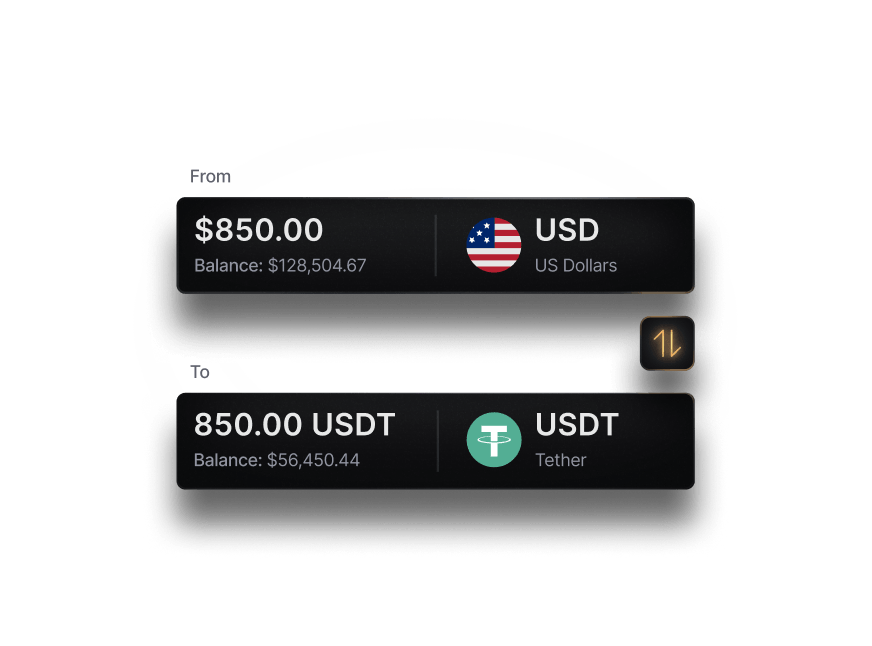
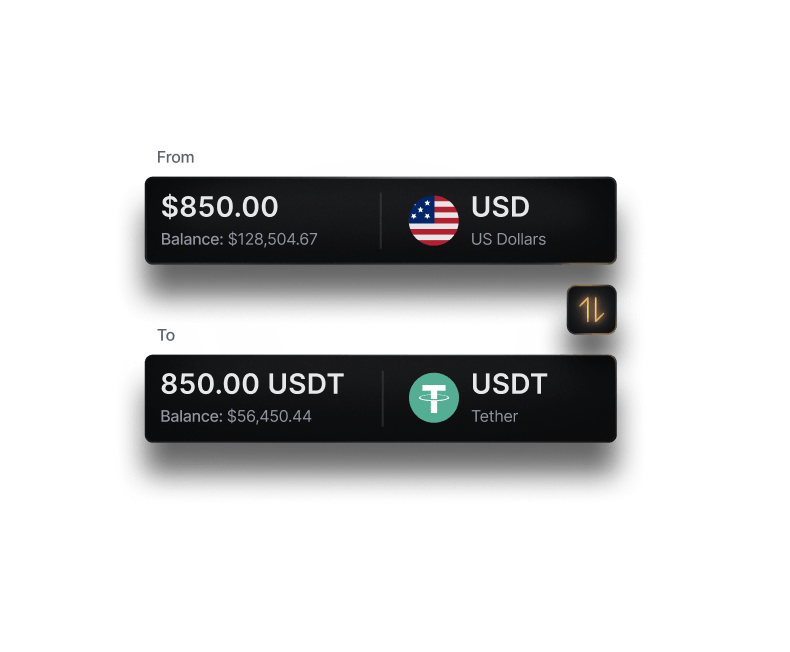
This is the type of activity the Slash Global USD Account is designed to support. You get a US account and routing number, access to the ACH network, and USD corporate cards without needing to set up a US business entity beforehand. The account is backed by USDC on Base, and it on-ramps and off-ramps stablecoins into USD for your transactions.
Slash business banking
Works with cards, crypto, plus cards, crypto, accounting, and more.
Risks of Using Crypto Credit Cards
For the most part, the risks of using crypto cards are the same risks as getting involved in the cryptocurrency market to begin with: high-risk, high-reward investments; still maturing infrastructure; and shifting regulatory frameworks. As you’ll see, however, using stablecoin-backed crypto cards can sidestep many of the associated risks.
Here’s what to consider:
Acceptance is still maturing
Crypto cards work anywhere their network (Visa or Mastercard) is accepted, but the programs behind them don't. Availability varies by country, some cards are limited to a single region (the Nexo Card is EEA and UK only), and programs have been suspended or restructured with little notice when an issuer or banking partner changes course. However, these limitations should ease as regulators and financial institutions continue moving toward broader crypto acceptance.
Off-ramp fees
Every conversion from crypto to dollars costs something. Published conversion fees on crypto card programs commonly run in the range of 0.5% to 2%, and there may also be a foreign exchange markup on purchases in another currency, a weekend surcharge, or a spread built into the quoted rate rather than disclosed as a fee. Slash's on-ramp and off-ramp fees are 1.5% per transaction.
Investment exposure risk
Relying on a volatile investment to fund your spending means you can lose money. Crypto can drop 30% in a day; if that happens, you suddenly have a lot less money to spend on your card. The opposite effect is equally true: spending $1,000 worth of a token that appreciates 30% that day is an unfortunate way to lose out on $300. That's another reason many crypto card issuers rely on stablecoins, since you aren't forced to make a strategic investment decision every time you swipe your card.
Capital gains taxes
In the US, spending cryptocurrency is a disposal of property, so it can trigger capital gains tax on the difference between what you paid for the asset and what it was worth when you spent it. Say you bought a token for $3 and later spent it on a $5 coffee. That's $2 in capital gains to report. Using a volatile asset to back your card spending creates a long list of these small taxable events, which can be a real headache come April.
Stablecoins don't come with the same trouble. Since the asset tracks the dollar, the gain or loss on a purchase is effectively zero, so there's no real capital gains tax to pay. Bills proposing a formal safe harbor for dollar-pegged stablecoin payments have been introduced in Congress but have yet to be adopted, so reporting is still an open question. This is general information rather than tax advice, so check with a tax professional on your own situation.
No FDIC insurance
Holding money at a bank in the US means your balance is protected up to $250,000 per depositor, per bank, if that bank fails under the FDIC. Crypto balances aren't insured, at least not by default (some DeFi contracts offer coverage, but that's its own article). While different token issuers vary widely on how they back their assets, stablecoins like USDC and USDT are widely considered above board: both are backed one-to-one by real cash and short-term Treasury bills according to their issuers' reserve reports, so a liquidity disaster is far less likely.
Crypto Rewards Programs: What to Know
Some crypto rewards programs advertise rates that look far better than a conventional cash back card, but usually the headline number is the least important part of the offer. What matters is which asset the reward is paid in, what you have to do to qualify for the top rate, and what the reward is actually worth by the time you use it.
Below are how some of the most common crypto reward structures work:
Fixed-asset rewards
These pay you a reward for your spending in one token, almost always bitcoin. When your transaction posts, the platform buys that amount of bitcoin at the going price and deposits it in your account. The practical consequence is that the rate is only an estimate of what you earned; your rewards payout can be worth $60 or $25 by the time you sell it.
Choice-of-asset rewards
This rewards structure lets you pick which token your rewards convert into. If the program lets you select a stablecoin, you've effectively turned a crypto rewards card into a dollar cash back card. If you have a bigger appetite for risk, you can choose a more volatile token. These can be especially interesting for avid cryptocurrency investors; if you have a market prediction, you can start building up a stockpile of the tokens you think could hit it big just from everyday spending.
Native-token rewards
Native-token rewards structures pay in a cryptocurrency the card issuer created itself, like CRO from Crypto.com or NEXO from Nexo. Rates in this category are generally advertised to be the highest for a simple reason: the issuer already holds a supply of its own token, so paying you in it costs far less than buying bitcoin. The catch is that these programs usually require staking, meaning you lock up a quantity of that token for a year to qualify, riding its price the whole time; some issuers have cut reward rates after users staked, so make sure to carefully read the agreement before signing on.
Spend Stablecoins Like Cash with Slash
Everything in this guide points the same direction: you want a crypto card backed by a dollar-pegged asset (a.k.a stablecoins), priced transparently, run by a company that is transparent about how everything works. Slash Global Cards are Visa charge cards backed by USDC on Base, spendable in 130+ countries, from a platform already trusted by 10,000+ businesses. Plus, you don't need a US entity to get one.
The infrastructure under it is boring, which is a good thing when you’re dealing with crypto. USDC, the token underpinning the Slash Global USD account, is issued by Circle, a public company that holds its reserves in real cash and short-term Treasuries. Base, the blockchain network supporting the account, is built and operated by Coinbase with transactions settling onto Ethereum, two of the world’s leading blockchain developers and token issuers.
Here’s what else you get with the Slash Global USD account:
- Get US account and routing details to receive USD payments without forming a US entity.
- Send and receive ACH transfers through the account.
- Create and send invoices from your Global USD account and collect payment by ACH, wire, or supported stablecoins directly into the account.
- Send and receive supported USDC and USDT transfers in addition to using USDC to fund card spend.
- Create physical and virtual cards with per-card limits, card-group budgets, merchant-category controls, instant freezing, and role-based permissions.
Apply in less than 10 minutes today
Join the 10,000+ businesses already using Slash.
Frequently Asked Questions
Do crypto credit cards require a credit check?
It depends on the type. Genuine credit cards that pay crypto rewards involve underwriting, which usually means a credit pull, though some issuers show a preliminary decision without affecting your score. Stablecoin and crypto-backed cards typically skip credit underwriting, since you're spending your own assets or borrowing against collateral, and rely on identity verification instead.
The 5 Best Business Credit Cards for Startups with No Credit

Are crypto card rewards taxed as income?
The IRS has not issued guidance specific to crypto card rewards, and treatment can vary. Rewards earned on credit card spending are often treated as a purchase rebate rather than income, while rewards resembling interest or staking yield are generally treated as ordinary income. In either case the crypto you receive gets a cost basis, so selling it later can produce a taxable gain.
Are Credit Card Rewards Taxable for Businesses?

Can a business use a crypto card for expenses?
Yes. Stablecoin-backed cards are the type most businesses use, since spending an asset pegged to the dollar avoids constant gain and loss calculations.
Slash vs Coinbase Business: Features and Key Differences

Do crypto cards work internationally?
The Visa or Mastercard networks are accepted in most countries. Check the program's fee table for international spending to see if additional fees or restrictions apply.
Leading Airwallex Alternatives for Global Businesses in 2026


