

How to Build Your Finance Tech Stack: A Guide for Modern Businesses
Businesses don't set out to add more friction to their financial operations. It happens gradually: maybe you have a bank account here, a spreadsheet there, an expense tracking app added when the team got big enough to need one, and an invoicing tool bolted on when someone complained about unpaid invoices. At some point the finance manager is going to forget one of the five logins they need to get a complete picture of where the company's money is.
At companies like this, decisions often get made on incomplete information because pulling everything together can take a herculean effort. A finance tech stack is the answer to that problem. Despite how it sounds, it isn't a concept reserved for enterprises or companies with dedicated CFOs. Any business that wants to stop managing finances manually, whether a 5-person startup or a 200-person company, benefits from thinking intentionally about how its financial tools connect.
The right stack isn't a fixed list of products. It depends on where the business is today, what its operational complexity looks like, and where it's headed. This article covers what a finance tech stack is, what it's made of, and how to build one that matches where you actually are. We’ll also take a look at Slash, a neobank that could play a huge role in your company’s stack. Slash’s combination of business banking, invoicing, and expense management tools can significantly streamline a finance team’s operations.¹
What Is a Finance Tech Stack?
A finance tech stack is the collection of software tools a business uses to manage its financial operations. This can encompass everything from holding and moving money, to tracking expenses, running payroll, and closing the books each month.
The key word is "stack." The tools aren't meant to operate in isolation. A well-connected stack passes data between layers automatically: transactions recorded in your banking platform flow into your accounting software; expense reports sync to the general ledger without manual entry; payroll runs export to the right accounts. The result is less manual work and a real-time view of the business's financial position that no single tool, on its own, can provide.
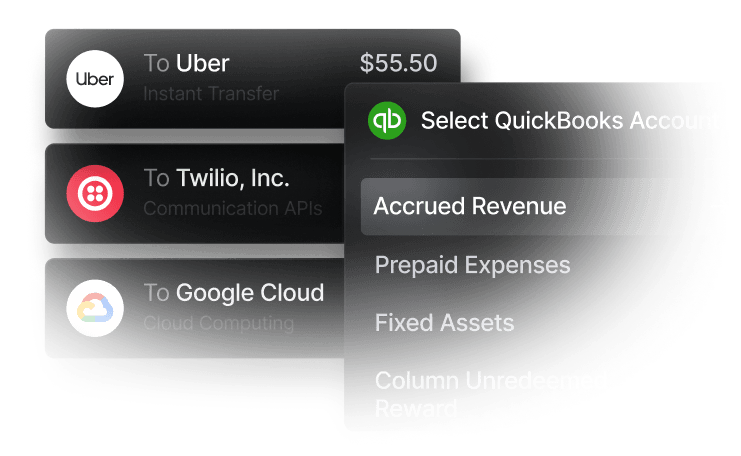
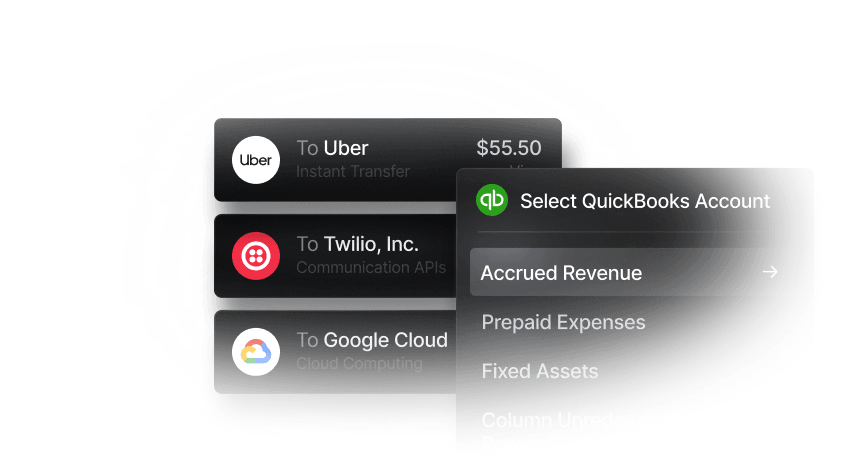
Platform integrations make these stacks possible. For example, Slash connects two-ways with popular accounting systems like QuickBooks Online, Xero, and Sage Intacct. When data can be pulled into your banking software from your accounting system and then pushed back into it, your two tools act as one. It’s important to select solutions that can offer these connections.
The Benefits of a Modern Finance Stack
Moving from spreadsheets and disconnected tools to an integrated finance stack is, at its core, a shift from reactive to proactive financial management. Instead of reconstructing what happened last month, you can see what's happening now. Here are some more benefits:
- Automation of repetitive finance tasks: Bank feeds, transaction categorization, expense matching, and accounting entries that used to require tedious work happen automatically when tools are properly connected. This also removes the human error that can accumulate when the same data is re-entered across multiple systems.
- Real-time visibility into spend and cash flow: When banking, card transactions, and accounting are integrated, the business has a live view of its financial position at any moment. Finance decisions regarding payments and budgets can be made on current data instead of last month's close.
- Fewer errors from disconnected systems: Every manual handoff between systems is an opportunity for data to be entered incorrectly, categorized differently, or lost entirely. Integration eliminates those handoffs. When the system of record is consistent across tools, the numbers are more reliable and reconciliation often becomes much quicker.
- Faster audit and tax prep: A well-structured stack maintains continuous, organized records and doesn’t require a scramble at year-end. Transactions are categorized correctly as they happen, receipts are attached at the point of purchase, and the general ledger stays current. When an audit or tax filing arrives, the data is already in order.
These benefits compound over time. Getting the stack right early reduces the cost of rebuilding it later; migrating financial data, retraining teams, and untangling integrations is far more expensive at 100 employees than it would have been at 10.
Core Components of a Finance Tech Stack
A finance stack is made up of distinct layers, each with a specific job. Which ones a business needs depends on its size, complexity, and how it makes and moves money. Here are some of the components that most finance stacks include:
Banking and Cash Management
Banking is often the foundation of the stack. This is where the business holds its operating funds, receives incoming payments, and initiates outgoing ones — wire transfers, ACH, real-time payments, and bill pay. Some businesses keep this simple with a single checking account; others operate multiple accounts across entities or currencies. Either way, everything else in the stack connects back here. Some banking platforms, such as Slash, support other functions like invoice automation and corporate cards directly within their solution.
Accounting and Bookkeeping
Bookkeeping solutions represent the system of record for the business's financial history. Accounting software can maintain the general ledger, handle accounts payable and receivable, generate financial statements, and support the close process. This layer receives data from banking, cards, payroll, and invoicing, and produces the reports that inform business decisions and satisfy regulatory requirements.
Corporate Cards and Expense Management
This part of the stack revolves around how the business controls and tracks what employees spend. Corporate cards replace personal cards and reimbursement cycles, enabling real-time visibility into spend as it happens. Expense management tools that can capture receipts, enforce spend policies, route approval requests, and categorize transactions can come along with these cards. When employee card spend is integrated with the accounting layer, there's no separate data entry step.
Invoicing and Payments
For businesses that bill clients rather than collect payments at point-of-sale, an invoicing layer handles the creation, delivery, tracking, and reconciliation of customer invoices. This includes both collecting money owed (accounts receivable) and paying vendors on schedule (accounts payable). Some businesses manage this within their accounting software, while others use dedicated tools for higher volume or more complex billing arrangements.
Payroll
Payroll is one of the most regulated and time-sensitive functions in the finance stack. Payroll software can calculate wages, withhold taxes, manage benefits deductions, and file employer tax returns on schedule. Because payroll is highly specialized, most businesses use a dedicated tool here rather than trying to handle it within a general accounting platform.
Reporting and Analytics
Above the transactional layer sits the reporting layer: tools that aggregate financial data across the stack and surface the metrics that matter to decision-makers. This ranges from the built-in reporting within an accounting platform, to business intelligence tools that can manage sophisticated financial modeling and scenario planning. The reporting layer is where a well-connected stack pays its biggest dividends; the better the underlying data, the better the analysis. Not only does Slash come with its own analytics tools, but its agentic AI assistant, Twin, can be prompted to dive deeper into your financial numbers and even generate its own reports.
The standard in finance
Slash goes above with better controls, better rewards, and better support for your business.

How Your Finance Tech Stack Evolves as Your Business Grows
As you construct your finance stack, you may overbuild too early by investing in enterprise tools the business isn't complex enough to use. On the other hand, you could underbuild by sticking with manual processes for too long. The right approach is often to prioritize scalability and layer in complexity as the business demands it.
The groupings below are illustrative. Stack requirements vary by business model, revenue, and how the company makes money. A services firm's needs may look different from an e-commerce business at the same headcount.
Small Teams (1–10 People)
At this stage, the priority is establishing clean financial infrastructure that's easy to maintain without a dedicated finance person. The stack should be lean enough to run without overhead, but connected enough that nothing falls through the cracks.
A Business Bank Account
Keeping business and personal finances in separate accounts is the first step toward having financial data that's actually interpretable. A business checking account gives you a clean record of all business transactions, which is often the data that every other tool in the stack depends on. Choosing a platform with strong digital capabilities, such as automation and integrations, can avoid an expensive migration later on.
A Corporate Card
Moving team spend off personal cards eliminates reimbursement cycles and gives the business real-time visibility into what's being spent. Even with a small team, the time spent tracking down receipts and processing reimbursements adds up quickly. A corporate card (especially one that connects directly to accounting software) makes expense tracking largely automatic and removes one of the most common sources of month-end confusion.
Basic Accounting Software
Accounting systems like QuickBooks Online covers the accounting needs of most small businesses: income and expense tracking, invoicing, bank reconciliation, and tax-ready reports. The key is connecting it to your banking and card provider so transactions flow in automatically rather than requiring manual entry. With a proper feed established early, the general ledger stays current with minimal effort — and the business has reliable financial data to make decisions with. That’s why Slash integrates with some of the most popular solutions on the market.
Growing Teams (10–50 People)
More people means more transactions, more complexity, and more things that can go wrong if the stack isn't keeping up. This is the stage where gaps in the early stack can hurt, and where adding the right tools pays for itself quickly.
Expense Management and Reimbursements
With multiple employees incurring business expenses, an informal process stops working. Expense management tools formalize workflows by ensuring expenses are properly categorized, receipts are collected at the point of purchase, and spend limits are enforced before transactions happen rather than after. This layer often integrates directly with corporate cards, making the two work as a single system.
Invoicing
If the business bills clients, a proper invoicing workflow becomes essential by this stage. Manual invoices sent by email become hard to track and reconcile at volume. Dedicated invoicing software can handle the full cycle by creating and sending invoices, tracking vendor payment status, sending reminders, and reconciling received payments against outstanding balances in the accounting system.
Payroll
Manual payroll calculation is a liability risk that no growing business should carry. Dedicated payroll software handles tax withholding, employer filings, direct deposit, and benefits deductions. This should happen automatically, on schedule, with the compliance burden shifted to the platform rather than a finance team member who may or may not be current on the applicable rules.
Reporting
At this stage, a business needs more than a simple profit & loss (P&L) statement. Management reporting that encompasses cash flow forecasts starts to matter for decisions about hiring and growth. Whether this is handled through better use of the accounting platform's built-in reports or with a dedicated financial planning & analysis tool depends on the complexity of the business. In any case, some level of structured reporting process is necessary by this stage.
Larger or Scaling Teams (50+)
At scale, the stack needs to handle multi-entity complexity, support a dedicated finance team's workflows, and be connected enough that information moves between tools without manual intervention.
Treasury Management
Larger cash balances make cash management a strategic function rather than an administrative one. Treasury tools — or banking platforms with treasury features built in — help optimize where cash is held, earn yield on idle balances, manage liquidity across accounts, and forecast cash positions days or weeks ahead. Slash’s treasury account allows users to earn up to 3.83% yield by investing in institutional-grade funds powered by BlackRock and Morgan Stanley.⁶
Multi-Entity Management
Businesses with multiple legal entities like subsidiaries or related LLCs need the ability to manage financials at both the entity level and the consolidated level simultaneously. This means separate books for each entity, intercompany transaction tracking, and consolidated reporting that gives leadership a full-picture view without requiring manual aggregation across systems.
Accounting Automation
At higher transaction volumes, manual accounting processes break down. Accounting automation that handles automated journal entries and rules-based transaction categorization can keep the ledger current without a proportional increase in headcount. This is also where the quality of integrations between systems becomes critical; poor integrations may create extra reconciliation issues.
How Slash Fits Into Your Finance Stack
The exact opposite of a stack is fragmentation. With a fragmented system, banking lives in one place, corporate cards in another, expense tracking in a third, and each one requires its own login and reconciliation process. Every handoff between systems is a potential point of friction that can result in missing data and incorrectly-categorized transactions.
Slash is built for businesses that want to build a complete stack with as few parts as possible. Rather than assembling four or five solutions, Slash consolidates core finance workflows into a single platform that includes business banking, corporate cards with per-employee spend controls, expense management with receipt capture and approval workflows, and direct integrations with accounting systems. Further connecting these pieces is Twin, Slash’s agentic AI that can complete complex tasks and investigate data across functions.
Our users can experience the benefits of less manual reconciliation, fewer integrations to monitor and maintain, and a unified view of spend, payments, and cash position. All of this is accessible on our integrated financial dashboard that updates in real time.
Here are some more Slash features that can fit right in to your stack:
- Slash Visa® Platinum Card: The Slash Card allows you to set customizable spending controls and issue unlimited virtual cards for handling team expenses, vendor payments, subscriptions, and more. Users can also earn up to 2% cash back on business purchases.
- Working capital financing: Access short-term financing with flexible 30-, 60-, or 90-day repayment terms to help bridge cash flow gaps and time financial stages.⁵
- Native cryptocurrency support: Hold, send, and receive USD-pegged stablecoins USDC and USDT across eight supported blockchains for faster, lower-cost global payments.⁴
- Diverse payment methods: Slash supports a wide range of payments, including card spend, global ACH, international wire transfers to over 180 countries via SWIFT, and real-time domestic payments through RTP and FedNow.
- Global USD: The Slash Global USD Account is designed as an alternative for foreign founders who want access to USD without forming a US entity.³ Balances are held in USDC on Base, a stablecoin designed to maintain a one-to-one value with the U.S. dollar.
If you’re building your finance stack from scratch, Slash can give you a head start by offering several key features alongside your banking system. Get in touch with us to see just how many tools we can offer.
Apply in less than 10 minutes today
Join the 10,000+ businesses already using Slash.
Frequently Asked Questions
How do you know if your current finance tech stack is working?
Overall, you'll know your finance tech stack is a success if your team begins working more efficiently. In practice, this often looks like less time spent on financial reporting, month-end close, and simply logging in to various systems.
The Top 7 Platforms for Integrated Treasury, Forecasting, and High-Yield Accounts

Best Budgeting Software for Business in 2026 (Top Picks)

Does a stack help make audits easier?
Yes, a good financial tech stack can both help teams make errors less frequently. It can also help auditors look through your data and assess your financial picture more easily.
Accounts Payable Audit Guide: Checklist, Steps, and Best Practices
What does two-way integration mean?
Two-way integration means that data is shared between platforms in both directions; an accounting platform can use a banking solution's information and vice versa.
How to Streamline Accounting Processes for Faster Reporting and Better Decision-Making
Read more from us


