

The Top 7 Integrated Treasury Platforms in 2026
Modern finance teams are expected to do more than monitor account balances. Treasury management today means actively managing liquidity, planning ahead for cash needs, and making sure capital is positioned efficiently across accounts, entities, and currencies. That responsibility can become harder when visibility is fragmented across multiple banks and systems.
When treasury data is spread across separate platforms, it can be difficult to maintain a real-time view of liquidity. Forecasts may rely on incomplete information, capital may sit idle, and financial decisions slow down. Integrated treasury platforms are designed to bring cash visibility, forecasting, payments, and control into one unified environment.
In this guide, we’ll look through 7 popular treasury management solutions for modern finance teams and discuss their practical strengths and weaknesses. We’ll also look at how Slash approaches treasury differently by combining business banking infrastructure, global payments, corporate cards, and yield-generating treasury products in one platform.¹, ⁶
What is an Integrated Treasury Platform?
A treasury management system (TMS) is software designed to help businesses oversee liquidity, cash positioning, forecasting, risk exposure, and more. While a TMS covers a broad scope of functionality, its primary purpose is giving businesses visibility and control over company funds.
A treasury account, on the other hand, typically refers to an account that allocates funds into short-term securities (often government or institutional money market instruments) to generate yield on idle cash. These are investment products, not operating bank accounts.
For example, Slash offers treasury accounts that allocate funds into securities powered by BlackRock and Morgan Stanley, with yields up to 3.83% annualized. Funds must settle (i.e., securities must be sold) before being transferred as cash, which means these accounts are designed for yield optimization, not day-to-day operating liquidity.
An integrated treasury platform combines treasury management functionality (cash visibility, forecasting, payments, controls) with embedded banking infrastructure and related financial tools like corporate cards, FX, and accounting integrations. Instead of layering a TMS on top of legacy banks, integrated platforms unify the stack.
Treasury vs. Cash Flow vs. Accounting
These terms can be conflated, but they serve distinct roles:
- Treasury focuses on strategic liquidity management, capital allocation, and risk mitigation.
- Cash flow measures the movement of money in and out of the business over a defined period.
- Accounting ensures transactions are recorded, categorized, reconciled, and reported accurately.
Treasury decisions may rely on cash flow data and accounting accuracy. An effective integrated treasury platform should support all three without forcing teams to reconcile data across multiple systems.
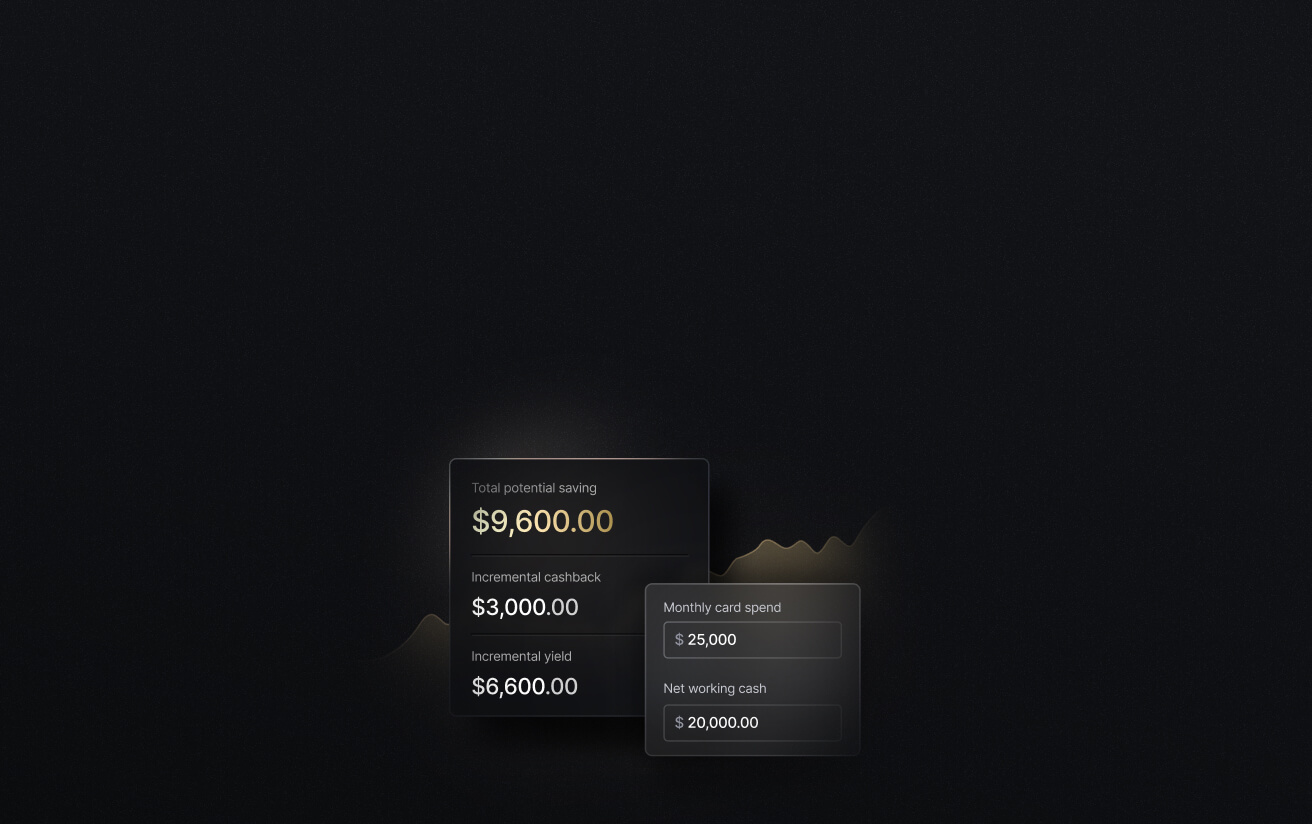
See the ROI behind your spend
Use this calculator to understand impact, then manage and track it all in Slash.

What Should I Look For in an Integrated Treasury Platform?
Selecting the right treasury management software requires evaluating your specific operational requirements, capital flexibility, and growth trajectory. Here are some steps you should take as you do your research:
Identify Operational Scale
Assess your average transaction volume, foreign currency use, and geographic scope. Early-stage startups may prioritize simplicity and low costs, while scaling companies often need platforms that support international payments, high-yield accounts, and complex workflows.
Evaluate Forecast Needs
Similarly, organizations rely on many different levels of cash forecasting. Basic cash flow visibility suffices for some businesses, while others require scenario modeling, integration with budgeting tools, or API access for custom forecasting models.
Plan for High-Yield Business Accounts
Businesses with extra capital may seek treasury systems with the highest-yield returns, while those with less flexibility won’t be as focused on savings. Consider your capital and determine whether you’ll be investing enough money in securities to make annualized yield one of your priorities.
Assess Global Operations
Companies operating internationally or paying foreign vendors need platforms with robust global transfer capabilities, competitive FX rates, and local payment rail access. These elements won’t be as important for companies that mainly operate domestically.
Review Integration Requirements
Identify which systems must integrate with your treasury platform: accounting software , payroll platforms, or custom applications. Platforms with pre-built integrations help accelerate implementation and sync data for easier utilization.
What Features Can Set Integrated Treasury Platforms Apart?
While you’ll find features like cash forecasting and real-time visibility in most treasury management solutions, some offer features that make them stand out among the competition. You may want to prioritize platforms that offer:
Two-Way Sync Integrations
Pre-built integrations with your accounting system eliminate manual data entry and reduce reconciliation burden. You’ll also want to know how deeply these integrations connect, as some only sync transaction data, while others handle expense categorization and automated reporting while syncing both ways.
Programmatic FX, Spend, and Forecasting Modules
Access to foreign exchange capabilities, spend management controls, and forecasting data enables users to build custom workflows and tailor automation to specific business processes.
Extensive Business Banking Features
The right treasury platform should be fully integrated with several other financial tools. Corporate cards, crypto support, multi-entity capabilities, and automated accounting processes are some of the features that can – and should – be in your integrated treasury platform.⁴
Transparent pricing
It’s difficult to compare the potential ROI of all these tools when the pricing structure is confusing or secretive. Platforms with transparent pricing can prevent surprise costs that erode projected savings. Compare total cost of ownership including subscription fees, transaction costs, FX markups, and additional service charges.
Popular Integrated Treasury Platforms
Let’s compare seven popular treasury management software choices so you can get a good idea of what features are common, what shortcomings may arise, and which solutions best fit your needs:
Slash
Slash is an integrated treasury and banking platform designed to centralize liquidity management and yield optimization. Finance teams can track real-time cash positions, forecast short-term liquidity, and allocate idle balances into treasury accounts powered by BlackRock and Morgan Stanley, with yields up to 3.83% and redemptions settling in as little as one business day. By combining operating accounts and treasury products in one system, Slash reduces friction between cash management and capital allocation.
Strengths: Treasury accounts with competitive annualized yields, FDIC-insured deposit accounts, low FX fees (1% or $0.40 minimum), integrated corporate cards with up to 2% cashback, automated expense categorization, and two-way accounting sync.²
The standard in finance
Slash goes above with better controls, better rewards, and better support for your business.
Kyriba
Kyriba is a cloud-based treasury management platform that offers comprehensive tools to manage cash, liquidity, payments, risk, and working capital. It fits best with large, complex treasury operations. With over 20 years in operation, it’s also one of the forerunners of the integrated treasury field.
Strengths: Extensive bank connectivity, risk avoidance features, deep treasury tools
Weaknesses: Given Kyriba’s platform complexity, implementation can be a lengthy process and costs can be upwards of $85,000.
HighRadius
With a custom-built machine learning AI that uses financial data to automate daily projections, HighRadius is an effective cash forecasting platform. Their service claims 90% accuracy, and comes with the ability to easily override projections if financial teams feel that something should be tweaked.
Strengths: AI model that learns from data, tracks accuracy, flags patterns, and adapts to changes for better forecasts
Weaknesses: Its targeting of cash forecasting leaves it with a narrow scope of features compared to other treasury management software. They do not offer high-yield business accounts, which is a core tenet of treasury operations for many organizations.
ION Treasury
ION Treasury’s platform supports cash management, back-office settlement, trading, and hedge accounting services. Its strongest tools relate to its data visualization, displaying trends, forecasts, and KPI insights on extensive charts and dashboards. With risk management features, ION also works well for organizations with deep investments.
Strengths: Real-time data visibility and the ability to process millions of daily records
Weaknesses: Implementation can take more than a year, and the platform notably lacks phone-based customer support.
FIS Integrity
FIS Integrity offers a comprehensive treasury suite that includes bank account administration, cash forecasting, payments processing, accounting, and compliance. One of its key features is its security – their real-time vulnerability scanning and network monitoring is known as the “Secure by Design” infrastructure.
Strengths: Full liquidity management, integrations with ERPs, extensive treasury reporting
Weaknesses: International payment capabilities can be inconsistent; for instance, some validation checks like IBAN aren’t available.
Nomentia
Nomentia is a cloud-based global payment hub that allows companies to take control of their cash flows and manage their end-to-end payment cycles. Something that sets Nomentia apart is its flexibility – the platform is modular, meaning users can build their technology stack from scratch or add solutions that complement their existing ERPs.
Strengths: Modularity, customized treasury reports, and a notably wide range of cash and treasury management portfolios
Weaknesses: A lack of AI and automation features means many processes that competitors perform automatically must be done on the Nomentia platform manually.
Coupa
While Coupa is closer to a cash forecasting platform than a complete treasury management software, it still offers useful features for treasurers who are looking to increase their financial agility. Outside of optimized liquidity and extra cash flow visibility, Coupa strives to unify treasury management with other aspects of business like procurement and supply chain processes.
Strengths: Automated reconciliation of invoices, integrated trading platforms, integrates with ERPs
Weaknesses: Coupa lacks expense categorization and modern receipt capture, and often requires third-party connectors to work smoothly with your current finance stack. It’s also one of the most expensive treasury options you’ll come across, starting at around $2500 a month.
Optimize Your Banking and Treasury Management with Slash
Businesses of all sizes need solutions for treasury management and cash forecasting without breaking the bank or adopting software that doesn’t fit their workflow.
Slash unifies operating accounts, real-time cash visibility, liquidity forecasting, and yield-generating treasury products in one platform, allowing finance teams to manage daily cash needs while optimizing idle capital. With treasury accounts powered by BlackRock and Morgan Stanley offering yields up to 3.83% and redemptions that can settle in as little as one business day, businesses can improve returns without separating funds from their core banking infrastructure.
Slash is also built for global operations. Businesses can send and receive cross-border payments via ACH, wire, and SWIFT with transparent pricing and low FX fees (1% or $0.40 minimum). Companies using stablecoins can also on- and off-ramp crypto directly within the platform. Global USD accounts enable non-U.S. businesses to access full banking functionality without forming a U.S. entity.³
The Slash Visa® Platinum Card extends treasury visibility into spend management. Transactions are automatically categorized within the dashboard and synced with accounting systems, while up to 2% cashback improves overall capital efficiency.
Whether managing high-volume international flows or optimizing short-term liquidity for growth, Slash integrates treasury oversight with the infrastructure needed to move and manage money confidently.
Apply in less than 10 minutes today
Join the 10,000+ businesses already using Slash.
Frequently asked questions
How do integrated treasury platforms support real-time cash forecasting and visibility?
Integrated treasury platforms connect directly to bank accounts, payment rails, and transaction data to consolidate balances into a centralized dashboard. Because activity updates automatically, finance teams can build rolling forecasts, run scenario analyses, and make liquidity decisions using current cash positions instead of delayed reports.
Cash Flow Management: A Guide for Making Smarter Business Decisions

What should finance teams look out for regarding security and compliance?
Finance teams should evaluate encryption standards, role-based access controls, multi-factor authentication, detailed audit logs, and independent certifications such as SOC 2. A strong treasury platform should also support internal governance requirements by maintaining clear transaction traceability and approval workflows that align with regulatory expectations.
Business Fraud Prevention: A Guide for Protecting Your Company
Read more from us


