

Business Fraud Prevention: Essential Controls Every Company Needs in 2026
Fraud isn't a risk limited to large enterprises or high-risk industries. It's a persistent, inconspicuous threat that can affect businesses of every size. Fraudsters tend to look for weak points in financial operations, such as poor internal controls, limited visibility into transactions, and outdated safeguards. Strengthening overall financial security and business fraud prevention practices can close these gaps. Small businesses can be particularly attractive targets because they may lack dedicated fraud prevention resources or tools to combat fraud schemes.
The financial impact of fraud usually extends well beyond the initial loss. Fraudulent activity can interrupt daily operations, strain relationships with vendors and customers, and create legal or compliance exposure for business owners. In many cases, fraud is only discovered weeks or months after it occurs, particularly when reconciliation processes are slow or highly manual.
There's no doubt that financial fraud has been on the rise. Homeland Security Today reported that global financial crimes have surged, reaching 4.4 trillion — but that's where we come in. At Slash, we engineer our product with the mission of reducing fraud.¹ Our platform features AI-assisted fraud detection, granular card controls, compliant identity verification, and real-time transaction visibility. Together with ongoing transaction monitoring, these controls strengthen your defenses.
The standard in finance
Slash goes above with better controls, better rewards, and better support for your business.


What is fraud prevention? Key concepts and importance
Fraud prevention refers to the strategies, controls, and processes businesses use to reduce both the likelihood and impact of fraudulent activity. This can include internal controls, identity verification, transaction monitoring, employee training, clear procedures for responding to suspicious activity, and more. Many teams document internal controls for fraud prevention to standardize reviews and approvals across finance.
Rather than trying to eliminate fraud entirely, which is rarely realistic, fraud prevention focuses on reducing opportunity, improving detection, and responding faster when something goes wrong. In practice, this means combining preventive controls, detective controls, and response protocols. Preventive controls are designed to reduce opportunities for fraud; detective controls help identify suspicious activity; and response protocols outline what to do once fraud is suspected or confirmed.
Businesses also rely on regulatory frameworks to shape their fraud prevention efforts, including:
- Know Your Customer (KYC): Processes used to verify the identity of customers before establishing financial relationships.
- Know Your Business (KYB): Similar checks applied to businesses, vendors, and counterparties to confirm legitimacy and ownership.
- Anti-Money Laundering (AML): Ongoing monitoring and reporting requirements designed to detect and prevent illicit financial activity.
These know-your obligations—kyc (know your customer) and kyb (know your business)—establish baseline checks that support effective fraud detection and due diligence.
Beyond compliance, fraud prevention supports broader operational goals. It can help protect revenue, preserve trust with vendors and customers, limit losses from theft or misappropriation, and improve overall financial discipline.
How fraud prevention works: Everything you need to know
Fraud prevention works differently depending on where risk enters the business. Below are some of the most common types of fraud affecting companies today, along with why each requires a slightly different approach:
Bank fraud
Bank fraud can include unauthorized ACH transfers, wire fraud, or account takeovers. These incidents often may occur after credentials are compromised through phishing attacks or weak authentication practices. Once funds leave a bank account, recovery may be difficult and highly time-sensitive, especially for wire transactions.
Accounting fraud
Accounting fraud may involve manipulated financial statements, hidden liabilities, or misclassified expenses. This type of fraud can often occur internally; it may be linked to limited oversight, infrequent audits, or a lack of segregation of duties within finance teams. Implementing periodic reviews, anomaly testing, and reconciliations aids in detecting accounting fraud before it snowballs.
Credit card fraud
Businesses can experience credit card fraud t hrough unauthorized card use, fraudulent chargebacks, or misuse of employee cards. Card skimming at the point of sale can also expose sensitive financial information. Without transaction-level controls and tokenization, both of which are standard features on Slash's charge cards, these issues may persist undetected.
Investment fraud
Investment fraud can occur when businesses are targeted with false or misleading opportunities, such as Ponzi schemes, pyramid schemes, or unregistered securities offerings. Some schemes rely on social relationships, while others involve impersonation of regulators or financial institutions.
Identity theft
Fraudsters may use stolen or fabricated identities to open accounts, initiate transactions, or redirect payments. Strong adherence to KYC, KYB, and customer due diligence procedures is critical for reducing this risk. Businesses should verify identification documents, cross-reference information against trusted databases, and monitor for inconsistencies in application details. Multi-layered verification processes make it significantly harder for fraudsters to succeed with synthetic or stolen identities.
Check fraud
Check fraud has increased in recent years, even as overall check usage has declined. Common schemes include counterfeit checks, forged signatures, and check kiting—where fraudsters exploit the float time between deposit and settlement. Businesses that continue to rely on checks without safeguards like positive pay may face elevated exposure, which is why many companies are transitioning to digital payment methods with stronger security protocols.
Despite the wide range of fraud schemes, several safeguards tend to improve protection across the board:
- Clear internal controls and approval workflows
- Identity verification through KYC and KYB
- Ongoing transaction monitoring and alerts
- Restricted system access and role-based permissions
- Defined procedures for responding to suspicious activity

How can you protect your business from fraud: 6ways to minimize risk
Protecting your business from fraud doesn't require an enterprise budget or a dedicated security team. The most effective approach combines proactive controls, consistent monitoring, and the right tools to catch issues early. Here are six practical ways to strengthen your business fraud prevention strategy:
1. Strengthen internal controls and reduce manual processes
Internal controls for fraud prevention work best when they're applied consistently. When approvals, payments, and reconciliation live in disconnected systems, it becomes easier for fraudulent activity to slip through. Centralizing financial activity makes irregularities easier to spot.
A platform like Slash gives business owners real-time visibility into cash flow across bank accounts, cards, and payment methods. Granular permissions ensure employees only have access to what they need, while configurable spending rules prevent unauthorized transactions. Capturing transaction data digitally also reduces the chance that information is hidden or altered, especially when synced with accounting tools like QuickBooks.

2. Verify information about employees, customers, and vendors
Without strong KYC and KYB processes, businesses may expose themselves to identity theft, fraudulent vendors, or wire and check fraud. Verifying who sits on the other side of a transaction is particularly important when payments are large, urgent, or out of pattern.
Employee background checks should be conducted before granting access to financial systems or sensitive information. When onboarding new employees, take time to confirm legitimacy through multiple channels: a phone call to a known number, verification of business addresses, and review of incorporation documents can all help establish trust before money changes hands.
3. Secure bank accounts and online banking access
Bank accounts are a frequent target for fraudsters. Limiting who can initiate transactions, enforcing multi-factor authentication, and reviewing access permissions regularly can all help reduce exposure.
Slash allows businesses to manage role-based access, revoke permissions instantly, and set transaction limits at the account level. Virtual cards can add another layer of protection by tokenizing information at the point of sale, reducing the risk of card skimming during transactions. Slash's native stablecoin support can provide additional protection during transfers over traditional bank transfers, since on-chain transactions can be harder to fabricate or alter once settled.³ These measures contribute to overall financial security.
4. Monitor transactions and flag suspicious activity early
Early detection is one of the most effective ways to limit fraud losses. Monitoring transactions in real time allows businesses to catch anomalies—such as unexpected payment amounts, new vendors, or unusual timing—before funds fully leave an account.
Slash uses AI-powered transaction monitoring to identify potentially suspicious activity and enable faster review. Configurable approval flows and instant alerts help businesses pause questionable transactions before they're finalized, rather than discovering issues down the line.
5. Guard against and prevent business email compromise and phishing
Many scammers target employees by impersonating company leadership; one smart, convincing scammer can sufficiently fool an employee into giving up important business information. To help prevent business email compromise, it's important to hold regular training for employees about the dangers of phishing scams and how to spot them. And, for new employees, be sure to address this early, as they're at the highest risk for both being targeted and falling for the trick. For larger businesses, consider implementing phishing test emails to see how your employees react to a possible scam.
6. Conduct regular audits and reconciliations
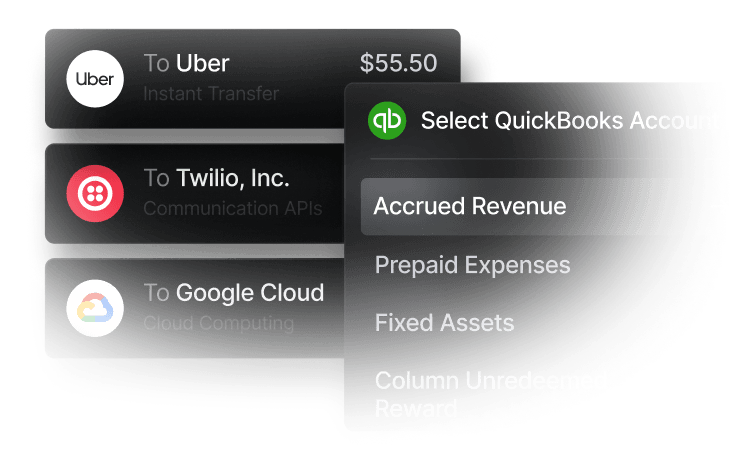
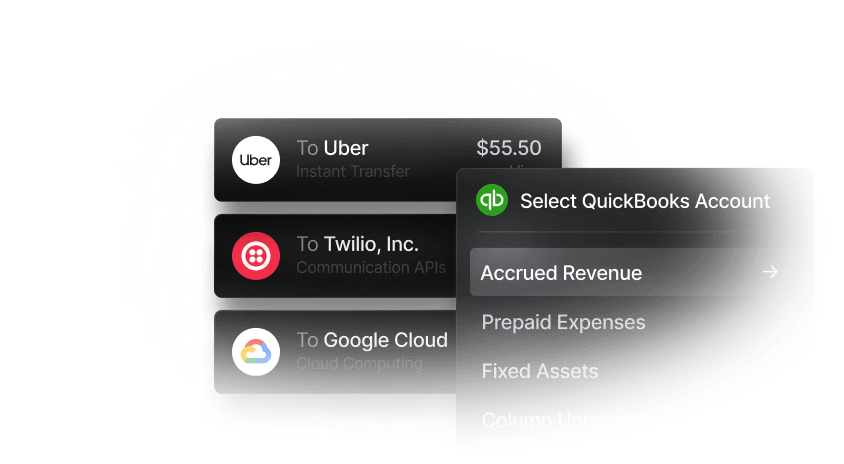
Audits and reconciliations are most effective when they're routine. Waiting until something feels off may allow fraud to continue longer than necessary. With an integrated banking and accounting setup—such as Slash paired with QuickBooks—reviewing transactions, reconciling accounts, and preparing financial statements can become a standard part of operations rather than a disruptive quarterly hassle.
What to do if your business is a victim of fraud?
If fraud is suspected or confirmed, working quickly with your banking provider is critical. Time can significantly affect whether funds can be frozen or recovered. Here's what to do:
- Contact your bank immediately: Report suspicious activity to your financial provider as soon as possible. Your provider may be able to place holds on transactions, freeze affected accounts, or initiate recovery procedures. Banks can sometimes recall wire or ACH transfers if notified within hours of the transaction, before funds are fully settled.
- Secure all access points: Reset all relevant login credentials, revoke user permissions, enable stronger authentication, and review recent changes to account details. Your banking provider can often help audit recent login activity and transaction history, too.
- Document everything: Maintain records of fraudulent transactions, communications, timestamps, and internal findings. Banks and payment networks typically require detailed documentation to investigate fraud claims.
- Adjust controls for the future: After the incident, review and strengthen your fraud prevention measures. Update approval workflows, modify spending limits, and implement additional monitoring as needed to reduce future risk.
Instead of wasting time over the phone with your banking branch, platforms like Slash allow businesses to take immediate action at the first sign of fraud from the dashboard. Because Slash maintains detailed transaction records and access logs, businesses may be better positioned to document fraudulent activity quickly and work with payment networks or authorities as needed.
Get complete visibility into payments and transactions with Slash
When fraud strikes, every minute counts. With the Slash dashboard, what used to take hours now takes minutes. At the first sign of something wrong, you receive an instant alert. You open the app and freeze accounts with a single click. You navigate to your analytics dashboard to see a company-wide view of all transactions, broken down by team, recipient, payment type, and more. All transaction details are automatically recorded and readily available. Once you've identified the issue, you can revoke user permissions and close compromised accounts instantly—no phone call required.
Slash also offers a comprehensive suite of financial tools designed to give businesses greater control, visibility, and security:
- Slash Visa Platinum Card: A 2% cash back charge card that enables granular spending controls, customizable card groupings, and real-time transaction insights. Save all transaction data across your teams for better visibility, and easily adjust permissions for employees who misuse their company card.
- Native crypto support: Cryptocurrency payments benefit from blockchain technology that makes transactions extremely difficult to fabricate, duplicate, or alter. This is because they live on a decentralized network that uses cryptographic keys to secure payment information. Slash enables users to hold, send, and receive stablecoins like USDC and USDT across 8 different blockchains.
- High-yield savings accounts: Further centralize your company accounts with high-yield accounts that integrate directly into the Slash dashboard. Earn up to 4.1% annualized yield from Morgan Stanley or BlackRock money market accounts tied to U.S. Treasuries.⁶
- Virtual accounts: Separate different payment pools by vendors, category, and more depending on your needs with easily configurable virtual bank accounts.
Apply in less than 10 minutes today
Join the 10,000+ businesses already using Slash.
Frequently asked questions
What is the 10-80-10 rule for fraud?
The 10-80-10 rule applies to many different contexts, but when referring to business fraud, it means this: 10% of people will likely never commit fraud, 10% of people will always commit fraud given the chance, and the remaining 80% are somewhere in the middle. Fraud prevention generally focuses on limiting the chance for the middle 80% to commit fraud, as proper safeguards can effectively deter generally good people from committing dishonest acts.
What are the 4 "P's" of fraud?
The 4 "P's" refer to the common way that fraudsters manipulate their victims. The 4 "P's" are pretend, problem, pressure, and pay; a scammer will pretend to impersonate someone, they will present a problem to you that can be solved with monetary compensation, they will pressure you by fabricating urgency or swindling you with false promises, and then finally, you may pay them, at which point an authorized transaction cannot be reversed.
Can I put a fraud alert on my EIN number?
There's no centralized fraud alert system for EINs. Monitoring bank accounts closely and implementing strong identity verification are the most effective protections. If you suspect your EIN has been compromised for fraud, submit IRS Form 14039-B and contact major credit bureaus to place an alert on your profiles and identification.
How to Find My EIN Number Online: Quick Tax Guide


