

Business Banking for Startups: How to Choose the Right Setup
When you’re founding a company, opening a bank account is one small task on a long checklist. Open an account, get a card, move on. But for pre-seed startup founders, the financial infrastructure you choose early on can shape how you operate for a long time. The wrong fit might mean outgrowing your tools within just a few months, dealing with hard-to-reach qualification requirements, or getting locked into a system with tools you don't really need early on.
Ideally, your startup should look for balance. You want a financial setup that works just as well for a three-person team as it does when you're scaling to three hundred. You should be able to access the basics: checking accounts, business cards, and some financial planning tools. But, that same system should be able to take on more complex financial processes as you scale, without charging you an arm and a leg.
This guide breaks down what to look for in a startup banking setup, where the most common hurdles are to getting started, and how to put a financial foundation in place that you won't have to rip out six months from now. And if you're setting up your startup's finances now, consider Slash: earn up to 2% cashback on card spend, no minimum balance to open treasury, and integrated business tools built for the way startups actually operate.¹ ,⁶
The standard in finance
Slash goes above with better controls, better rewards, and better support for your business.

Why it’s important for startups to set up their banking early
When you're building a product, talking to customers, and trying to close your first deal, opening a business account and picking a card provider feels like admin work. But delaying your banking setup creates compounding problems that get harder to fix the longer you wait, such as:
Personal and business finances get tangled
The most common early mistake is running business expenses through a personal bank account. It's easy to justify in the first few weeks. You're the only employee, the expenses are small, and you'll sort it out later. But "later" arrives faster than most founders expect. Once you have dozens of transactions split across personal and business spend, separating them becomes a manual accounting project. And if you're applying for a business credit card, seeking financing, or preparing for a fundraise later on, messy books can raise questions you don't want to answer.
Miss out on compounding interest
Every month your startup's funds sit in a zero-interest personal checking account is a month of lost yield. For a startup with $200,000 in the bank, even a modest APY on a business savings account or treasury account adds up over the course of a year. That's money you could put toward hiring, marketing, or extending your runway.
Painful migration later on
If you start with a bank that doesn't fit your needs and switch six months later, you'll end up re-routing every automated payment and integration. Your accounting software will need to be re-connected. Your team's cards will need to be re-issued. Recurring bill pay schedules will need to be rebuilt. Founders who've gone through a mid-stride banking migration will tell you it's one of those problems that's much easier to avoid than to fix.
How startups should put together their core banking stack
Once your account is open, you need to build out the basic financial infrastructure that keeps your startup running day to day. Here's what that actually looks like:
Checking and deposit accounts
At minimum, you need a business checking account that keeps your company's money cleanly separated from your personal finances. This isn't optional. Commingling funds can compromise your LLC's liability protection, create accounting headaches at tax time, and make due diligence a nightmare if you ever raise a round.
But a single checking account isn't always enough. Many founders opt for services with subaccount capabilities early on to separate operating expenses from reserves or tax obligations.
What matters here is the platform behind the account. The online dashboard from a legacy bank or local credit union wasn't built for the way startups operate. You'll want real-time transaction visibility, the ability to categorize spend, and seamless connections to accounting software.
Business cards
When you're just getting started, you probably won't qualify for the premium travel rewards cards. That’s fine. What you need right now is a card that lets you make purchases, manage spending, and earn cashback.
Your options typically fall into a few categories depending on your business's credit profile:
- Secured business cards: You put down a cash deposit that acts as your credit limit. Not glamorous, but it's a reliable way to start building business credit when you have no revenue history.
- Fintech charge cards: Platforms like Slash, Brex, and Ramp offer corporate cards that underwrite based on your cash balance rather than your personal credit score. These are popular with funded startups because approval doesn't require a personal guarantee, and spending limits scale with your deposits.
- Traditional business credit cards: Banks like Chase, Amex, and Capital One offer small business cards, but they typically require a personal guarantee and a credit check on the founder. If your personal credit is strong, these can work, but the liability sits with you personally if the business can't pay.
For most early-stage founders, a charge card tied to your business bank account is the path of least resistance. You get purchasing power without a personal guarantee, and your card limits grow as your balance grows.


Expense management and financial tooling
Consolidate where you can. A platform that pairs your bank accounts, cards, and payments into a single environment means that when you pay a vendor from your checking account, it shows up in the same place as your card transactions. When you send an invoice, the incoming payment lands in the same ledger. When your accountant needs access, they're looking at one system instead of four.
This doesn't mean you need to force every tool into a single provider. Your payroll platform, for example, might always be separate. But the closer you can get to a unified financial stack for your core banking, cards, and payments, the less time you'll spend on manual reconciliation and the cleaner your books will be when it's time for tax filing, board reporting, or investor due diligence.
How startups typically structure their banking setup
There's no single right way to structure your startup's finances, but most founding teams end up with some version of the same core architecture. The specifics vary by stage, burn rate, and business model, but the building blocks tend to be consistent:
Pre-Seed and Bootstrapped Startups
At the earliest stage, the banking stack is simple. Most pre-seed startups operate with:
- One business checking account for all operating expenses, including payroll, vendor payments, and subscriptions
- A couple corporate cards (usually a fintech charge card) for day-to-day purchases, SaaS subscriptions, and ad spend
- A basic accounting integration with QuickBooks or Xero to keep the books clean from the start
The priority at this stage is keeping things minimal and avoiding fees. You don't need a complex multi-account setup. You need a single account that handles your core transactions, a card that works without a personal guarantee, and an accounting connection so your bookkeeper or CPA isn't starting from scratch at tax time.
Some founders at this stage also may open a treasury account to hold funds they're not spending immediately. If the provider offers competitive yield with no minimum balance, like Slash, there's little reason not to.
Seed and Series A Startups
Once you've raised a proper round, your banking stack typically expands. A funded startup with a team of five to twenty people usually runs:
- An operating checking account for payroll, rent, and recurring vendor payments
- A high-yield treasury or savings account for runway reserves, earning yield on the bulk of the raise
- Multiple corporate cards issued to team leads or department heads, each with individual spend limits
- Invoicing and bill pay systems that handle incoming and outgoing money flows through the same system
- A real accounting integration that syncs transactions in near real-time to QuickBooks or Xero
At this stage, expense management becomes a real concern. You're no longer the only person spending money. The marketing lead is buying ad spend, the engineering manager is paying for cloud infrastructure, and the office manager is ordering supplies. Without card-level spend controls and real-time visibility into who's spending what, small overruns compound quickly.
Funded startups at this stage should also start thinking about FDIC insurance coverage. Most fintech platforms hold deposits through partner banks, and FDIC insurance typically covers up to $250,000 per depositor per bank. If you've raised a $3 million seed round and it's all sitting in a single account, only a fraction of that balance may be insured. Platforms like Slash work with partner banks to extend FDIC insurance coverage across multiple institutions, which can bring your insured balance well above the standard $250,000 cap – something to keep in mind before you deposit your entire round in one account.²
Growth-Stage Startups
As a startup scales past Series A, the financial stack becomes more specialized. At this point, you might layer in:
- Venture debt or credit lines to extend runway without additional dilution
- Dedicated AP/AR systems for high-volume invoice processing and vendor payments
- Multi-entity or multi-currency accounts if you're operating internationally
- More granular expense policies with approval workflows, merchant restrictions, and automated receipt matching
The banking provider that worked at the seed stage may not scale to this level. That's why it matters to choose a platform early that can grow with you, rather than one you'll need to replace once your operations get more complex.
What your startup should look for in a business bank account
When you're evaluating providers, here are the features and considerations that tend to matter most for early-stage and growth-stage companies:
No (or Low) Fees
Startups, especially pre-revenue ones, shouldn't be paying high monthly maintenance fees, per-transaction fees, or minimum balance penalties just to have a bank account. Traditional banks often charge $15 to $30 per month for a business checking account, and those fees can increase once your transaction volume grows. Most fintech platforms have eliminated these charges entirely. Look for a provider like Slash with no required monthly fees, no minimum balance requirements, and no additional charges for ACH or wire transfers with Slash Pro.
Yield on idle cash
Look for a provider that offers a business savings account, treasury account, or high-yield deposit product that lets your funds earn competitive interest rates without locking them up. The best options let you move money between your operating account and your yield-earning account seamlessly in the same platform. With Slash, you can start earning returns from day one with treasury accounts provided by Morgan Stanley and BlackRock money market funds, no minimum balance requirement required.
FDIC insurance coverage
When you’re planning to someday get a lump sum of millions of dollars from a funding round, the standard FDIC insurance coverage of $250,000 is not that much cushion. Some banks, like Slash’s partner bank Column N.A., use insured cash sweep networks, which spread your funds across multiple partner institutions to raise your FDIC coverage into the tens of millions.
Business financial tools
A business bank account in isolation isn't very useful. What matters is how it connects to the rest of your financial operations. Prioritize providers that offer:
- Built-in invoicing so you can send and track invoices from the same platform where your deposits land
- Native bill pay for vendor and contractor payments via ACH
- Card issuance with spend controls, so you can manage team expenses without a separate platform
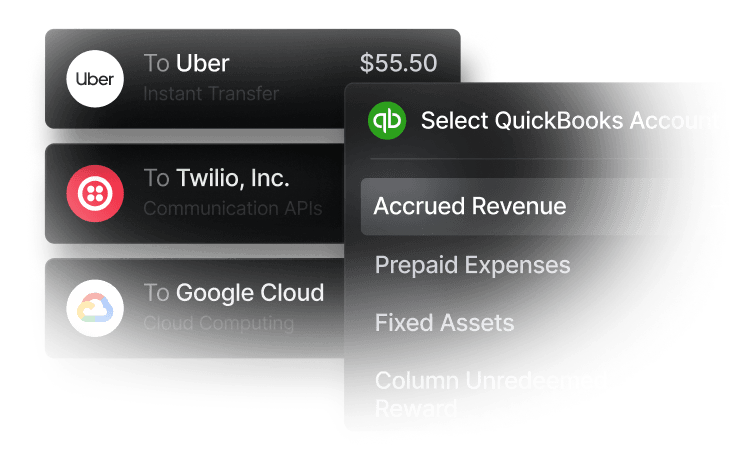
- Real-time syncing with accounting software like QuickBooks and Xero, so your accounting integrates without manual effort
- Cash flow visibility through dashboards that show incoming and outgoing money in real time
Traditional banks vs. fintechs for startups
This is one of the first decisions founders face when setting up business banking, and it's worth thinking through carefully rather than defaulting to whatever bank you already use for personal finances:
Managing banking and payments as your startup scales with Slash
As your startup scales, the demands on your banking and payments infrastructure increase quickly. Managing spend, maintaining visibility into cash, and earning a return on idle funds all become more important as transaction volume grows. Slash is built to support that progression, with up to 2% cashback on spend and treasury access that does not require a minimum balance, so every dollar can be put to work from the start.
Control and flexibility become just as important as complexity increases. Slash provides granular card controls that allow teams to manage spending across employees and vendors without adding operational overhead. Combined with direct integrations into accounting and ERP systems, this creates a more consistent and accurate financial workflow as your operations scale.
As your needs expand, Slash also provides a broader set of tools to support day-to-day operations and long-term growth:
- Dynamic business banking: Open unlimited virtual accounts to separate operational funds and give teams clearer visibility into cash flow. Manage multiple business entities from a single dashboard, with consolidated reporting across accounts.
- Accounting & ERP integrations: Sync transaction data with QuickBooks Online, Xero, or Sage Intacct to streamline reconciliation, reporting, and month-end close.
- Native cryptocurrency support: Convert funds into USD-pegged stablecoins such as USDT or USDC to send transfers on the blockchain, offering a near-instant international payment method with reduced fees and settlement times.⁴
- High-yield treasury: Earn up to 3.83% annualized yield on idle funds with money market investments from BlackRock and Morgan Stanley, managed directly within your Slash account.
- Flexible financing: Access short-term financing with 30-, 60-, or 90-day repayment terms to help bridge cash flow gaps when needed.⁵
Apply in less than 10 minutes today
Join the 10,000+ businesses already using Slash.
Frequently asked questions
How should startups manage cash flow as they scale?
Startups should manage cash flow by maintaining clear visibility into balances, separating funds for different purposes, and earning a return on idle cash. Using tools like virtual accounts, real-time tracking, and treasury accounts can help ensure funds are both accessible and productive.
Cash Flow Management: A Guide for Making Smarter Business Decisions

How do startups manage team spending and expenses?
Startups can manage team spending by using corporate cards with built-in controls and real-time tracking. Setting limits, assigning cards to employees, and monitoring transactions in one place helps prevent overspending and reduces manual expense work.
Expense Management Automation: Importance and Key Strategies for Modern Finance
What Is Business Spend Management? Key Components Explained

Do startups need separate accounts for different business functions?
Separating funds across accounts can improve visibility and control as a startup grows. Using multiple accounts or virtual accounts for payroll, operations, and taxes helps teams track cash flow more clearly and avoid mixing funds across different use cases.
What Is a Sub-Account? Key Benefits, Features, and Use Cases


