

Business Accounts That Hold USDC and USDT in 2026: Ramp, Brex, Mercury, and Slash Compared on Receiving, Sending, and Conversion
If a customer pays you in USDC or a supplier wants USDT, your business account has to handle the coin at both ends. Of the four platforms featured in this article, Ramp keeps deposited USDC and USDT in a stablecoin balance, Slash receives and sends both from a dollar balance, Brex accepts USDC and converts it to dollars, and Mercury holds dollars only.
Slash, a business banking platform¹ for US companies, runs stablecoin payments⁴ from the same account as your cards, wires, and ACH. Incoming USDC or USDT converts to dollars when it arrives, and an outgoing payment converts from your dollar balance when you send it. That means nobody on your team has to manage a wallet.
Key Takeaways
- Slash sends and receives USDC and USDT from a US dollar balance, and their conversion fees vary with transaction volume and the coin used.
- Ramp's Stablecoin Account, open since July 21, 2026, accepts USDC and USDT, excludes businesses based in New York, and opens only for the primary entity of a multi-entity customer.
- Ramp's rewards of up to 3.25% require a $5,000 stablecoin deposit and 5 qualifying payments a month.
- Mercury says its accounts hold only fiat currency, so a Mercury customer only accesses stablecoins through a third-party exchange.
Which US Business Account Holds USDC and USDT and Pays Vendors in Stablecoins?
Most businesses that work with stablecoins use them to move money. A customer abroad pays an invoice in USDC, or a contractor asks for USDT, and the business wants dollars on its books before and after. That makes the useful comparison less about who can store a token and more about how money gets in and out, what the conversion costs, and who on your team can approve it. Since stablecoin holdings aren’t FDIC-insured, the place the money waits between payments matters as much as how fast it moves.
Before we assess different platforms, here’s what matters most:
- Both coins, both directions: USDC and USDT, received and sent, from one account.
- A balance you already run payroll from: Money waiting between payments sits where your other cash sits, rather than in a separate wallet someone has to fund.
- A conversion cost you see first: The fee should appear before you confirm, not in a statement afterward.
- Approvals on stablecoin transfers: A USDT payment leaves as fast as a wire, so it needs the same sign-off.
- A route for non-US entities: Companies with a subsidiary abroad need to know whether that entity can hold dollars too.
1. Slash: USDC and USDT In and Out of a Dollar Balance
Slash treats stablecoins as one more avenue to pay or get paid. A payer sends USDC or USDT to your Slash deposit address and you receive dollars, and you pay a vendor's wallet straight from your USD balance without opening an exchange account. It’s important to note, though, that Slash itself doesn’t custody stablecoins. The conversion happens at the moment of the transaction, so your balance stays in dollars that are FDIC-insured² up to $200 million through a sweep network of partner banks.
What Slash Does With Stablecoins
- Receive USDC or USDT: Incoming coins convert to dollars and land in the same balance your ACH and wires use.
- Send from dollars: Pick USDC or USDT, choose the network, and send, and Slash converts from your USD balance, per its crypto transfers guide.
- Approval before it leaves: A stablecoin transfer can call for MFA or a payment approval under the payment policies you set for wires and ACH.
- Invoices paid in stablecoin: The payment link on a Slash invoice lets your customer pay by bank transfer or stablecoin.
- Fees on the record: The conversion fee shows before you send and stays in your transaction history, next to the accounting sync that carries your activity to QuickBooks Online, Xero, Sage Intacct, and NetSuite.
- A dollar account for subsidiaries abroad: The Slash Global Account³ lets a subsidiary abroad hold a balance in USDC with US account and routing numbers, then send and receive USDC and USDT.
What It Costs
Slash's stablecoin payments page says on-ramp and off-ramp fees vary with your transaction volume and the stablecoin you use, so the Slash team quotes the rate for your account. The fee is the price of turning dollars into a stablecoin or back, and the recipient of a USDC payment still receives the dollar-pegged coin you sent.
Say a customer in Singapore pays a $10,000 invoice in USDC. Slash converts it to dollars on arrival and the fee posts as a separate line against your USD balance, so the invoice reconciles at its full amount and the fee books as its own expense. Sending USDT to a contractor works the same way in reverse.
Free costs $0 a month with a default 1.5% cashback on eligible purchases with the Slash Visa® Platinum Card. Pro starts at $25 a month with up to 2% and $0 on same-day ACH, domestic wires, and outgoing FedNow and RTP payments, per the pricing page.
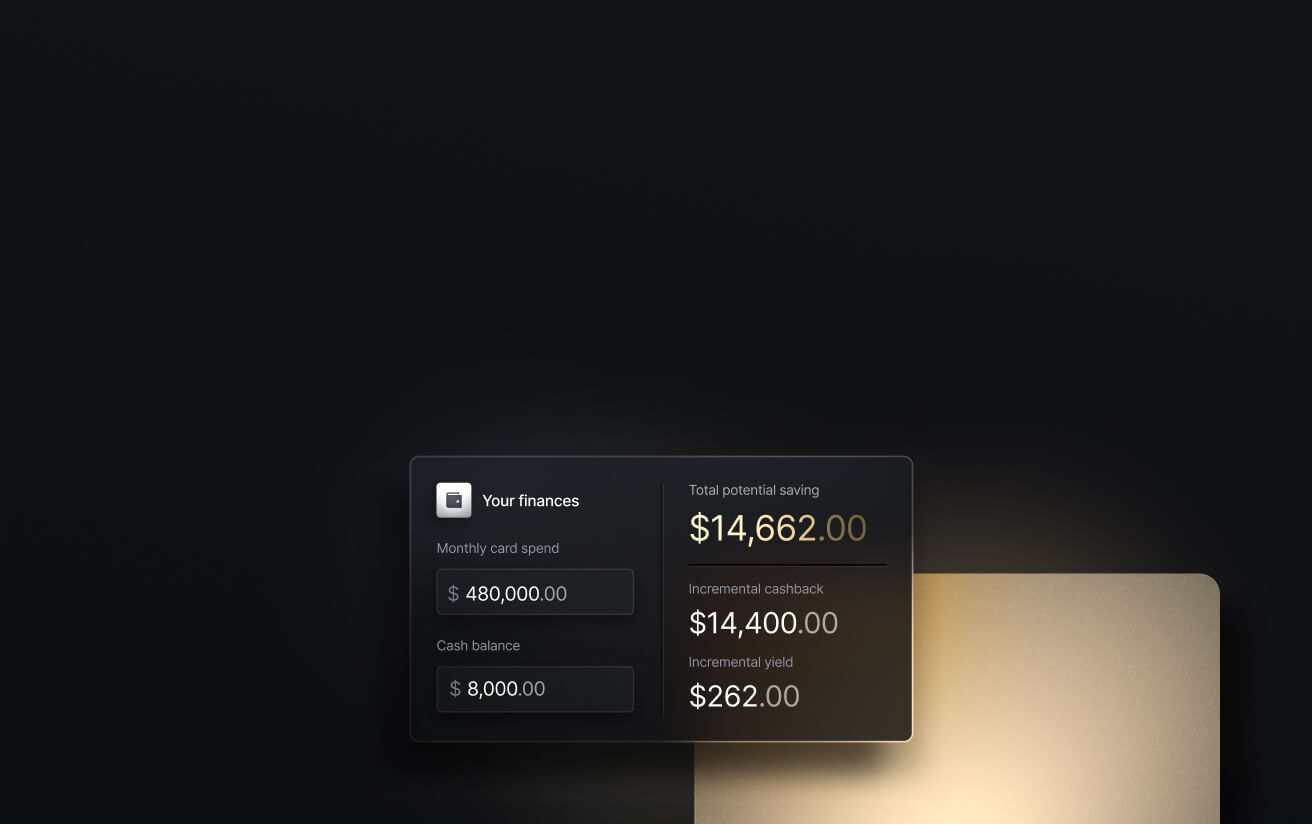
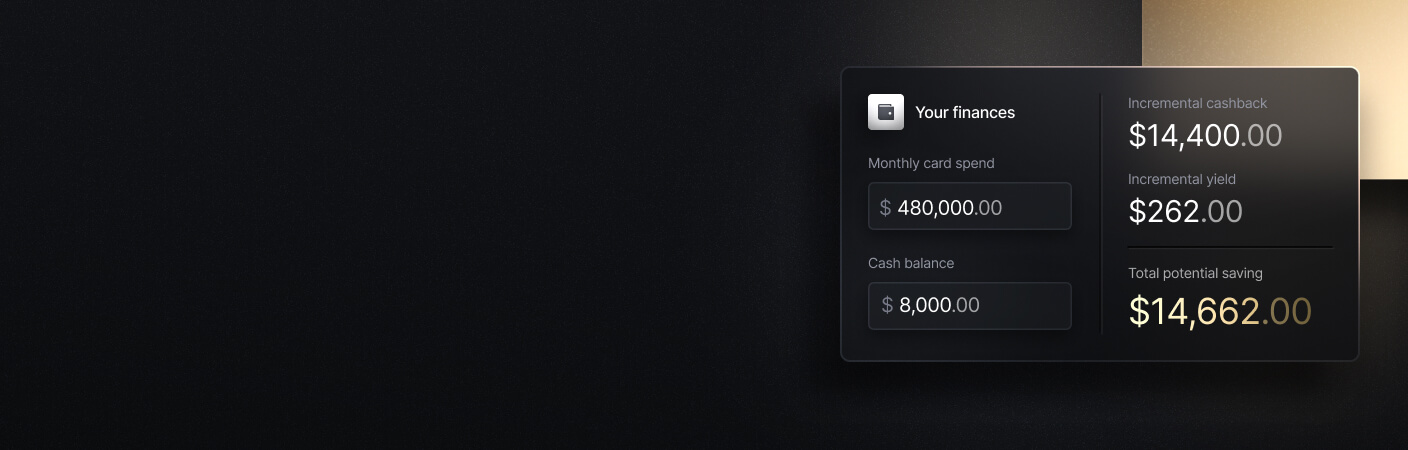
See the ROI behind your spend
Use this calculator to understand impact, then manage and track it all in Slash.
2. Ramp: A Stablecoin Balance on Seven Deposit Networks, Outside New York
Ramp opened its Stablecoin Account to US businesses on July 21, 2026, and it’s the one US account of the four that keeps a stablecoin balance. Coins at rest sit as USDB, a stablecoin Ramp's infrastructure uses, and convert back to USDC or USDT when you pay or withdraw. Its help center lists deposits on Base, Ethereum, Polygon, Arbitrum, Optimism, Solana, and Tempo, and warns that coins sent on any other network cannot be recovered.
Ramp's stablecoins page says you can pay vendor wallets directly in more than 140 countries, or convert and pay through local rails in more than 40 currencies. The same page says converting between USD and USDC or USDT carries no fee. Its stablecoin addendum still reserves the right to charge conversion fees and add a margin to the rate.
The account has three limits. Businesses based in New York are prohibited, and a multi-entity customer can open it only for its primary entity. Ramp pays rewards of up to 3.25% on the balance, but only after a $5,000 stablecoin deposit and 5 qualifying payments a month. They also say the rewards are not interest and the rate can change.
To open a Ramp account in the first place, its sign-up requirements ask for a corporation, LLC, or LP with at least $25,000 in cash in a linked US business bank account.
3. Brex: USDC In and Out of the Dollar Balance, Through Its Partner Bank
Brex announced stablecoin payments in three parts. A business account can accept stablecoins and convert them to dollars automatically, send stablecoins straight from its dollar balance, and pay down the Brex card balance in stablecoins. The rollout started with USDC, and Brex's account terms say the list of supported coins and networks can change at any time.
Like Slash and Ramp, Brex doesn’t custody the coins. Its partner bank holds the payment addresses and keys and executes the conversions, and the stablecoin addendum sets a daily conversion limit that the bank chooses and states that stablecoins are not FDIC-insured. Brex's early announcement promised free conversion in and out of USDC, and its account terms say fees can change at any time.
The stablecoin features sit inside the Brex business account, so the Brex account requirements apply first. Every applicant needs a US EIN, US incorporation, and US operations, plus an equity investment of any amount, more than $500,000 a year in revenue, or a referral for a tech startup on a path to either.
4. Mercury: Dollar Accounts That Can Fund a Crypto Exchange
Mercury says its accounts can hold only fiat currency, not cryptocurrency. Eligible businesses can send money from Mercury to a third-party crypto exchange, and Mercury's Web3 page notes that its wires carry your business name as the sender, which helps an exchange such as Coinbase or Gemini credit the deposit. The same page says Mercury does not open accounts for money services businesses or crypto exchanges.
Getting from dollars to USDC on Mercury means running two accounts, Mercury's and the exchange's, and paying the exchange's own fees. Non-dollar payments follow the same pattern, since Mercury's help center says incoming non-USD payments convert to dollars before they reach the account. What Mercury does offer is a dollar account with FDIC coverage of up to $5 million through a sweep network, and IO, a charge card paying 1.5% on all spend.
Mercury's pricing page lists a $0 plan, Plus at $29.90 a month, and Pro at $299 a month, billed annually, and its eligibility rules require a company formed in the US or a US territory.
Side-by-Side Comparison
Provider figures reflect publicly published information as of October 2026 and are subject to change.
How to Choose an Account for USDC and USDT
- Decide whether you need to hold the tokens or only move them: If USDC arrives and leaves within days, converting on arrival keeps your books in dollars and your cash in an FDIC-insured balance.
- Check the network before anyone sends: Coins sent on an unlisted network are lost, no matter what platform you use. Confirm the network with each of your payers before starting a transaction.
- Read the terms, not only the fee headline: Ramp advertises free conversion while its addendum allows fees and a margin, Brex's terms say fees can change, and Slash's stablecoin page says its fees vary with volume and the coin used.
- Count your entities: Ramp's Stablecoin Account opens for the primary entity only, and a subsidiary outside the US needs an account built for non-US companies, such as the Slash Global Account.
- Put stablecoin transfers under approvals: A sent stablecoin payment can't be recalled like a pending ACH, so it should be routed through the same approval chain as a wire.
How Slash Supports Businesses Paid in Stablecoins
- Collect in either coin: Share your deposit address for USDC or USDT, or send a Slash invoice with a payment link that takes bank transfer or stablecoin.
- Pay out of the same balance.: Wires, ACH, FedNow, RTP, and stablecoin transfers all draw on one dollar account, under one set of approval rules.
- Spend it on cards: The Slash Card draws on the same balance, with virtual cards on both plans and up to 2% cashback on Pro.
- Collect on time: Recurring invoices and automated reminders before the due date keep stablecoin-paying customers on schedule, with each payment converting to dollars as it lands.
- Park what you don't need yet: Slash Treasury⁶ invests idle dollars in money market funds from Morgan Stanley and BlackRock, with no minimum balance.
Conclusion
Ramp accepts both coins and pays conditional rewards, but stops at New York businesses and the primary entity. Brex starts with USDC behind its own funding and revenue requirements, and Mercury leaves stablecoins to an outside exchange.
Slash receives and sends USDC and USDT from the dollar account that also runs your cards, wires, approvals, and ledger sync, with conversion fees that vary by volume and coin. Your subsidiaries outside the US can hold USDC on the Slash Global Account.
Talk to the Slash team about paying and getting paid in USDC and USDT.
Apply in less than 10 minutes today
Join the 10,000+ businesses already using Slash.
FAQs
Does Slash let my business receive USDC and USDT?
Yes. A payer sends USDC or USDT to your Slash deposit address, and the payment converts to dollars in your Slash balance. Customers can also pay a Slash invoice in stablecoins through its payment link.
USDC vs. USDT: Choosing the Right Stablecoin

Can I pay a vendor in USDT from a Slash account?
Yes. You choose USDT or USDC, send to the vendor's wallet, and Slash converts the amount from your USD balance. The transfer may require MFA or a payment approval first.
What does Slash charge to convert between dollars and stablecoins?
Slash's stablecoin payments page says on-ramp and off-ramp fees vary with your transaction volume and the stablecoin used, so the Slash team quotes the rate for your account. Same-day ACH, domestic wires, and outgoing FedNow and RTP cost $0 on Pro.
Cryptocurrency Conversion Guide: How Crypto On/Off Ramps Transform Business Payments

Does Slash hold stablecoins in my US business account?
No. Slash does not custody stablecoins on the US account, and conversion happens at the time of each transaction, so the balance stays in dollars. A subsidiary abroad can hold a USDC balance on the Slash Global Account.
Which US business accounts support USDC and USDT?
Slash sends and receives both, and Ramp accepts both into its Stablecoin Account for businesses outside New York. Brex announced stablecoin payments starting with USDC, and Mercury accounts hold fiat only.
Read more from us


