

Fiat-Backed Stablecoins: A Complete Guide for Businesses
Most businesses still send and receive money through rails that can experience long delays, close during off-hours, and become more expensive when traveling between countries. Fiat-backed stablecoins are a modern alternative that can solve each of these problems. Before diving into the world of crypto, however, finance teams should understand which stablecoins are most reliable and come with the most support. There are dozens of tokens on the market, but many companies only use a select handful.
As you read this guide, you’ll learn how fiat-backed stablecoins work, why businesses use them, and what the top stablecoins are based on factors like supported blockchains and relative popularity. If you’re looking for a way to send and receive tokens without the hassle of opening an exchange account and digital wallet, look no further than Slash.¹,⁴ Slash is a financial platform that comes with built-in stablecoin on/off ramps, meaning businesses can convert their local currency to crypto in the same place they send and receive their other transfers. Users can transact with USDC and USDT, which happen to be the two most commonly used stablecoins.


Key Takeaways
- Fiat currency refers to government-issued money, while cryptocurrency refers to digital tokens.
- The two most important advantages of stablecoins for businesses are their high speeds and low costs, especially when used internationally.
- USDT is the largest stablecoin by circulation at roughly $183 billion and the most widely supported globally, though it’s been delisted from EU exchanges under MiCA.
- USDS works differently from the others, since no centralized issuer holds a dollar of cash or Treasuries per token, relying instead on overcollateralized protocol assets.
- Stablecoins are usually cheap, but they aren’t free. Network, conversion, and withdrawal fees still apply.
What Are Fiat-Backed Stablecoins?
Stablecoins are digital tokens designed to maintain a predictable value. They’re pegged 1:1 to fiat currency, which is a term that refers to government-issued money like the U.S. dollar. This tie to standard money separates them from cryptocurrencies like Bitcoin, whose prices change with market supply and demand. All in all, stablecoins were created to introduce a form of currency to the blockchain that could potentially be used to mimic everyday transactions for both businesses and individuals.
A blockchain, if you aren’t familiar, is a digital ledger maintained across a shared network instead of within one bank’s database. When someone sends a stablecoin, the network checks the transaction against its rules, records the transfer, and updates which address controls the tokens. On public blockchains, users can generally inspect details such as the sending and receiving addresses, amount, time, and transaction hash. This doesn’t reveal every party’s identity or explain the business purpose, but it does create a record that can be independently checked.
Stablecoin issuers hold reserves in fiat that match the value of each of the tokens out in circulation. If one million dollar-pegged coins are in active use, for example, the issuer should hold roughly $1 million in eligible reserve assets. Any time a customer deposits $1, the issuer mints a new stablecoin. As long as that’s done consistently, the value of the stablecoin should remain roughly equal to the dollar.
While these coins are all designed similarly, their reserve composition, custody, reporting practices, redemption access, and legal protections can differ by issuer. Before deciding to use a certain stablecoin, businesses should understand who issues the token, what backs it, and how reserves are verified. The coin’s popularity is also good to know, since you and your client can start on the right foot if you have workflows set up for the same token. If the two of you use Slash, for instance, you’ll be ready to go with USDC and USDT support.
Why Should Businesses Use Stablecoins?
Cryptocurrency presents a series of advantages over typical fiat, especially when businesses need to send large amounts of money from one country to another. Some of these benefits include:
Speed
Domestic wire payments generally take a business day to settle, while global transfers via ACH or wire can take up to five business days. Stablecoins, on the other hand, can travel from user to user in mere minutes. The term “business day” is hardly relevant with crypto, as blockchains operate 24/7, including on weekends and holidays. As a result, companies can pay contractors, move funds between entities, or receive customer revenue without having to wait until networks open up..
That said, situational compliance reviews, conversions, and withdrawals to a bank can add time. The overall process is fastest when both parties can receive and reuse the token, or when a banking platform like Slash offers the on/off ramps.
Low Cost
Cross-border bank payments often involve several intermediary banks and foreign-exchange spreads that mark up the transfer price piece by piece. Stablecoins allow you to skip those steps. That said, they aren’t completely free – network, conversion, and withdrawal fees can still apply, which can bump up the total costs to a few dollars. ACH can end up being the cheaper solution when making routine domestic payments, but you can potentially save a lot of money when using stablecoins instead of SWIFT to send money overseas.
Transaction Transparency
Since blockchains are public, each transaction creates an easily-accessible record. Finance teams can use a transaction hash to confirm when funds were sent, how much moved, which network handled the payment, and whether the intended address received it. This data doesn’t explain the context of a transfer, though, so businesses should develop accounting records and reconciliation procedures surrounding crypto payments.
Expanding Audience
Stablecoins can present another payment option for customers and business partners who already hold crypto. This can matter for tech-savvy buyers, remote workers, international suppliers, and users in markets where cross-border banking is tricky. If you’re thinking about allowing everyday customers to purchase your product or service with stablecoins, you should consider your audience’s demographics first. For example, you can expect a gaming/PC company to see a lot more crypto traffic than a company that sells winter jackets.
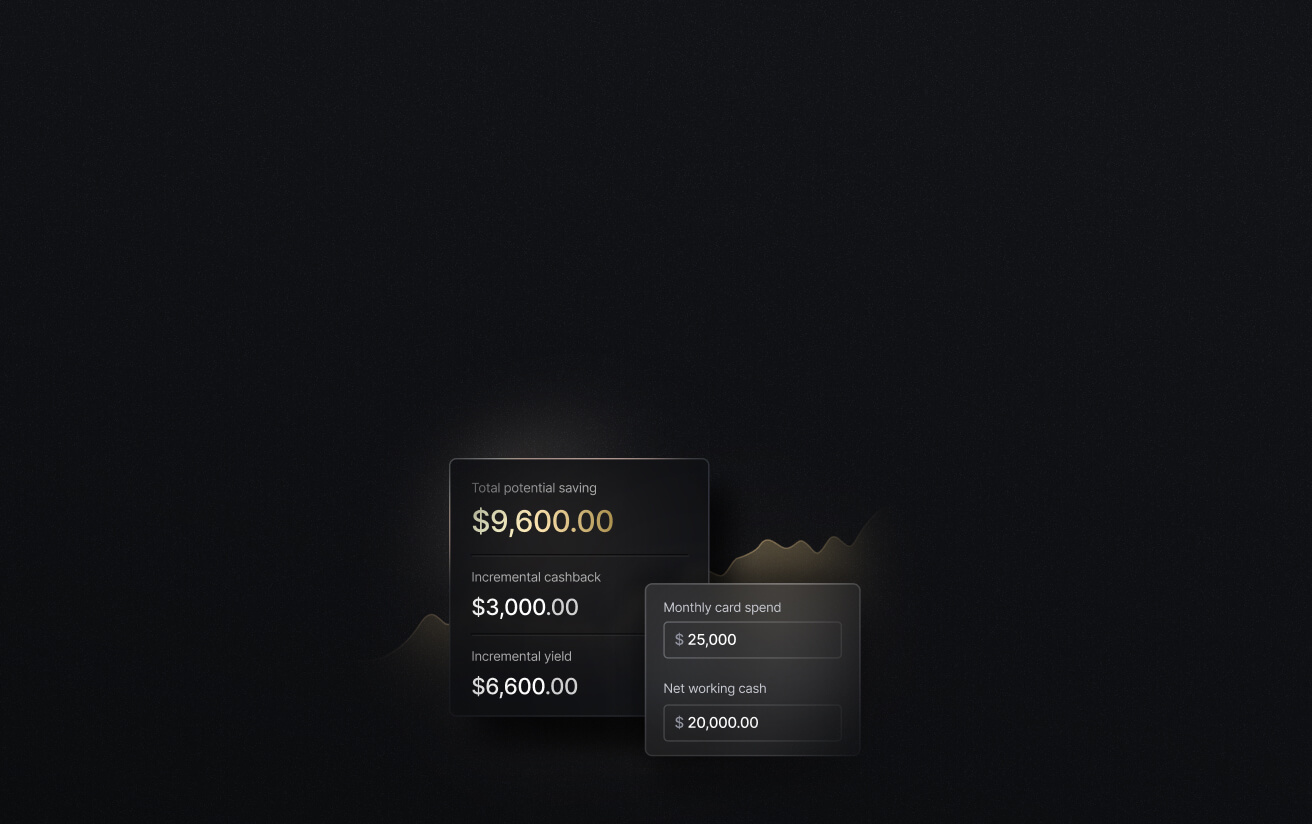
See the ROI behind your spend
Use this calculator to understand impact, then manage and track it all in Slash.

The Top Five Fiat-Backed Stablecoins for Businesses
The largest stablecoins all aim to maintain a value near $1, but they don’t accomplish that goal in exactly the same way. Issuers differ in their reserve assets, reporting practices, regulatory structures, blockchain support, and integration partners. Let’s explore five of the best options for businesses and take a look at how they work:
USDT (Tether)
USDT is the largest stablecoin by circulation and one of the most broadly established ones across global crypto markets. Tether launched USDT with reserves that include traditional currency, cash equivalents, and other assets such as receivables from loans. USDT’s scale is a big advantage, since exchanges, wallets, payment providers, and international users tend to be more likely to support it than most smaller stablecoins. That’s partly because it was one of the first stablecoins ever minted, having been launched in 2014.
- Current Market Cap (as of Sept 2026):$183.33 billion
- Supported blockchains: Tron, Ethereum, Solana, and 11 others
USDC (USD Coin)
USDC is a stablecoin issued by Circle whose reserves are held in the Circle Reserve Fund, which contains cash, short-dated U.S. Treasuries, and overnight Treasury repurchase agreements. While it isn’t quite as popular globally as USDT, it’s fully embraced by the EU’s MiCA (Markets in Crypto-Assets), which Tether’s coin has been delisted from.
For businesses, USDC’s strongest advantage is in its connections. It’s widely supported by payment APIs, wallets, financial platforms, exchanges, and cross-chain transfer tools. That makes it a smart option for companies that want to integrate with the tools and regulated financial providers they’re already familiar with.
- Current Market Cap:$74.2 billion
- Supported blockchains: Ethereum, Solana, Base, and a total of 35 others
USDG (Global Dollar)
Global Dollar, or USDG, is issued by Paxos Digital Singapore and powers the Global Dollar Network. It’s fully redeemable from Paxos on a 1:1 basis and is backed by reserves that include cash, cash equivalents, U.S. Treasury bills, and money-market funds. Paxos publishes monthly reserve reports, while issuance is subject to regulatory oversight in Singapore and Europe.
USDG’s defining feature is actually its economic model. The Global Dollar Network allows participating exchanges, fintech companies, and payment providers to receive a share of the reserve economics generated by USDG held through their platforms. This extra slice of pie is meant to encourage businesses to integrate and distribute the stablecoin over others.
- Current Market Cap:$3.2 billion
- Supported blockchains: Arbitrum, Ethereum, Solana, Ink, Xlayer, Robinhood Chain, and Mantle
PYUSD (PayPal USD)
PYUSD is a payment-focused stablecoin created by PayPal and issued by Paxos. It’s backed by U.S. dollar deposits, U.S. Treasuries, and similar cash equivalents, with Paxos publishing monthly reserve reports and independent attestations. PayPal and Venmo users can buy or sell PYUSD for dollars, while businesses and developers can use it for B2B transfers, global payouts, microtransactions, and other blockchain-based payments.
As you could probably surmise, PYUSD’s biggest advantage is its connection with PayPal’s existing payment ecosystem. That means users don’t have to begin with an exchange or leave the system they already use for standard transfers.
- Current Market Cap:$2.78 billion
- Supported blockchains: Ethereum, Solana, Stellar, and Arbitrum
RLUSD (Ripple USD)
RLUSD is an institutional-focused stablecoin issued by regulated Ripple subsidiaries, including Standard Custody & Trust Company. Their reserves include U.S. Treasury bills, government money-market funds, overnight Treasury repurchase agreements, and U.S. dollar deposits. Ripple publishes monthly reports from an independent accounting firm covering the circulating supply and reserve assets. Like PYUSD, RLUSD’s connection to Ripple’s payments infrastructure is an advantage for those who already use the platform, though that user base is smaller than PayPal’s.
- Current Market Cap:$2.3 billion
- Supported blockchains: The XRP Ledger and Ethereum
Unlock the Power of Stablecoins With Slash
More than$10 trillion in stablecoins have been sent and received throughout the last 12 months. At this point, businesses should be asking themselves which stablecoins they should choose rather than whether they should use them in the first place. Slash can make that decision a lot easier.
Slash is a business banking platform that comes with built-in on/off ramps for USDC and USDT, the world’s two most popular stablecoins. Eligible businesses can begin with dollars in their Slash account, enter a recipient’s wallet address, choose the blockchain network, and send the payment as a stablecoin. Slash coordinates the conversion from dollars into USDC or USDT and delivers the funds to the external wallet. For incoming payments, a business can generate a Slash deposit address, receive supported stablecoins, and have the funds converted into dollars in its Slash account.
Our platform’s supported networks include Ethereum, Solana, Base, Tron, and 11 others. For each transfer, Slash can show the network, timing, and applicable fees before the transfer is submitted. Once you master the art of sending and receiving stablecoins, you may be able to save money on each international transaction – and some domestic ones as well.
Businesses can also take advantage of the following features to more easily manage their fiat currency:
- The Slash Visa® Platinum Card: The Slash Card is a corporate charge card that allows you to set customizable spending controls and issue unlimited virtual cards for handling team expenses, vendor payments, subscriptions, and more. Users can also earn up to 2% cash back on eligible business purchases.
- High-yield treasury: Earn up to 3.88% annualized yield on idle funds with money market investments from BlackRock and Morgan Stanley, managed directly within your Slash account.⁶
- Accounting & ERP integrations: Sync transaction data with QuickBooks Online, Xero, NetSuite, or Sage Intacct to streamline reconciliation, reporting, and month-end close.
- Separate virtual accounts: Create multiple business bank accounts to silo cash flows by project, department, or client with real-time analytics across each of them.
- Multi-entity support: Slash offers multi-entity account management tools without separate logins, allowing businesses to track spending, manage accounts, and download statements across all subsidiaries in one place.
Apply in less than 10 minutes today
Join the 10,000+ businesses already using Slash.
Frequently Asked Questions
Are all stablecoins fiat-backed?
No, there are some exceptions. USDS (Sky), for example, is backed by overcollateralized protocol assets that include other stablecoins, on-chain and over-the-counter crypto lending positions, short-duration Treasury bills, corporate debt, and other governance-approved structures. This isn’t a niche example, either; USDS is the third largest stable by market cap.
Fiat vs Crypto: What’s the Difference and Why it Matters

How do I choose which blockchain to send a stablecoin on?
Part of the decision is based on what your recipient can actually receive. Beyond that, networks differ in transaction cost and confirmation speed, so higher-fee chains can make small transfers unreasonable.
What is the Blockchain? A Beginner's Guide

Are stablecoins insured the way bank deposits are?
No. Digital assets are not bank deposits and carry no FDIC or SIPC coverage, so protection depends entirely on the issuer's reserves and the custodian holding your tokens.
How should a business record stablecoin payments in its books?
The IRS treats crypto as property rather than currency. In order to practice good digital asset management, you should record the US dollar value at the moment the transfer settles and keep the transaction hash as supporting documentation the way you would a receipt. If you convert to dollars immediately, the entry stays close to an ordinary payment.
Crypto Tax Forms for U.S. Businesses: What to Know

Read more from us


