

Best Business Bank Accounts for Wholesalers and Importers: Wire Fees, FX, and Terms Compared
US imports of goods reached a record $3.4 trillion in 2025, according to the Census Bureau and BEA's annual trade release published in February 2026.
Every container in that total was paid for before it cleared a port, which is why we built our business banking platform¹ around the supplier payment rather than the monthly fee, with SWIFT wires to 180+ countries, stablecoin settlement, and Bill Pay approvals in one dashboard.⁴
For a wholesaler or importer, the account decides whether a factory deposit lands on Tuesday or Thursday, how much of a $40,000 invoice disappears into FX markup, and whether there's cash to reorder while the last shipment is still on the water.
Most reviews rank on monthly fees and APY. Neither one matters much when your three biggest line items are supplier wires, duties, and freight. Here's how four accounts compare on the numbers that actually move an importer's margin.
Key Takeaways
- Slash sends international wires to 180+ countries for $25 on both the Free and Pro plans, and offers stablecoin transfers as an alternative route for suppliers who accept them.
- Per-wire fees and FX markup, not monthly plan cost, decide the real price of paying overseas suppliers.
- Bill Pay with approval routing keeps the invoice, the approval, and the payment in one auditable record.
- Financing terms matter as much as fees, because inventory is paid for weeks before it sells.
- Multi-entity support becomes essential once an importer runs separate trading and holding companies.
What Actually Drives Cost for an Import Business
A wholesaler paying twenty suppliers a month is running a payments operation, whether or not the finance team thinks of it that way. Five numbers decide what it costs.
- Per-wire fee: A flat $25 versus $45 sounds small until it's multiplied across 200 wires a year.
- FX markup: The spread between the interbank rate and what you're charged is usually larger than the wire fee on any invoice over $10,000.
- Settlement speed: A supplier that releases goods on receipt of funds is waiting on your rail, and SWIFT can take days.
- Approval control: Who can send $50,000 to a new beneficiary, and whether that requires a second signature.
- Financing terms: How long you can carry inventory cost before revenue arrives, and what that bridge costs.
1. Slash: Best Overall for Importers Paying Suppliers in Multiple Currencies
We're a financial technology company, with banking services provided by our partner bank, Column N.A. We raised a $100M Series C at a $1.4 billion valuation and serve more than 10,000 businesses, and our business bank account for wholesalers and importers treats supplier payments, approvals, financing, and multi-entity reporting as one workflow rather than four products.
What We Do for Supplier Payments
- Four payment rails: Domestic and international ACH, SWIFT wires to 180+ countries in 135+ currencies, RTP, and FedNow, all from one global payments dashboard.
- Stablecoin settlement: Send USDC or USDT to suppliers who accept it across 15 supported networks through our stablecoin payments rail, with near-instant settlement and lower cost than a correspondent-bank wire.
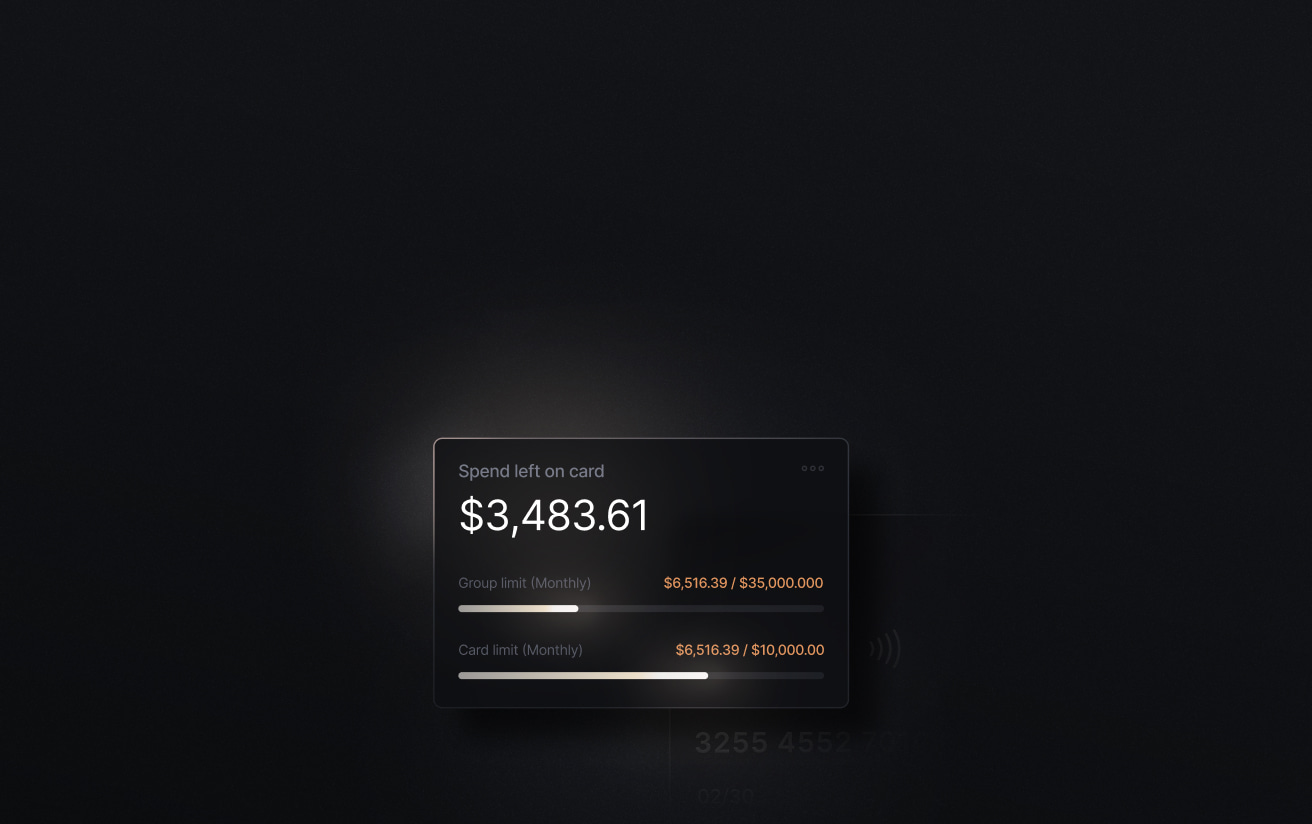
- Bill pay with approval routing: Upload or forward a supplier invoice and we parse the vendor, invoice number, dates, currency, amount, and line items into a digital bill. Approval rules route it to the right person before anything leaves the account.
- Multi-step approvals: Set up an org chart in the dashboard and designate approvers by team, so a $75,000 wire to a new factory needs a second sign-off before it goes out.
- Working Capital Financing: Approved businesses draw short-term financing from the dashboard with 30-, 60-, or 90-day repayment terms to bridge the gap between paying for inventory and selling it.⁵
- Multi-entity control: Switch between a trading company, a holding company, and a regional subsidiary from one login, with separate financials for each.
- Unlimited virtual accounts: A separate checking account per supplier region, product line, or duty reserve, FDIC-insured up to $150 million through Column N.A.'s insured cash sweep network.²
- Invoicing on the sell side: Bill wholesale customers from the same dashboard the supplier payments run through, with an embedded payment link and automated reminders before the due date.
- Cards for freight and duties: The Slash Visa® Platinum Card issues unlimited virtual cards, so a card scoped to one freight forwarder or customs broker cannot be used anywhere else.
Christopher Wilts, who runs the Los Angeles 3PL Eco Fulfillment and the postage platform ShipLogix, a Slash customer, moved postage revenue onto our platform for faster transfers and easier auditing: "Creating margin in a small-margin business gives you options you wouldn't otherwise have."
The standard in finance
Slash goes above with better controls, better rewards, and better support for your business.
Pricing
Our Free plan is $0 a month. International wires are $25, domestic wires $6, same-day ACH $1, and outgoing FedNow or RTP $5. Pro is $25 a month and takes domestic wires, same-day ACH, and FedNow or RTP to $0, with international wires staying at $25 on both plans.
Stablecoin on- and off-ramping carries a 1.5% conversion fee, which is the number to compare against a bank's FX spread on the same invoice. Both plans are published rather than quoted per customer, and accounts serve US-registered LLCs, C-Corps, and S-Corps.
2. Mercury: A Fit for USD-Denominated Supplier Payments
Mercury is a fintech company rather than a bank, with banking services through Choice Financial Group and Column N.A., and its core checking carries no monthly fee. For importers whose suppliers invoice in dollars, international USD wires are free when sent as SHA payments, where intermediary fees come out of the recipient's amount, or $15 as OUR payments that cover those fees.
Deposits are eligible for up to $5 million of FDIC coverage through partner sweep networks, and plans run $0, $29.90 for Plus, and $299 for Pro per Mercury's pricing page. For an importer buying exclusively in dollars, the free SHA wire is the cheapest line on this page.
Non-USD wires carry a 1% currency exchange fee. On a €40,000 invoice, that's roughly $450 before the supplier's own bank takes its cut, and Mercury notes that businesses exchanging more than $200,000 can ask about custom pricing. Financing on the platform is venture debt rather than short-term inventory terms, so the bridge between paying and selling sits elsewhere.
3. Bluevine: A Fit for Importers Who Want Checking Yield and a Credit Line
Bluevine is a financial technology company with banking services from Coastal Community Bank, and its checking pairs with a revolving line of credit of up to $250,000. International payments reach 180+ countries in 40+ currencies for $25 per payment plus 1.5% when sent in a non-USD currency, with outgoing domestic wires at $15 on the standard plan.
Sub-accounts are tiered by plan at 5 on Standard, 10 on Plus, and 50 on Premier, per Bluevine's plans and pricing page, with monthly fees of $0, $30, and $95. An importer separating funds by supplier region or duty reserve will pass the Standard tier quickly.
At $25 plus 1.5%, a €40,000 invoice costs roughly $675 to send. Bluevine says businesses sending at least $25,000 a month internationally may qualify for lower fees, per its published FAQ, and the 1.5% is the figure to model, since it compounds on every non-USD payment rather than on conversion alone.
4. Airwallex: A Fit for Importers Holding Balances in Supplier Currencies
Airwallex is built around holding and paying in many currencies. Global Accounts provide local details in 20+ currencies, local transfers are free to 120+ countries, and FX runs around 0.5% above interbank on major currencies and about 1% on the rest.
For an importer that can hold a CNY or EUR balance and pay suppliers locally, that avoids SWIFT on many corridors, and the saving compounds on a book of recurring orders in the same currency.
Pricing is regionalized, so the rate card depends on where the entity is registered, and an inbound receiving fee of around 0.3% has been reported on some account types that isn't on the public pricing page. There is no short-term inventory financing on the platform.
Side-by-Side Comparison
Provider figures reflect publicly published information as of September 2026 and are subject to change.
How to Choose Based on How Your Suppliers Invoice
- Suppliers invoice in USD: Per-wire fee is the whole cost. Mercury's free SHA wires and our $25 wires are both defensible, so pick on approvals and financing.
- Suppliers invoice in EUR, CNY, or other currencies: FX markup dominates. Compare each provider's spread on a real invoice before looking at anything else.
- Suppliers accept stablecoins: A platform that settles in USDC or USDT alongside wires turns a three-day SWIFT transfer into minutes, and ours is the only account here that does.
- You float inventory for 30 to 90 days: Financing terms matter more than fees, and 30/60/90-day Working Capital Financing on the same dashboard removes a second lender from the process.
- You run more than one entity: Start with multi-entity support, because reconciling across logins costs more in staff time than any wire fee.
- You sell as well as buy: An account that handles expense management and receivables alongside supplier payments keeps the whole cycle in one ledger.
Then run the math: take last quarter's supplier payments, count them by currency, and multiply by each provider's per-wire fee plus FX spread. A company sending forty €25,000 payments a year pays roughly $15,000 at a 1.5% markup and $10,000 at 1%, so the spread decides the answer and the $25 wire fee barely registers.
A $40,000 Supplier Invoice, Rail by Rail, on Slash
The invoice arrives: Forward it to Bill Pay and we create a digital bill with the vendor, amount, currency, and due date parsed out. If your approval rules require a second signer above $25,000, the bill routes there before anything is scheduled.
If the supplier wants a SWIFT wire: Schedule it from the bill for the due date. The $25 fee is the same on Free and Pro, and the bill moves through scheduled, payment pending, and paid with the invoice attached to the transaction.
If the supplier is domestic: Send it over RTP or FedNow and it settles in near real time, 24/7. On Pro that's $0.
If the supplier accepts USDC: Pay from the same bill. We convert USD from your account at the moment of the transaction and send on the supplier's preferred network. The funds settle in minutes, you never hold the stablecoin yourself, and digital-asset transfers can be irreversible.
If the cash isn't there yet: Draw Working Capital Financing on a 30-, 60-, or 90-day term that matches when the shipment sells through, and pay the supplier on time without waiting on receivables.
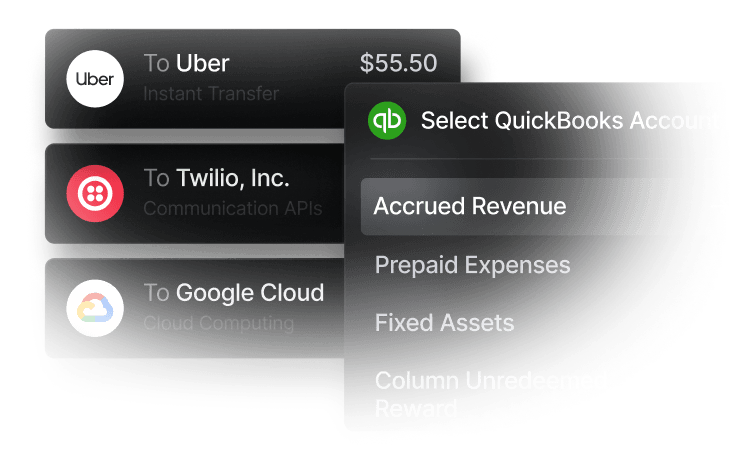
When it's done: The transaction syncs to QuickBooks Online, Xero, NetSuite, or Sage Intacct through our accounting integration with the bill and approval trail attached. Ask Twin, our AI financial assistant, how much went out to that supplier this quarter, and the answer comes from live account data. Idle cash between shipments can sit in a treasury account with no minimum balance.
Conclusion
Importers pay for inventory in a world where the fee on the wire is often smaller than the FX spread inside it, and where the cost of the financing bridge can dwarf both. Rank on per-wire fee, FX markup on your real currency mix, approval control, and financing terms, and put the monthly plan last.
The account that wins is the one that makes all four visible on a single screen, which is the design we start from.
Talk to the Slash team about paying overseas suppliers from one dashboard.
Apply in less than 10 minutes today
Join the 10,000+ businesses already using Slash.
FAQs
1. What is the best business bank account for importers in 2026?
The best business bank account for importers in 2026 is Slash, based on SWIFT wires to 180+ countries for $25 on both plans, stablecoin settlement in USDC and USDT, Bill Pay with multi-step approvals, and 30/60/90-day Working Capital Financing on the same platform. Mercury suits importers whose suppliers invoice only in USD, and Airwallex suits businesses that hold balances in supplier currencies.
The 8 Best Free Business Bank Accounts in 2026

2. How much does Slash charge for international wires?
Slash charges $25 per outgoing international wire on both the Free and Pro plans, reaching 180+ countries in 135+ currencies over SWIFT. Domestic wires are $6 on Free and $0 on Pro, and same-day ACH and FedNow or RTP transfers are $0 on Pro.
How Wire Transfer Fees Work (and How to Lower Them)
3. Can a wholesaler pay overseas suppliers with stablecoins through Slash?
A wholesaler can pay overseas suppliers with stablecoins through Slash, which sends USDC and USDT across 15 supported networks with near-instant settlement. We convert USD from the business account at the time of the transaction, so the business never custodies the stablecoin, and a 1.5% conversion fee applies.
How the Vendor Payment Process Works (and How to Improve It)

4. Does Slash offer financing for inventory purchases?
Slash offers Working Capital Financing for inventory purchases through our partner Slope, with 30-, 60-, or 90-day repayment terms drawn directly from the dashboard. Approved businesses can pay a supplier on time and repay when the shipment sells through, without a separate lender or underwriting cycle.
Wholesale Inventory Financing: A Complete Guide

5. How does Slash handle supplier invoice approvals?
Slash handles supplier invoice approvals through Bill Pay, which parses an uploaded or forwarded invoice into a digital bill and routes it to designated approvers based on rules set in the dashboard's org chart. Bills move through pending approval, scheduled, payment pending, and paid, with the invoice and approval trail attached to the transaction.
Best Invoice Processing Software in 2026: Top Tools Compared


