

What Are Smart Contracts? A Beginner's Guide to Blockchain Technology
A smart contract is a piece of code that executes itself when preset conditions are met. That is a vague definition on its own, so it helps to see it in action. In decentralized finance (DeFi), the term for financial services that run on the blockchain, smart contracts stand in for the person or institution that would normally make an eligibility or pricing decision: they lend cryptocurrency out of a pooled liquidity fund to borrowers who post collateral, exchange one token for another at a market-set price, and release payment when a preset event has taken place.
A vending machine is the closest parallel. You put in the right amount of money, press a button, and a soda drops out. There is no cashier, no receipt to sign, no negotiation. The machine has a rule ("if $1.50 goes in, dispense one Coke") and enforces it automatically. A smart contract works the same way, except it lives on a blockchain.
A smart contract typically contains three things: the terms of an agreement, the logic that checks whether those terms have been satisfied, and instructions for what happens when they are (a payment, a transfer of ownership, a status change). It lets two or more parties agree on a rule, lock that rule into code, and deploy it to a blockchain where no third party can change it. That is what people mean when they call the blockchain "trustless": the participants do not need to trust each other, because they can both look at the code, understand the rules, and trust the network to run it as written.
Slash business banking
Works with cards, crypto, plus cards, crypto, accounting, and more.
The Technology Behind Smart Contracts
The term "smart contract" dates back to 1994, when computer scientist Nick Szabo used it to describe self-enforcing digital agreements. The idea did not become practical until Ethereum launched in 2015 and made it possible to run arbitrary code on a public blockchain.
A blockchain is a shared database maintained by many independent computers, called nodes. New transactions are grouped into "blocks," and each block is cryptographically linked to the one before it, creating a chain. Because thousands of nodes hold copies of the ledger, no one can rewrite past transactions without controlling a majority of the network, which is prohibitively expensive on established chains.
Bitcoin, the older blockchain network, was designed primarily to move crypto tokens; Ethereum, the newer generalist, was designed to run programs for a range of financial and non-financial processes. Since then, dozens of other blockchains (Solana, Avalanche, Base, and others) have built their own smart contract capabilities.
A smart contract does not depend on any single party staying online, honest, or in business. The blockchain keeps a public record of every action the contract has taken, so any party can verify what happened after the fact. Smart contracts share a handful of defining characteristics:
- Self-executing. Once conditions are met, the contract runs on its own. No one needs to press a button or approve the transfer.
- Immutable. Once deployed, the code cannot be altered. That protects against tampering, but it also means bugs stay in place unless the contract is redeployed at a new address.
- Transparent. The code and every transaction it produces are visible on the public blockchain. Any counterparty can inspect what the contract does before agreeing to interact with it.
- Deterministic. Given the same inputs, the contract always produces the same outputs. It does not have moods, holidays, or a legal team.
Those properties are both what explain the appeal and the risks. A smart contract will do exactly what it was written to do, whether or not that matches what its authors intended.
Once smart contracts exist, developers can string them together to build decentralized applications, or dApps. A dApp typically has a normal-looking web or mobile interface on the front end, with its back-end logic running partly or entirely as smart contracts on-chain.
Use Cases for Smart Contracts: Decentralized Finance (DeFi)
The largest and most tested use cases for smart contracts so far have been in decentralized finance, or DeFi. Most of the financial services associated with DeFi (lending, borrowing, trading, yield generation) run on smart contracts instead of relying on traditional financial institutions. Here’s how:
Trading on Decentralized Exchanges
Smart contracts are frequently used to swap tokens on a decentralized exchange (DEX) like Uniswap or Curve. A DEX is a set of contracts holding pools of tokens; when you swap Token A for Token B, the contract prices the trade from an algorithmic formula and settles it in a single on-chain transaction. There is no order book or market maker, which is why DEXs are sometimes called automated market makers, or AMMs.
Lending and Borrowing
The next-largest category is on-chain lending on protocols like Aave, Compound, and MakerDAO. Users deposit tokens as collateral and borrow other tokens (usually stablecoins) against them, with interest rates that float algorithmically based on how much of the pool is currently borrowed. Loans are overcollateralized, so if the collateral falls below a required threshold, the contract automatically liquidates the position to repay the loan.
Stablecoins and Digital Asset Management
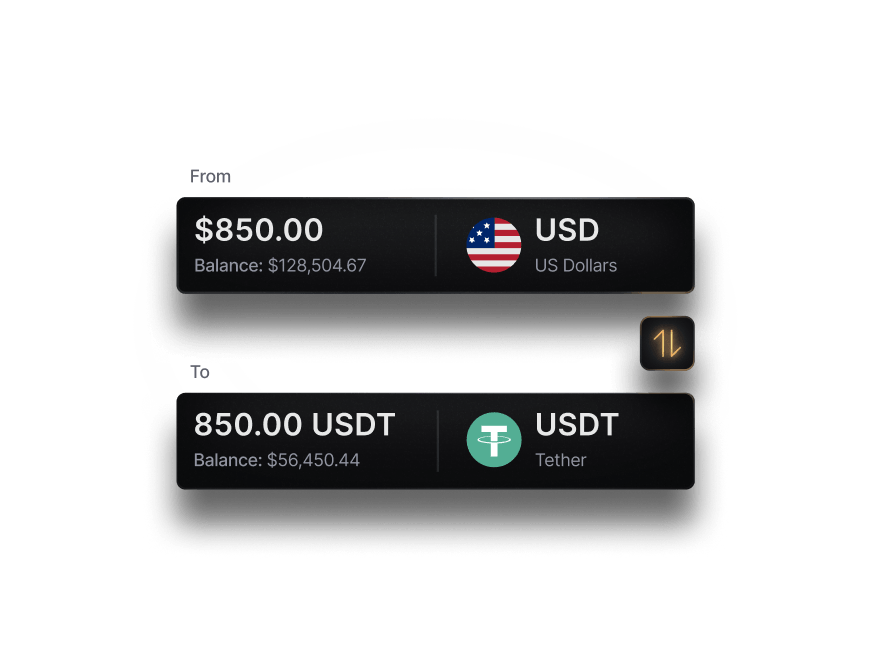
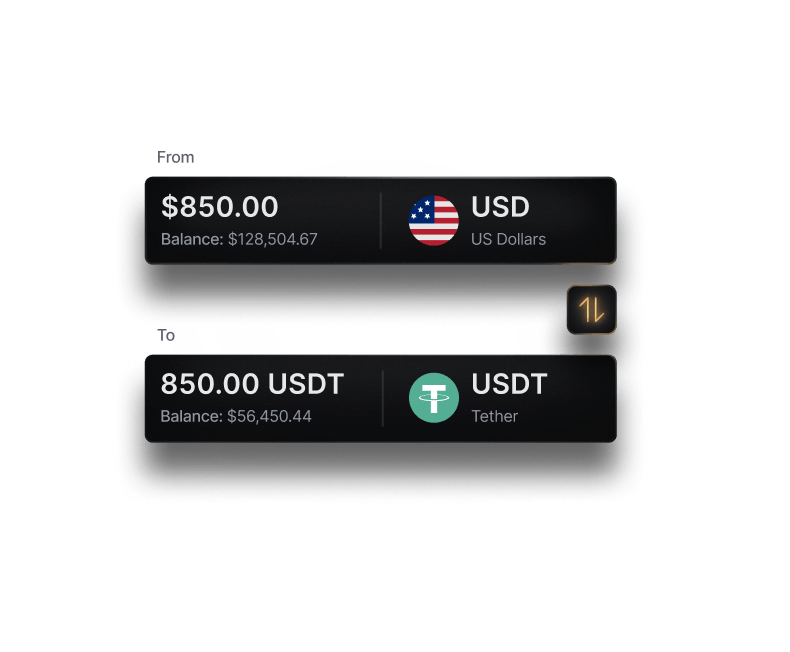
Measured by transaction count, most smart contract activity is simply sending and receiving tokens, especially stablecoins. Every USDC or USDT transfer is a call to that stablecoin's smart contract, which updates balances on-chain. Slash lets businesses send and receive USD-pegged stablecoins (USDC and USDT) across eight major blockchains, with on- and off-ramp conversion straight from your business account.⁴
Tokenization of Real-World Assets
Tokenization represents an off-chain asset (real estate, an invoice, a share in a company) as a digital token issued by a smart contract, so ownership transfers by moving the token between wallets.BlackRock and Franklin Templeton have launched tokenized money market funds holding U.S. Treasuries on-chain. The legal and accounting infrastructure is still catching up, so any business tokenizing its own assets should work with counsel familiar with securities law in its relevant jurisdiction.
Business Automation
Smart contracts can also automate agreements where payment depends on an event: a logistics contract that releases payment when a delivery is confirmed by an oracle, or an affiliate program that pays commissions the moment a sale is verified. The catch is that every party in the workflow needs an on-chain wallet and needs to accept payment in tokens, which is common in crypto-native ecosystems but rare in the rest of the SMB world.
Security Considerations of Using Smart Contracts
The security model of a smart contract is different from a normal web application. In a web app, if a vulnerability is discovered, the developer can push a patch. In a smart contract, the code at a given address cannot be changed after deployment. Fixing a bug means deploying a new contract at a new address and, in most cases, convincing users to migrate their funds to it. In the meantime, the original contract sits on the chain with its flaw in plain view of any attackers.
Most projects mitigate this by using upgradeable contract patterns (a "proxy" contract that can point to different logic contracts over time) and by putting funds in contracts controlled by multi-signature wallets or time-locked governance. These measures are more secure, but they also add complexity, and added complexity means more places for new bugs to hide. Additionally, independent smart contract auditing and formal verification are commonly used to reduce risk.
The other structural risk is what practitioners call "composability." DeFi protocols are designed to interoperate, so one contract calls another which calls another. A vulnerability in a widely used lending pool can cascade through the entire ecosystem.
Here are some of the commonly known vulnerabilities of smart contracts, especially in a DeFi context:
- Reentrancy attacks. A contract calls out to another contract, which calls back into the original before it has finished updating its own balances. The attacker withdraws the same funds multiple times before the ledger catches up.
- Oracle manipulation. Contracts that need real-world data (a market price, a sports score, a weather reading) rely on oracles to bring that data on-chain. If an attacker can move the price on a thin market that the oracle reads, they can trick a smart contract into settling at a distorted value.
- Access control mistakes. A function that should only be callable by the contract's owner is accidentally left open to anyone, allowing an attacker to mint tokens, drain reserves, or change parameters at will.
- Integer overflow and underflow. Older versions of Solidity, the main Ethereum smart contract language, allowed numeric values to wrap around at their maximum or minimum, sometimes turning a tiny balance into an astronomically large one. Modern compiler versions guard against this, but older contracts that were never rewritten still carry the risk.
- Bridge exploits. Bridges are smart contracts that let assets move between blockchains by locking tokens on one chain and issuing wrapped versions of them on another. Because bridge contracts hold large pools of collateral in one place, they are a frequent target for attackers.
Forecasting Future Trends for Smart Contracts
Smart contracts are still a young technology by financial-services standards. Most of the interesting movement over the next few years will happen where the code meets the legal system, and where enterprise use catches up with what crypto-native businesses have already been doing:
Legal status of smart contracts
In most U.S. jurisdictions, a smart contract can constitute a legally enforceable contract in the same way that any other agreement can, provided the traditional elements (offer, acceptance, consideration, mutual assent) are present. The federal E-Sign Act and the state-level Uniform Electronic Transactions Act (UETA), which applies in almost every state, treat electronic records and signatures as valid, and a smart contract is a form of electronic record.
Wyoming, Arizona, Tennessee, and Nevada have all enacted statutes that specifically recognize smart contracts, clarifying that a signature or record secured through blockchain technology is enforceable and that a smart contract cannot be denied legal effect solely because it is a smart contract.
However, questions about jurisdiction, consumer protection, and tax treatment are still being worked out in courts and legislatures. If you are using smart contracts for material transactions, do not treat the code as a substitute for a written master agreement; for now, treat it as an execution mechanism within an established legal relationship.
The standard in finance
Slash goes above with better controls, better rewards, and better support for your business.


Predictions for Business Automation
For businesses, the near-term use cases are coming into view. Smart contracts can enable workflows that combine on-chain settlement with off-chain agreements: a supply-chain contract where payment is triggered by a delivery event verified by an oracle, an intercompany loan settled in a tokenized dollar, a royalty payment sent automatically to rights holders when a stream or license fires.
JPMorgan, HSBC, and Citi have all launched or piloted programmable payment systems built on private or permissioned blockchains, aimed at cross-border payments and intraday liquidity. Visa and Mastercard have begun processing certain stablecoin settlements, too.
The likely trajectory is not that every business runs on Ethereum, but that specific high-value workflows like cross-border payments, certain types of loans, and trade finance implement smart-contract infrastructure, while consumer-facing implementations stay mostly unchanged.
Future Trends in Smart Contracts
Here’s a short list of some of the other near-to-long term trends for smart contracts:
- Account abstraction. Standards like ERC-4337 make smart contract wallets more usable by ordinary businesses (sponsored gas fees, session keys, social recovery), which lowers the bar for treating a wallet like a bank account rather than a technical artifact.
- Zero-knowledge proofs. ZK technology lets a contract verify that some computation happened correctly without revealing the underlying data, which opens up private smart contracts and more scalable Layer 2 networks. Ethereum's roadmap is heavily oriented around ZK rollups.
- Regulated tokenization. Tokenized versions of Treasuries, money market funds, and even public equities are gaining traction with regulated custodians. Similar products have launched from several large asset managers, and the regulatory perimeter is starting to catch up.
- AI-assisted auditing. Machine learning tools that scan contracts for known vulnerability patterns are becoming a standard part of the audit stack. They do not replace human auditors, but they catch some classes of bugs earlier and cheaper.
Access the Blockchain for Your Business with Slash
Getting involved with smart contracts is not straightforward. Even if you’re using a dApp, you should still have a working grasp of what is happening on-chain with your money. DeFi also still sits in a regulatory gray area and remains a common target for smart contract attacks. So, while smart contracts have real use cases, they are not for every business.
The case for using the blockchain to move money, on the other hand, is strong. Gas fees and on-chain conversions are typically a fraction of the cost of a traditional bank transfer (especially an international wire), and transfers settle in minutes around the globe instead of days or weeks. If you want to access the blockchain without taking on the risk of DeFi, consider Slash.
Slash is a business banking platform with built-in on- and off-ramps into USDC and USDT stablecoins, so you can transact on-chain without interacting with DeFi protocols directly.¹ Select the token, choose the blockchain, enter a USD value, and hit send. There’s no separate exchange to sign up for, no private keys to manage, and no gas fees to handle on your own. Business owners outside the U.S. can also use Slash's Global USD Account, which pairs with a Slash Visa corporate card that off-ramps crypto at the point of sale with balances held in USDC on Base.
Outside of Slash's crypto capabilities, here is what else your business can do:
- Slash Visa Platinum Card: Corporate charge cards that can earn up to 2% cash back with granular spend controls, spend limits, and card grouping.
- Business banking: FDIC-insured business checking, protected up to $150M through Column N.A.'s insured cash sweep network.²
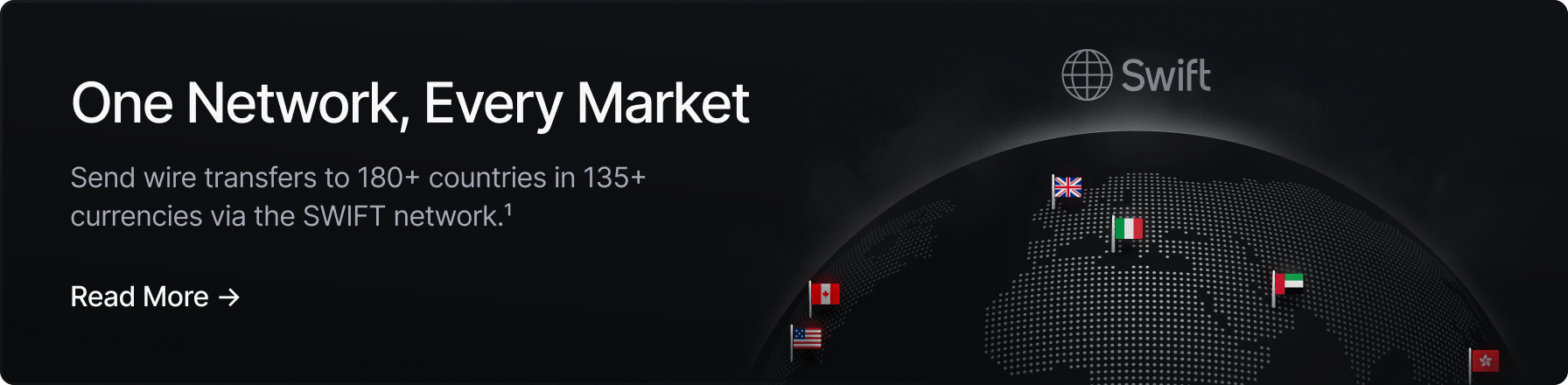
- Diverse payment methods: Multi-rail payments including same-day ACH, wires via SWIFT to 180+ countries, RTP, FedNow, and stablecoin transfers in USDC or USDT.
- Integrated treasury: High-yield treasury accounts backed by Morgan Stanley and BlackRock money market funds, with no minimum balance to get started.⁶
- Flexible financing: Access line of credit financing with repayment timelines ranging from 30 to 90 days depending on your cash flow cycle. Make drawdowns and payments directly from your dashboard.⁵
- Accounting integrations: Two-way sync with QuickBooks, Xero, NetSuite, and Sage Intacct.
Apply in less than 10 minutes today
Join the 10,000+ businesses already using Slash.
Frequently Asked Questions
What is an example of a smart contract?
A common example is a decentralized exchange like Uniswap, where smart contracts let users swap one token for another without an intermediary. Stablecoins like USDC and USDT and most NFT collections are themselves smart contracts too.
Cryptocurrency Conversion Guide: How Crypto On/Off Ramps Transform Business Payments

What are the four parts of a smart contract?
The four components are state variables (the data it stores), functions (how users interact with it), conditions (when actions can happen), and events (logs of what the contract has done). Structure varies by language and platform, but those four elements show up in almost every contract.
What is needed for smart contracts to work?
You need three things: a blockchain that supports programmable contracts (like Ethereum or Solana), the contract code itself (written in a language like Solidity or Rust), and users with wallets funded to pay the network's gas fees. Contracts that depend on real-world data also need an oracle service like Chainlink to bring that data on-chain.
Web3 Banking Explained: Benefits, Risks, and Use Cases


