

Same-Day ACH Cutoff Times and How They Shape B2B Payment Timing
For many U.S. businesses, ACH is still the backbone of how money moves between bank accounts. It’s inexpensive, well-understood, and integrated into nearly every accounting and payroll tool on the market. However, the catch is its speed; a standard ACH transfer can take one to three business days to settle, which leaves finance teams floating payroll, scrambling to chase vendor payments, or fronting refunds out of working capital.
Same-Day ACH closes that gap. It uses the same rails, the same NACHA rules, and the same originating bank relationships, but adds three same day settlement windows that let funds move and post on the same business day they are submitted. For payroll corrections, vendor pay, customer refunds, and time-sensitive B2B disbursements, that change can be the difference between a clean week and a tense one.
As useful as Same-Day ACH is, it’s not necessarily the most efficient payment rail for every scenario, nor is it the only way to send money within the same business day. In this article, we’ll discuss how Same-Day ACH works, its limits and fees, and what scenarios call for it. We’ll also take a look at Slash, a business banking platform that supports Same-Day ACH and other fast payment methods like RTP/FedNow and stablecoins.¹, ⁴
The standard in finance
Slash goes above with better controls, better rewards, and better support for your business.
What is Same-Day ACH?
Same-Day ACH is a NACHA-governed enhancement to the existing Automated Clearing House network that lets fund transfers settle on the same business day they’re originated, rather than the next business day or later. NACHA, the nonprofit that administers the ACH network, introduced Same-Day ACH in phases starting in 2016 and has gradually expanded its windows and limits since then.
From a finance team's perspective, the mechanics are familiar. You originate an ACH file through your bank or banking platform, the file is sent to the ACH operator (typically the Federal Reserve), and the receiving bank credits or debits the counterparty's account. The difference is timing: Same-Day ACH entries are sorted into specific intraday processing windows and clear within hours, not days.
Same-day ACH vs standard ACH at a glance
Standard ACH typically settles in one to three business days, costs $0.20-$1.50 per transaction, and has no per-payment dollar cap. Depending on the merchant service provider or transfer amount, senders may also pay a ~1% fee. Same-Day ACH settles the same business day, costs more per transaction (often a small surcharge on top of the standard ACH fee), and currently has a $1 million per-payment cap.
For recurring transactions like monthly vendor invoices on net-30 terms, standard ACH is often the right call. Same-Day ACH earns its premium when timing actually matters: a missed payroll, a refund that needs to post before a customer complaint escalates, or a vendor that has stopped shipping until they see the payment.
Who can use Same-Day ACH?
Any U.S. financial institution that participates in the ACH network can receive Same-Day ACH credits and debits, which means effectively every U.S. business and consumer bank account. On the origination side, you need a bank or banking platform that supports Same-Day ACH origination, which most modern business banking providers now do.
3 Same-Day ACH cutoff times you need to know for B2B payments
NACHA defines three Same-Day ACH processing windows, each with its own submission deadline and settlement time. All times are Eastern, since the ACH operators run on ET. Missing a cutoff by a few minutes can push a payment into the next window or even the next business day, so finance teams should treat these as hard deadlines and build internal cutoffs 30 to 60 minutes earlier.
1. Morning window: 10:30 a.m. ET cutoff, 1:00 p.m. ET settlement
The first daily Same-Day ACH window closes at 10:30 a.m. ET, with funds settling at the receiving bank by 1:00 p.m. ET. This window suits west coast finance teams that want a payment out before lunch on the east coast, or east coast teams that started their day catching up on overnight exceptions. In practice, most payroll correction files land here.
2. Afternoon window: 2:45 p.m. ET cutoff, 5:00 p.m. ET settlement
The second window cuts off at 2:45 p.m. ET and settles by 5:00 p.m. ET, just before the close of the standard business day in Eastern time. This tends to be the most heavily used window for B2B vendor payments because it gives most teams a full morning to review and approve invoices before submission.
3. Evening window: 4:45 p.m. ET cutoff, 6:00 p.m. ET settlement
The third window, added in March 2021, closes at 4:45 p.m. ET and settles by 6:00 p.m. ET. NACHA added this window specifically to extend Same-Day ACH availability for west coast businesses, where 4:45 p.m. ET is still 1:45 p.m. PT. Finance teams in Pacific time get a usable runway to originate same day payments after their morning operations are settled.
How weekends, holidays, and bank schedules affect cutoffs
Same-Day ACH only runs on Federal Reserve business days. Payments originated on a Saturday, Sunday, or federal holiday process on the next business day, regardless of how urgent they feel. Many banks also impose internal cutoffs 30 to 60 minutes ahead of the NACHA deadline to allow time for fraud screening, file assembly, and Federal Reserve transmission. It’s important to confirm the cutoff with your bank or platform, not just the published NACHA window.
Same-Day ACH limits, fees, and risk controls
The rules that govern Same-Day ACH are designed to balance speed with the network's traditional reliability and fraud controls. Three constraints matter most when planning B2B payment workflows:
Per-payment limit: $1 million
NACHA raised the Same-Day ACH per-payment cap to $1 million in March 2022. This applies to credits and debits alike, and to both consumer and business entries. Most B2B vendor payments fall well under this threshold, but treasury operations, large supplier settlements, and certain payroll runs can hit it. When a single payment exceeds $1 million, you can either split it across multiple Same-Day ACH entries, use a wire transfer for that specific payment, or move it to RTP if both banks support real-time payments.
Fees: typically a small surcharge per entry
Same-Day ACH costs more than standard ACH but far less than a wire. Pricing varies by bank and platform, but a typical surcharge runs a few cents to roughly one dollar per same day entry, on top of the standard ACH fee. For context, a domestic wire often costs $15 to $35. For most B2B finance teams, the math favors Same-Day ACH for time-sensitive payments under $1 million.
Return and reversal risk
Same-Day ACH entries can still be returned for the same reasons as standard ACH: insufficient funds, account closed, unauthorized debit, and so on. Returns typically come back within two banking days, though they can occur later in certain dispute scenarios. Because settlement is faster, the window between funding and confirmation is shorter, which can compress fraud detection. Teams that originate large or unfamiliar Same-Day ACH debits should pair the rail with verification tools that confirm account ownership before submission.
When to use Same-Day ACH for B2B payments
Same-Day ACH is not a replacement for standard ACH or for wires. It is a third option for situations where standard ACH is too slow and a wire is overkill. A few patterns come up often, including:
- Payroll runs and off-cycle corrections: Standard ACH payroll typically requires submission one to two business days ahead of payday. When something goes wrong, such as a missed timecard, an employee added late, or a calculation error caught at the last minute, Same-Day ACH lets you fix it without delaying the entire run. Finance teams that originate payroll out of Slash can use Same-Day ACH for these off-cycle corrections without standing up a separate workflow.
- Time-sensitive vendor payments: Vendors do not always extend credit graciously. If a critical supplier has put your account on hold or is threatening to delay a shipment, Same-Day ACH gets funds posted by the end of the business day at a fraction of the cost of a wire. Many AP teams reserve Same-Day ACH for vendors that confirm receipt by close of business and reserve wires only for international or higher-dollar payments.
- Customer refunds and dispute resolution: When a customer has filed a chargeback or is escalating a refund request, posting the refund the same business day can prevent the situation from worsening. Same-Day ACH lets support and finance teams clear refunds quickly without resorting to manual check runs or running into wire fees.
- B2B marketplace and platform payouts: Marketplaces and platforms that pay out to sellers, contractors, or partners increasingly use Same-Day ACH to offer faster payouts as a competitive feature. Pairing Same-Day ACH with strong account verification and risk controls lets platforms shorten payout times without exposing themselves to higher fraud losses.
Same-Day ACH vs. FedNow and RTP for B2B payments
Real-time payments have changed the picture since Same-Day ACH first launched. Two newer rails (The Clearing House's RTP network and the Federal Reserve's FedNow service) now offer instant, 24/7/365 settlement between participating banks. Here’s how they compare:
- Speed and availability: RTP and FedNow settle in seconds and operate every day of the year, including weekends and holidays. Same-Day ACH only runs on banking business days within three intraday windows. For payments that absolutely must clear at 2 a.m. on a Saturday, only RTP or FedNow can deliver. For payments that need to clear by end of business on a weekday, Same-Day ACH is usually sufficient and often cheaper.
- Limits and coverage: As of an update in November 2025, both the RTP network and FedNow support payments up to $10 million per transaction (with banks able to set lower internal limits). Coverage is the bigger constraint: not every U.S. bank participates in RTP or FedNow yet, while essentially every U.S. bank accepts Same-Day ACH. For B2B counterparties whose bank does not yet support real-time payments, Same-Day ACH remains the fastest available rail.
- Cost and finality: Real-time payments are final on receipt: no returns, no reversals. This is useful for sender certainty, but harsh on payment errors. Same-Day ACH retains the return-and-reversal mechanics of standard ACH, which gives finance teams a recovery window for mistakes. Pricing for RTP and FedNow varies by bank, but is generally competitive with Same-Day ACH for the originator.
Send Faster B2B payments with Slash
Finance teams shouldn’t have to pick a single payment rail and live with its limitations. Slash is a business banking platform that brings business banking, corporate cards, and outgoing payments together so you can choose the right rail per payment from a single interface, along with the controls and audit trail your operations need.
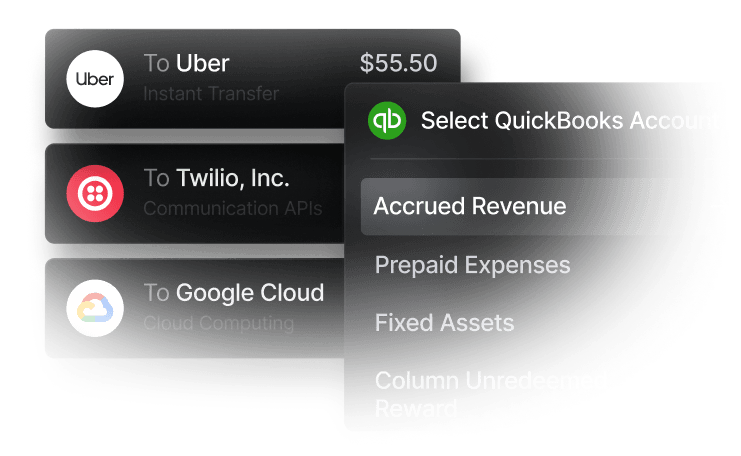
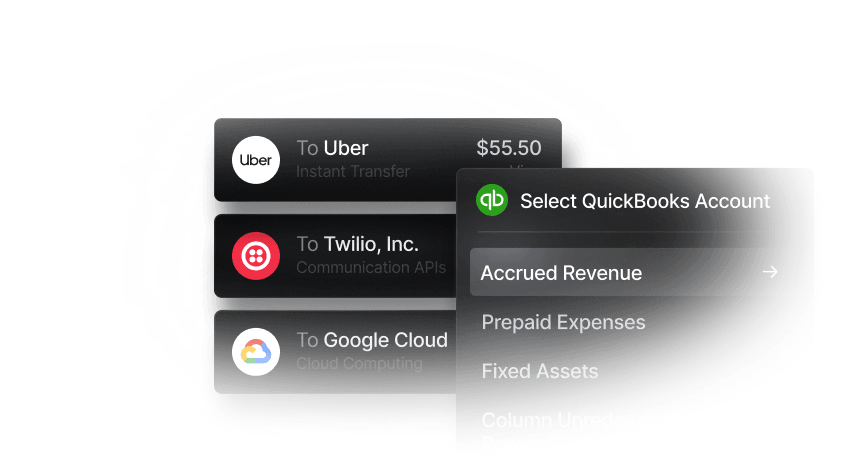
With Slash, you can originate Same-Day ACH credits during all three NACHA windows, schedule recurring or future-dated transfers, and review approval workflows before submission. When Same-Day ACH is not the right fit, the same dashboard lets you send a domestic wire, an RTP or FedNow real-time payment, or a stablecoin transfer for international counterparties, all without leaving the platform. No matter the transfer method you use, all money movement is visible in real time on our integrated financial dashboard.
Here are some other Slash features that can elevate how your business manages its finances:
- AI-powered finance: Our platform comes with Twin, a built-in AI agent that can be prompted with natural language to complete complex tasks. Users can ask it to create cards, pay invoices, review your cash flow, and much more.
- Slash Visa® Platinum Card: The Slash Card allows you to set customizable spending controls and issue unlimited virtual cards for handling team expenses, vendor payments, subscriptions, and more. Users can also earn up to 2% cash back on business purchases.
- Working capital financing: Access short-term financing with flexible 30-, 60-, or 90-day repayment terms to help bridge cash flow gaps.⁵
- High-yield treasury: Earn up to 3.80% annualized yield on idle funds with money market investments from BlackRock and Morgan Stanley, managed directly within your Slash account.⁶
- Accounting & ERP integrations: Sync transaction data with QuickBooks Online, Xero, or Sage Intacct to streamline reconciliation, reporting, and month-end close.
Apply in less than 10 minutes today
Join the 10,000+ businesses already using Slash.
Frequently asked questions
What is the Same-Day ACH limit per payment?
The current Same-Day ACH per-payment limit is $1 million, raised from $100,000 in March 2022. The limit applies to both credit and debit entries. For payments above $1 million, finance teams typically split the amount across multiple same day entries, use a wire transfer, or move to RTP, which supports payments up to $10 million.
ACH Routing Numbers Explained: How They Work and Where to Find Yours

Can I use Same-Day ACH on weekends or holidays?
No. Same-Day ACH only operates on Federal Reserve business days. Entries originated on a Saturday, Sunday, or federal holiday are processed on the next business day. For payments that must settle outside of banking days, RTP and FedNow offer 24/7/365 real-time settlement between participating banks.
How does Same-Day ACH compare to a wire transfer for B2B payments?
Same-Day ACH typically costs less than a dollar per entry, while a domestic wire often costs $15 to $35 per outgoing transfer. Same-Day ACH is capped at $1 million per payment, while wires generally have no per-payment cap and settle within minutes once initiated. For most time-sensitive B2B payments under $1 million, Same-Day ACH offers better unit economics, while wires remain a useful tool for very large or international payments.
ACH vs Wire Transfer: Key Differences, Costs, Limits & Use Cases

Are Same-Day ACH payments reversible?
Same-Day ACH entries follow the same return and reversal rules as standard ACH. Returns for insufficient funds, account closed, or unauthorized debits typically come back within two banking days. This differs from RTP and FedNow, which are final on receipt with no reversal mechanism. For finance teams that value a recovery window on payment errors, Same-Day ACH is often preferable to instant payments.
Read more from us


