

The Top 9 Best Crypto Cards for Businesses in 2026
For a long time, holding crypto and spending it were two very different tasks. You could watch your balance ebb and flow for years without any easy way to use it, especially in person. If you wanted to take your crypto and spend it at a store, you’d have to sell it on an exchange and transfer the resulting money into your checking account first.
Crypto cards were created to make that easier. They let you pay at ordinary checkout terminals using digital assets, with the conversion to fiat currency happening in the background. Not only do these cards make your crypto feel more tangible, but they also tend to come with better rewards and more dynamic features than traditional debit or credit cards.
Over the last several years, the market has become saturated with crypto cards, each coming with their own rewards, fees, and supported tokens. We created this article to explain how crypto cards work, who uses them, and the nine leading cards of 2026. We’ll also learn about the Slash Global Card, a USDC-backed card that works differently from typical crypto cards.³ The Global Card allows foreign business owners to access the U.S. dollar without forming an entity within the United States.


Key Takeaways
- When spending crypto at a checkout terminal, the balance settles on the merchant’s end in regular currency, meaning business owners don’t have to go out of their way to accept crypto.
- Always check regional availability, since a couple of the best-known crypto cards are unavailable in the US.
- The advertised cashback rate is rarely the rate you'll earn, because top tiers usually require locking up tens of thousands of dollars in the platform's own token.
- Custodial cards are simpler, but leave your funds dependent on the provider staying solvent and not making mistakes. Self-custodial cards remove that risk, but you’re responsible for your own keys.
- Spending Bitcoin or another token through a card counts as selling it, and thus creates a taxable event.
What Are Crypto Cards?
A crypto card is a payment card that draws on cryptocurrency rather than a bank balance. It usually runs on the same Visa, Mastercard, or American Express networks as your average card, which means it works at any merchant that accepts those networks. A store owner doesn’t have to do anything special or adopt a new software; even if they have no idea what crypto is, their customers can spend it at their terminal.
At the moment, crypto companies can’t exactly issue cards directly, so every crypto card comes attached to a licensed issuing bank or BIN sponsor behind the scenes. For example, Coinbase works with Pathward, and Nexo issues through a Lithuanian e-money institution called DiPocket. The crypto company builds the app, the wallet connection, and the spending controls, while the licensed partner handles things like the network relationship and compliance.
The combined powers of a crypto company and an established financial institution can create a crypto transaction that works like a regular purchase. When you swipe or tap, the merchant sends an authorization request through the card network. The issuer checks with the crypto platform to confirm you have enough value to make the purchase. Then, the platform sells the precise amount of crypto needed at the market rate, returns an approval, and the merchant gets paid in their local currency rather than in digital tokens.
As you research cards, one of the most important factors to keep in mind is who holds the assets. Custodial cards keep your crypto on the provider's platform, where the company controls the keys and executes the sale on your behalf. Non-custodial cards leave the assets in a wallet you control. While that means you don’t have to trust someone else with your tokens, it also means losing your keys can result in the permanent loss of your funds.
From there, cards generally fall into three categories:
- Debit cards draw directly from your crypto balance with each purchase, similar to a standard debit card.
- Prepaid cards work similarly, but you’ll load your crypto onto your card account/app ahead of time rather than allowing it to access your entire balance.
- Credit cards let you spend your crypto without selling it on the spot. Some use conventional credit lines from a bank that simply pay rewards in crypto, while others extend a line secured by crypto you've pledged as collateral, which lets you keep your position while accessing its value. The upside is the potential to earn yield/profit on coins you’re holding, while the downside is the possibility of those coins losing value due to volatility.
There’s one catch with crypto cards that make them a little less simple than you’d hope. The IRS treats cryptocurrency as property, so using a card to spend Bitcoin or Ether counts as selling it, and any gain since you acquired it is a taxable event. If you spend a dollar-pegged stablecoin like USDC or USDT, you may not experience a gain in value, since its value tracks the dollar. So, stablecoin-based cards are often easier to report on taxes, as most will incur a $0 gain or loss.
Who Uses Crypto Cards?
Both individuals and businesses can take advantage of crypto cards in different ways. For the average person, the appeal is largely access and rewards. Someone paid in crypto can spend it without having to sell it at an exchange and move the money to a bank. An investor holding a long-term position can use a collateralized credit card to use that value without selling it before they want to. Crypto cards are also useful for travelers, since they often charge less on foreign transactions than banks, and some cards waive foreign exchange fees entirely.
The use cases are a little different with businesses. Lots of crypto-powered cards, including the Slash Global Card, can be issued to employees along with spending controls and fraud alerts. As employees spend money from merchant to merchant, they can earn rewards and benefits. Businesses paying international contractors in regions where banking is slow or expensive can also issue cards instead of paying for wire transfers. If your company happens to be a fintech, you can use crypto cards themselves as infrastructure, partnering with issuing banks to launch your own branded cards for your customers. That’s exactly what many of the companies below did.
Top 9 Best Crypto Cards of 2026
While these nine cards are some of the leading options on the market, they each come with different supported tokens, rewards, and fees. Some of them also have noteworthy availability restrictions. Below, we break them down card by card, then arrange them on a table so they’re easy to compare. Let’s dive in:
1. Slash Global Card
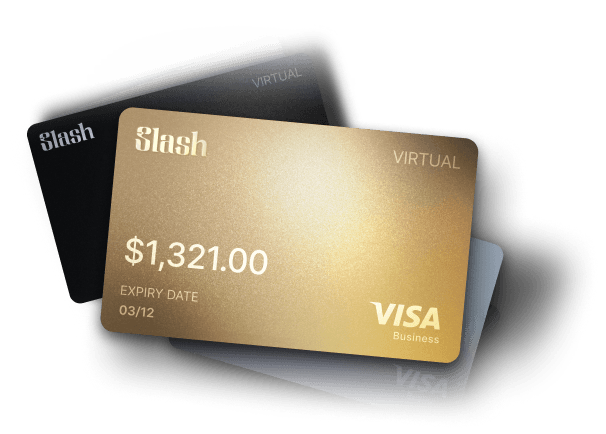
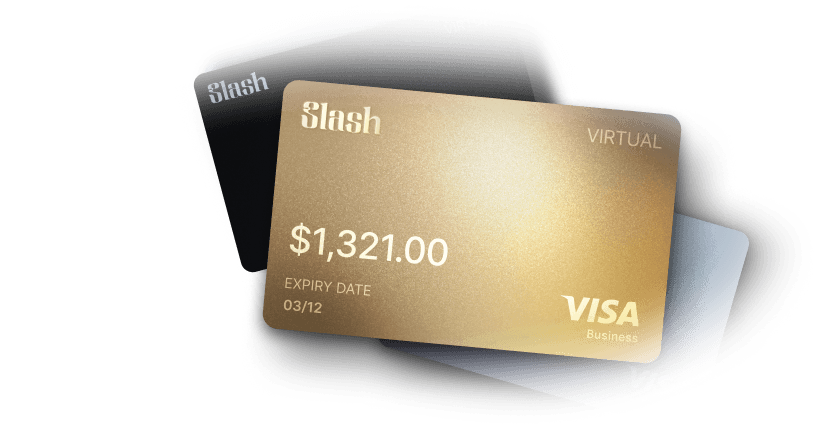
The Slash Global Card is a Visa charge card issued by Rain that allows foreign business owners to access the U.S. dollar without having a U.S.-based entity. Normally, this isn’t possible. With the help of the Slash USD account, however, foreign founders can skip the complex process of entity formation and spend the US dollar with a card without even needing to provide an EIN.
Your Global Card is backed behind the scenes by a balance held in USDC on Base. From your point of view, you hold a balance in US dollars and spend it through a virtual or physical card. Behind the scenes, the transaction is powered by USDC, and settles in the merchant’s local currency. The cardholder doesn’t have to deal with a crypto wallet, private keys, or an exchange. They simply spend the U.S. dollar as they would normally, with the help of underlying stablecoins.
- Strength: The Slash Global Card gives business owners in over 130 countries access to USD without a United States entity, which typical bank accounts and cards forbid. It also earns users 1% cash back on eligible spend.
- Drawback: At this time, Global Cards can’t be used for ATM withdrawals.
2. Coinbase Card
The Coinbase Card is a Visa debit card that spends from your Coinbase balance, converting crypto to dollars automatically at checkout. It carries no annual fee and applies no spending fee when you spend USDC. Rewards rotate monthly, letting you pick which asset you earn back from a changing list. Coinbase also offers an American Express credit card called the Coinbase One card that allows you to spend in USD and receive rewards in Bitcoin.
- Strength: Since it’s backed by Coinbase, you can spend over 250 different cryptocurrencies through the Coinbase card. If you hold it within the exchange, you can almost always spend it.
- Drawback: Since rewards rotate inconsistently, you can't count on a specific percentage month to month. This might not matter much for individuals, but can affect cash flow projection for businesses.
3. MetaMask Card
The MetaMask Card is a non-custodial Mastercard that offers both virtual cards and a physical metal card. Funds stay in your own wallet across Linea, Solana, Monad, and Base until the moment you pay, when the card is authorized to move the specific amount needed. It supports nine tokens, mostly stablecoins, with rewards paid in mUSD (MetaMask USD) at 1% on eligible transactions.
- Strength: You keep custody of your assets right up to the point of payment, which isn’t the case with most other cards. Also, here at Slash, we can respect a sleek metal card.
- Drawback: The metal card costs $199 per year, which is as high an annual fee as you’ll see among crypto cards. Their 1% rewards rate also isn’t particularly impressive.
4. Crypto.com Card
Crypto.com runs a prepaid Visa card across the US, UK, EU, Canada, Australia, Singapore, and Brazil, plus a separate Visa Signature credit card available only in the US. Your rewards and fees vary depending on tier; you may either use the free product, or pay a monthly subscription fee for one of their Level Up tiers. Cash back on their free tier is zero, while cash back on their “Private” tier is up to 5%.
- Strength: The Crypto.com card has the widest reach on this list, with regional issuing arrangements in seven markets. You also won’t pay any trading fees, though the upper limit to this privilege is lower on cheaper tiers.
- Drawback: If you’re not looking to spend an annual fee on your crypto card, the free product doesn’t offer quite as much as other competitors.
5. Nexo Card
The Nexo Card is a Mastercard with an unusual setup: you can switch between two modes in the app. Debit Mode spends your assets directly, while Credit Mode draws on a crypto-backed credit line with interest rates anywhere from 1.9% to 15%, depending on your tier and loan-to-value ratio. Curiously, their FX fees are more expensive on weekends by around 0.5%.
- Strength: No other major card offers a combination of credit and debit capabilities. Additionally, holding assets in a Nexo account can naturally earn interest up to 14% per year. This blows away traditional high-yield accounts, as well as many other crypto accounts.
- Drawback: It isn't available in the US at all, serving only the EEA, UK, and selected European markets. Cashback also requires holding at least $5,000 in digital assets to qualify for any tier, so smaller balances don’t earn anything.
6. Wirex Card
Wirex has issued crypto cards since 2014, which makes it an established veteran within the field. It has over 7 million customers worldwide, and they’ve processed over $20 billion worth of transactions. The account blends fiat and crypto balances, and the card runs on Visa or Mastercard depending on the region.
- Strength: Along with its industry experience, Wirex’s standout feature is actually its insurance coverage. Through Fireblocks, an institutional-grade custodian, your digital assets can be insured for up to $30 million.
- Drawback: While Wirex advertises a cash back rate of up to 8%, it requires you to hold a large stake of Wirex's own WXT token, plus a monthly subscription. Unless you’re committed to embracing WXT, you’ll probably earn a lot less than 8%..
7. Bybit Card
Bybit's card spends directly from your exchange balance rather than a separate wallet, drawing on your Funding Account with a customizable priority order across supported assets. It can be issued as a prepaid or credit card, depending on the market. The Bybit Card comes with a total of six tiers, each with scaling rewards and perks. These tiers unlock based on activity rather than a monthly or annual fee.
- Strength: If you reach Bybit’s sixth tier, known as Infinite, you can access a 10% cash back rewards rate.
- Drawback: It currently isn’t available in the US, and foreign exchange fees can reach 7% in some markets.
8. Gnosis Pay Card
The Gnosis Pay Card is a self-custodial Visa debit card that lets users spend stablecoins directly from a smart-contract wallet at online and physical merchants that accept Visa. Unlike many crypto cards, it doesn’t require users to preload funds into an account controlled by the card provider. Instead, it spends in real time from a Safe smart account you control, and Gnosis Pay never takes possession of the assets.
- Strength: Through API tooling, you can launch virtual cards in minutes, each with programmable spending limits and allowances.
- Drawback: Only three stablecoins are spendable, EURe, GBPe, and USDCe, and they only travel through Gnosis Chain. Additionally, the Gnosis Pay Card isn't yet available in the US.
9. Kraken's "Krak" Card
The Krak Card is a Visa debit card that supports more than 600 cryptocurrencies and fiat currencies. You get up to 2% cash back in USD or BTC on eligible purchases, which is a more straightforward reward structure than you’ll see elsewhere. If you’re an American that hasn’t heard of the Krak card, that may be because it wasn’t available in the United States until August 18th, 2026, which was three days ago at the time of this article’s publishing.
- Strength: Your 2% cash back can be paid in dollars as real money rather than points or coins, with no monthly or annual fee and no markup on Visa's exchange rate.
- Drawback: That 2% requires an average of $50,000 across your Kraken balances. Additionally, the US program currently excludes New York, Maine, Massachusetts, and Indiana.
Best Crypto Cards: A Breakdown
How the Slash Global Card Works Differently
Each of the cards featured on the table above help you directly spend crypto you already hold. The Slash Global Card, while backed by crypto, helps founders spend fiat currency they may not already hold.
The Slash Global USD account is designed for eligible businesses incorporated outside the United States that want to hold and move U.S. dollars. For those companies, the problem is that a US bank account usually requires a US entity, an EIN, and a physical presence. The Global USD account removes those barriers, covering businesses in 130+ countries. Stablecoins are the backbone of the account rather than the currency, with USDC balances backed on Base.
The card, powered by Rain and issued through Visa, allows your balance to be spent both physically and virtually. Through Rain’s infrastructure, USDC is converted to US dollars at authorization, allowing the cards to be used for eligible transactions wherever Visa is supported. For card purchases, the stablecoin conversion happens behind the scenes, although Global USD customers can also send and receive supported stablecoins directly. Each eligible card purchase can also earn 1% cash back.
The Slash Global USD account also allows you to:
- Create physical and virtual cards with per-card limits, card-group budgets, merchant-category controls, instant freezing, and role-based permissions
- Get US account and routing details to receive USD payments without forming a US entity
- Send and receive ACH transfers
- Create and send invoices, then collect payment by ACH, wire, or supported stablecoins directly into your Global USD account.
- Send and receive supported USDC and USDT transfers, in addition to using USDC to fund card spend.
Apply in less than 10 minutes today
Join the 10,000+ businesses already using Slash.
Frequently Asked Questions
Do crypto cards work anywhere regular cards work?
Yes, because they run on the same Visa and Mastercard networks, so the merchant sees an ordinary transaction and receives local currency. That said, some cards come with their own rules. The Coinbase card, for example, can’t be used to gamble or buy firearms.
Which crypto card has the best cash back?
Technically, headline rates can reach 8% or 10%, but those come with conditions most users won't meet, typically by staking a large amount of the platform's own token for months. So, your cash back largely depends on how you’re willing to invest.
Are Points Better Than Cash Back?

Are crypto cards safe to use?
The transaction itself is as safe as any other card on the same network. The risk, however, relates to whether your provider holds your assets and what happens if it freezes your account or fails. Custodial cards assign that risk to the provider, while it’s all on you with non-custodial cards.
Can businesses use crypto cards?
Some allow it and some explicitly don't, so read the terms first. Gnosis Pay, for example, restricts its card to personal use. Teams interested in card spending funded by digital assets may be better served by a business banking platform like Slash with native stablecoin support.¹ Slash also adds granular spend controls, unlimited virtual cards, and accounting integrations most crypto cards lack.
Stablecoins vs Crypto: What Businesses Should Know


