

The Best Credit Cards For AppLovin Ad Spend: Features Compared
If you’ve heard of AppLovin, you might associate it with its origin in mobile gaming ads. What you might not know is that they recently sold off their mobile game studio division, and they’ve begun targeting e-commerce and direct-to-consumer (DTC) brands. Today, they process more than $11 billion in ad spend a year from a wide variety of sources.
Choosing a credit card to pair with your AppLovin ad spend is an interesting endeavor, as the platform charges users every single day rather than once a month. We wrote this article to break down AppLovin and its structure, then review the six best credit cards for AppLovin spend. Along the way, we’ll take a look at the Slash Visa® Platinum Card, a corporate charge card with spend controls and high cash back designed to give marketing teams extra flexibility.¹
Key Takeaways
- AppLovin charges daily rather than monthly, so a card that declines interrupts campaigns the very next morning.
- Both Amex Business Gold and Chase Ink Business Preferred cap their advertising bonus at the first $150,000 of qualifying spend per year.
- Chase offers two cards with 3x points on advertising, one with a cap, and a pricier one without.
- While both Opal and Slash offer up to 2% cash back, Opal often calls their rewards unlimited 1% cash back, and it’s unclear what determines your rate on a given purchase.
What is AppLovin?
AppLovin is an advertising technology company founded in 2012 and headquartered in Palo Alto, CA. For a long time, it actually worked on both sides of the mobile ecosystem, operating its own portfolio of game studios while also specializing in advertising. In mid-2025, AppLovin sold its gaming business to Tripledot Studios in mid-2025, and they became a full-time advertising company.
One of its core features is its Axon AI, a system that matches advertisers to inventory and bids on impressions against whatever return target you set. In other words, it uses predictive machine learning to figure out what ads should be shown to which users based on their activity. Today, AppLovin serves ecommerce brands, subscription businesses, rideshare, insurance, and home services, with customers including Gymshark, Wayfair, HelloFresh, and Bombas.
AppLovin’s Billing Structure
While most marketing platforms send you an invoice or charge your card once a month, AppLovin charges the card you have on file every single day at midnight UTC. If you start a new campaign or raise a budget, that money will be spent that day. Even if this doesn’t technically change the amount that’s spent, it can still be a pretty big deal.
With this structure, your card statement will now have 30 different transactions a month instead of one large one at the end. While AppLovin does send you an invoice that summarizes it, that doesn’t change what hits your accounts. Dealing with the extra transaction volume can be tedious by hand, so you may want to use a business banking platform like Slash that syncs with accounting tools and offers an agentic AI that can break down your activity for you.
You also have to think about reliability, in regards to a card’s built-in limits. AppLovin recommends keeping a backup card on file, since a declined charge at midnight UTC means campaigns don't run the next day, and you might not notice until the morning. So, if your card has a spending ceiling and you hit it on a given day, your ad campaign’s momentum could suddenly stall out of nowhere.
Top 6 Corporate Cards for AppLovin Ad Spend
Below, we’ve arranged six credit cards and charge cards that offer cash back and spend controls designed for marketing teams that work through AppLovin. While there aren’t any cards on the market that offer rewards related exclusively to AppLovin, most of these cards do offer rewards and multipliers connected to digital advertising. Let’s dive in:
1. Slash Visa®Platinum Card
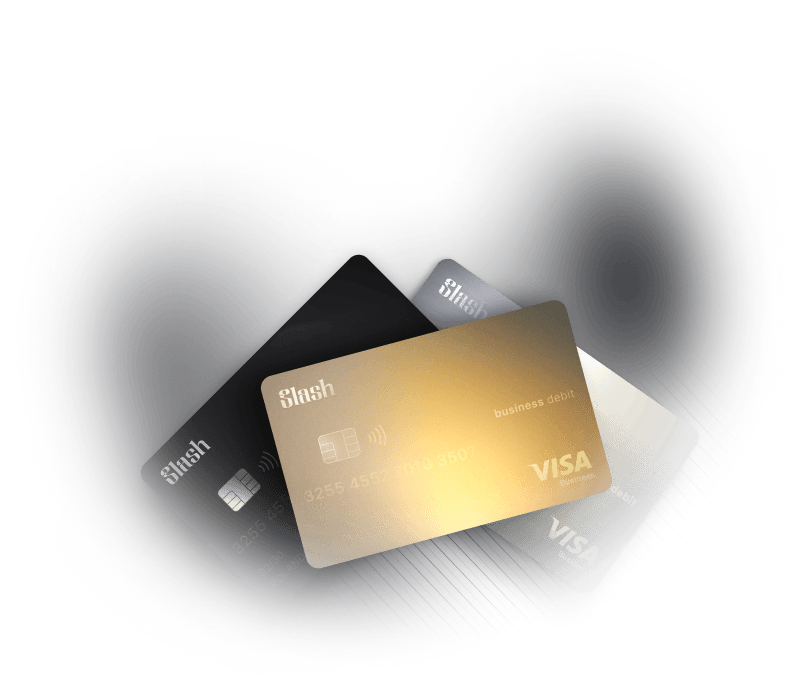
The Slash Card is a corporate charge card that pays up to 2% cash back on eligible business purchases. There’s no annual fee, and a personal guarantee isn’t necessary to apply. Users can issue unlimited virtual and physical cards, each with their own spend limits and category rules/restrictions. All card transactions, virtual and physical, post in real time on the Slash dashboard with relevant context.
When it comes to AppLovin in particular, the Slash Card’s daily repayment structure is a perfect match. AppLovin charges your card each day, you repay your Slash Card at the end of the business day, and that balance is all set.
- Strength: The Slash Visa® Platinum Card offers high cash back, connects to an all-in-one financial platform, and comes with a payment cycle that matches AppLovin’s.
- Weakness: At this time, sole proprietors cannot get the Slash Card.
2. Wyndham Rewards Earner® Business Card
While its 8x points on hotel purchases makes the Wyndham Rewards Earner card a travel-first product, it also pays up to 5X Wyndham Rewards points on eligible marketing and advertising purchases. Even though 5x points can potentially represent 4-5% cash back, redemption can be tricky, and the value can fall below the expected return rate. In Wyndham’s case, you can redeem points for a fair value when repurposed for hotels, but they’re only worth 0.35-.4 cents when put towards a statement credit. Its annual fee is $149, with a variable APR of 19.49% to 29.49%.
- Strength: A 5x points multiplier on advertising along with a moderate annual fee makes it a solid option overall, especially for traveling teams.
- Weakness: Wyndham Rewards points are best spent at hotels, and are worth less than half their possible value when redeemed as a statement credit.
3. American Express® Business Gold Card
The American Express® Business Gold Card is a charge card that pays 4X Membership Rewards points on your top two spending categories each billing cycle. These categories can include advertising, but they can also potentially be overshadowed by other types of expenses like software and restaurants. The card comes with a $375 annual fee, and it costs a flat $95 to issue up to 5 cards to different employees. Each individual card afterwards costs another $95.
- Strength: 4x points is a high multiplier, and unlike the Wyndham card, doesn’t drastically lower when redeemed on your statement.
- Weakness: You won’t earn 4x points on advertising if you happen to spend on 2 other categories more than advertising. If AppLovin is your 3rd highest spend item, you’ll only earn 1x points on it.
4. Opal Card
The Opal Card is a charge card built specifically for advertising spend, issued by First Internet Bank of Indiana with credit provided by CapitalOS. There’s no annual fee, and you get unlimited free virtual cards with per-campaign budget controls. While they claim to offer “up to 2% cash back” on ad spend, lots of their messaging states that you can earn “unlimited 1% cash back” on it. So, there’s a gray area on what exactly you’re offered, and it may be somewhere in the middle.
- Strength: The Opal Card is purpose-built for media buying, with spend controls organized around campaigns and clients rather than generic expense categories.
- Weakness: Assuming you’ll spend some time earning 1% cash back on ad spend instead of the highest possible 2%, it’s not a very impressive cash back rate.
5. Chase Ink Business Preferred® Credit Card
Our second credit card on the list is the Chase Ink Business Preferred® card, which pays 3X Ultimate Rewards points on advertising purchases. However, those 3X points pool with travel, shipping, and internet/cable/phone across the first $150,000 in combined purchases each year, which means the limit can become a real problem. Its annual fee is a humble $95, with a variable APR ranging from 17.74% to 26.74%.
- Strength: A low annual fee, plus a 100,000 point welcome bonus after $8,000 of spend in three months.
- Weakness: Since the cap is shared across four categories, you might hit your $150k ceiling faster than you expect, especially if you spend a lot on travel.
6. Chase Sapphire Reserve for Business
Like their Preferred card, Chase’s Sapphire Reserve for Business card is a Visa Infinite card that pays 3X Ultimate Rewards points on social media and search engine advertising. Unlike their preferred card, however, purchases that earn points are completely uncapped. The annual fee is $795, but it can be offset by credits Chase values above $3,000, including travel, Google Workspace, and ZipRecruiter allowances.
- Strength: The uncapped advertising rate can really help out high-spend teams, especially compared to the Chase Preferred card.
- Weakness: The $795 fee may only be worth it if you use the credits, and most of them are travel perks that some teams might not end up using.
Cards Compared
Get More Cash Back on AppLovin Ad Spend With Slash
Only one of these cards we’ve discussed comes with a daily repayment rhythm that matches AppLovin’s charging structure. Coincidentally, it’s also the only card that offers up to 2% cash back consistently, without any complex redemption requirements. That’s the Slash Visa® Platinum Card.
The Slash Card’s cash back rate comes with no annual fee, no personal guarantee, and no categories to go out of your way to track. If your business runs most of its spend through AppLovin, a consistent, high rate can be a lot more valuable than a complex one or a multiplier that comes with caveats.
It’s also built for how marketing teams work. Users can issue unlimited virtual and physical cards each with their own spend limits and merchant rules, so a card per campaign or per client keeps AppLovin's daily charges separated at the source rather than reconciled at month end. Along with Slash’s card-related features, the platform also comes with:
- AI-powered finance: Our platform comes with Twin, a built-in AI agent that can be prompted with natural language to complete complex tasks. Users can ask it to create cards, pay invoices, review your cash flow, and a lot more.
- Working capital financing: Access short-term financing with flexible 30-, 60-, or 90-day repayment terms to help bridge cash flow gaps.⁵
- Native cryptocurrency support: Send and receive USD-pegged stablecoins USDC and USDT across eight supported blockchains for faster, lower-cost global payments.⁴
- Diverse payment rails: Slash supports a wide range of payment methods, including card spend, global ACH, international wire transfers to over 180 countries via SWIFT, and real-time domestic payments through RTP and FedNow.
- Business banking: FDIC-insured business checking, protected up to $150M through Column N.A.'s insured cash sweep network.²
Apply in less than 10 minutes today
Join the 10,000+ businesses already using Slash.
Frequently Asked Questions
Will my card earn advertising rewards on AppLovin?
Almost definitely, but it’s tough to make guarantees, as providers seldom identify AppLovin by name as they advertise their supported platforms. For instance, Chase's language covers search engines and social media sites, which likely matches AppLovin.
Why does AppLovin recommend keeping a backup card?
AppLovin’s charges hit daily and a single decline pauses your campaigns the following day. Their own billing documentation advises adding a second card for exactly this reason, and it's worth doing regardless of which primary card you choose.
Are points better than cash back?
Points tend to come with higher possible ceilings than cash back, but as you redeem them, they may be worth less than you expect, especially when placed towards a statement credit. Meanwhile, cash back is much more consistent and straightforward.
Are Points Better Than Cash Back?


