

Forward Contracts for Business FX: How Companies Lock Exchange Rates Before Paying Overseas Vendors
Exchange rates can make cross-border payments hard to predict. Imagine a supplier invoices your business in euros, your company operates in dollars, and the payment is not due for another month or two. During that time, currency markets can shift enough to change the final cost of the purchase.
Forward contracts help businesses remove some of the uncertainty. Instead of waiting to see where the exchange rate lands on the payment date, a company can lock in a rate ahead of time for a future currency conversion. That way, finance teams know exactly how much the payment will cost before the invoice comes due. Forward contracts are commonly used by companies that regularly pay overseas vendors, collect revenue in foreign currencies, or manage international budgets with fixed margins.
Businesses handling cross-border payments often look at FX exposure from multiple angles, including when to lock exchange rates and how funds move internationally. With options for faster global settlement, your business can minimize the risk of FX swings against you. Slash supports international business payments across multiple rails, including global ACH, international wires via SWIFT, and USD-pegged stablecoins, giving you more flexibility over how you move money internationally.¹, ⁴
The standard in finance
Slash goes above with better controls, better rewards, and better support for your business.


What is a forward contract?
A forward contract is an agreement to exchange one currency for another on a future date at a rate agreed on today. For businesses, the future date typically lines up with a payable: an invoice due date, a purchase order, or a payroll obligation. Instead of waiting to see where the exchange rate lands when the payment comes due, the company locks in a rate ahead of time to reduce uncertainty around currency movements.
The contract fixes the exchange rate itself, not the underlying transaction. If a supplier is owed €100,000 in 60 days, for example, the forward contract helps the business know how many dollars will be needed to complete the payment. It does not change the supplier’s pricing, payment terms, invoice amount, or purchasing agreement. The goal is simply to create more predictability around the currency conversion tied to the payment.
Every forward contract also includes a settlement date, which is when the currency exchange takes place. Some settle on one fixed date, while others allow businesses to draw from the contract during a defined window. Depending on the provider and the size of the contract, businesses may also need credit approval, collateral, margin, or an upfront deposit before entering into the agreement.
How to create a forward contract: 5 steps
Really, creating a forward contract is just drafting up a simple agreement. You list the terms, send them to the other party, negotiate if needed, and finalize the contract. But beyond the agreement itself, there are also operational steps that need to happen throughout the process. Here’s how it all works:
Step 1. Identify the foreign currency exposure
The first step is identifying the payment the business wants to protect against currency fluctuations. Companies commonly use forward contracts for overseas vendor invoices, purchase orders, recurring foreign payroll, or expected customer payments in another currency. Each forward contract should be tied to a specific business obligation so the company knows exactly what payment or receivable the contract is covering.
Step 2. Set approval rules for the contract
Next, you should define who can approve a forward contract based on the contract amount, currency pair, and settlement timeline. For example, a smaller euro payment due in 30 days may only require finance manager approval, while a larger six-month contract could require CFO approval. The approval record should include the reason for the contract, the related invoice or forecast, and the exchange rate quoted by the provider at the time of approval.
Step 3. Add the contract to cash planning
Once the business enters into the forward contract, the settlement date and expected funding amount should be added to the company’s cash forecast and payment calendar. That way, the finance team knows when the contract will need to be funded and can make sure enough cash is available before the payment date arrives. It also helps the business prepare ahead of time if the provider requires a deposit, collateral, or other upfront funding as part of the agreement.
Step 4. Coordinate the international payment
Locking the exchange rate does not complete the vendor payment on its own. The business still needs to send funds to the supplier using the correct payment rail, bank details, and remittance information. Some FX providers handle both the currency conversion and the outgoing payment, while others only provide the FX contract itself.
Step 5. Review the contract after settlement
After the vendor payment is complete and the contract settles, the business should review how the forward performed against the original objective. The finance team can compare the contracted amount against the final invoice to evaluate whether any fees, collateral requirements, or payment delays affected cash flow planning. Even a short review process can help strengthen future FX decisions and internal policies.
Best practices for using forward contracts in international business
Using forward contracts well can take a little finesse. Payment dates move, invoices change, and cash flow still needs to line up when settlement arrives. The businesses that get the most value out of forwards usually have tight internal controls and financial planning tools to help them make better decisions around FX and financial planning. Here are some common strategies:
Match forward contract settlement dates to international payment timing
The settlement date on the forward contract should align as closely as possible to when the business actually expects to send or receive funds. If the payment date moves, the company may need to amend, extend, or close the contract early, which can create additional costs depending on market conditions. Keeping payment schedules and FX contracts closely aligned helps reduce avoidable adjustments later.
Review the full cost of the forward contract, not just the exchange rate
The quoted exchange rate is only one part of the agreement. Businesses should also review provider spreads, fees, collateral requirements, and any upfront funding obligations tied to the contract. In some cases, a forward contract may improve budgeting predictability while still creating short-term cash flow pressure if margin or deposits are required before settlement.
Coordinate FX decisions with international payment execution
Locking an exchange rate does not complete the payment itself. The business still needs to send funds through the correct payment rail with accurate remittance and beneficiary information. Some providers combine FX conversion and payment execution in one workflow, while others separate the two processes. Clear coordination between treasury, finance, and payment operations can help reduce delays and administrative errors.
Keep forward contract records for accounting and cash flow planning
Forward contracts can affect budgeting, reporting, and cash forecasting, especially for businesses with recurring international payments. Most finance teams maintain records showing the contract amount, exchange rate, settlement date, related invoice, and business purpose tied to each contract. Consistent documentation makes it easier to review payment activity later and helps accounting teams track how FX decisions affected actual cash flow over time.
When should your business use a forward contract?
Not every cross-border transaction needs a forward contract. In fact, overusing them can sometimes create its own problems if your payment amounts or timelines change after you lock in the rate. And depending on how funds move internationally, you may not always have the same level of FX exposure to begin with. Faster settlement methods, local payment rails, and USD-pegged stablecoins can reduce the amount of time funds sit exposed to currency swings compared to traditional international wires.
Still, there are situations where locking in the exchange rate ahead of time is the smarter move, including:
Locking in costs for a large overseas supplier invoice
Example: U.S. importer receives a €250,000 supplier invoice from a manufacturer in Germany, but payment is not due for another 60 days. If the euro strengthens against the dollar during that period, the final cost of the purchase could increase significantly before the invoice is paid.
In that situation, the business might use a forward contract to lock in the EUR/USD exchange rate as soon as the invoice is approved. That gives the company more certainty around inventory costs, pricing, and expected margins while the goods are still in transit.
Managing recurring foreign currency business expenses
Example: A U.S. company has a small team in the United Kingdom and expects to run £80,000 in payroll each month for the next quarter. The company budgets for those payroll runs in dollars, but the actual dollar cost will depend on the GBP/USD exchange rate each month.
If the pound strengthens before payroll is funded, the company may need more dollars than expected to cover the same salaries. To reduce that risk, the business could use a forward contract to lock in the exchange rate for part or all of the expected payroll amount. That makes the dollar cost of payroll easier to plan around for the quarter, while still leaving room to adjust if headcount or bonus payments change.
Protecting margins on international customer payments
Example: A software company signs a contract with an overseas customer and invoices the client in British pounds, but most of the company’s operating expenses are still denominated in U.S. dollars. If the pound weakens before the customer pays the invoice, the business could end up collecting less value than originally expected.
To reduce that risk, the company could enter into a forward contract tied to the expected customer payment date. By locking in the future conversion rate ahead of time, the business has a clearer idea of what the incoming revenue will actually be worth once converted back into dollars.
Challenges of using foreign contracts for FX
Forward contracts can make international payments more predictable, but they aren’t the magic solution to global trade. Once you lock in a rate, you’re trading flexibility for certainty; that tradeoff may not always work in your favor. Before using forwards regularly, your business should understand some of the possible downsides that can come with using them:
- You may miss favorable exchange rate movements: Once a business locks in a forward rate, it generally must honor that rate even if the market later moves in its favor. In exchange for certainty, you give up some upside potential.
- Payment timing can change after the contract is signed: If the actual payment date no longer lines up with the forward contract settlement date, you may need to amend, extend, or close the contract early, which can create additional costs or administrative work.
- Some providers require collateral or advance funding: Depending on the size of the contract and the currencies involved, a provider may require margin, collateral, or upfront funding before settlement. Even if the exchange rate itself is favorable, those requirements can still affect short-term cash flow planning.
- Forward contracts depend on good financial visibility: Businesses make better FX decisions when they have a clear understanding of budgets, cash flow, and upcoming payment obligations. Without solid visibility, it becomes harder to decide when and how much currency exposure to lock in.
- Overusing forward contracts can reduce flexibility: Locking too many future payments into fixed exchange rates can become restrictive. Companies with fluctuating payment volumes or uncertain forecasts often use forwards selectively instead of hedging every expected international transaction.
Slash business banking
Works with cards, crypto, plus cards, crypto, accounting, and more.
Optimize your global payment strategy with Slash
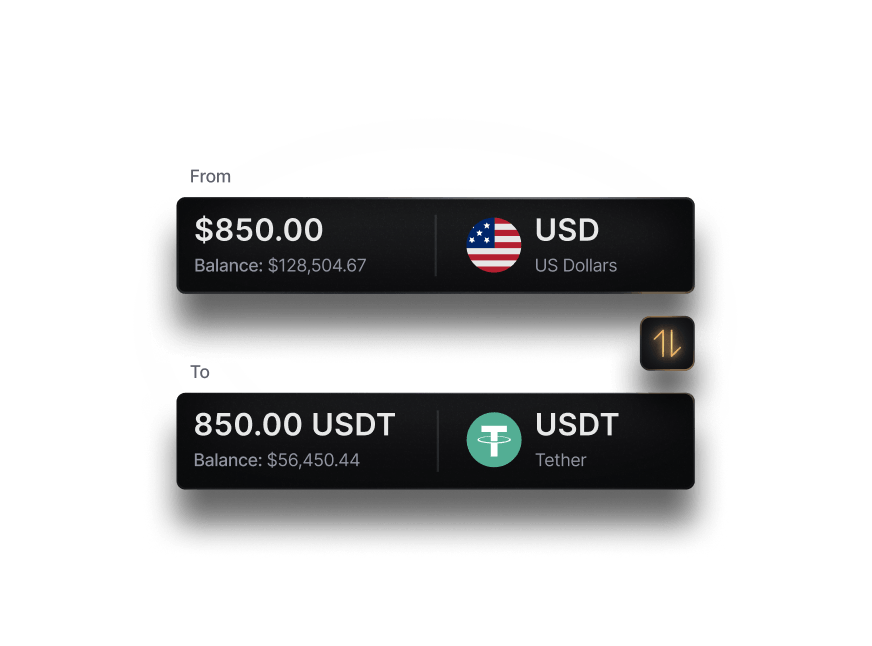
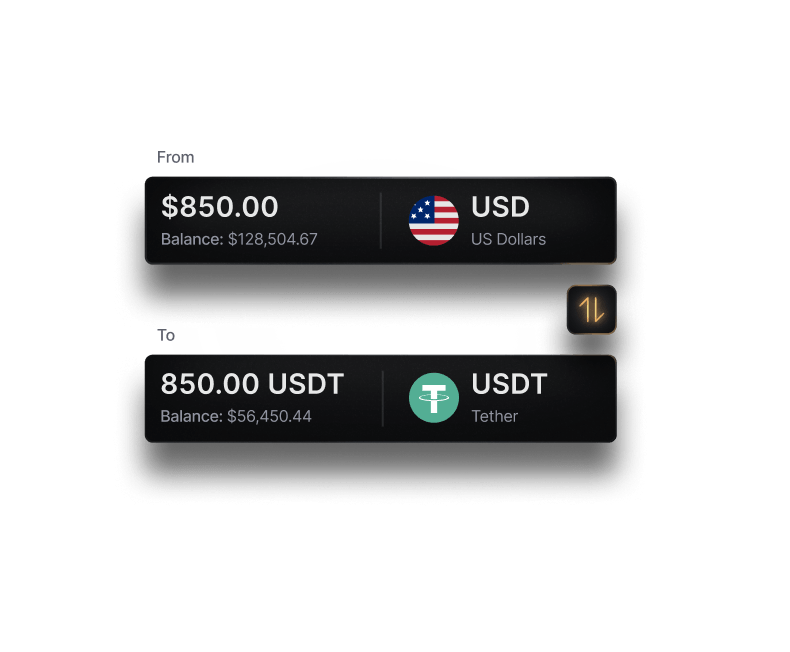
Besides managing your international business relationships, the way you move money matters too. Traditional international wires can leave funds in transit for days while exchange rates continue moving in the background, especially when multiple banks or currency conversions are involved. Faster settlement methods can reduce that exposure window significantly. Slash supports global ACH, SWIFT wires, and USD-pegged stablecoins including USDC and USDT. Moving funds faster and more directly can limit how long payments remain exposed to FX volatility in the first place.
At the same time, it can be difficult to make good FX decisions when you cannot easily see where cash is moving or what payments are coming next. This is where accounting integrations become more than just “nice to have.” Platforms like QuickBooks and NetSuite include multi-currency workflows for tracking unrealized FX gains and losses, revaluing open foreign currency balances at month-end, and reconciling transactions against changing exchange rates.
When payment activity syncs directly from Slash into your accounting system, your finance teams can spend less time manually tracing international transactions after the fact and more time planning ahead for your continued global operations. Here’s what else you get with Slash:
- Diverse payment methods: Slash supports a wide range of payments, including card spend, global ACH, international wire transfers to over 180 countries via SWIFT, and real-time domestic payments through RTP and FedNow.
- Native cryptocurrency support: Send and receive USD-pegged stablecoins USDC and USDT across eight supported blockchains for payments that are often faster and lower-cost than international wires.
- Accounting & ERP integrations: Sync transaction data with QuickBooks Online, Xero, Sage Intacct, or Netsuite to streamline reconciliation, reporting, and month-end close.
- Global USD: The Slash Global USD Account is designed as an alternative for foreign founders who want access to USD without forming a US entity.³ Balances are held in USDC on Base, a stablecoin designed to maintain a one-to-one value with the U.S. dollar.
- Slash Visa Platinum Card: Set customizable spending controls and issue unlimited virtual cards for handling team expenses, vendor payments, subscriptions, and more. Earn up to 2% cash back on eligible purchases (U.S. only).
Apply in less than 10 minutes today
Join the 10,000+ businesses already using Slash.
Frequently asked questions
Are forward contracts the same as spot conversions?
No. A spot conversion exchanges currency at the current market rate for near-term settlement, while a forward contract locks in a rate today for settlement at a future date. Spot conversions are typically used for immediate payments, while forwards are used for planned future currency needs.
Currency Volatility: Definition, Causes, and How to Manage It

Do forward contracts save money?
Sometimes they do, and sometimes they don’t. A forward contract may end up looking favorable compared to a later spot rate, or it may end up costing more if the market moves in your favor after the rate is locked. Most businesses use forwards for predictability rather than speculation.
How should a small business decide whether to use forward contracts?
Start with the size, timing, and certainty of the foreign currency exposure. If the payment is large, confirmed, and sensitive to exchange rate movement, a forward contract may be worth discussing with an FX provider. If the amount is smaller or the timing is uncertain, a standard spot conversion is often simpler.
Best Ways to Pay Overseas Suppliers: Comparing Different Methods and Navigating Fees


