

The 6 Best Online Banking Platforms for Businesses in 2026: Fees, Features, and Cards Compared
Online banking platforms trade cash and branch access for advanced tools like virtual cards, expense controls, accounting integrations, automated invoicing, and even cryptocurrency support. If your business doesn’t mainly transact in cash, you can use these sorts of systems to manage your finances at a deeper level than a traditional bank would allow.
Choosing the right online platform, however, is easier said than done. Some providers are chartered banks that operate without branches, while others are financial technology companies that build software around accounts held at regulated partner banks. To help you make the right choice, we’re here to break down how digital banking platforms work and the six leading options that make the most sense for modern businesses. One of these systems is Slash, a banking solution¹ that offers high cashback corporate cards, expense management tools, and AP/AR automation at a lower price point than most alternatives.
Key Takeaways:
- With up to 2% cashback on eligible purchases, Slash offers one of the most rewarding corporate cards on the market.
- Axos offers interest on checking balances, but the system works in an odd way. Business Interest Checking pays up to 1.01% APY on the first $50,000, while balances above that earn 0.2% or less, which is the opposite of how most tiered accounts work.
- A chartered online bank like Axos gives you a direct FDIC relationship (with thinner software), while a fintech wraps cards, approval rules, and accounting tooling around deposits held at a partner bank.
- SoFi’s business platform isn’t really built for small businesses. Big Business Banking targets enterprise partners, financial institutions, and digital-asset companies, with custom-quoted pricing and no published rate card.
- Before online account opening, Brex requires applicants to have $50,000 in a business account, and Ramp requires $25,000.
How Do Online Banking Platforms for Businesses Work?
Online banking platforms let businesses view checking balances, transfer funds, pay bills, download statements, and manage account settings entirely through a website or mobile app. Since these providers don’t need to manage physical branches, they tend to carry lower overhead and therefore can offer lower rates and fees for certain transaction activity. The downsides are the lack of cash compatibility and the tougher path to customer support than you’d get with an in-person branch.
These platforms generally come in two different forms. The first is essentially an online bank: a chartered institution that accepts deposits directly but operates without physical branches. The largest of these in America is Ally Bank, although they’re aimed more towards consumers than businesses. The second is the digital-native fintech platform, which isn’t technically a bank in its own right. For example, Slash provides the software experience while its banking services and eligible deposit insurance come through Column N.A., the partner bank.
Besides their structure, the main difference is the fact that fintech platforms usually include more business software within the account. Instead of focusing on balances and transfers, you’ll see them add things like corporate cards, automated approval rules, accounting tools, stablecoins, multi-entity support, and APIs. While a conventional online bank may feel more familiar, its product can be more limited.
Let’s take a look at some of the benefits businesses can get from using an online banking platform with a full feature set:
- Lower account and transaction costs: A lower company headcount and a lack of branches can translate into lower monthly fees and less expensive transfers.
- 24/7 account access: Owners and finance teams can review balances, statements, and transactions without visiting a branch or waiting for banking hours. Actions like wire transfers, however, still won’t process until the morning.
- Faster financial workflows: Digital payments, approval rules, transaction alerts, and accounting integrations can save teams a lot of time on handling paperwork and manually entering data.
- More control over company spending: Features like virtual cards, employee limits, merchant restrictions, and real-time notifications make it easier to delegate purchases safely.
The tradeoff, ultimately, is that it all depends on technology. Outages, security lapses, and poor support can become bigger problems when there’s no branch to visit.
Top 6 Online Banking Platforms Compared
Let’s take a look at six of the top online banking platforms on the market today and compare them based around their key features, strengths, and weaknesses:
Slash
Slash is a business banking platform that includes corporate cards, accounting automations, high-yield treasury⁶, cryptocurrency⁴, bill pay tools, and more on a single live dashboard. These features are each available under their $0/mo Free plan, while the $25/mo Pro plan unlocks a higher card cashback rate and several waived transaction fees.
Key Features:
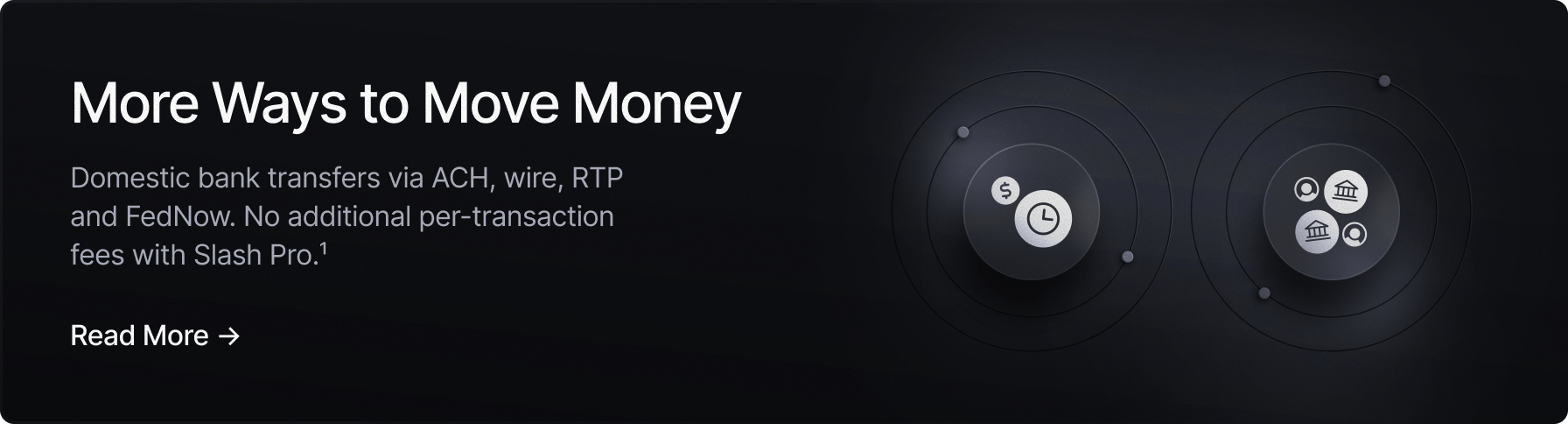
- Diverse payment rails: Slash supports a wide range of payment methods, including card spend, global ACH, international wire transfers to over 180 countries via SWIFT, and real-time domestic payments through RTP and FedNow.
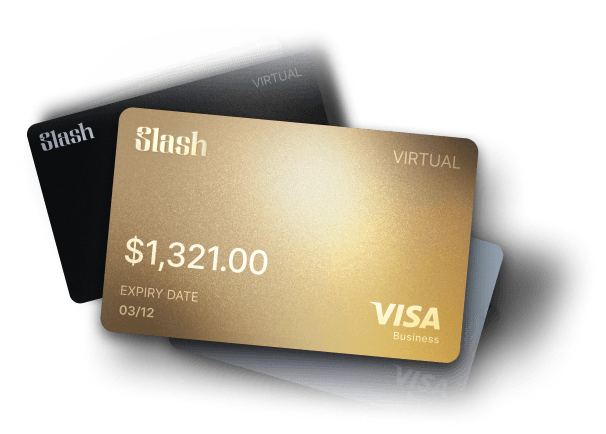
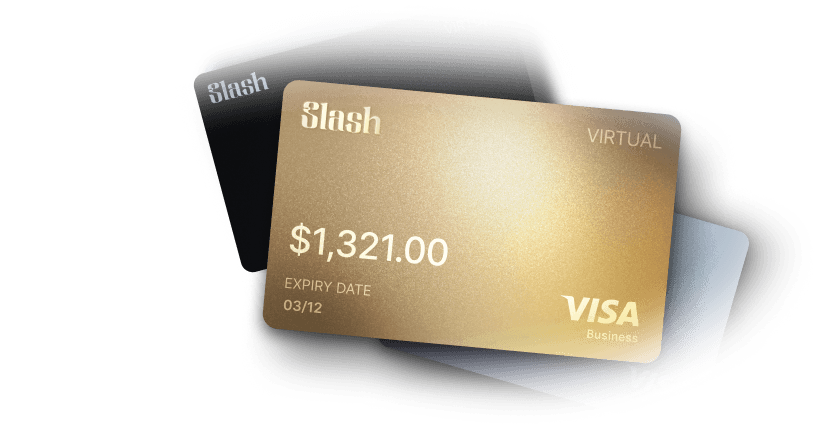
- The Slash Visa® Platinum Card: The Slash Card is a corporate charge card that allows you to set customizable spending controls and issue unlimited virtual cards for handling team expenses, vendor payments, subscriptions, and more. Users can also earn up to 2% cashback on eligible business purchases.
- Native cryptocurrency support: Send and receive USD-pegged stablecoins USDC and USDT across 15 supported blockchains for faster, lower-cost global payments.
- Accounts payable and receivable: Create invoices, track payment status, and collect payments via multiple methods all in your dashboard. For your bills, Slash can parse an uploaded invoice, route each bill for approval, and track its status from pending to paid, so payables don't slip through the cracks.
Strength: You don’t need to pay a monthly subscription fee to access Slash’s impressive range of features, which can’t be said about most business banking alternatives. Their support for stablecoins, working capital financing⁵, and treasury is also a rare combination.
Weakness: At this time, Slash isn’t available for sole proprietors.
SoFi
SoFi’s business platform is called “Big Business Banking.” It’s generally aimed more at enterprise partners, financial institutions, and digital-asset companies than ordinary small businesses. Rather than a typical deposit account, it comes with Enterprise Deposit Accounts, which are high-capacity settlement accounts built for treasury operations and API-driven money movement.
Key Features:
- SoFi Exchange Network (SEN): SoFi Bank offers their own proprietary real-time payment network that can settle payments 24/7/365.
- Stablecoin capabilities: SoFi also issues SoFiUSD and supports institutional stablecoin infrastructure, including settlement through Mastercard’s global payment network. It’s worth noting that digital assets remain separate from insured bank deposits.
- Embedded commercial banking: SoFi Tech Solutions supports a business checking account, savings, virtual and physical commercial cards, credit lines, spending controls, ACH, and other infrastructure that partner companies can build into their own products.
Strength: Users get direct access to a nationally chartered bank that combines fiat and digital-asset infrastructure, and large companies get a lot of tools built for enterprise operations.
Weakness: It’s not a standard self-service account that makes sense for most small businesses. Likely due to the scale of its ideal customer, pricing is custom-quoted and not explicitly published.
Brex
Brex is a finance platform for funded startups and larger companies that need business accounts, corporate cards, travel, bill pay, reimbursements, and expense automation. Its free Essentials plan covers everyday workflows, while Premium costs $12 per user per month and adds advanced policies, compliance reviews, and multi-entity controls.
Key Features:
- Travel and reimbursements: Travel is one of Brex’s strong suits, with features like integrated booking and VAT documentation. Their card rewards are also centered around travel, with up to 7x rewards points on rideshare (but 1x points on most other purchases).
- Global cards and expenses: Brex’s physical and virtual cards connect with travel booking, reimbursements, receipt collection, configurable policies, and AI-assisted compliance reviews.
- Bill pay automation: With Brex, accounts payable teams get quick vendor onboarding, itemized invoice capture, and automated approval routing.
Strength: Brex’s travel and multi-entity capabilities are its strong suits, along with a solid expense management system overall.
Weakness: Brex requires applicants to have at least $50,000 in a business bank account, which can rule out most small businesses and some startups. If you’re a mid-sized company with that kind of capital, you may need to invest in their quoted pricing tier to get things like custom implementation and access to certain policies.
Axos Bank
Axos is a chartered online bank rather than a fintech working through a partner institution. “Basic Business Checking” has no monthly maintenance fee or minimum opening deposit, while “Business Interest Checking” offers up to 1.01% APY and waives its monthly fee with a qualifying balance. Counterintuitively, balances of up to $50,000 get their top APY rate, while balances above that only earn 0.2% APY or less. Usually, accounts that offer APY see rates go up with higher balances rather than down.
Key Features:
- Traditional business banking: Axos users get checking, savings, money-market accounts, CDs, ACH, wires, bill pay, check deposits, and mobile account access.
- Commercial cards: Axos offers a Visa commercial credit card with unlimited 1% cashback and a commercial charge card with tiered rebates of up to 1.75%.
- Accounting connectivity: The platform comes with direct and file-based connections with QuickBooks Online, QuickBooks Desktop, and Quicken. While this is less than you’d get with a fintech, it’s more than most traditional banks.
Strength: Direct relationship with an FDIC-insured bank and straightforward checking options.
Weakness: Axos users get fewer accounting, spend-management, and automation features than digital-native finance platforms.
Ramp
Ramp’s main features are cards and expense management, but they also offer AP/AR, procurement, travel, banking, and investing. Their Free plan costs $0 per user, while Plus costs $15 per user per month plus a team-based platform fee. With a per user pricing plan, costs can get surprisingly high over time as you add more team members into the fold.
Key Features:
- Finance automation: Automated receipt matching, invoice extraction, policy checks, fraud screening, vendor payments, procurement, and customer collection workflows.
- Banking and cash management: Ramp Checking earns a variable 2% APY with no account minimum, while eligible deposits can access up to $190 million in coverage through IntraFi.
- Stablecoins: Ramp’s Stablecoin Account supports USDC and USDT deposits, conversion, bills, card payments, and reimbursements.
Strength: Ramp offers good automation capabilities across their cards, expense tracking, AP/AR, and accounting features.
Weakness: Similar to Brex, U.S. applicants generally need $25,000 in linked business cash, and several advanced capabilities require paid plans. Additionally, the “up to 1.5% cashback” Ramp advertises is more accurately stated as 0%-1.5%.
Mercury
Mercury offers free checking and savings through partner banks, along with other key features like corporate cards and expense management. While most tools are supported for free, paid tiers jump up in price pretty quickly; the Plus Plan with ACH debit invoices and unlimited tax filing costs $35 per month, and a $350/mo Pro Plan adds a relationship manager.
Key Features:
- Free payments: Users get free ACH, domestic wires, USD international wires, checks, and eligible real-time payments.
- Corporate cards: The Mercury IO charge card earns unlimited 1.5% cashback. New customers may begin with daily repayment, while $15,000 in Mercury balances can unlock monthly terms.
- Financial workflows: Mercury offers direct integrations with QuickBooks, Xero, and NetSuite, alongside AI-powered coding, bill pay, invoicing, and Mercury Command.
Strength: Overall, the platform gives you accessible free banking with startup-oriented software and straightforward card rewards.
Weakness: There’s no native stablecoin account or blockchain payments; Mercury accounts hold fiat only.
Make the Right Financial Move With Slash
Most of the platforms we’ve discussed have tradeoffs, such as high minimum balances, a lack of native integrations, and middling cashback. With Slash, you don’t have to make those kinds of compromises.
Slash is an all-in-one business banking platform designed to bring together capabilities that usually get stuck spread across a bunch of different tools. With Slash, business owners can focus on the things that matter while accounting tasks are automated, idle cash earns annualized yield in a Treasury account, and company card expenses earn up to 2% cashback on eligible expenses.
Unlike a SoFi or an Axos that focuses more on traditional checking, Slash makes sure finance teams have all the tools they need to send money quickly, oversee company spending fully, and earn extra capital wherever they can. Here are some other features you’ll get with Slash:
- Working capital financing: Access short-term financing with flexible 30-, 60-, or 90-day repayment terms to help bridge cash flow gaps.
- Enterprise-grade protection: Business accounts are protected up to $200M through Column N.A.'s insured cash sweep network. Approvals and controls are granular down to the individual card, and AI-assisted monitoring flags spend that falls outside your policy.
- Invoicing: With Slash’s invoicing and bill pay features, users can send customized invoices, collect payments, and manage vendor bills all in the same place.
- MCP connections for agents: The Model Context Protocol is an open standard for connecting AI agents to software tools. Through MCP, agents can connect to Slash directly.
- Card controls and spend policies: Issue unlimited virtual and physical cards, set limits by card, team, or individual, and see every transaction post in real time. Slash texts employees for receipts and matches them automatically to transactions. Eligible business spend earns up to 2% cash back with the Slash Visa® Platinum Card.
Apply in less than 10 minutes today
Join the 10,000+ businesses already using Slash.
Frequently Asked Questions
How do fintechs insure deposits above $250,000?
Standard FDIC coverage is $250,000 per depositor, per insured bank, per ownership category. That’s not that high. To get around that limit, fintech platforms can extend it by spreading your balance across many partner banks rather than holding it at one. Sweep networks like IntraFi and the networks run by partner banks such as Column automatically distribute funds in sub-$250,000 chunks, each separately insured, which is how a platform can advertise coverage in the millions or hundreds of millions.
Business Bank Accounts With the Highest FDIC Coverage (2026)

Can I deposit cash with an online business banking platform?
Usually not directly. Some chartered online banks let you deposit cash through an ATM network or a partner retail location, while most fintech platforms have no cash deposit path at all.
Can I use more than one of these platforms at the same time?
Yes, and it’s not uncommon. Some companies pair a primary operating account with a second platform for cards or treasury. The issue can be reconciliation, since two systems feeding one ledger means two sets of rules to maintain and more opportunities for transactions to get miscoded.


