

Which Accounting Software Is Best for Marketing Agencies?
Lots of accounting platforms assume your business sells product. If you buy inventory, you can mark it up, sell it, and let the software track the margin. Marketing agencies don't work that way – they instead sell time, which is hard to account for. A strategist's hour costs the same whether it goes to a client project, an internal pitch, or an intro sales call.
Agencies also handle money that isn't theirs. A shop managing $400,000 a month in client ad spend will have that money travel through its accounts, but none of it is actual income. You’ve also got retainers billed in advance for work delivered later, long-term ad campaigns, and contractors invoicing at different rates. With projects like these, you need to make sure your accounting software is up to the task.
We wrote this article to evaluate the features marketing agencies should look for in accounting platforms, then break down the top five options available today based on their capabilities. We’ll also take a look at Slash, a business banking platform that not only ships with its own accounting tools, but also syncs two-ways with popular apps like QuickBooks and Sage Intacct.¹
Key Takeaways
- Agencies should look for time tracking, project profitability, and flexible billing. Most general accounting platforms gate these features behind mid or top tiers.
- QuickBooks is the only platform on our list with a native markup field for rebilling client costs.
- Zoho Books’ Professional plan is the cheapest way to get timesheets, retainer invoicing, and project profitability in one plan.
- As a platform meant for larger teams, Sage Intacct’s pricing is custom-quoted and module-based.
- While Wave is a good budget option, it has no time tracking, which may be a hard limit for a business that sells hours.
Key Features of Accounting Software for Marketing Agencies
As advertising firms evaluate different accounting options, they should remember that a wide feature list won’t necessarily align with their needs. For example, an ERP-sized platform may let you look at profitability ratios and inventory margins, but these aren’t going to help teams that run digital ads and bill by the hour. Here are some of the capabilities that do matter:
Time Tracking
Since time is more-or-less the product for a marketing agency, tracking it is a sort of inventory management. Without a reliable record of who worked on what, you can't truly calculate the cost of delivering a project.
Good time tracking tools can capture hours spent on specific clients and projects, separate billable work from non-billable work, and apply a cost rate for the person alongside the client’s bill rate. They should identify “utilization”, which refers to the share of available hours that turned into billable work. That number explains most of the difference between a busy agency and a profitable one. Time entry should also be pretty seamless, for the sake of both your team’s sanity and the accuracy of the numbers.
Project Billing
Agencies bill in more different ways than most companies. A single client might be charged through hourly overflow work, a monthly retainer, a fixed-fee project, or a pass-through arrangement for media spend. If your software only handles one or two of these, you’ll have to find workarounds for the others.
Essentially, you want to be able to invoice against any of those structures without rebuilding the invoice by hand. This means looking for retainer invoices that generate themselves, milestone billing tied to deliverables, and a clean way to rebill client costs like ad spend with or without a markup. Retainers also raise a revenue recognition issue, since money collected in January for work delivered in March isn't January revenue. However, a lot of accounting software treats it that way.
Built-in Integrations
Oftentimes, an agency's financial data starts in other systems. Hours live in a project management tool, ad spend lives on a card statement, client payments land in a bank account, and contractor payments are all by themselves on their respective rails. The more of these actions you connect, the better.
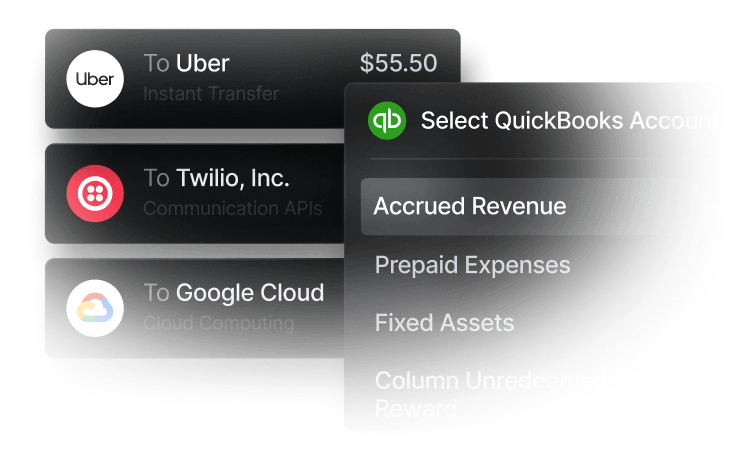
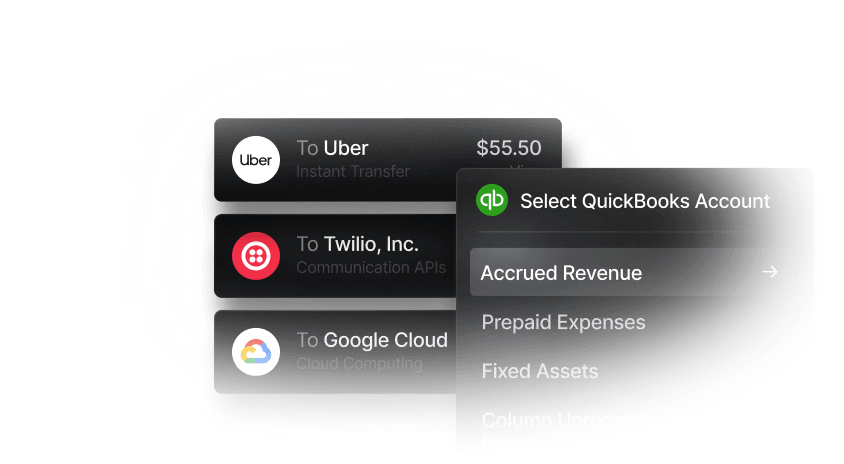
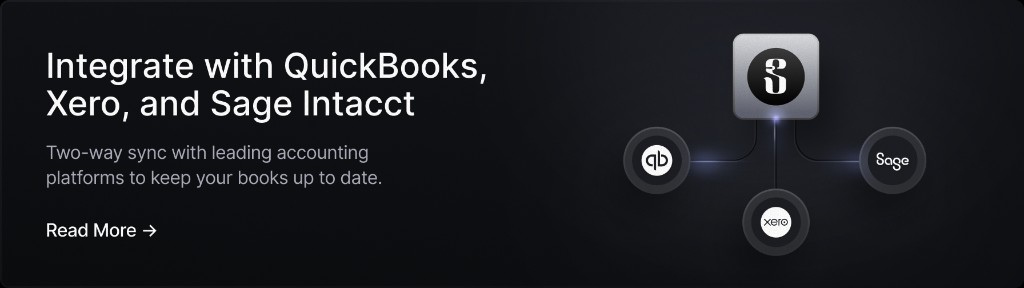
The integrations that matter most center around money and time. When your project tool and your ledger are connected, hours can flow through without export files. A bank and card feed should be linked and able to automatically categorize transactions. Slash, for instance, is a business banking platform that integrates with QuickBooks Online, NetSuite, Sage Intacct, and Xero. Agencies can track time in a dedicated accounting app, create a bill and accept the payment for that bill within Slash, then sync that transaction back to their accounting software.
Reporting and Analytics
While standard financial reports tell you whether a business made money, agency reporting should tell you where it came from and where it went. In other words, profitability would be broken out by client and project, so you can see which relationships subsidize others. It should be able to tell you realization rates, letting you know how much of the work you did actually got billed and collected. Your software should also show whether a client is consuming more hours than their fee covers, which is known as “retainer burn”.
Another factor that matters for agencies in particular is cash flow reporting. You pay people (and often ad platforms) before clients pay you, so a profitable agency can still end up running short of cash. To help with these scenarios, Slash comes with an agentic AI assistant named Twin that can be prompted to dive into your financial data and produce cash flow forecasts and chart-based reports.
Automated Tools
You might be surprised at how many accounting processes can be automated, even within a busy marketing agency. Recurring invoices for retainer clients, reminders on overdue ones, transaction categorization, receipt capture, and approval routing can all be handled by automated or machine-learning tools on certain platforms. Figure out what manual processes your team spends the most time on, and keep an eye out for accounting solutions that manage them for you.
Top Accounting Software Options for Marketing Agencies
We’ve put together a list of five accounting platforms that marketing agencies may want to shortlist as they shop for a solution. Overall, we made our choices based on capabilities, prices, and relation to marketing needs. Let’s dive in:
QuickBooks Online
QuickBooks is one of the most popular accounting solutions around, for both agencies and other types of businesses. Outside of its lightweight free tier, QuickBooks offers four tiers from Simple Start at $38 a month to Advanced at $275. Basic time tracking starts at the $75/mo Essentials tier, which also allows users who don't consume a paid seat to be tracked. The $115/mo Plus tier includes project profitability.
- Strength: QuickBooks Online is the only platform here with a native markup field on billable expenses. You can record a client cost, set a markup percentage, and rebill it without rebuilding the line by hand.
- Weakness: Unless you pay for the Advanced tier, you’ll be capped at 40 classes & locations and 250 active accounts in your chart of accounts.
Xero
Xero is a cloud-based accounting software platform largely made for small and medium-sized businesses. Its plans are Early at $25, Growing at $55, and Established at $90. However, it’s important to note that they’ll tick up a little on October 1st, 2026, rising to $27, $59, and $97. Time tracking and project profitability live in Xero Projects, which is included only with Established.
- Strength: No per-seat costs, a large integration ecosystem, and a project module reporting revenue, expenses, tracked time, and margin per project on the Established tier.
- Weakness: There's no markup field on billable expenses, which can be frustrating for agencies that want to stay flexible.
Zoho Books
As one of the cheapest options on the list, Zoho Books prices per organization rather than per user, starting with a free tier for businesses under $50,000 in annual revenue, then Standard at $20 a month billed annually, Professional at $50, and Premium at $70. For marketing agencies, Professional is the tier that matters, coming with timesheets, billable hours, project budgeting, project profitability, and retainer invoices in one step. Extra users are $2.50-$3 a month, depending on whether you’re billed annually or monthly.
- Strength: For roughly $50 a month, a ten-person agency can get access to time tracking, retainer invoicing, and project profitability.
- Weakness: If you want good reporting, you’ll have to pay a little extra. Professional caps custom reports at 25, with the report builder and cash flow forecasting gated to Premium. Revenue recognition isn't available below Premium.
Sage Intacct
Sage Intacct is likely the best fit for mid-sized marketing agencies. It’s the only platform among these five that runs billing and revenue recognition as separate schedules off one contract, which can help with retainers. Additionally, Sage’s prices are custom-quoted by module on an annual subscription, which is a sign they might not be the cheapest. Its agency-relevant pieces (project accounting, project costing and billing, Sage Intelligent Time, revenue recognition) are extended capabilities, which means you may have to discuss them within the sales conversation.
- Strength: Dimensions are Sage’s strong suit. Instead of encoding client, project, and department into the account number, you can tag transactions and slice reports by any combination. It also comes with a total of 19 utilization, realization, and profitability metrics.
- Weakness: With an implementation time of around 3-6 months and a custom pricing structure, it’s not a good fit for small teams without strong revenue.
Wave
On the other side of the spectrum is Wave, which comes with a fairly robust free tier. The $0 Starter plan includes unlimited invoices, estimates, bills, and double-entry bookkeeping, which may be enough for some lean marketing teams. Its Pro plan is only $190 a year, and adds bank feeds, receipt scanning, and the ability to add unlimited users. “Tags”, a Pro-exclusive Xero feature that labels transactions by client or campaign and reports profit per tag, can also be helpful for marketing teams.
- Strength: Their Starter plan essentially gets you real bookkeeping for free, and ~$16 a month for bank feeds, receipt capture, unlimited users, and per-client profit is just as good a deal.
- Weakness: Wave’s main drawback is its lack of time tracking, which can be a dealbreaker depending on your needs.
Manage Every Aspect of Your Marketing Agency With Slash
While Slash isn't a purpose-built accounting software in and of itself, it's a modern banking platform that comes with accounts payable/accounts receivable features and syncs with QuickBooks Online, Xero, Sage Intacct, and NetSuite. For marketing agencies, that means the hours tracked and invoiced through a time-tracking or accounting system can connect to a broader financial workflow. Client payments flow into Slash, bills and other obligations can be managed in one place, and bank and card activity syncs with the agency’s general ledger.
Slash can also help agencies better understand and control the costs behind their client work. Teams can issue unlimited virtual and physical Slash Cards for specific employees, departments, clients, or campaigns, each of which can come with their own individual restrictions and controls. Additionally, eligible expenses made with the Slash Visa® Platinum Card can earn up to 2% cash back.
You can also attach receipts and accounting categories to transactions as they occur. When those expenses sync to your accounting platform alongside your client’s revenue, you can get a clearer view of project profitability, reimbursable expenses, media spend, and software costs.
Slash comes with quite a few more features that can help marketing agencies, including:
- Working capital financing: Access short-term financing with flexible 30-, 60-, or 90-day repayment terms to help bridge cash flow gaps.⁵
- Global USD: The Slash Global USD account is designed as an alternative for foreign founders who want access to USD without forming a US entity.³ Accounts are backed on Base by a balance held in USDC, which is designed to maintain a one-to-one value with the US dollar.
- Native cryptocurrency support: Send and receive USD-pegged stablecoins USDC and USDT across eight supported blockchains for faster, lower-cost global payments.⁴
- AI-powered finance: Our platform comes with Twin, a built-in AI agent that can be prompted with natural language to complete complex tasks. Users can ask it to create cards, pay invoices, review your cash flow, and a lot more.
- Business banking: FDIC-insured business checking, protected up to $150M through Column N.A.'s insured cash sweep network.²
Apply in less than 10 minutes today
Join the 10,000+ businesses already using Slash.
Frequently Asked Questions
Do I need separate time tracking software?
Only if your accounting platform doesn't include it, which is common at lower tiers and the main problem with Wave. The problem is that you’ll have hours and dollars living in different systems, so it’s not ideal.
When should an agency move off entry-level accounting software?
If you have multiple legal entities, retainer revenue large enough that recognition timing moves your reported numbers, or a chart of accounts that’s tough to handle because you should actually be using dimensions. Those are just the specific examples, though – overall, if your manual processes are getting too challenging and taking too much time, it might be time to consider an upgrade.
The Top 6 Enterprise Resource Planning Software in 2026

Do any of these 5 accounting solutions charge per user?
Zoho Books is the only one that charges per user, and even then, that’s not quite its structure. It prices per organization, but each tier includes a fixed number of users (3 on Standard, 5 on Professional, 10 on Premium) and extra seats are $2.50 a month on annual billing or $3 monthly.


