

1099-NEC Forms: What They Are and How They Work
The freelance economy has arrived. According to Upwork's Future Workforce Index, 38% of American workers are doing independent work in some capacity in 2026, which is a massive jump from the 28% measured in 2025. As part of IRS law, once these workers pass a certain threshold of income, they earn themselves a 1099-NEC form.
1099 forms are a core part of being an independent contractor, but the rules that surround them can be a little tricky. If you're a business owner employing freelance workers, you also need to know when to issue them and who to issue them to. Mistakes made on either side of the equation can invite penalties and audits from the IRS.
We wrote this guide to help explain 1099 forms to both the independent contractors that need to receive them and the businesses that need to send them. In this article, you'll learn what 1099 forms are, how businesses should issue them correctly, and some common mistakes to avoid when filing. If you're a business owner, it can be even tougher to fill out your 1099s if you haven't been accurately tracking your contractor payments. Business banking platforms like Slash, which serves businesses registered as an LLC or corporation, give you deep visibility into your money movement, allowing you to see transfers in real time and search through payments made months in the past.¹
The standard in finance
Slash goes above with better controls, better rewards, and better support for your business.
Key Takeaways
- Businesses send 1099-NEC forms to freelancers and independent contractors that they pay more than $2,000 to over a full tax year
- 1099-NEC forms are due on January 31 of each year
- In order to accurately fill these forms out, businesses should consistently track payments made to their contractors
- Mistakes made when filing these forms can result in penalties levied to both the business and the worker
What is a 1099 Form?
A 1099-NEC form is an IRS return form used to report income that isn't paid through standard employment. While a W-2 form documents wages paid by a legal employer, a 1099 documents payments made to contractors and freelancers who operate independently. While the businesses who issue these forms aren't technically employing their contractors, we'll be referring to them as employers throughout this article for the sake of simplicity.
Once the tax year begins to wrap up, the employer files the 1099 with the IRS and sends a copy to the worker, meaning both parties and the government all get a record of the income. These forms are the main way freelancers and contractors track their income. Because they don't have an employer that's withholding taxes on their behalf, contractors are responsible for reporting that income and paying self-employment tax.
Businesses have to issue 1099s to any non-employees who received $2,000 or more in payments during the tax year. For a long time, the threshold for these payments was $600, but the 2026 tax year saw the ceiling raise to $2,000. While this doesn't impact many full-time contractors, it may have an effect on workers that take freelance jobs through sites like Fiverr.
One more note: there are actually over 20 types of 1099 forms. The form we're discussing in this guide is Form 1099-NEC, which covers nonemployee compensation and tends to be the most commonly used. A couple 1099s you may also run into include:
- Form 1099-MISC (Miscellaneous Information): 1099-MISC covers things like rent, royalties, awards, medical/healthcare payments, and fees paid to attorneys for legal settlements.
- Form 1099-INT (Interest Income): 1099-INT reports interest income paid to you by banks, credit unions, or other financial institutions during the tax year. Once that income surpasses the threshold of $10, you'll receive a 1099-INT.
What is an independent contractor?
Perhaps you've been reading this without knowing for sure if you're considered an independent contractor or not. An independent contractor is a self-employed individual or business entity hired to perform specific services without being treated as an employee. Contractors often use their own tools and equipment, set their own schedule, and send invoices for their services. As a result, they're responsible for their own tax payments.
Some common examples include freelance writers and designers, software developers, marketing consultants, accountants offering bookkeeping services, legal professionals, and tradespeople. You can also be a contractor if you own business entities like single-member LLCs or sole proprietorships.
Businesses might want to hire contractors for a few reasons. They could be pushing a new product that requires extra marketing and sales manpower, or they might be starting a project that requires specialized expertise. Companies may also hire a full-time worker under the label of "contractor" to save a little money on benefits and taxes (which is not a recommended tactic). In any case, businesses need to make sure they correctly classify their workers during tax season in order to avoid penalties.
1099 Reporting Requirements
Figuring out who must file a 1099-NEC form, why, and when, can be confusing. A 1099 form needs to be issued when all of the following conditions are checked off:
- The payment was made to a non-employee, which can include an individual, sole proprietor, partnership, or single-member LLC
- The payment was for services rendered in connection with the business
- The total paid to that person during the calendar year exceeded the threshold of $2,000 (as of tax year 2026)
- The payment was made via cash, check, or direct deposit/ACH rather than credit card, debit card, or a third-party payment processor
Form 1099-NEC is due to both the worker and to the IRS by January 31, regardless of whether it's sent in the mail or filed online. From there, the independent contractor uses the information found on the form to fill out their Schedule C and include it in their tax returns by April 15.
Filling Out the 1099 Form
Before even thinking about a 1099-NEC, you need your contractors to complete Form W-9 when they're brought on board. The W-9 collects the contractor's legal name, address, business classification, and taxpayer identification number (which is either an EIN or Social Security number). Per U.S. law, completed W-9s must be kept on file for at least three years.
After that's all set, you can use the information from the W-9 to help fill out the 1099 form at the end of the tax year. Here's how to complete a 1099-NEC form in full:
- Track payments throughout the year: Record every payment you make to a contractor, including the rail. Payments made via card or through third-party processors don't require a 1099, while payments made through other methods do. If your business is registered as an LLC or corporation, a platform like Slash records your past payments automatically and keeps them identifiable by rail, which makes this step simple.
- Confirm the total meets the threshold: At the end of the year, add up all payments for that contractor to see if the total reaches the $2,000 threshold. If it doesn't, your journey ends here.
- Fill in the employer's information: Enter your business name, address, and EIN in the designated boxes on the form.
- Fill in the recipient's information: Enter the contractor's legal name, address, and TIN exactly as they appear on the W-9.
- Enter the payment amount: Include the total sum of all qualifying payments in Box 1.
- Send copies and file with the IRS: After you're done, you'll have a Copy A and a Copy B. By January 31, Copy B needs to be sent to the contractor and Copy A needs to be filed with the IRS.
Common Mistakes in 1099 Reporting
As we all know, making mistakes when filing information with the IRS can result in some big problems. When it comes to 1099-NEC forms, errors made along the way can also impact the corresponding freelancer. Here are some mistakes you should watch out for as you fill out and send your 1099s:
- Misclassification of workers: When you want someone to work 40 hours a week, you should hire them as a W-2 employee rather than a contractor. If you set their hours, direct how their work is performed, and supply their equipment, that relationship looks like standard employment even if their contract calls them a freelancer. The IRS can tell. In these cases, the business faces penalties and the freelancer's entitled to reclaim unpaid benefits and back pay through a labor claim.
- Issuing a 1099 for payments made via card or PayPal: If you paid a contractor through a credit card, debit card, or third-party payment processor (like Stripe or Paypal), you don't actually need to issue a 1099-NEC. The processor handles the reporting through Form 1099-K. If you do send a 1099-NEC, the contractor will have a duplicate form and they'll likely end up with problems when they try to file their return.
- Missing or incorrect information: If you forget to collect the W-9, report a name that's different from the contractor's legal name, or write the TIN incorrectly, you'll end up with processing errors and potential penalties.
- Not filing timely: Last but not least, always make sure to file the 1099 before the January 31 deadline. Missing the deadline affects both you and your contractor, since they'll need the form to file their own taxes.
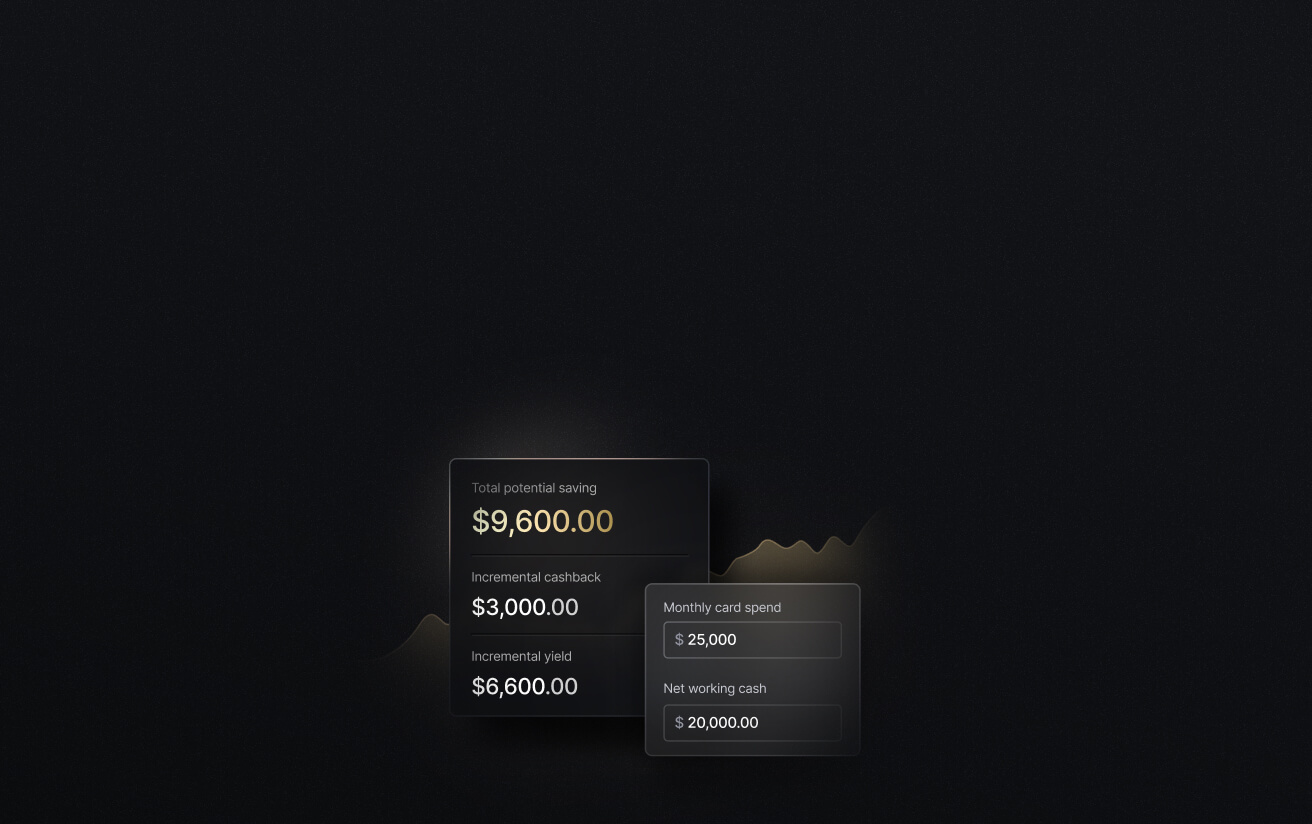
See the ROI behind your spend
Use this calculator to understand impact, then manage and track it all in Slash.

Consequences of Non-Compliance
Some penalties are specific to certain mistakes, while others vary based on context and severity. For example, if there's a mismatch between the contractor's W9 and their true information, 24% of their pay is withheld until the discrepancy gets fixed. If they later receive a 1099 that overstates their income, the contractor has to document the discrepancy themselves unless they're issued a corrected form.
Filing a 1099 after January 31 incurs a $60 penalty, which jumps to a $130 penalty if it's more than a month late. In some completely irresponsible scenario where you file more than 6 months late, the penalty can reach $680.
Beyond the direct financial penalties, failure to file 1099s can cost a business its deductions. If the IRS reviews your returns and discovers that you paid contractors without filing the required 1099s, you likely won't be able to deduct those contractor payments as business expenses. That means you'll end up paying taxes on income you already spent.
The IRS also has the right to audit businesses and contractors whose 1099s have suspicious or inaccurate information. If a contractor's self-reported income doesn't match the 1099s filed on their behalf, the IRS might come knocking. To avoid any and all of these consequences, make sure you file everything accurately and on time.
How Slash Can Help Businesses Manage Their Contractor Payments
Ultimately, filling out a 1099-NEC can be one of the easiest parts of wrapping everything up at the end of the tax year. As long as you have clean records of who you paid, how much, and by what rail, you'll be all set. The problem is that a year's worth of payment information can be hard to put together in a short time, especially if you're working with messy spreadsheets and a handful of different programs.
If your business is registered as an LLC or corporation, Slash can put all that data right at your fingertips. Slash is a business banking platform that centralizes payments, invoices, accounting integrations, and more in the same place as your business checking account. If you want to see how much you've paid a contractor throughout the year, you can scroll through your payment history to find out how much you paid them and through what method.
That said, we know searching through payments can be tedious if you're running a busy company. That's why we have Twin. Twin is Slash's AI financial assistant, and it can be prompted to scan your payment history for you and pick out payments made to a certain account. You can also use Twin to manage corporate cards, run purchasing end to end within your approval rules, and a lot more.
Along with these features, Slash also offers:
- Diverse payment rails: Slash supports a wide range of payment methods, including card spend, global ACH, international wire transfers to over 180 countries via SWIFT, and real-time domestic payments through RTP and FedNow.
- Slash Visa® Platinum Card: The Slash Card is a corporate charge card that allows you to set customizable spending controls and issue unlimited virtual cards for handling team expenses, vendor payments, subscriptions, and more. Users can also earn up to 2% cash back on business purchases.
- Working capital financing: Access short-term financing with flexible 30-, 60-, or 90-day repayment terms to help bridge cash flow gaps, subject to eligibility and approval.⁵
- Invoicing features: With Slash's invoicing and bill pay features, users can send customized invoices, collect payments, and manage vendor bills all in the same place.
- Separate virtual accounts: Create multiple business checking accounts to silo cash flows by project, department, or client with real-time analytics across each of them.
1099-NEC forms shouldn't be a challenge for you or your contractors. If your business is set up as an LLC or corporation and you want to keep payment tracking simple, get in touch with Slash today.
Apply in less than 10 minutes today
Join the 10,000+ businesses already using Slash.
Frequently Asked Questions
Do independent contractors have to pay taxes on 1099 income?
Definitely. All income reported on a 1099 is taxable, and contractors are responsible for reporting it on their federal and state tax returns. Unlike W-2 employees, contractors don't have taxes withheld from their payments, which means they owe both income tax and self-employment tax. Some contractors pay their estimated taxes quarterly to keep things organized and avoid potential underpayment penalties later on.
What Are Non-Deductible Expenses? IRS Rules & Examples

What's the 1099 filing threshold for 2026?
For the 2026 tax year, the reporting threshold for Forms 1099-NEC, 1099-MISC, and 1099-K has increased to $2,000 as part of changes made in the "One Big Beautiful Bill". Before 2026, the threshold was $600.
When do I need to issue a 1099-NEC, and to whom?
You'll issue a 1099-NEC any time you pay a non-employee $2,000 or more for services connected to your business in a calendar year. The form must be sent to the worker and filed with the IRS by January 31. The contractor then uses it to complete Schedule C and file their own return by April 15.
Do I need to issue a 1099 to an LLC?
Sometimes, depending on how the LLC is taxed. A single-member LLC that hasn't elected corporate tax treatment is taxed as a sole proprietorship, and a multi-member LLC without a corporate election is taxed as a partnership. They both get 1099s. However, you usually don't need to issue a 1099 to an LLC that's taxed as a corporation. If you have no idea how the LLC you work with gets taxed, it should be listed on the W-9 they provided.
Choosing an LLC Type: Complete Guide for Businesses


