


Comparing the 6 Top Business Card Options for Small Businesses
There are a lot of business cards out there. Some offer rewards on high-impact spending categories, some come with full-fledged dashboards for managing cards across a team, and a few are tuned to specific industries like logistics or ecommerce. Narrowing down which card makes the most sense for your small business can be hard, especially when plenty of options sound appealing but end up being the wrong fit.
In this guide, we're comparing some of our top business card picks for small businesses. These are cards that don't require high balances in your business account to qualify, and that offer rewards and tools to help with managing small teams, handling your finances yourself, or simply earning better cash back on your spending.
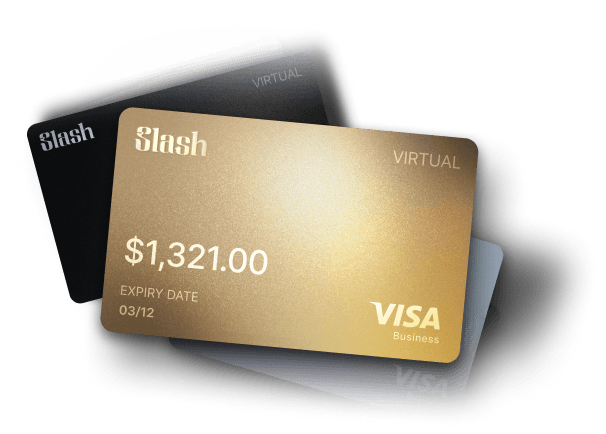
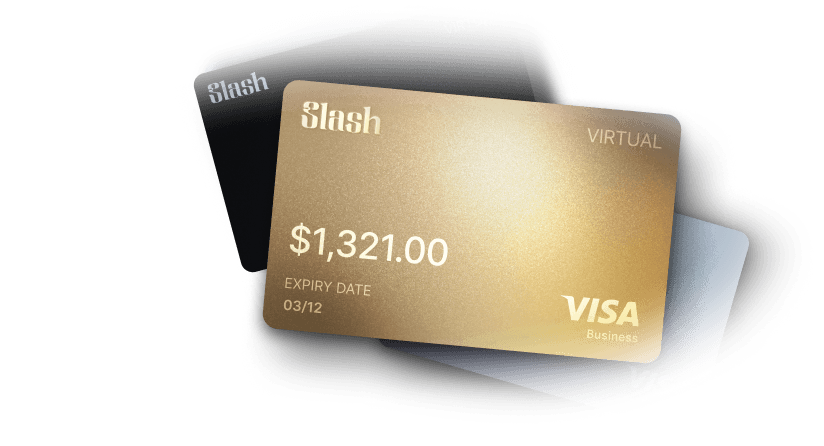
We'll also explain the practical advantages and rewards-earning potential of the Slash Visa® Platinum Card, which comes with Slash's business banking platform.¹ The Slash Card earns up to 2% cash back on eligible business spending, with granular card controls that let you set rules and limits for different teams, departments, or individual employees. Along with cards, Slash includes tools for invoicing, bill pay, treasury management, and more, so you can run your small business's entire financial operations from a single system.⁶
Quick Overview: Top Business Cards for Small Businesses
What is a Business Card, and Why Does it Matter?
A business card is a credit or charge card issued to a business rather than to an individual. Owners and employees use it to pay for company expenses: supplies, software, travel, advertising, inventory, and the everyday costs of running the operation.
The card account belongs to the business, even though a person's name usually appears on the physical card; that separation is important, because it creates what’s called the corporate veil. The corporate veil is the colloquial term for a legal doctrine that separates the identity of a corporation or LLC from its owners. It protects shareholders and members from personal liability, meaning their personal assets are generally shielded from business debts, lawsuits, and obligations. However, business cards requiring a personal guarantee can still make owners personally liable for repaying outstanding debts.
There are additional benefits besides legal protections, too. Clean separation between business and personal finances can make bookkeeping faster, since you are not sorting through a single statement trying to remember which charges were for the company. It can make tax preparation more straightforward, since your deductible expenses are already grouped in one place. And it gives your finance and HR teams a clearer audit trail when they need to verify who spent what, and why. For a small business, that clarity can save hours every month and reduce the risk of errors during tax season or an audit.
What Are the Different Types of Business Cards?
Small businesses can choose from several types of business cards, and the right one depends on how your company manages cash flow, what rewards you value, and how much control you need over employee spending. The categories below cover the main options, and they differ mainly in how you repay balances and how hard they are to qualify for:
Business credit cards
Credit cards allow you to carry a balance from month to month, with interest (the APR) that applies to anything you do not pay off. Credit cards can offer flexibility when cash flow is uneven, though carrying a high balance can quickly get expensive if you’re accruing interest fees. Many business credit cards also require a personal guarantee, which makes the business owner personally liable for covering any outstanding balance in the event that the business fails.
Business charge cards
Charge cards are paid in full at the end of each billing cycle rather than carried as a revolving balance. Charge cards from fintech providers like Slash offer some benefits that credit cards often don't. Slash underwrites by looking at revenue or cash flow rather than the owner's personal credit, which can help owners who have strong cash flow but not a long credit history. The Slash card also requires no personal guarantee, and it earns up to 2% cash back on purchases.
Secured business cards
A secured card works by requiring a refundable cash deposit, usually equal to your credit limit, which the issuer holds as collateral. In exchange, you can get approved when an unsecured card would turn you down, and your on-time payments are reported to the credit bureaus, which builds a business credit history over time. Though secured cards can be a great entry point, there are some major tradeoffs: the deposit ties up cash you could otherwise use, limits tend to be low, and rewards are usually minimal or absent.
The 6 Top Business Cards for Small Business Owners in 2026
The cards below cover a range of needs, from full business banking platforms to straightforward cash-back cards. The right fit depends on how much you spend, what you spend it on, and how your team operates.
Slash Visa Platinum Card
Slash is a business banking platform built for small to mid-sized companies with high monthly spend and growing teams. Instead of a standalone card, Slash combines FDIC-insured checking, treasury, and expense tools in one place, so banking and spending live on a single dashboard.²
- Up to 2% cash back on eligible purchases
- EIN-only application, no personal guarantee required
- Unlimited virtual and physical cards, each with its own spending controls
- Receipts captured by text and automatic syncing to QuickBooks, Xero, Sage Intacct, and NetSuite
- Multi-entity controls and finance APIs for growing teams
- 24/7 support
American Express Business Gold Card
The Amex Business Gold Card is a business charge card aimed at established businesses that spend heavily in a handful of categories like travel, advertising and software.
- Rewards come as Membership Rewards points rather than cash back
- Bonus earning is limited to a capped set of categories, so the value depends on your spending matching them
- $375 annual fee
- Statement credits require enrollment and apply only at specific merchants+
Chase Ink Business Preferred Credit Card
Chase's Ink Business Preferred earns across a range of everyday business categories, which tends to fit online businesses and agencies with regular ad, shipping, and phone spend.
- Bonus rewards are points, capped each year and tied to specific categories
- Points reach their highest value mainly when redeemed for travel through Chase
- $95 annual fee
- Includes purchase protection and cell phone coverage
Capital One Spark Cash Plus
The Spark Cash Plus is a flat-rate business charge card for businesses that prefer not to track categories.
- Flat cash back with no bonus categories to manage
- $150 annual fee, refunded only in a year when you spend at least $150,000
- No preset spending limit, which can move up or down based on your profile
- Cash back stays as cash and cannot be moved to travel partners
Bank of America Business Advantage Customized Cash Rewards
BofA Customized Cash Rewards is a credit card geared toward businesses that already keep their accounts with Bank of America.
- No annual fee
- The top earning rates apply only to the first $50,000 in combined purchases per year, then drop
- The highest rates require enrolling in Preferred Rewards for Business, which depends on balances held at the bank
Stripe Corporate Card
The Stripe Corporate Card is a business charge card designed for online businesses and SaaS companies already using Stripe to process payments.
- No annual fee
- Built mainly for companies already inside the Stripe ecosystem
- Cash back is paid only as a statement credit and is not transferable
- No traditional travel protections or perks
Key Factors to Consider When Choosing a Business Card
Choosing the right card is part of running the business well, and the best choice matches how your company spends, pays partners, and manages team expenses. A few factors deserve a close look before you apply:
Credit limits and underwriting
Many cards still expect a certain amount of annual revenue or a year or two in business. Newer companies without that history are not shut out: some cards approve you on a personal guarantee, and several fintech platforms underwrite on your cash flow instead, which can open the door earlier.
Rewards structure
Cards generally pay you back in cash, points, or travel. Cash back is simple and predictable, while points and travel rewards can be worth more if you use them well but take more effort to manage. Tie the choice to where your money actually goes, whether that is ad spend, software subscriptions, travel, or inventory.
Fees and pricing
Look beyond the annual fee at foreign transaction fees, late fees, and interest rates. If your margins are thin, model the total cost against the rewards you expect to earn. A card with a high fee only makes sense when its rewards clearly outweigh it.
Spend controls
If you issue cards to employees, check that you can set a limit on each card, require receipts, and tie spending to your HR and payroll policies. These controls make onboarding and offboarding easier and keep spending within bounds.
Software integrations
Confirm the card connects directly to the tools you use, such as QuickBooks, Xero, or NetSuite, along with any expense or HR software. Direct syncing saves your team from manual data entry. Slash provides native integration with several leading accounting platforms, as well as API configurability to connect it with the rest of your stack.
Security
Practical protections matter. Look for virtual cards that utilize tokenization, configurable category and merchant limits to prevent maverick spend, and real-time alerts. A virtual card assigned to a single vendor, for instance, limits the damage if that vendor's systems are compromised.
Best Practices for Managing Business Card Spend
Even the best card creates risk if no one is watching how it gets used. A few habits keep spending under control as your team grows:
- Set limits by role, not by person: Set card limits by role and function rather than by individual. When you tie a limit to a job instead of a name, onboarding a new hire or removing someone who leaves becomes a quick change instead of a rebuild.
- Review transactions on a schedule: Review transactions on a regular schedule, weekly or every two weeks, and turn on automated alerts for unusual merchants, foreign transactions, or charges above a set amount. Catching an odd charge within days, rather than at the end of the month, limits the fallout.
- Require receipts and memos: Require a receipt and a short memo for every transaction. It feels like a small thing, but it makes accounting, tax preparation, and any future audit far less painful, because the context is captured while it is fresh.
- Use virtual cards for vendors and subscriptions: Use virtual cards for vendors and subscriptions wherever you can. Assigning a separate card number to each recurring vendor means you can shut one off without disrupting the rest, and it reduces your exposure if a vendor is breached.
- Re-evaluate your cards every year: Re-evaluate your cards at least once a year. Rewards, terms, and software features change, and so does your business. A card that fit when you had three employees may not be the right fit when you have thirty.
Simplify Small Business Spending with Slash
Most of the cards here are good at one thing. Some pay strong rewards in a category or two, others come with the controls and dashboards a growing team needs, and a few are shaped around how a particular kind of business spends. The catch is that a single card rarely does all of it. You can end up with rewards on one platform, expense controls on another, and your actual banking somewhere else, which means more logins, more reconciliation, and more room for something to slip through.
Slash is different. Beyond earning up to 2% cash back on eligible business spending, it pairs the card with a business banking platform, so your checking, cards, and spending controls all live in one place. You can set rules and limits by team, department, or individual, issue virtual and physical cards as you need them, and capture receipts and sync transactions to accounting tools without manual entry. Add invoicing, bill pay, and domestic and international payments, and you have a single system for running your small business's finances rather than a stack of disconnected accounts.
Here are some other Slash features that can optimize how your small business manages its money:
- Real-time cash flow visibility: Track inflows, outflows, and account balances in real time. See your largest cost centers at a glance. Ask Twin, Slash’s AI financial assistant, to analyze your finances for you, giving easy-to-understand explanations about your metrics and graphical representations.
- Expense management: Streamline expense reporting with end-to-end SMS receipt collection for Slash cards, simple reimbursement flows, and automatic accounting updates.
- Accounting integrations: Connect Slash with QuickBooks, Xero, Netsuite or Sage Intacct so your transaction data flows directly into your books, already categorized and ready for reconciliation.
- Working capital financing: Access short-term financing with flexible 30-, 60-, or 90-day repayment terms to help bridge cash flow gaps.⁵
- High-yield treasury accounts: Earn up to 3.75% annualized yield on idle funds through money market investments managed by BlackRock and Morgan Stanley directly in your Slash account.
Apply in less than 10 minutes today
Join the 10,000+ businesses already using Slash.
Frequently Asked Questions
Can you get a business card without a long credit history?
Yes. Many issuers, especially fintech platforms, look at your current business financials and cash flow rather than years of credit history, and some approve you on a personal guarantee instead. A secured card is another option, since the cash deposit lowers the issuer's risk while you build a track record.
What is the difference between a business credit card and a charge card?
A credit card lets you carry a balance from month to month, with interest charged on anything you don't pay off. A charge card is paid in full each billing cycle, so you avoid revolving interest, but the full balance comes due every month.
Charge Card vs Credit Card: 6 Key Differences You Should Know

Do business cards require a personal guarantee?
Many do, which means you are personally responsible if the business cannot repay the balance. Some cards underwrite on the business alone, though. The Slash card, for instance, requires no personal guarantee.
Business Credit Cards With No Personal Guarantee: Top Picks and How To Apply
Read more from us


