

B2B Real-time Payments: Key Benefits and Best Use Cases
Sending B2B payments can become an unexpected obstacle as companies scale. Between ACH payments that can take days to settle, wire transfers with high fees, and antiquated paper checks, it can be tough to find a great solution for sending and receiving large volumes of money. To solve this problem, some companies are exploring a relatively new alternative known as real-time payments.
Real-time payments are a transfer method that enables near-instant money movement between bank accounts. Through specialized payment networks that operate 24/7, modern companies can send and receive money at a faster speed and lower price than traditional methods offer. This can unlock a more optimized cash flow, quicker reconciliation cycle, and even better relationships with vendors and business partners.
In this guide, we’ll discuss how real-time payments work, the networks that support them, and the scenarios where near-instant payments can deliver the most value. We’ll also take a look at Slash, a neobank that supports real-time payments through RTP and FedNow, along with global ACH, international wire transfers, and cryptocurrency.¹, ⁴ No matter the method, all transfers and payments are instantly displayed and categorized on the Slash dashboard.
The standard in finance
Slash goes above with better controls, better rewards, and better support for your business.

What are B2B Real-Time Payments?
Real-time payments are transfers that move funds between bank accounts near-instantly, with no batch windows or cutoff times. Companies can utilize real-time payments to send money to suppliers and business partners 24/7, 365 days a year – holidays included. Once initiated, funds are immediately made available to the recipient.
More than 80 real-time payment networks have been developed around the world, mostly operating domestically within individual countries. The U.S. has created two of its own real-time networks: the aptly-named RTP network, launched in 2017 by The Clearing House, and FedNow, launched in 2023 by the Federal Reserve.
When it comes to B2B payment processing, these two networks are rather similar. Both settle payments within seconds, allow transfers of up to $10 million, and come with a $0.045 fee per credit transfer. Most large banks support RTP and FedNow, but some smaller credit unions may only work with one or neither. The main difference is in the entities that run them, as the RTP network is privately managed, while FedNow is a public project backed by the U.S. government.
All U.S.-based real-time payments are connected to either the RTP or FedNow network. You might come across a service that markets its transfers as “instant” or “real-time”, but speed alone doesn’t define a real-time payment. When researching options, dig a little deeper to make sure a given payment provider supports RTP or FedNow.
As of 2026, real-time payments in the United States are only possible domestically. With Slash, users can access the RTP network and FedNow on the same platform that supports global ACH, international wire, and stablecoins. Our platform allows companies to use the payment methods of their choice without the need to manage multiple bank accounts or integrations.
How do Real-Time Payments Work?
Each real-time payment follows the same direct path from initiation to settlement. The steps proceed as follows:
1. The payer initiates the transfer
The first step is payment initiation, which begins when the sender authorizes a transfer through their digital banking platform. The sender should come prepared with the recipient’s account details and payment amount. Initiation can happen through the sending institution's online banking portal, mobile app, or even in-person at a brick-and-mortar branch.
2. The payer’s bank verifies the request
Next, the sending bank validates the request by confirming the payer’s identity through measures like biometric data, PIN/password, or two-factor authentication. For real-time payments to proceed, identity and transaction details must be verified immediately. This means that transfers from accounts with insufficient funds can’t make it halfway through the process only to be rejected hours later.
3. The payment is routed through a real-time payment network
Next, the payment is cleared through the network that connects the sending and receiving banks. Instead of batching transactions for later processing, real-time payment networks handle each transaction individually, routing currencies and data between institutions in real time. It’s important for companies to establish which network they’re using when communicating with their vendors; if the vendor’s bank supports FedNow while the company’s bank only supports RTP, the services will not connect.
4. Funds settle in the recipient’s account
Finally, funds land in the recipient’s account within seconds. Once the money arrives, the sender no longer has the ability to cancel the transaction, but they can reach out to the recipient directly and request a reversal if need be. Whether in the form of email, SMS, or banking app message, a notification is sent to both the sender and recipient to confirm that the transaction is complete.
Why Businesses Are Switching to Real-Time Payments
Real-time payment networks have been operational in the U.S. for nearly 10 years, but many companies are still stuck using outdated financial infrastructure. Traditional methods like ACH, wire transfer, and checks come with disadvantages like slow processing times and high fees. Some businesses are stubbornly sticking with these payment systems despite the existence of better alternatives.
For forward-thinking companies, the shift to real-time payments has already arrived. In Q4 2025, the RTP network processed $405 billion in transactions, up about 1,800% from Q4 three years prior. With extra pressure on finance teams to optimize accounts payable, reduce reconciliation overhead, and keep vendors happy, modern companies are turning to real-time technology to transform their payment processing capabilities.
Real-time Payments vs ACH, Wire Transfers, and Checks
Let’s compare real-time payments with other common payment systems to get a picture of the true differences:
While real-time payments offer some advantages over traditional systems, there are still scenarios where modern companies may prefer other methods. For instance, ACH works well for recurring payments among companies that don't mind delays and want to be open to last minute reversals. Small businesses that meet with their vendors in person may find it easiest to deliver paper checks by hand. A company can use domestic wire transfers to send large sums to a partner that hasn’t yet integrated real-time payment processing.
Perhaps most importantly, ACH and wire transfers can be utilized to send money across borders, whereas real-time payments cannot.
Benefits of B2B Real-Time Payments
Faster payments are only the beginning of the advantages real-time payments can offer to companies. Here are some more ways these networks can help:
Improved Cash Flow
Businesses often sacrifice speed and flexibility when they wait days for transfers through ACH or wire to settle. Real-time payments give companies complete control over their cash flow, allowing them to determine exactly when and where their money moves. This precision lets finance teams manage working capital more effectively, ensuring on-time payments without having to begin transfers several days ahead of time.
Stronger Vendor Relationships
Real-time payments allow companies to pay invoices the moment the funds are ready, even if that time comes in the evening or over a weekend. When vendors receive their payments exactly when requested, business relationships can improve. Transaction delays, on the other hand, can lead to stress for suppliers and missed early payment discounts for senders.
Faster Reconciliation
Because real-time payments settle in seconds, transactions can be matched against invoices immediately, removing the need for manual data entry and reducing human error. This can help streamline reconciliation, especially when compared to slower methods that result in pending periods.
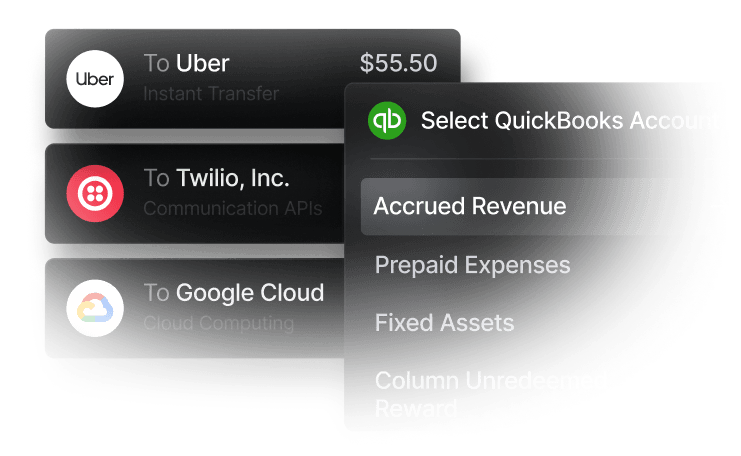
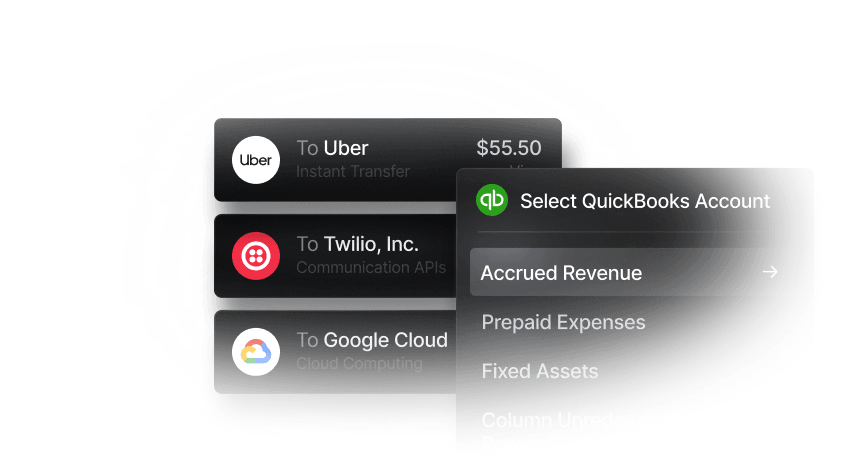
For busy finance teams, reconciliation can still be a challenge when constant incoming and outgoing payments are displayed separately from other types of cash flow. The Slash platform offers an all-in-one dashboard that syncs with accounting solutions like QuickBooks Online, Xero, and Sage Intacct, allowing all financial information from vendor payments to employee card spend to be reconciled and analyzed together.
Operational Efficiency & Savings
Businesses that rely on methods like wire transfers lose capital each time they initiate a transaction. A $30 fee may not seem like much to companies that routinely send and receive five-figure sums, but their finance team can see how high these fee totals get by the end of the fiscal year.
FedNow and the RTP network only carry fees of $0.045 per credit transfer, meaning that large volumes of real-time payments will barely make a scratch on a company’s expense report. Fast payments and minimal fees make these networks much more efficient than wire transfers, ACH, and checks.
Challenges of B2B Real-Time Payments
As real-time payments are a fairly new type of technology, there are some caveats and operational risks for B2B ccompanies to be mindful of. Some of these challenges include:
- Irrevocability: Because initiated payments can’t be reversed, senders should be very careful not to make input mistakes or transfer amounts that haven’t been officially approved. This also means that, while real-time networks are well-protected, any fraudulent transactions that do get through cannot be saved. This should be manageable with well-implemented internal controls.
- Bank limitations: While most major banks support both RTP and FedNow, some local banks or credit unions may not. Businesses likely won’t run into obstacles when exchanging funds, but a small vendor may not work with a banking partner that supports real-time payments.
- Domestic constraints: In the United States, it’s not possible to use either RTP or FedNow to send money across borders. While international payments are a long-term goal, companies that do business with partners and suppliers overseas will have to hang on to other payment methods for now.
Real-time payments are best used as a tool to send certain transfers rather than a catch-all that handles all financial transactions. Fortunately, there’s no need to overhaul your existing payment processing infrastructure, as banking solutions allow these networks to be utilized selectively. For example, Slash allows easy access to real-time transfers alongside other options like international wire and crypto; with a Slash Pro subscription, you pay no additional per-transaction fee for any outbound domestic transfer, no matter the type.
Slash business banking
Works with cards, crypto, plus cards, crypto, accounting, and more.


Common Use Cases for B2B Real-Time Payments
Businesses can take advantage of faster payments in any context where cash flow timing directly affects operational efficiency or personal trust. Here are a few use cases that demonstrate the benefits of real-time payments:
Emergency and Time-Sensitive Payouts
Companies can encounter a number of situations that require urgent payments, such as missed deadlines/cutoffs, insurance claims, refunds, or other time-sensitive obligations. Old-school methods will struggle to make timely transfers, especially when unexpected delays arise on top of standard waiting times. Since real-time payments run 24/7/365, these nightmare scenarios can be resolved in a snap, even on a Saturday night.
Supply Chain and Manufacturing
In the context of manufacturing, multi-day settlements from ACH or wire transfers can hold up shipments and inconvenience suppliers. Real-time payments skip these waiting periods and allow processes to run smoothly. Faster payments can be especially helpful with something called “just-in-time inventory”, which is a specific type of management system that orders raw-material goods only as needed for production or sales.
Contractor or Gig Payments
When employing gig workers or contractors on inconsistent schedules, transaction delays can make payment cycles even more irregular. With the help of real-time payments, it’s possible to deliver same-day remittances to contractors based upon project completion or request. In industries with variable staffing or project-based work, quick payment methods can be a valuable tool.
Get Started With Real-Time Payments With Slash
For modern companies to improve cash flow management, supplier relationships, and operational efficiency, they should combine their traditional payment methods with real-time payment networks, allowing both international transactions and near-instant domestic transfers. This is possible with the Slash business banking platform.
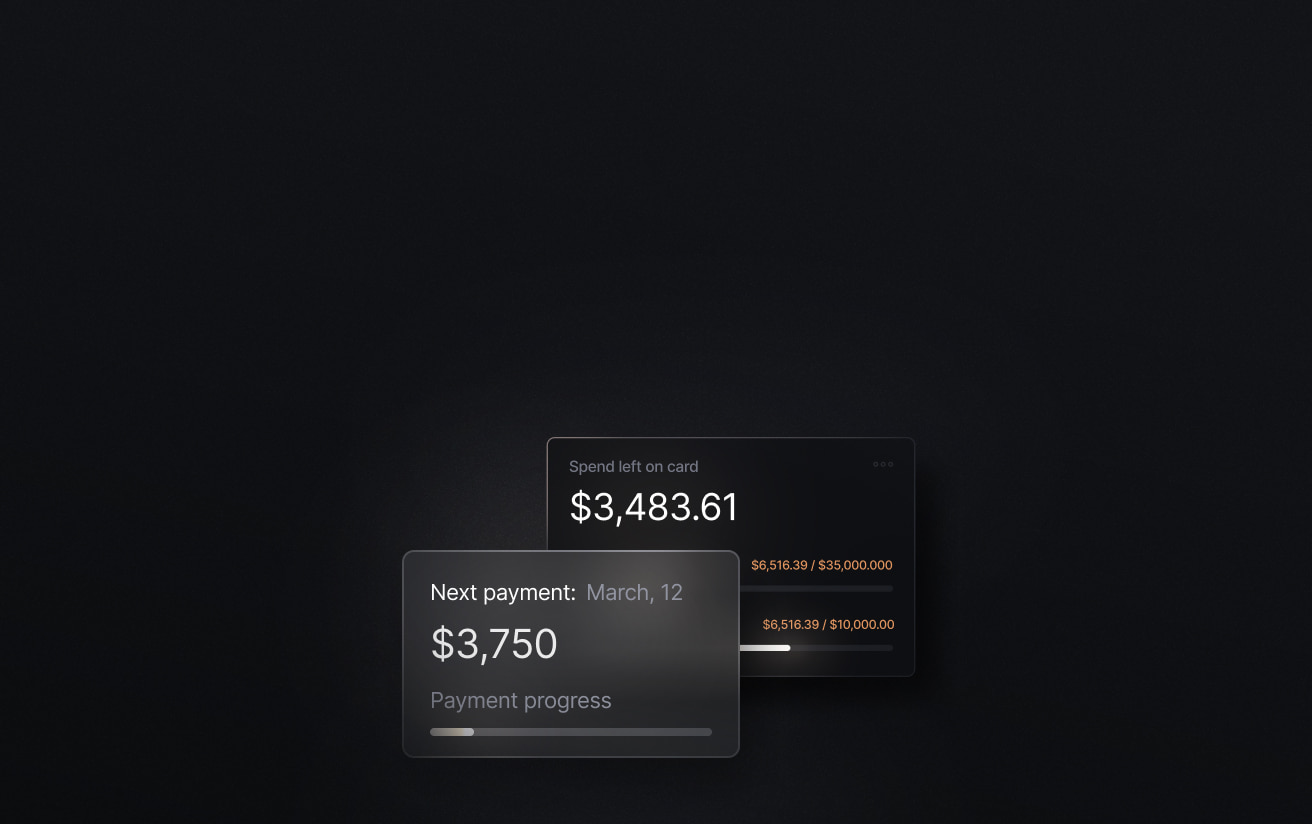
Slash supports RTP & FedNow while unlocking deeper access into incoming and outgoing funds. All payments are automatically uploaded to our financial dashboard, where crypto balances, virtual accounts, employee cards, and more are visible in one spot. Whether paying invoices, contractors, or business partners, all financial transaction data is accessible on our dashboard within minutes of execution.
Our platform also offers safety guardrails for real-time payments, including role-based permissions that control who can initiate transfers, as well as OFAC screenings that check transactions against international sanctions.
Scaling companies may also take advantage of the following features:
- Flexible financing: With Slash’s working capital, users can choose between 30, 60, or 90 day repayment terms so companies can continue to scale while still supporting liquidity for daily operations.⁵
- High-yield treasury accounts: With treasury accounts backed by BlackRock and Morgan Stanley money market funds, companies can earn up to 3.82% APY on their idle cash.⁶
- Native stablecoin support: Hold, send, and receive USD-pegged stablecoins USDC and USDT across nine supported blockchains for faster, lower-cost global payments.
- Slash Visa® Platinum Card: Our card allows users to earn up to 2% cash back on business expenses, issue unlimited virtual cards, and set granular controls to restrict spending by category, merchant, or limit. All transactions are intelligently categorized and uploaded to the Slash dashboard.
With deep transparency into transaction data, Slash makes real-time payments more accessible than ever. Click below to learn more about how we can help your business streamline its B2B payment processing today.
Apply in less than 10 minutes today
Join the 10,000+ businesses already using Slash.
Frequently asked questions
What is the difference between the RTP and FedNow payment systems?
Other than a couple small distinctions in fee structure, the RTP network and FedNow are very similar payment services. Their biggest difference is in the entities that run them; RTP is privately managed by The Clearing House, and FedNow is backed by the U.S. Federal Reserve.
What Are Real-Time Payments? How They Work and Network Comparison

Are real-time payments the same as instant payments?
Real-time payments are a specific type of payment solution, while "instant payments" are a more nondescript term to describe a fast fund transfer. They can refer to the same thing, but an instant payment doesn't necessarily connect to RTP or FedNow.
6 PayPal alternatives for International Payments: Top Picks

What is a Request For Payment (RFP)?
A request for payment is a message that can be used by businesses to send electronic invoices to their customers. RFPs are available via both the ACH network and RTP network, representing one of the few features the two networks have in common.


