

Embedded Payments Explained: How Platforms Integrate and Manage Payments
Embedded payments can sound like industry jargon that doesn't mean much for a business's day-to-day operations. In reality, the model has a direct impact on revenue capture, customer retention, and user experience for SaaS companies, marketplaces, and online sellers.
The term is often misunderstood. Embedded payments aren’t just a slick checkout page or a well-designed payment gateway. It refers to a specific kind of payment infrastructure, where the platform owns the merchant relationship, controls the user experience, and earns on every transaction. Embedded payments put the business in direct control of each transaction, rather than outsourcing payments to third-party providers.
Once a payment is made, the money has to go somewhere. Slash is a business banking platform where businesses can collect payments and manage receivables alongside their core banking activity.¹ Instead of routing funds through separate tools, incoming payments land directly in your accounts, where they can be tracked, reconciled, and moved as needed.
Slash business banking
Works with cards, crypto, plus cards, crypto, accounting, and more.
What are embedded payments?
Embedded payments are payment capabilities built directly into a non-financial software platform, allowing users to complete transactions without leaving the interface. The term is often used loosely, which has led to some confusion about what actually qualifies as embedded.
The clearest form of embedded payments is when a platform builds and operates its own payments stack end-to-end. Think Uber, Netflix, or Amazon. Building direct connections to card networks, maintaining bank sponsorships, and handling PCI compliance is a multi-year, capital-intensive undertaking, so many companies don't build out their payment infrastructure themselves; instead, they outsource payment processing to a third party.
When a third party is used for embedded payments, it’s referred to as PayFac-as-a-service. Here, a payment processor like Stripe, Finix, or Adyen provides the underlying infrastructure, but the platform owns the experience on top of it. The merchant signs up through the platform, the checkout is branded to the platform, pricing is set by the platform, and the platform earns on every transaction. Shopify Payments is one example: the merchant-facing product is Shopify's, but Stripe's rails run underneath.
There are three questions you can ask to determine if a payment system is actually embedded:
- Does the merchant sign up through the platform?
- Does the platform control the UX and pricing?
- Does the platform earn on the transaction?
If the answer is yes to all three, the payments are embedded.
If a customer gets redirected to a Stripe-branded or PayPal-branded payment page, or if the merchant has to sign up for a separate Stripe or Square account to accept payments, that's not embedded. That's an integration to a payment service provider (PSP). The payment is happening outside the platform's control under someone else's brand, often earning nothing beyond referral or partner fees.
What are the benefits of using embedded payments?
For platforms weighing whether to embed payments, the upside shows up in a few specific places. Here are the main ones:
Revenue capture
A subscription business grows revenue in two ways: adding customers or charging existing customers more. Embedded payments add a third lever. When a platform earns a percentage of every transaction flowing through the product, revenue grows automatically as the platform's customers do more business, without any new sales or price increases.
Research from Andreessen Horowitz has found that adding embedded fintech can increase revenue per user by two to five times, which is why vertical SaaS companies hitting a ceiling on subscription growth have turned to embedded payments as an optimization strategy.
Customer retention
Platforms that embed payments keep their customers longer than platforms that don't. Once a business is collecting payments through a platform, the platform becomes part of how the business operates day-to-day, and that kind of integration is hard to walk away from.
Research from BCG and Adyen has found that platforms with embedded payments lose customers at 2.5 times lower a rate than platforms using third-party processing.
Product experience
Redirects and third-party checkout pages introduce friction, break branding, and create support headaches. When a customer calls with a payment problem, a platform using a referral model has to punt them to the processor’s support team. A platform with embedded payments can resolve it in-house, with full visibility into the transaction. That's a better experience for the merchant and the end customer, which is one of the reasons merchants are increasingly consolidating their operations and payments onto a single platform, according to research from EY-Parthenon.
How embedded payments work
To the end user, an embedded payment feels like a single action. Behind the scenes, it's a coordinated handoff between the platform, a payments infrastructure provider, card networks or payment rails, and one or more banks. Here's what happens at each stage:
- User initiates a transaction inside the platform: A shopper hitting "buy" on a storefront, a business customer clicking "pay invoice" in an email link that opens a branded payment page, a subscriber renewing a plan. The user never leaves the platform or gets redirected to a third-party site, and everything they see is rendered under the platform's brand.
- Payment data is captured within the interface: The user enters their payment details. The card number is captured in a secure, hosted field embedded in the page and immediately swapped for a token, which is what the platform actually stores and transmits. ACH and bank-transfer payments work similarly, with account details captured and tokenized.
- Backend provider processes payment: For a card payment, this means sending an authorization request to the card network (Visa, Mastercard, etc.), which forwards it to the customer's issuing bank. The issuing bank checks for funds and fraud signals and returns an approval or decline in real time, typically in under a second. The infrastructure provider also runs fraud checks, risk scoring, and compliance screening on the platform's behalf.
- Funds are settled: The payment is captured (either immediately or later, depending on the platform's configuration), and funds are transferred from the customer's bank to an acquiring bank that holds money on behalf of the platform's infrastructure provider. Interchange fees go to the card networks and issuing banks, the processor takes its cut, and the net amount is paid out to the merchant, typically on a T+1 or T+2 schedule.
In business settings, the payment flow is usually kicked off by an invoice or billing event rather than a point-of-sale system. Slash Invoicing brings the advantages of embedded payments to this process. A business creates and sends an invoice from its Slash account, and the recipient can pay using ACH, wire, card, or stablecoin through a payment link embedded directly in the email.⁴


Different payment facilitation models
Your business can choose from several payment facilitation models. The right model depends on how much control you want over the payments experience, how much compliance and risk you're willing to take on, and how quickly you need to get to market. The options fall on a spectrum, from lightest-touch to full ownership:
Referral model
In a referral model, the platform sends its users to a third-party processor and earns a commission on the volume those users generate. The processor owns the merchant relationship, handles onboarding, and controls the checkout experience.
This model is fast and low-effort to set up, but the platform earns very little (typically 5 to 15 basis points on volume), has no control over the user experience, and doesn't own the merchant relationship. Referral isn’t really considered "embedded" at all, but it's worth including since it's the baseline most platforms start with before graduating to a true embedded model.
PayFac-as-a-Service (PFaaS)
The platform partners with a registered payment facilitator that handles the regulatory and infrastructure heavy lifting (sponsor bank relationships, card network connections, PCI compliance, underwriting infrastructure) while the platform controls the merchant-facing experience: onboarding, branding, UX, pricing, and support.
Revenue is earned through either a revenue share or a buy-rate model, with platforms typically capturing 5x to 10x more than what a referral model would generate on the same volume.
Registered payment facilitator (Full PayFac)
At the far end of the spectrum, a platform registers as its own payment facilitator with a sponsor bank and takes on the full responsibilities of the role: underwriting sub-merchants, handling KYC and AML, managing fraud and chargeback risk, and owning 100% of payments revenue.
Time to market is 12 to 18 months and setup costs run into the hundreds of thousands of dollars, with ongoing operational overhead including dedicated underwriting, risk, and compliance staff. Full PayFac status only makes sense when payments are a core part of the business and volume is high enough to justify the infrastructure.
Challenges of using embedded payments, and how to choose the right system
Using embedded payments for your business can unlock higher revenue and retention, but it can also cause issues if you don't plan ahead or choose the right provider. Most of the operational weight of embedded payments sits with the infrastructure partner you build on, which means the right partner can handle the bulk of the complexity for you. Here's what to watch for:
- Technical complexity of integration → Flexible and modular integration: Embedded payments touch checkout, onboarding, payouts, and reporting. Look for a partner with well-documented APIs and pre-built components that let the platform integrate only the pieces the platform needs.
- Regulatory and compliance requirements → Security and compliance support: Card data handling, KYC, AML, and PCI compliance are non-negotiable, and the penalties for getting any of the areas wrong are severe. A strong partner handles PCI scope reduction through tokenization and runs KYC and AML on sub-merchants automatically.
- Limited flexibility depending on the provider → Ongoing product development and innovation: Real-time rails, stablecoin settlement, and AI-driven fraud detection are moving from nice-to-have to expected. Look for a partner with a track record of shipping new capabilities, not one coasting on a feature set from three years ago.
- Hidden costs or pricing structures → Pricing transparency: Payments pricing is notorious for compounded fee structures, with interchange markups, gateway fees, and chargeback fees layered on top of the headline rate. A transparent partner breaks out every line item so the platform can model unit economics accurately.
- Reconciliation complexity → Integration with invoicing and accounting systems: Every transaction needs to tie back to an invoice, a customer record, and a ledger entry, or finance teams end up matching entries by hand. Look for a partner that connects natively to the accounting and ERP systems the platform's customers already use.
Slash: The financial platform behind modern businesses
Slash brings embedded payments into one of the places where businesses use them most: invoicing. When a customer receives a Slash invoice, it includes a payment link directly in the email. They can pay using ACH, wire, card, or stablecoin, all without leaving the invoice itself. The payment flows back into your Slash account, so receivables, settlement, and reconciliation happen in one place.
Beyond invoicing, Slash operates as the financial platform that sits underneath a business's day-to-day operations. Banking, corporate cards, payments, treasury, and financing all live in the same account, which means a business can manage its money in a single system rather than stitching tools together. Embedded payments are one piece of a larger shift toward software owning the full financial workflow, and Slash is built to be the account that workflow runs through. Here’s what else you get when you switch to Slash:
- Slash Visa® Platinum Card: A corporate charge card that earns up to 2% cash back on company spending, with configurable spending rules, card controls, and encryption-grade fraud protection.
- Accounting & ERP integrations: Sync transaction data with QuickBooks Online, Xero, or Sage Intacct to streamline reconciliation, reporting, and month-end close.
- Diverse payment methods: Slash supports a wide range of payments, including card spend, global ACH, international wire transfers to over 180 countries via SWIFT, and real-time domestic payments through RTP and FedNow.
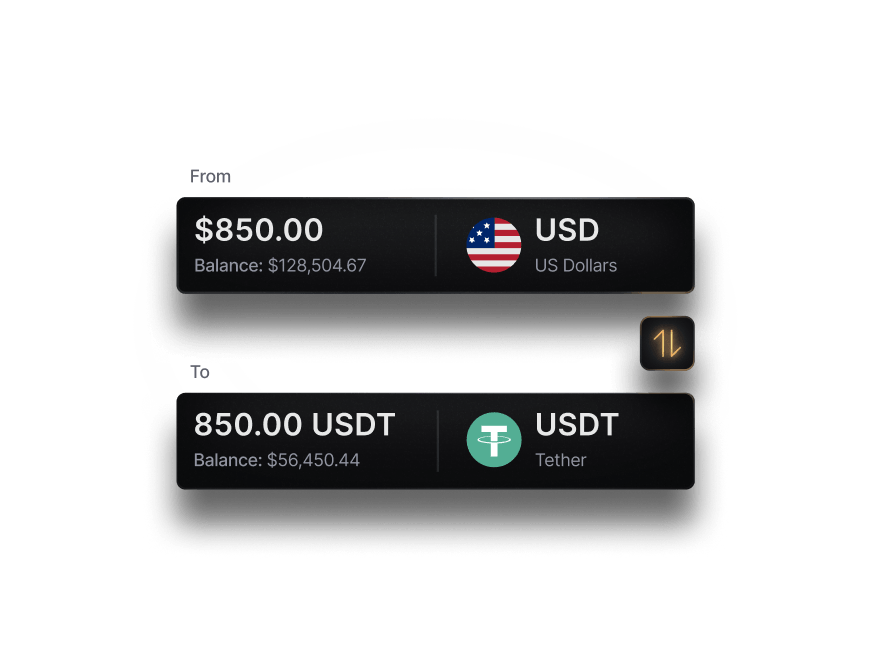
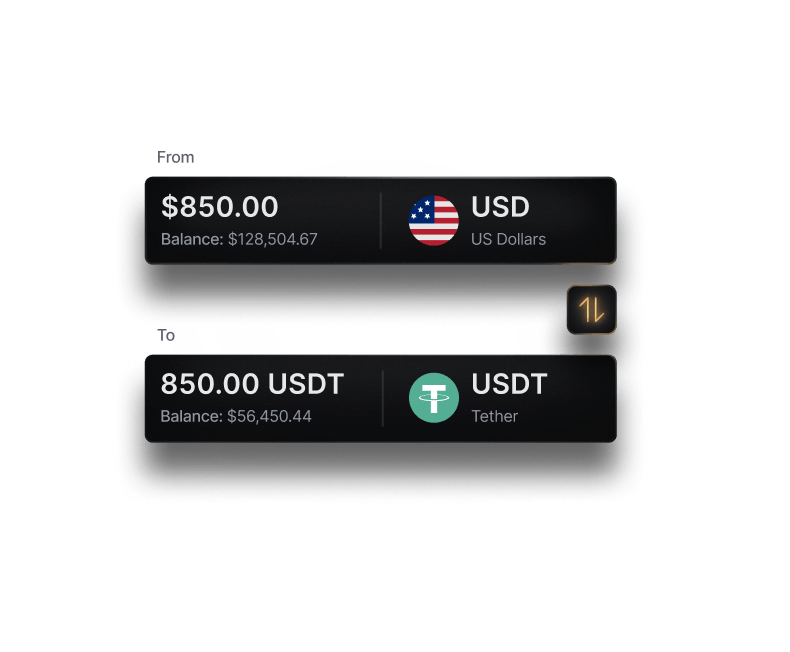
- Native cryptocurrency support: Convert funds into USD-pegged stablecoins such as USDT or USDC to send transfers on the blockchain, offering a near-instant international payment method with reduced fees and settlement times.
- Flexible financing: Access short-term financing with 30-, 60-, or 90-day repayment terms to help bridge cash flow gaps when needed.⁵
- AI-powered financial tools: Use Twin, our built-in AI financial agent, to manage your Slash dashboard. You can ask it to create cards, pay invoices, review your cash flow, and much more.
Apply in less than 10 minutes today
Join the 10,000+ businesses already using Slash.
Frequently asked questions
How long does it take to implement embedded payments?
A PayFac-as-a-Service integration typically takes a few weeks to a few months. Becoming a registered payment facilitator is a much longer project, usually 12 to 18 months, because the platform has to set up bank sponsorships and build its own compliance infrastructure.
Can I embed payments into an existing product, or does it require a rebuild?
Embedded payments can be added to an existing product without a full rebuild. Most infrastructure partners offer modular APIs and pre-built components that drop into specific parts of the product, like checkout or onboarding.
Ecommerce Payment Processing Explained: Methods, Gateways & Best Practices

Crypto Payment Processors: Compare Top Platforms for Businesses

Can I switch embedded payment providers without rebuilding my integrations?
Switching providers usually requires meaningful engineering work. Payment APIs aren't standardized across providers, so moving from one to another means re-implementing onboarding, checkout, and payout flows against a new set of APIs.
What is a Payment API? Benefits, Workflow, and Best Providers


