


A Practical Guide to IRS Form 8594 for Business Buyers and Sellers
When it comes time to sell your business or strike an acquisition deal, you can’t simply put a sticker price on your company and call it a day. The total price of your business needs to be divided between your equipment, assets, stock, and even something called “goodwill”. Separating these elements is known as purchase price allocation.
To do this, you’ll need IRS Form 8594, the Asset Acquisition Statement Under Section 1060. Both the buyer and seller file this form when a business changes hands as an asset sale in order to tell the IRS how the total payment is divided among different categories of assets. These categories determine very different tax outcomes for each party, as a dollar allocated to equipment has different implications than a dollar allocated to stock.
The allocations on the buyer’s and seller’s form are expected to match, which means a little teamwork is required to make sure everything’s on even ground. When they don't, both filings can draw IRS scrutiny. This guide covers what Form 8594 is, when you're required to file it, how allocation works across the seven asset classes, and the mistakes that buyers and sellers can make. We’ll also take a look at Slash, a neobank that’s built to help categorize your expenses and centralize your banking.¹ With Slash, you can get a clearer picture of your business’s current financial situation and future cash flow, making purchase price allocation more straightforward.
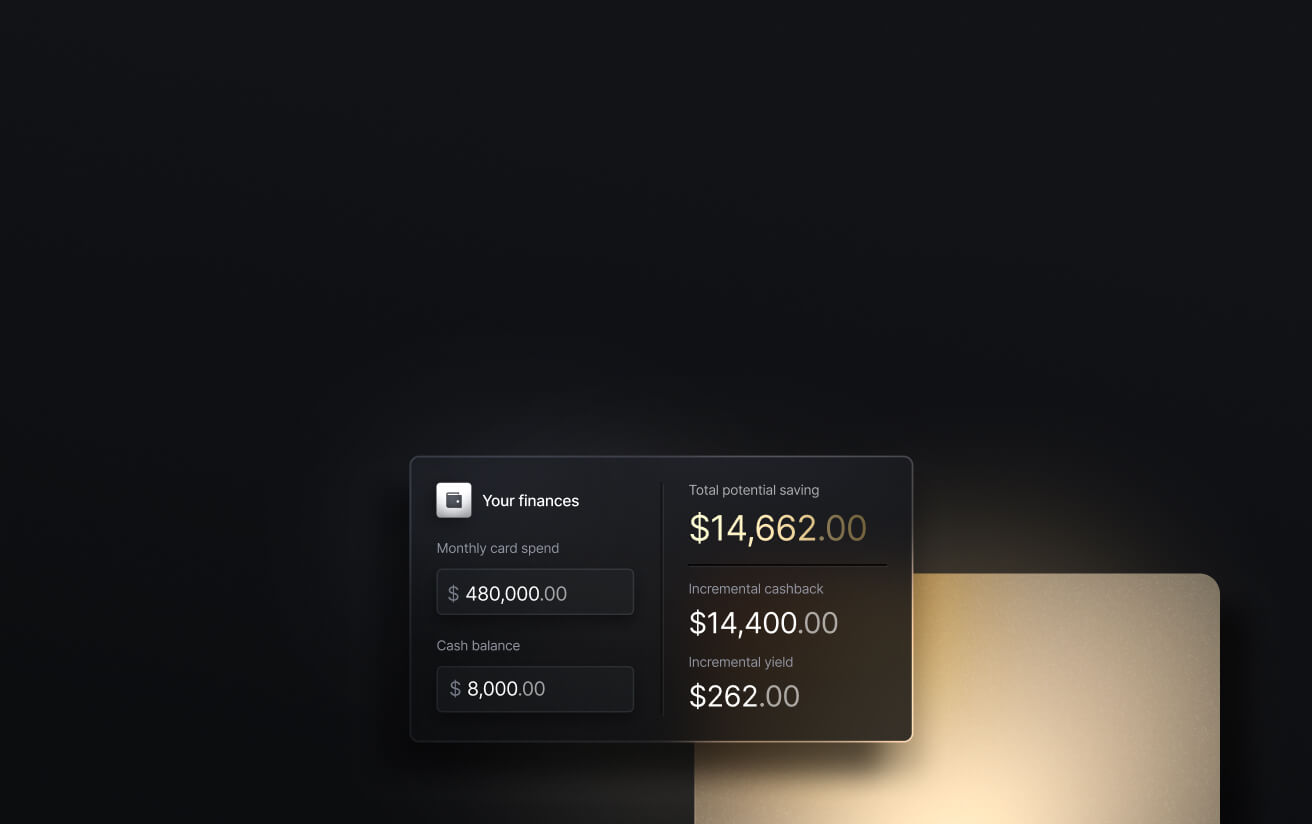
See the ROI behind your spend
Use this calculator to understand impact, then manage and track it all in Slash.

What Is IRS Form 8594?
Form 8594 documents how a business purchase price is distributed across asset categories. It's officially titled the Asset Acquisition Statement Under Section 1060, and is sometimes casually called the purchase price allocation form.
The form exists to make sure buyers and sellers allocate the same purchase price in a consistent manner, rather than separately on their own returns at the end of the year. The IRS requires both parties to allocate using the same methodology, file the results, and attach Form 8594 to their annual tax return for the year the transaction occurred. If the buyer reports $500,000 allocated to inventory and the seller reports $200,000, they may both be paid a visit by auditors.
Another reason this form was developed was to officially designate two intangible assets, goodwill and going concern value. Goodwill can represent things like a great brand reputation, recent momentum, or proprietary technology that holds potential. Going concern value is a bit similar, but it more closely relates to the value of an active company as compared to a company that’s defunct or filing for bankruptcy. Both of these elements are difficult for the IRS to evaluate from an outside perspective, so it’s up to the buyer and seller to determine their worth.
Each party may have different goals in mind, which can make deals relating to purchase price allocation tough. Buyers generally prefer more of the purchase price in depreciable tangible assets, since they can start recovering those costs through depreciation sooner. Sellers may prefer more in goodwill because goodwill proceeds are typically taxed at capital gains rates rather than as ordinary income. With all these factors at play, the negotiation stage of a business acquisition can take quite a while.
When Is Form 8594 Required?
From a technical perspective, Form 8594 is required when a group of assets that constitutes a trade or business is transferred, and the buyer's basis in those assets is determined by the amount they pay. However, when a buyer acquires the stock of a company rather than its assets, Form 8594 typically isn’t required. This is because the buyer inherits the seller's basis in the assets instead of establishing a new one.
Ultimately, if you're buying a business's assets directly, such as equipment, inventory, intellectual property, customer relationships, and goodwill, Form 8594 applies. There is a gray area in Section 338 elections, where the buyer and seller decide to treat a stock acquisition as an asset purchase for tax purposes. Because the stock has been declared an asset, it usually requires allocation mechanics and a corresponding Form 8594 filing.
When tax season comes around, Form 8594 must be attached to each party's annual return for the year of the transaction. If the purchase price changes afterward due to an adjustment, both parties must file an amended Form 8594 for the year the change occurs.
The Seven Asset Classes
Rather than allowing dozens of asset categories, the IRS divides all acquired assets into seven classes, including tangibles and non-tangibles. Each of the seller’s assets will fit within one of these buckets:
- Class I covers cash and general deposit accounts transferred as part of the sale. These go at face value, meaning they’re pretty easy to account for.
- Class II includes certificates of deposit, actively traded personal property, and U.S. government securities. Fair market values are also typically easy to determine here.
- Class III covers accounts receivable, mortgages, and credit card receivables. Sellers may retain existing receivables as of closing, so this class sometimes carries a zero allocation on the form
- Class IV is inventory and stock in trade, allocated at fair market value. Gains on inventory are generally taxed as ordinary income to the seller.
- Class V is a broad category covering most of the other tangible and intangible assets not captured by other classes, such as furniture, equipment, vehicles, leasehold improvements, and property. This class can be the biggest piece of the allocation. It’s also important to note that gains on tangible property sold above its depreciated basis can be taxed as ordinary income, so a large Class V allocation can result in some unexpected taxes.
- Class VI covers intangibles other than goodwill, including non-compete agreements, customer lists, trademarks, patents, software licenses, and franchise agreements. In small business deals, non-competes are common and typically generate ordinary income for the seller.
- Class VII is goodwill and going concern value, which sometimes ends up being what’s left over after Classes I through VI are determined. The buyer amortizes goodwill over 15 years, meaning the goodwill’s depreciable base is divided by 15. For sellers, goodwill is typically eligible for long-term capital gains treatment rather than ordinary income, which is why sellers may push for a heavier goodwill allocation while buyers tend to prefer the opposite.
If you’re selling a service-based business, most of the purchase price will probably end up in Classes V, VI, and VII. In the case of a company with physical storefronts and lots of inventory, the price will usually be spread out more evenly.
How Purchase Price Allocation Works in Practice
The first step of the allocation process is to simply value what's being acquired. For each asset class, the allocated amount should reflect fair market value at the time of the transaction
Some companies call upon professional appraisals as they go through the process, especially in reference to Classes V and VI. A business with specialized manufacturing equipment may have that equipment independently valued based on wear and tear, while customer lists and relationships can be appraised using an income-based method that estimates the cash flows they’ll generate in the future.
If two parties agree on a flat purchase price before ever discussing price allocation, they might have a difficult time agreeing on the values of each class. A seller who thinks highly of his company’s reputation might want his goodwill to be a large chunk of the purchase, while a buyer who wants to maximize depreciation deductions will want to spend more on Classes V and VI. Rather than trying to fit these values in boxes that add up to the purchase price, it can be better to determine your price allocation at the same time you set the total price.
Common Mistakes, Tax Implications, and What's at Stake
When you fill out Form 8594, you’re balancing the weight of a multi-million dollar company and the scrutiny of the IRS. Making a mistake at this stage can be costly, both in the eyes of your business partner and the auditors that comb through your numbers. Here are the errors you should look to avoid:
- Mismatched filings: Discrepancies between buyer and seller Form 8594 allocations will usually raise red flags for the IRS. Both parties may be audited when the numbers don't align, even if each party's individual allocation is reasonable on the surface. To avoid this problem, just make sure you and your partner are on the same page at the end of the process.
- Allocating without appraisal support: Hiring an appraiser isn’t mandatory, but it can be helpful when working with complex or high-value deals. If you assign large amounts to goodwill without documentation or inflate your equipment values, you might have a problem if the IRS examines the return. Any values that have been appraised by a third party are easier to defend and are typically more accurate in the first place.
- Ignoring post-closing adjustments: Some buyers will add a little extra value on top before the purchase closes, such as something called an “earnout payment” if a company reaches a certain goal or milestone. Any adjustments made in this way require an amendment on your Form 8594.
- Deciding the total purchase price too early: If the buyer and seller decide to exchange a business for $10 million, but they later find that their allocations total about $12 million, they’ll have a bit of a problem. Rather than fudging the numbers to fit in the $10 million box, they’ll likely have to rework the original deal.
For incorrectly submitted forms, the simplest penalties under IRC Section 6721 can reach $340 per return. However, the cost of audits and more serious mistakes can cost a lot more.
How Slash Can Help Determine Purchase Price Allocation
If you’re selling your company and trying to determine its total worth, it’s very important to have detailed records of your past activities and close visibility into your current activities. If you use a business banking platform like Slash, a lot of this information will be readily available once you make your first handshake.
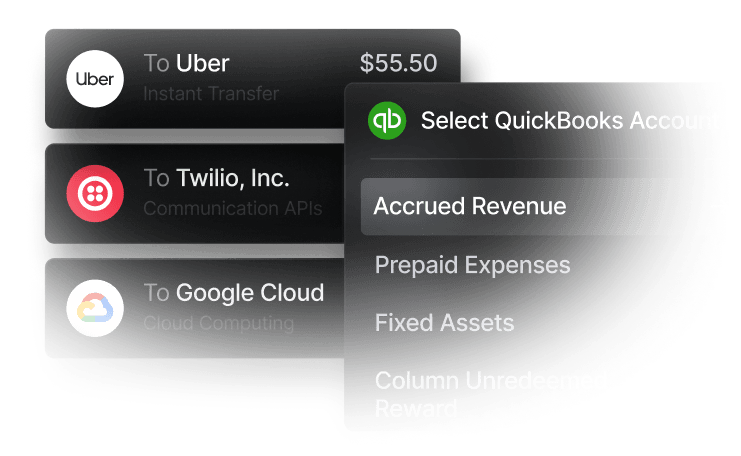
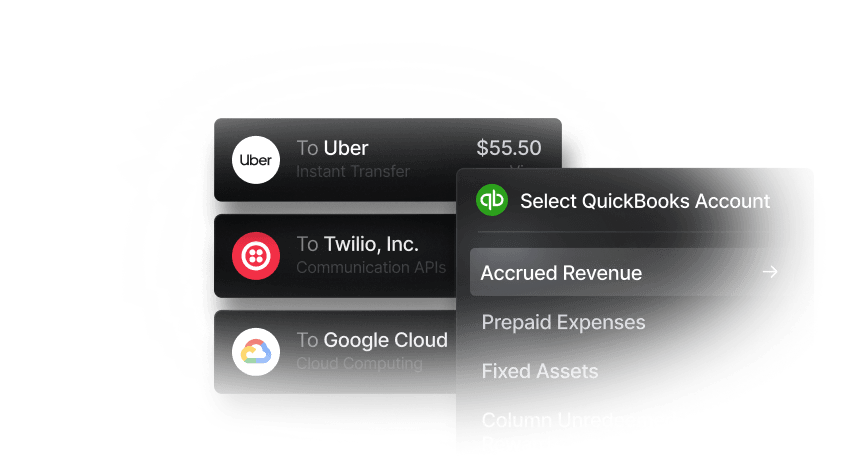
Slash comes with a real-time financial dashboard that tracks incoming and outgoing payments, corporate card spend, invoicing, treasury yield, and more.⁶ The platform also integrates two-ways with accounting solutions like QuickBooks Online, Sage Intacct, NetSuite, and Xero. If a seller wants more accurate information for accounts receivable in Class III or customer list value in Class VI, Slash can pull data from several years in the past.
With the help of Slash’s agentic AI assistant, Twin, this can be as simple as asking a single question. Twin can be prompted to search for data and complete complex tasks through a connection with your company’s Slack channel. You may ask it to bring up a list of past transactions, sort through customer trends, or estimate amortization timelines.
Slash comes with quite a few other features to better help your business manage its finances, including:
- Global USD: The Slash Global USD Account is designed as an alternative for foreign founders who want access to USD without forming a US entity.³ Balances are backed by Slash’s USDSL stablecoin, which is matched one-to-one in value with the US dollar.
- Slash Visa® Platinum Card: The Slash Card allows you to set customizable spending controls and issue unlimited virtual cards for handling team expenses, vendor payments, subscriptions, and more. Users can also earn up to 2% cash back on business purchases.
- Working capital financing: Access short-term financing with flexible 30-, 60-, or 90-day repayment terms to help bridge cash flow gaps.⁵
- Native cryptocurrency support: Send and receive USD-pegged stablecoins USDC and USDT across eight supported blockchains for faster, lower-cost global payments.⁴
- Diverse payment methods: Slash supports a wide range of payments, including card spend, global ACH, international wire transfers to over 180 countries via SWIFT, and real-time domestic payments through RTP and FedNow.
Selling your business is a complex process that requires accuracy and a good amount of documentation. Slash is a business banking platform that can help you along the way.
Apply in less than 10 minutes today
Join the 10,000+ businesses already using Slash.
This article is educational content, not legal or tax advice. You should consult a qualified tax professional before filing or structuring any business acquisition.
Frequently Asked Questions
Does Form 8594 apply to stock sales?
Typically, no. In a traditional stock sale, the buyer acquires the seller's equity and inherits the seller's assets, meaning no Form 8594 is required for the transaction. The exception is when the parties make a Section 338 election to treat the stock acquisition as an asset purchase for tax purposes.
Do the buyer's and seller's allocations legally have to match?
While there’s actually no law that says they have to match, discrepancies between buyer and seller Form 8594 filings often result in IRS audits.
What happens if the purchase price changes after you file?
If the total consideration changes after the initial Form 8594 filing, often under post-closing adjustment terms in the purchase agreement, both the buyer and seller must complete Part III of Form 8594 and attach it to their tax return for the year the adjustment occurs.
Do buyers and sellers negotiate the allocation, or does the IRS set it?
The parties have the ability to negotiate how the purchase price is divided across asset classes. That said, each class should reflect fair market value, and you’re certainly not allowed to assign unrealistic amounts. You might price a truck at $60,000 that was recently purchased for $80,000, but you won’t be able to get away with declaring it a $5,000 asset.
The Complete Guide to LLC Expenses and Tax Deductions


