


Brex vs Mercury: Key Differences in Cards, Fees, and Global Capabilities
With just a surface-level inspection, Brex and Mercury may not seem all that different. Both are fintech banking companies founded in 2017. Both are tech-first, AI-powered modern banking platforms designed for savvy startups. Both offer business accounts, corporate cards, expense management tools, and related financial services through a centralized dashboard.
However, Brex and Mercury take subtly different approaches to business banking. While their differences may seem minor at first, they can lead to meaningful operational implications over time. For instance, Mercury offers financing, while Brex doesn’t—meaning businesses facing a large unexpected expense or time-sensitive investment opportunity may need to scramble for external financing, or worse, miss the window entirely.
This guide examines how Brex and Mercury compare in handling everyday financial operations. We’ll focus on each platform’s payment capabilities, subscription costs and fees, rewards programs, global banking access, and more. As we examine both options, we'll also show how Slash is positioned to address the drawbacks of each platform. With Slash, businesses can gain stronger cash back rewards, broader global payment capabilities, native cryptocurrency support, and more.¹︐⁴
Key considerations when choosing between Mercury and Brex
When comparing Mercury and Brex—or any business banking platform—there are a few important factors to consider before deciding which is right for your business:
- Eligibility requirements: Does the platform have restrictive approval criteria based on business size, revenue, or capitalization?
- Rewards structure: Does the platform offer cash back or a points-based rewards system with specific redemption options?
- Fee transparency: Are foreign transaction fees, wire transfer costs, and other charges clearly disclosed—and can subscription pricing offset those costs? Is subscription pricing charged per user, or is it a flat fee for your entire team?
- Global capabilities: Can the platform adequately support international operations? Is access restrictive for non-U.S. entities?
- Modern payment rails: Does the platform support next-generation payment options like RTP, FedNow, or cryptocurrency?
It’s also helpful to understand that many digital banking platforms offer charge cards rather than traditional credit cards. Business credit cards typically allow revolving balances with minimum payments and interest charges, while charge cards are designed to be paid in full each billing cycle and often use flexible spending limits based on account activity.
Brex: An overview
Brex is a fintech company and digital banking platform that bundles corporate cards, business accounts, and expense management tools into a single system. Brex's partner banks include Column N.A., Emigrant Bank, and Fifth Third Bank N.A. Capital One’s 2026 agreement to acquire Brex reflects an upcoming transition in ownership that will reshape how the company is structured at the corporate level. While it originally gained traction as a startup-friendly alternative to traditional banks, Brex has increasingly positioned itself toward venture-backed startups and well-capitalized enterprises that can fully utilize its more advanced tooling. Some of Brex’s core products and features include:
- Brex Card: Corporate charge card that integrates directly with Brex’s dashboard for expense tracking and spend controls, with rewards issued through Brex’s points-based rewards program.
- Expense management: Built-in expense tracking with receipt capture, approval workflows, and policy enforcement.
- Payments: Support for ACH transfers, domestic and international wires, checks, and bill pay from the Brex dashboard. Brex’s upcoming cryptocurrency transfers are still unavailable to most users.
- Virtual banking and treasury accounts: Business cash accounts with FDIC insurance through partner banks, along with optional treasury products that generate yield on idle cash.
Brex’s approval criteria can be restrictive. The platform typically expects applicants to have significant venture backing or roughly $1 million in annual revenue, making it less accessible to smaller or bootstrapped companies. Certain business types, such as sole proprietors or very early-stage teams, are also less likely to qualify.
Beyond eligibility, Brex promotes high reward multipliers across select spending categories, but the actual value of those rewards is often less compelling in practice. When redeemed for cash, Brex points are worth just $0.006 per point, or 0.6 cents, which significantly reduces the effective return on spend. Achieving a competitive rewards rate requires carefully optimizing spend to match Brex’s bonus categories, a level of effort that can be difficult to sustain. Even then, the Brex rewards program lacks the breadth of benefits and redemption flexibility typically offered by legacy card providers.
Mercury: An overview
Mercury is another digital business banking platform. Mercury's partner banks include Column N.A. and Choice Financial Group. While Mercury is not as narrowly targeted as Brex, Mercury still primarily caters to entrepreneurs and tech-focused startups. Its financial tools can be a solid fit for U.S.-based companies with straightforward needs, but its product scope and approval criteria may limit its usefulness as businesses scale or operate internationally.
- Mercury IO Card: Corporate charge card that earns up to 1.5% cash back on eligible purchases. The IO Card's credit limits adjust with your Mercury cash balance, is designed to integrate with Mercury’s banking and expense tracking tools.
- Business accounts and expense management: FDIC-insured checking and savings accounts provided through partner banks, with support for multiple checking accounts to help organize cash flow. Mercury also offers debit cards and basic expense tracking features tied directly to account activity.
- Payments: Support for ACH transfers, domestic wires, international wires via the SWIFT network, and bill pay functionality for managing vendor payments.
- Business financing: Access to financing products for eligible customers, typically geared toward users with established revenue.
Mercury’s approval criteria can be more selective than some other financial platforms, as it’s largely oriented towards businesses formed in the U.S. with primarily domestic operations. The platform does not support non-U.S. entities, meaning founders and teams operating outside the United States may be unable to open an account without a U.S.-registered business.
Additionally, the platform has been slower to expand its payment rails and expense management capabilities compared to other fintechs. While competitors like Slash already support modern global payment methods such as blockchain-based transfers—and Brex has signaled plans to roll out similar functionality—Mercury remains largely reliant on traditional banking infrastructure, which can feel restrictive for businesses with international payment needs.
Slash: A stronger option than Brex and Mercury
Slash is a modern business banking platform that unifies corporate cards, integrations, expense management, and payments into a single system. It also offers advanced capabilities such as cryptocurrency support, real-time transfers, and AI-powered analytics. Compared to platforms like Brex and Mercury, Slash is accessible to a broader range of SMBs and offers more comprehensive global payment capabilities, making it well-suited for companies with diverse operational needs.
- Slash Visa Platinum Card: A business charge card that earns up to 2% cash back on purchases. The card includes real-time spending visibility, configurable controls, and unlimited virtual card issuance.
- Banking and treasury accounts: Configurable virtual accounts that allow businesses to separate and manage different cash flows by purpose, entity, or sales channel. Slash also offers high-yield treasury accounts backed by money market funds that earn a competitive 3.89% annualized yield.⁶
- Dynamic payments: Support for global ACH transfers, wire payments to 180+ countries across more than 135 currencies, and real-time payment networks such as RTP and FedNow. Slash also enables businesses to send and receive USD-pegged stablecoins like USDC and USDT for fast, low-cost global transfers.
- Invoicing and expense management: Built-in tools that provide detailed visibility into cash flow, outstanding payments, and company-wide spending, helping teams monitor expenses and maintain accurate financial records.
- Flexible financing: Access to working capital financing with 30, 60, or 90-day repayment terms, allowing businesses to manage short-term liquidity without disrupting operations.⁵
The standard in finance
Slash goes above with better controls, better rewards, and better support for your business.


What are the differences between Mercury, Brex, and Slash: An in-depth feature comparison
Brex, Mercury, and Slash are all financial technology companies focused on simplifying business banking for the digital era. While all three share the same goal, each approaches it slightly differently. Approval requirements, payment capabilities, cost structures, and rewards programs can significantly affect how well each platform fits your business. Here’s how they compare:
Account access and eligibility requirements
Brex’s underwriting and product focus are built primarily around venture-backed startups, technology companies, and large enterprises. The platform typically expects applicants to have significant VC backing or roughly $1 million in annual revenue. As a result, many small and mid-sized businesses, especially those outside the tech ecosystem, may find Brex inaccessible or misaligned with their operating needs.
Mercury and Slash both offer more flexible approval requirements, but with different constraints. Mercury primarily serves U.S.-based entrepreneurs and startups with straightforward ownership structures and domestic operations. Non-U.S. entities and founders without a U.S.-registered business are generally not supported.
Slash is accessible to a broader range of SMBs, including businesses that are bootstrapped, internationally distributed, or operating across multiple entities. In addition to supporting U.S.-based companies, Slash offers options for non-U.S. businesses through its Global USD account, expanding access beyond what Brex or Mercury currently provide.
Most accessible: Slash
Payments and banking features
Slash offers the most expansive set of payment rails among the three platforms. In addition to ACH and wire transfers, Slash supports real-time payments through RTP and FedNow, as well as blockchain-based payments using USD-pegged stablecoins like USDC and USDT. Brex and Mercury, on the other hand, both rely primarily on traditional banking rails.
All three platforms offer treasury or high-yield account options, though Brex and Mercury’s treasury capabilities come with notable caveats. With Brex, access to higher yield rates scales by subscription tier, meaning lower-tier plans may not receive the most competitive returns. Mercury’s yield offerings are even more restrictive, requiring either a $250,000 cash balance or an annual fee of $240 to access their treasury account. In contrast, Slash makes its highest yields available to all account holders, no additional fees required.
Most payment options: Slash
Cost structure and fees
Brex offers a free Essentials plan, but key features such as multi-entity support, full expense management, and ERP integrations require upgrading to Premium ($12 per user, per month) or Enterprise (custom pricing). Brex also applies an FX markup of up to 3% on international card transactions.
Mercury provides free core banking with no monthly fees or account minimums, though access to more advanced features requires paid plans starting at $35 per month, billed per account rather than per user. Mercury charges a 3% currency conversion fee on all non-USD card transactions, along with a 1% fee on non-USD international wires.
Slash makes its full platform functionality available on the free plan, with corporate cards earning 1.5% cash back. Upgrading to Pro for $25 per month unlocks unlimited free domestic ACH, wire, and real-time transfers, and increases cash back to 2%. Slash applies a 1% fee on foreign card purchases and charges a flat $25 per international wire. Additionally, stablecoin payments incur no foreign exchange fees at all.
Most cost-efficient pricing and fees: Slash
Credit cards and funding opportunities
The Brex Card from Mastercard is a corporate charge card with a points-based rewards program featuring category multipliers. However, the low redemption rate of $0.006 per point can significantly dilute the effective cash value of their points. The Brex Card is also considered a 'global card,' meaning it can be issued in different countries. Currently, Brex does not offer products that allow users to maintain a revolving credit balance, limiting flexibility for businesses needing extended payment terms.
The Mercury IO Mastercard, also a charge card, earns 1.5% cash back with no annual fees. Mercury also offers capital loans for eligible businesses. These loans provide funding with longer repayment terms than competitors, typically around 6 months for larger credit facilities, though they come with flat-fee pricing and fixed weekly repayments.
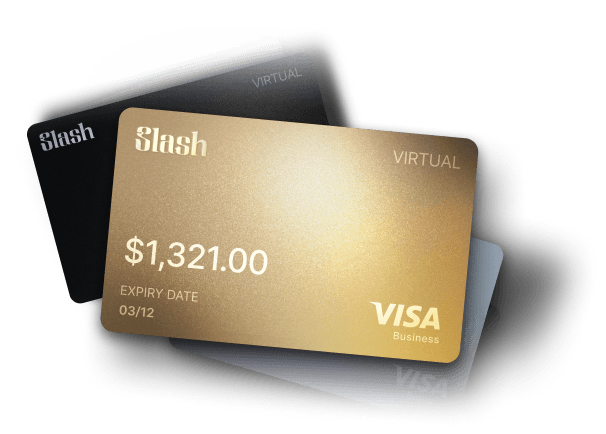
The Slash Visa Platinum Card earns up to 2% cash back—the highest rate of the three. The Slash card offers customizable spend controls, unlimited virtual cards, and real-time transaction visibility. Additionally, Slash's Working Capital financing provides a tailored line of credit that businesses can draw from whenever needed, with flexible 30, 60, and 90-day payment terms designed to boost short-term liquidity without the rigid requirements or extended commitment periods of traditional loans.
Best card rewards and credit access: Slash
International banking and payments
Slash leads in global payment capabilities with native stablecoin support for USDC, USDT, and USDSL, which enables fast, low-cost cross-border payments. The Slash Global USD account enables non-U.S. entities to send and receive USD payments without requiring a U.S. bank account or registered LLC—a barrier for both Brex nor Mercury. Combined with global ACH, international wires to 180+ countries, and a low 1% FX fee for our cards, Slash provides a more comprehensive global infrastructure.
Brex supports international wires via SWIFT along with multi-currency settlement, cross-border card issuance, and VAT tracking for global operations. However, Brex's cryptocurrency and stablecoin capabilities remain in early access, limiting options for businesses that need blockchain-based payment solutions.
Mercury supports international transfers through the SWIFT network in 30+ currencies but applies restrictive country policies and high foreign transaction fees (3% on non-USD card transactions, 1% on non-USD wires). Mercury does not support cryptocurrency or stablecoins in any capacity, and offers no access options for non-U.S. entities without a U.S.-registered LLC.
Best global payment capabilities: Slash
Making the right financial move with Slash
Slash is a comprehensive business banking platform designed to bring together capabilities often spread across multiple tools. Rather than forcing businesses to trade off between rewards, accessibility, or functionality, Slash combines these features into a single platform. It supports both domestic banking and global operations, offering a flexible financial stack built to scale with companies of all sizes.
Here are the features that set Slash apart from both Mercury and Brex:
- Full platform functionality on free plan: Unlike Brex's paywalled features, Slash provides complete access to multi-entity support, integrations, and automation tools without requiring paid upgrades.
- Up to 2% cash back: The Slash Visa Platinum Card delivers straightforward, consistent rewards without complex point tables or redemption restrictions. Unlike Brex's 0.6-cent-per-point redemption rate, Slash gives you real cash back.
- Global USD account for non-U.S. entities: Slash enables companies without a U.S.-registered LLC to access USD-based banking and payments through stablecoins—solving a major barrier that Mercury cannot address.
- Native cryptocurrency support: Hold, send, and receive USD-pegged stablecoins (USDC, USDT, and USDSL) with built-in on/off ramps. Make fast, low-cost cross-border payments with no foreign exchange fees.
- Real-time payment rails: Support for RTP and FedNow enables near-instant domestic transfers, a capability neither Brex nor Mercury currently offers.
- Low foreign transaction fees: At just 1%, Slash charges less than Brex and Mercury's 3% foreign transaction fee, delivering substantial savings for international operations.
Apply in less than 10 minutes today
Join the 5,000+ businesses already using Slash.
Frequently asked questions
What is the key advantage of Brex for startup founders regarding credit cards?
Brex’s primary advantage is that its charge cards do not require a personal guarantee and base limits on company finances rather than personal credit—the same advantages as the Slash Visa Platinum Card.
Top Brex Alternatives to Streamline Your Finance and Expense Management

Which third-party software do both Brex and Mercury integrate with?
Brex, Mercury, and Slash all have integrations with leading accounting systems and ERP platforms. Integrations include Quickbooks, Xero, Oracle Netsuite, Sage Intacct, and more.
Can Slash integrate with other financial or accounting tools?
Yes. Slash integrates QuickBooks and Xero to support reconciliation, reporting, and other accounting automations.
The Best QuickBooks Integrations to Automate Accounting
Read more from us


